Funeral flowers in Ireland: a practical guide
An Irish funeral moves fast. Within a day or two of a death the notice is up, the wake has begun and the removal is set. If you want flowers there, you need to know what the family has asked for and who to call. This guide walks you through it.
There is no wrong way to show you care, but there are customs that help. The most important one is simple: the death notice tells you what the family wants. Everything else follows from that, and from how close you were to the person who has died.
How an Irish funeral usually runs
Knowing the order of events tells you where and when flowers will be seen:
- The death notice
Usually published on RIP.ie within hours, and sometimes in the local paper or read out on local radio. It gives the funeral director, where the person is reposing, the times of the removal and the funeral Mass or service, and any wishes about flowers and donations.
- Reposing and the wake
The person lies in repose at home or in a funeral home, and people call to sympathise with the family. This is where most Mass cards are handed over.
- The removal
Often in the evening before the funeral, when the coffin is brought to the church. Some families now go straight from the funeral home on the morning of the funeral.
- The funeral Mass or service
Tributes are placed near the coffin or on it, then usually travel to the graveside or crematorium.
- Afterwards
The Month’s Mind Mass, about four weeks later, and the first anniversary are quieter moments when flowers to the house mean a great deal.
Four kinds of funeral flowers
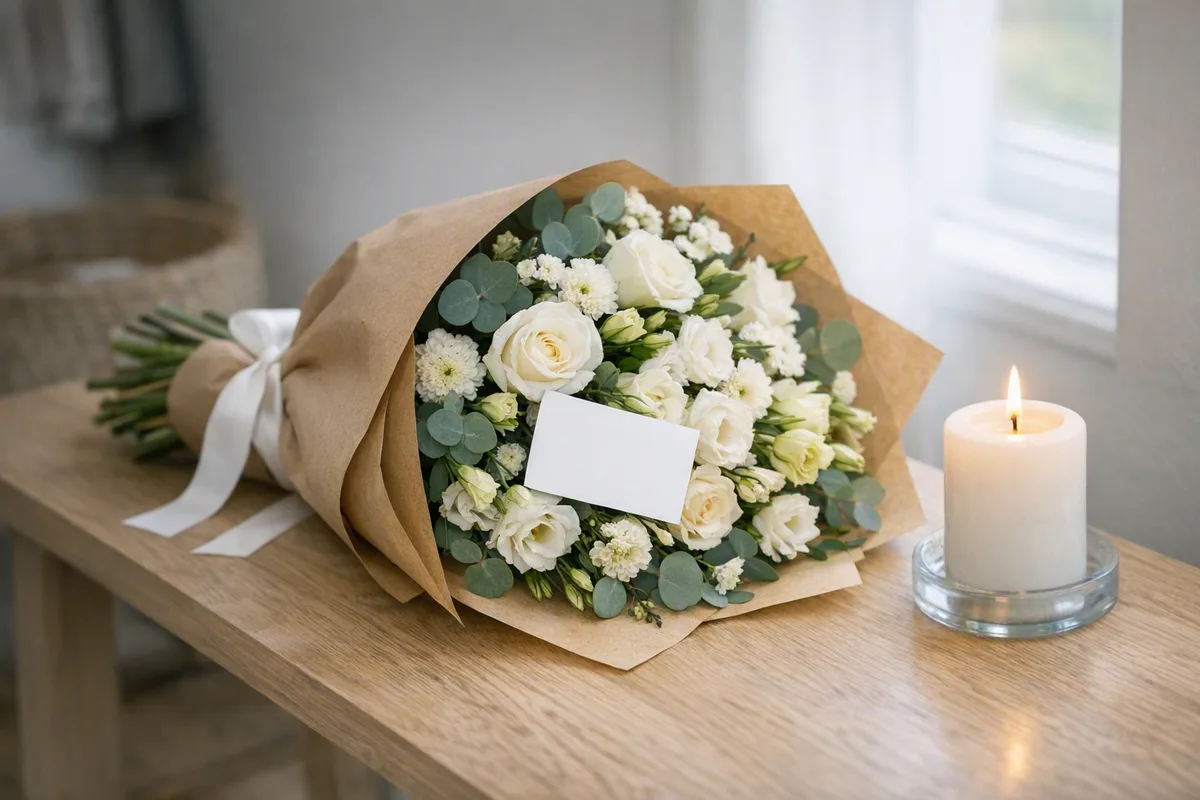
Sympathy bouquet
A soft, hand-tied bouquet for the family at home, sent once the funeral is over or when the notice asks for no flowers at the church. This is the kind you can choose online with us.
Choose online See sympathy flowers →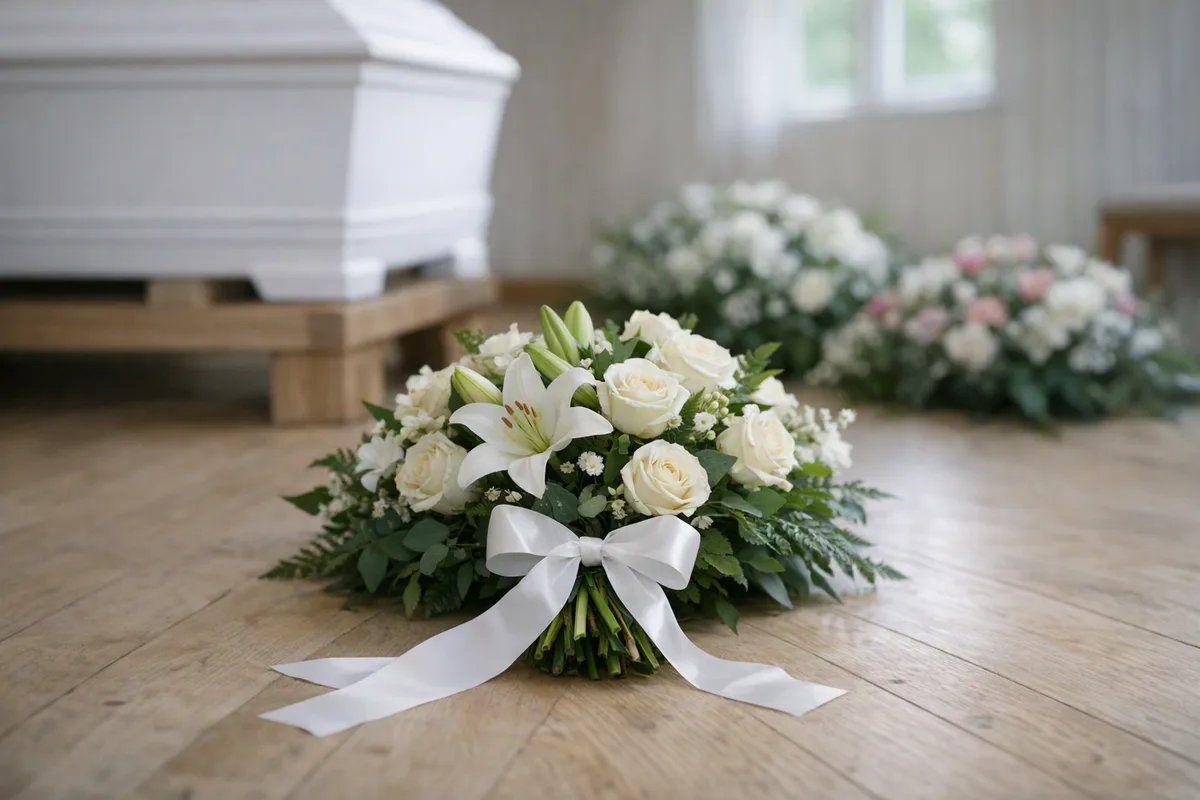
Sheaf or posy
A flat sheaf or tied posy that lies beside the coffin. A good size for a friend, a neighbour or a group from work, with a card saying who it is from.
Through the funeral director How to arrange it →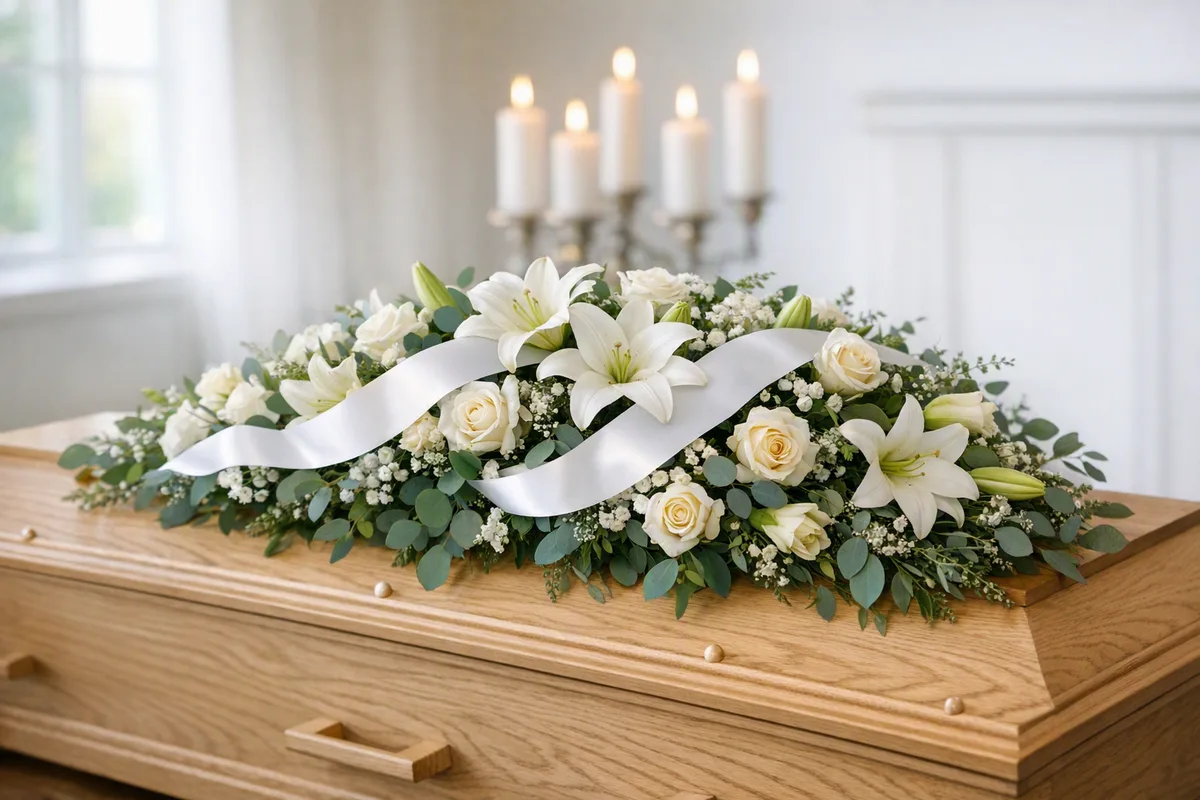
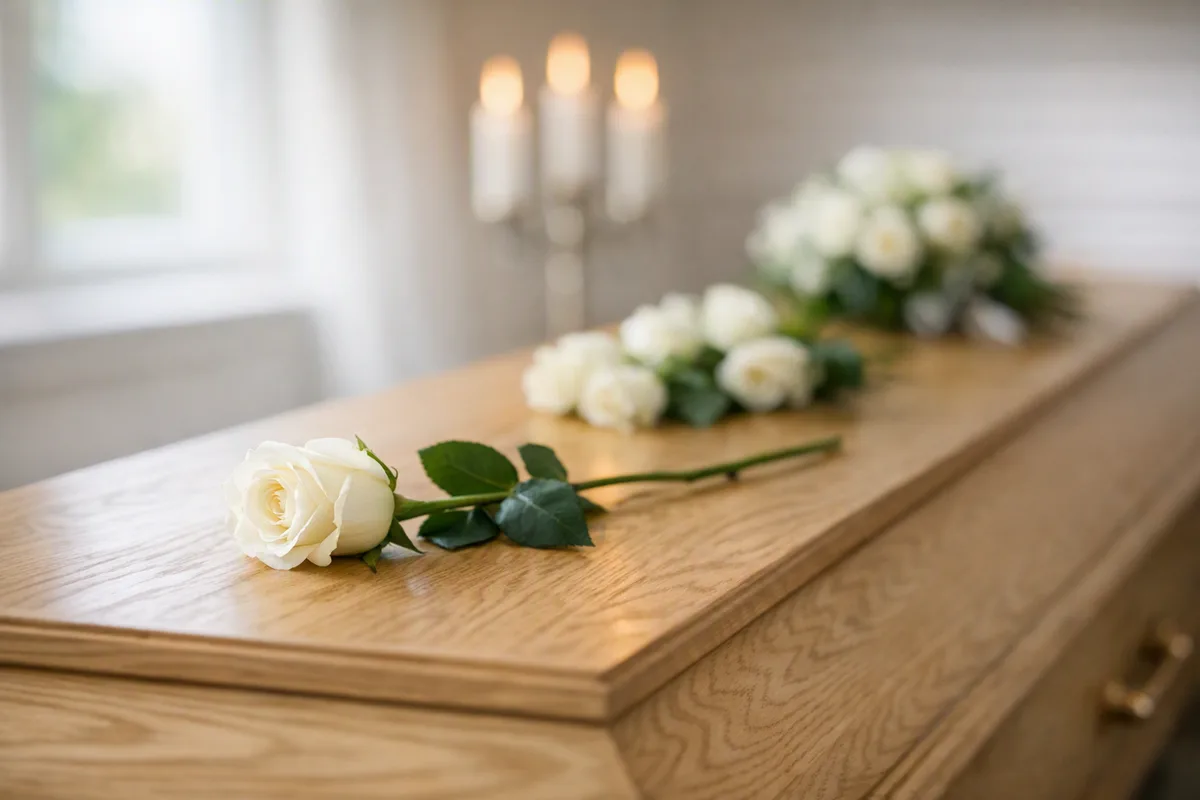
Coffin spray
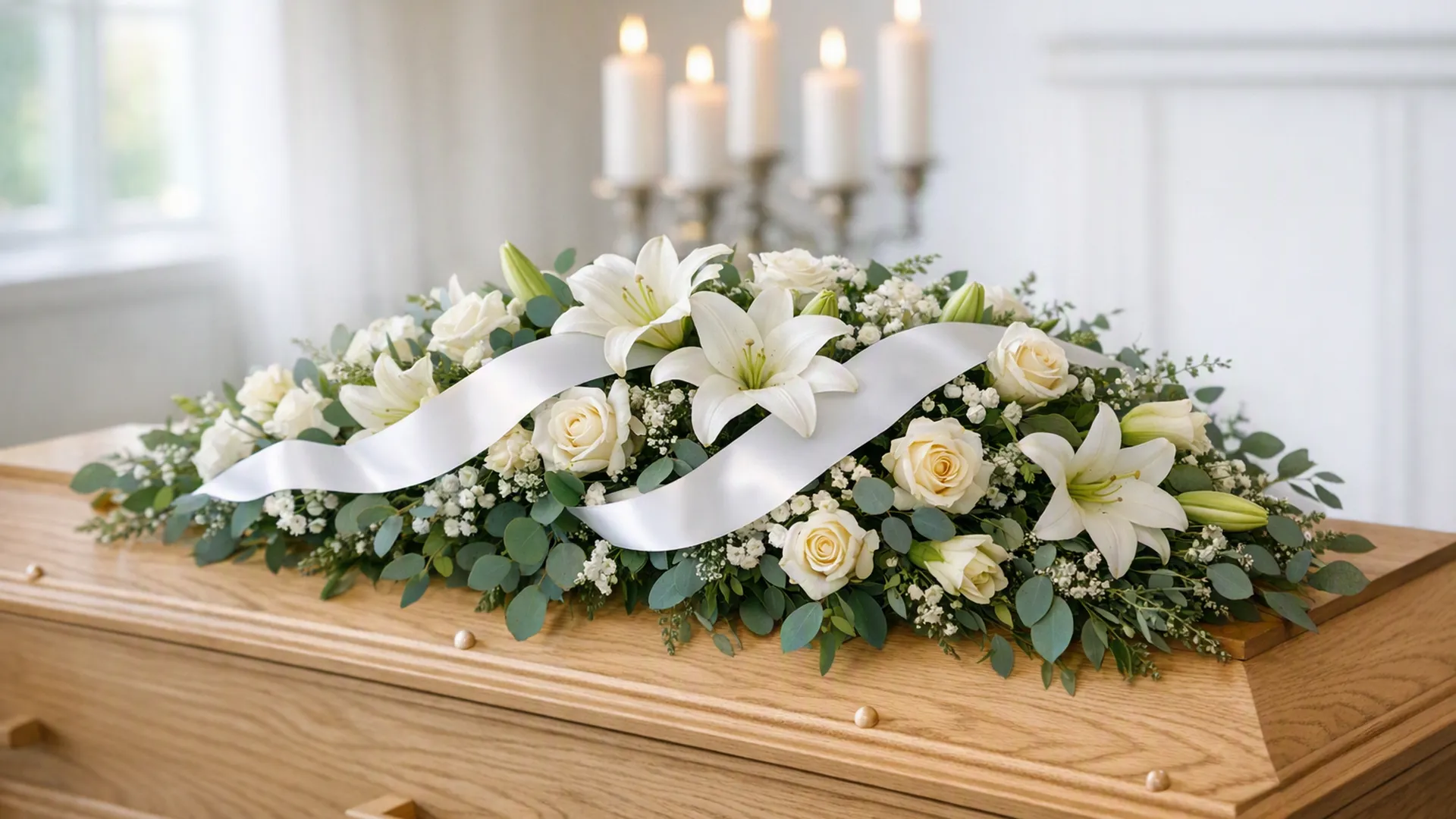
The long arrangement that rests on the lid of the coffin. It is chosen by the spouse or children, often together, and sometimes joined by letter tributes such as MAM, DAD or GRANDAD.
Through the funeral director How to arrange it →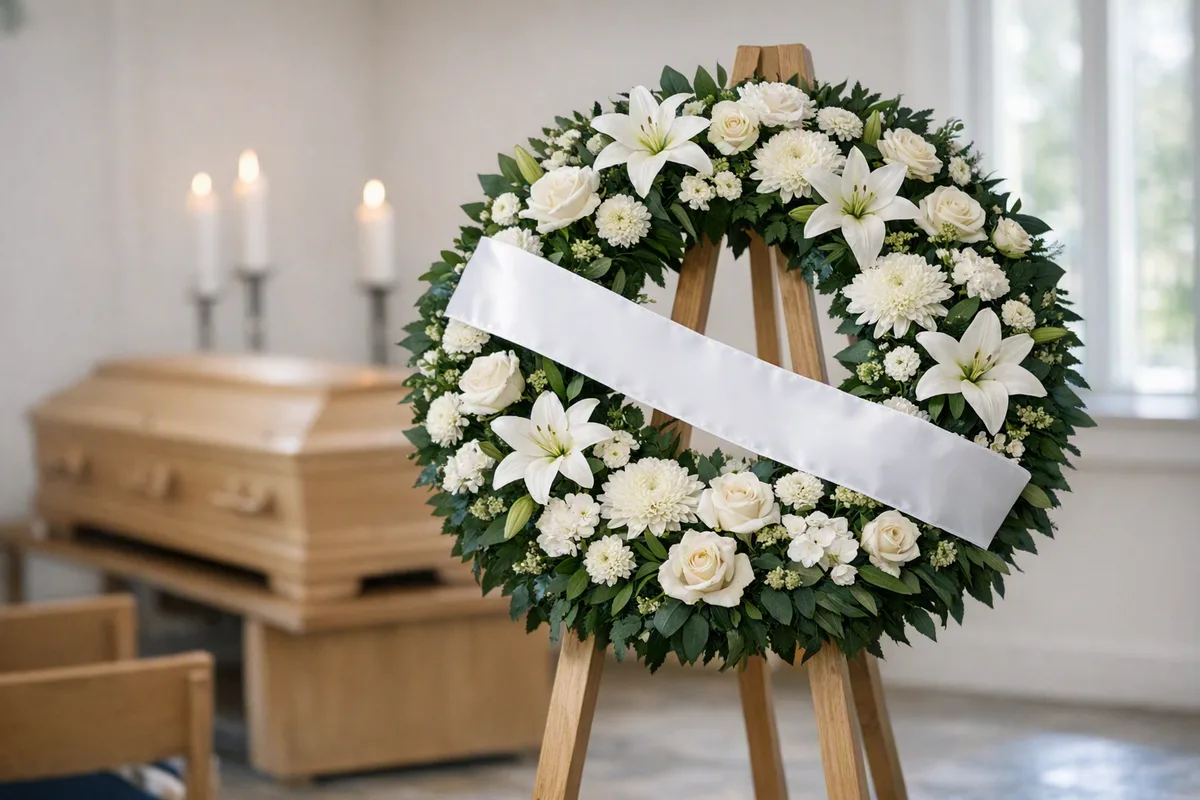
Wreath
The round wreath stands for everlasting life. Clubs, GAA teams, employers and extended family often send one between them.
Through the funeral director How to arrange it →Who usually sends what
| Your connection | Usual choice | Where it goes |
|---|---|---|
| Husband, wife or children | Coffin spray, often with letter tributes | On the coffin |
| Brothers, sisters, grandchildren | Wreath or sheaf, sometimes shared | Beside the coffin |
| Friend or neighbour | A Mass card at the wake, a sheaf, or flowers to the house later | Wake, church or home |
| Club, school, workplace | One wreath or sheaf from the whole group | Beside the coffin |
| Living abroad or unable to travel | A Mass card by post, an entry in the online condolence book and flowers to the house | Home |
Arranging a tribute for the service
Ring the funeral director named in the notice. They will tell you whether the family is accepting flowers, where tributes should be sent and the latest time to get them there. Many will take your order themselves or give you the name of a florist they work with near the church. Have the person’s name, the time of the removal or Mass and your card message ready before you call.
Because the timeline is short, do not wait for the day before. If you read the notice in the morning, call that morning.
Family flowers only, and other wishes
- Family flowers only: only the immediate family will send flowers to the funeral. Please do not send a wreath to the church.
- Donations in lieu, if desired, to …: the family would like money that might have gone on flowers to go to a named charity, often a hospice or the Irish Cancer Society.
- House private: the family does not want callers at the house, often on the morning of the funeral or altogether. Do not send flowers there either until some time has passed.
- Funeral private: only invited people will attend. A Mass card or a message in the online condolence book is the respectful way to reach them.
Mass cards
At a Catholic funeral the Mass card is still the most common gesture of all. It means a Mass will be said for the person who has died, and it is signed by a priest. You can get one from your parish office, a church shop or a religious order, and hand it to the family at the wake or post it to the house. Many people send both a Mass card and flowers; they are not either-or.
Words for the card
The family will read every card after the funeral, often more than once. Short and sincere is best:
For a woman, the Irish blessing becomes Ar dheis Dé go raibh a hanam. On the back, write clearly who the flowers are from, for example “Mary, Tom and the girls” or “All at the club”, so the family knows whom to thank.
Choosing flowers and colours
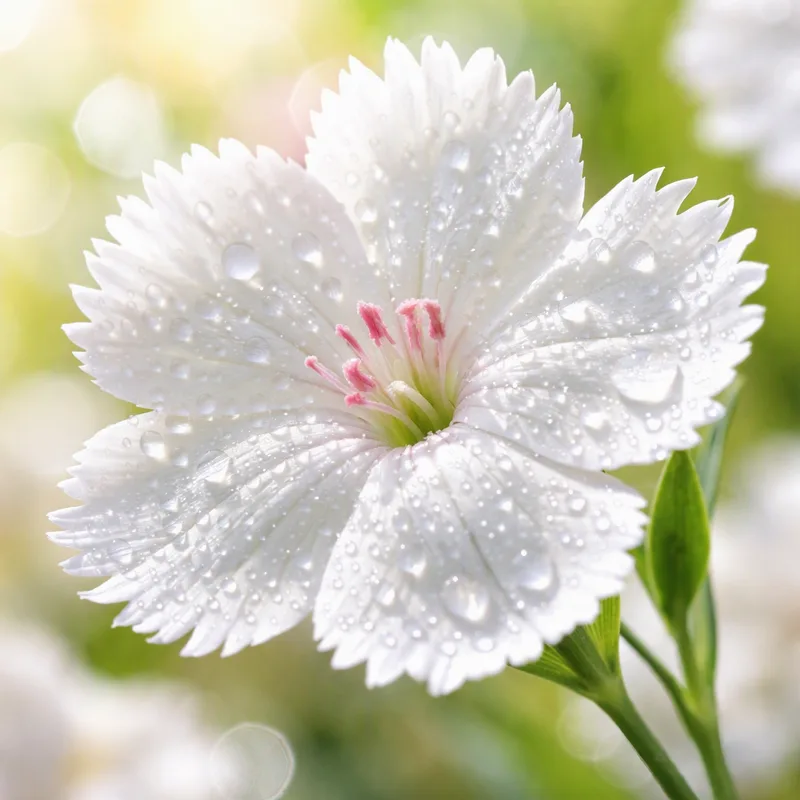
White and cream are traditional, with green foliage. But Irish families increasingly ask for flowers that say something about the person: sunflowers for someone sunny, county colours for a devoted supporter, roses from a garden they loved.



Usually right
- White, cream and green – roses, lilies, carnations, chrysanthemums
- Something personal – a favourite flower or county colours
- A card that says who you are – the family will want to thank you
- Flowers to the house later – when the crowds have gone
Best avoided
- Sending a wreath when the notice says family flowers only
- Leaving it until the day of the funeral
- Flowers to the house on the morning of a house private funeral
- A huge arrangement from someone outside the family
When you cannot be there
Emigrants and friends far away often feel this most. Leave a message in the online condolence book on the notice, post a Mass card, and arrange flowers to the family’s home for a week or two after the funeral, or for the Month’s Mind. Our guide to sympathy flowers covers this in more detail.
- Find the notice
It has the funeral director, the parish and the family’s wishes.
- Decide where
A tribute for the service through the funeral director, or a bouquet for the house afterwards.
- Get the address right
For the house, ask a relative or neighbour for the Eircode.
- Write the card
A line or two and your name is plenty.
Send a sympathy bouquet to a family at home in Ireland, with your own card message.
See sympathy flowers →