
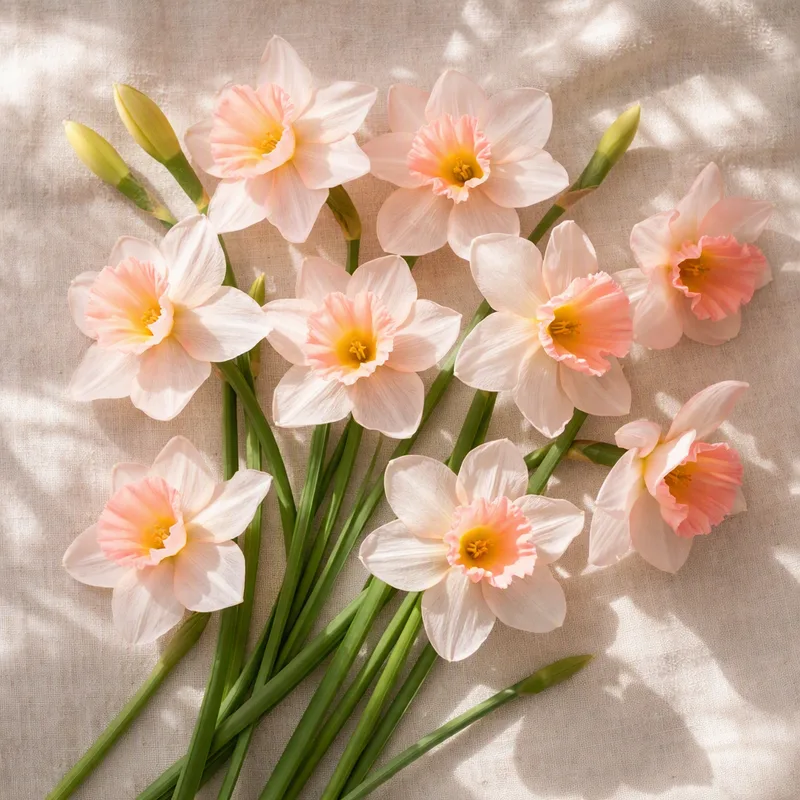
Pink only in the cup
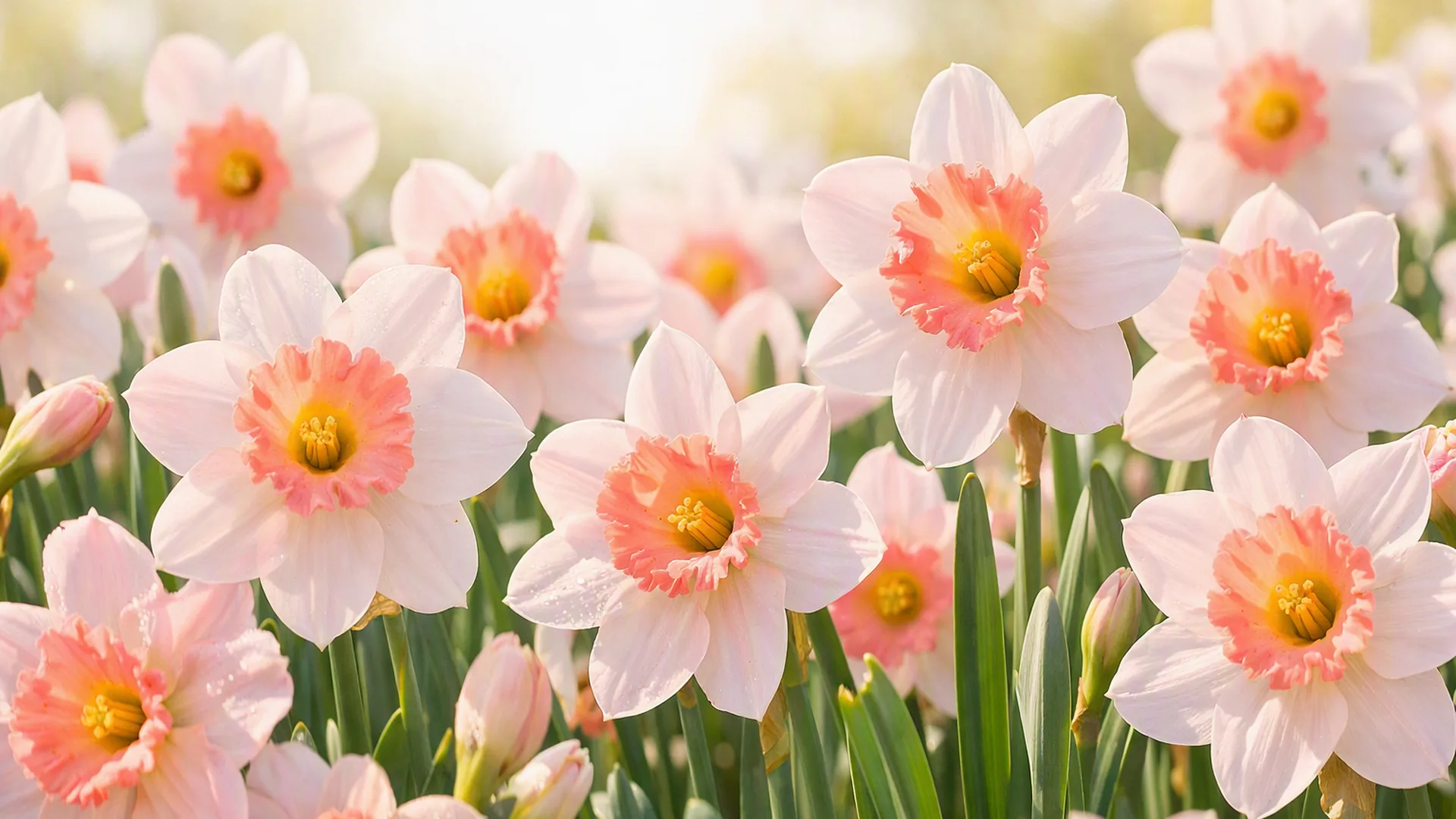
A fully pink daffodil does not exist. In the so-called pink varieties the outer petals are white or cream, and only the corona, the cup or trumpet at the centre, carries a hint of pink to salmon. 'Pink Charm' and 'Salome' are two known names. The colour often develops as the flower opens and can read as apricot depending on the light.
Keeping the pink
Strong sun bleaches the cup faster. A position with partial shade, or a cool spring, lets the colour last longer. Plant bulbs early in autumn in loose, free-draining soil. In a pot you can set several bulbs close together so the container looks full in spring. After flowering, pinch off the dead blooms so the plant does not waste strength on seed.
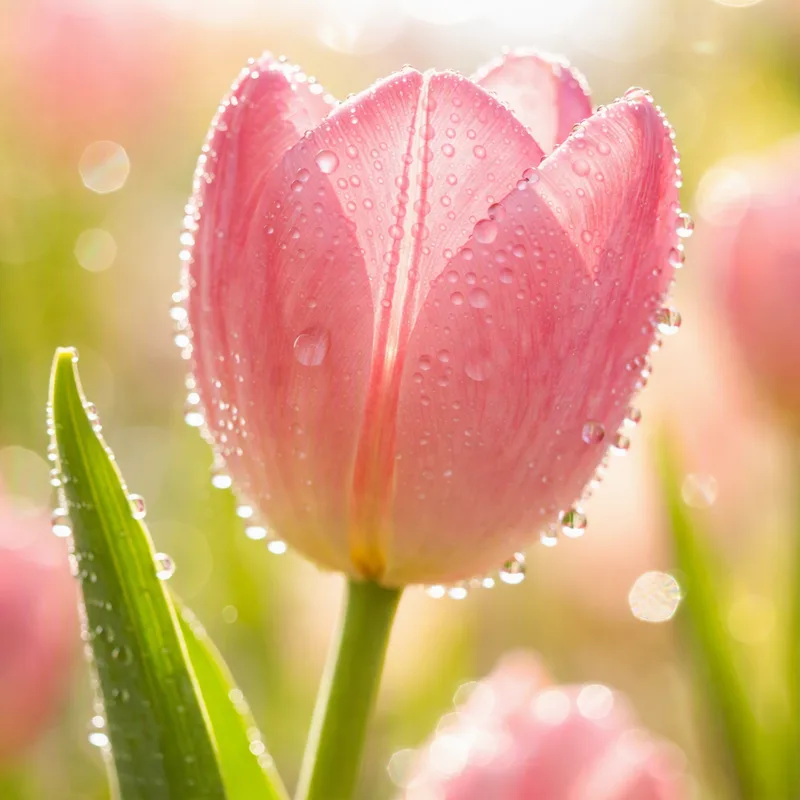
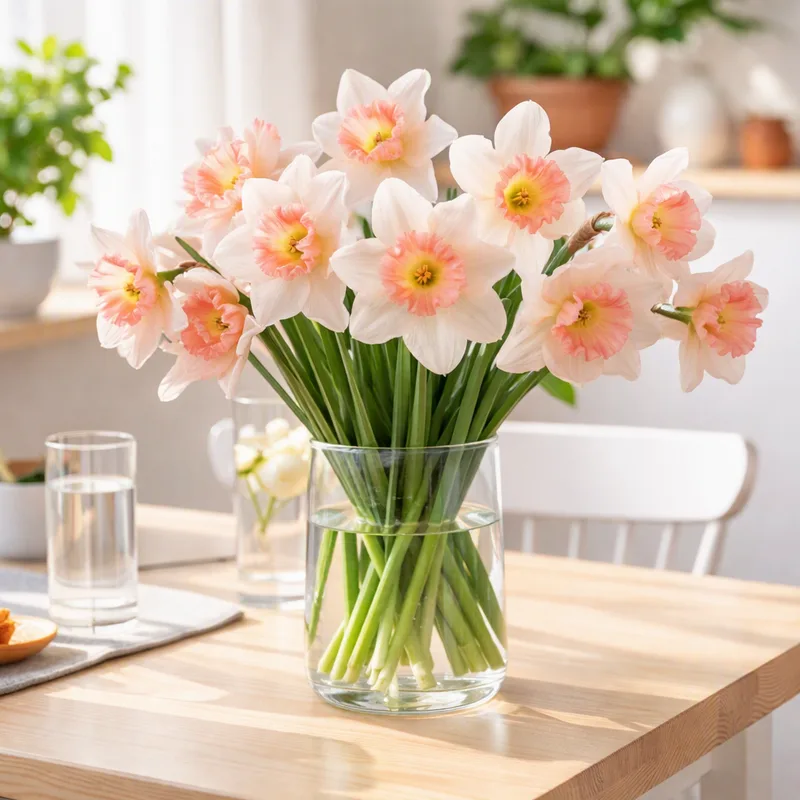
Pink daffodils pair with white or soft pink tulips and with hyacinths. In a vase they look very springlike next to cherry blossom twigs.
Growing guide
- Plant in September or October at about three times the bulb's height.
- Leave the leaves to die back; they build the bulb for next year.
- Condition freshly cut stems separately in water before adding them to a mixed vase.
- An autumn mulch of compost is all the feeding they need.
Poisonous parts
Daffodils contain lycorine and other alkaloids, most of all in the bulb. People may suffer nausea, vomiting and diarrhoea, and the National Poisons Information Centre can advise if someone has eaten some. The ASPCA lists the plant as toxic to dogs, cats and horses.