


Wild roses on Irish hedgerows
Long before garden hybrids, Ireland had its own wild roses. The dog rose (Rosa canina) tangles through hedges across the country, and the burnet rose (Rosa pimpinellifolia) clings to sand dunes and limestone ground near the coast. Their flowers have five simple petals, and in autumn they turn into the bright hips that birds feed on and that people have long used for syrup because of their vitamin C.
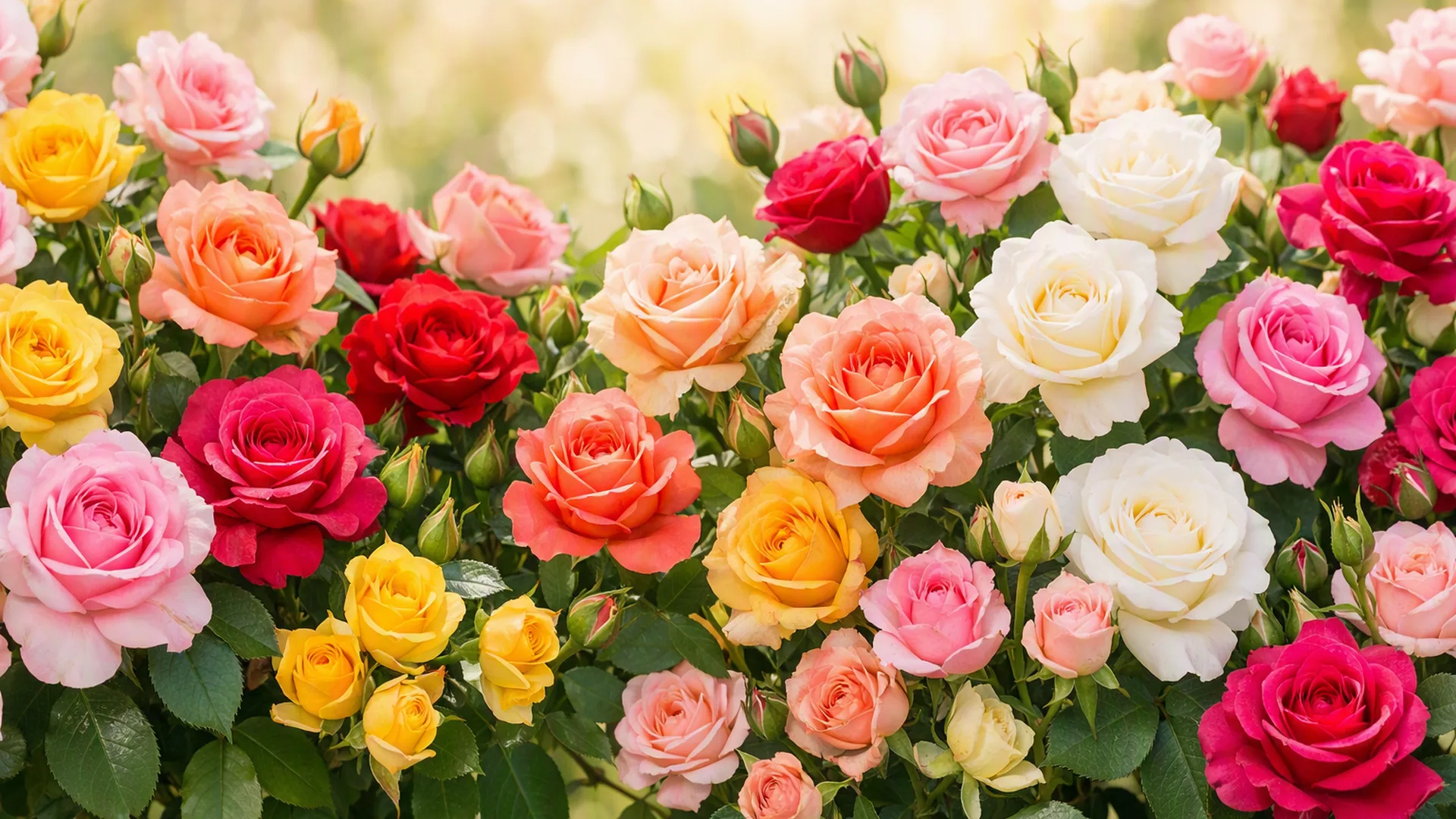
Most garden roses descend from Chinese roses introduced to Europe in the eighteenth century. They brought the ability to flower more than once in a summer. Nowadays the family is sorted loosely into climbers, shrub roses, floribundas and hybrid teas, and the old-fashioned "classic" look usually means a full, many-petalled bloom with a strong scent.
Thorns that are really prickles
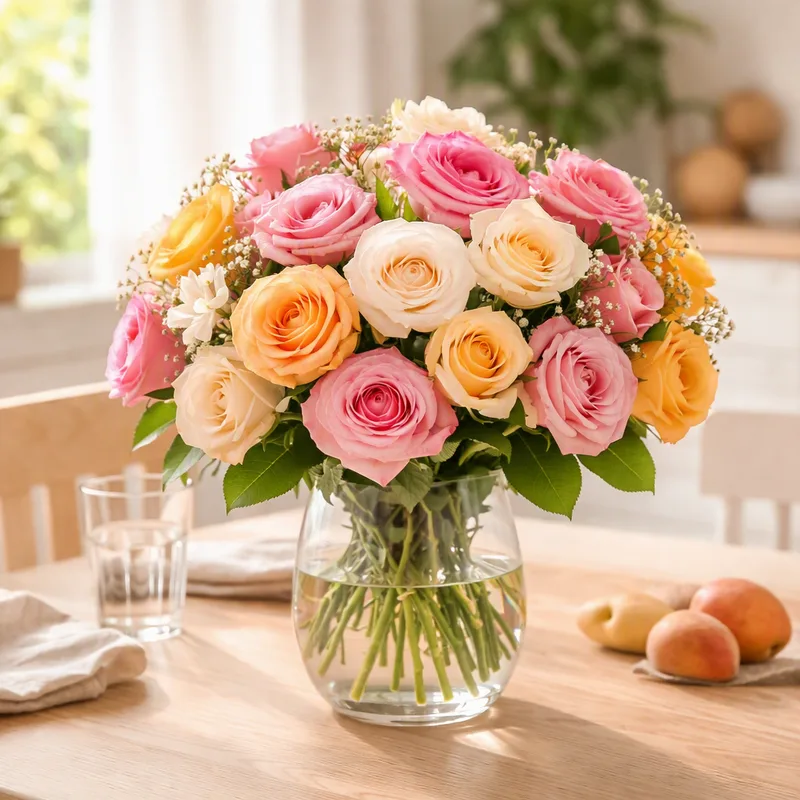
What we call thorns are botanically prickles, outgrowths of the skin of the stem that can be snapped off. For a vase, strip the lower ones with a rose stripper or the back of a knife. Cut the stems on a slant under cool water and change the water often, and a cut rose should last roughly one to two weeks.
Growing roses in a soft, damp climate
- Plant bare-root roses in late autumn or winter, and container roses almost any time the ground is workable.
- Prune in late winter or early spring, cutting back to a healthy outward-facing bud.
- Black spot thrives in mild, moist air, so give plants space, water at the base rather than over the leaves and clear fallen leaves in autumn.
- Roses like full sun and a rich, well-drained soil; very sour peat benefits from some added organic matter.
No such thing as a true blue
Roses lack the pigment for blue, so blue roses in shops are white ones that have been dyed. Breeders have only reached lilac and lavender shades.
Cats and dogs
Roses are rated non-toxic to dogs, cats and horses by the ASPCA. The only real hazard is the prickles, and petals from a bouquet are best kept off the floor so pets do not eat large amounts.