
A bulb with a long history
Tulips belong to the genus Tulipa, which has around 75 species according to botanical references, and every garden tulip descends from wild ones that grew far to the east of Ireland. They reached northern Europe in the sixteenth century and set off the Dutch tulip mania of 1634 to 1637, often described as the first recorded speculative bubble. There are now thousands of cultivars, arranged in groups according to how the bloom is built and when it opens.
Choosing a yellow
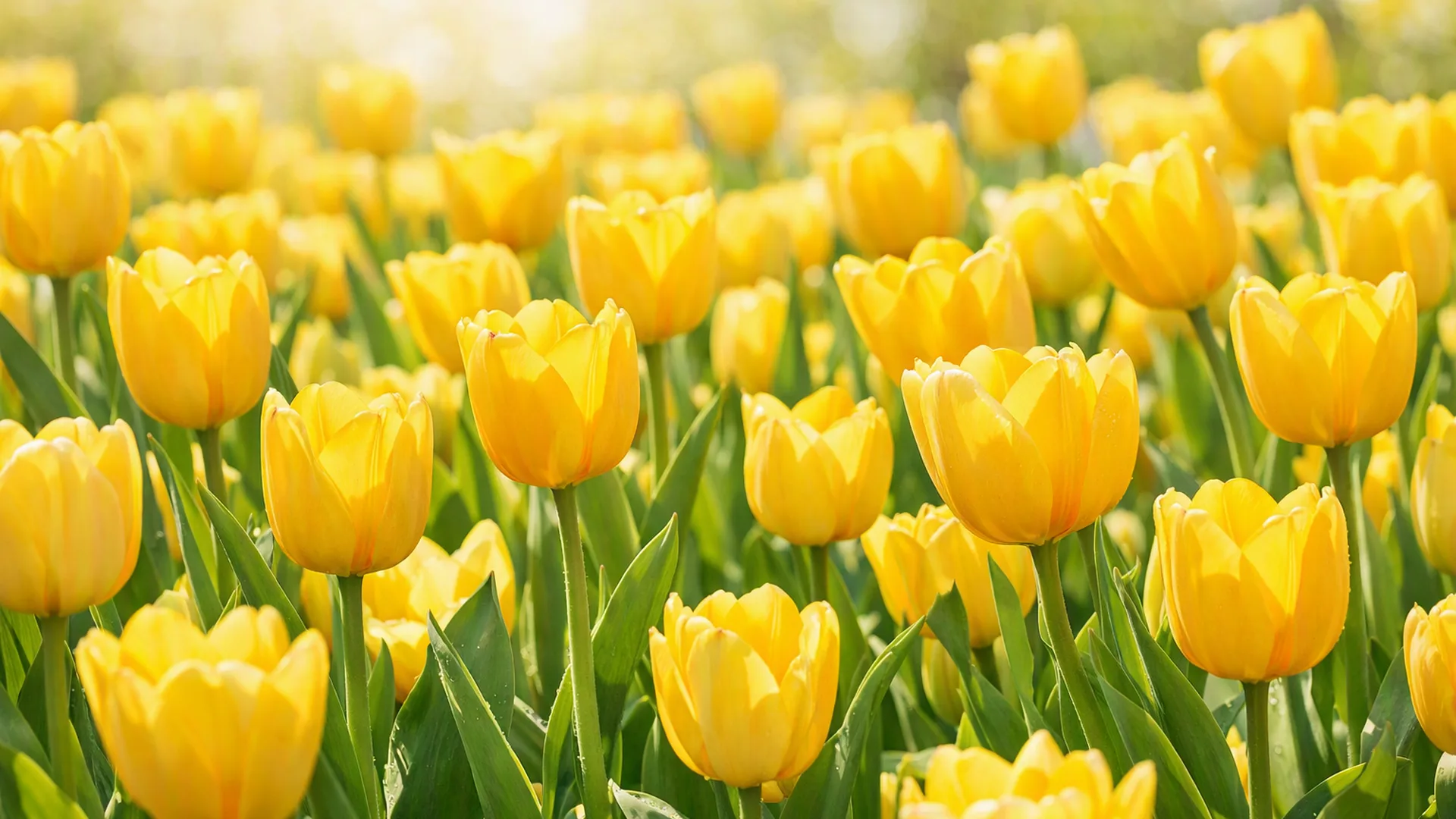
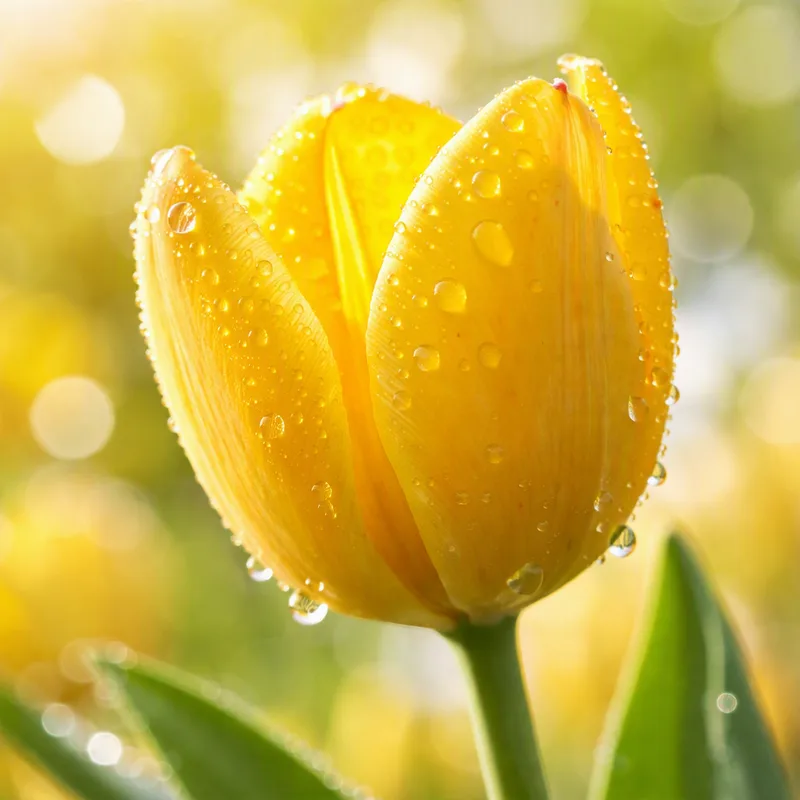
A single yellow tulip does not exist as a type, because the shade runs from pale lemon to deep gold. Lily-flowered varieties such as 'West Point' have tapering, outward-curving petals and look elegant in a tall vase. Single early and Darwin hybrid yellows are rounder and sturdier, which suits a windy doorstep pot. Heights run from about 25 to 60 cm depending on the group.
Making the stems last
- Cut the stem ends on the slant and strip any leaves that would sit under water.
- Use cool water and top it up, because tulips keep drinking and growing after cutting.
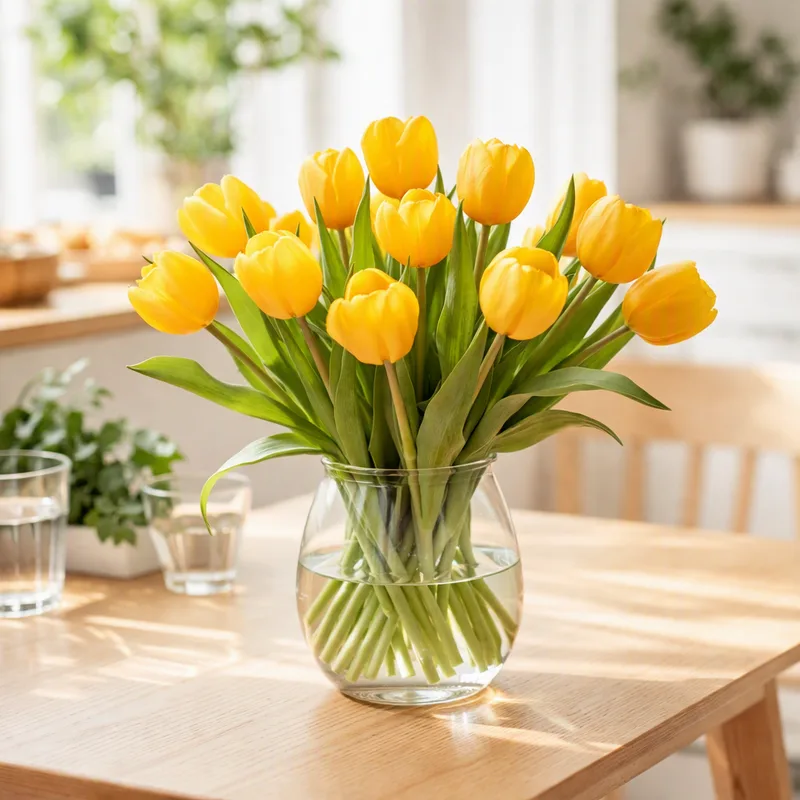
- Choose a tall vase so the stems are supported; they bend towards the light.
- Give daffodils their own vase, because the slime from cut daffodil stems clogs tulip stems.
Expect between five and ten days. Tulips have little scent, so they will not compete with other flowers on a table.
In the Irish garden
Bulbs go in during October or November. Our wet winters can rot them in heavy clay, so add grit to the planting hole or use pots with good drainage. Spring colour usually peaks in April, which fits Easter and Mothering Sunday displays.
Pets and handling
The ASPCA puts tulips on its toxic list for dogs, cats and horses, with the bulb holding most of the tulipalin A and B. Handling bulbs can also irritate skin. Store bulbs well away from animals, and phone your vet if one has chewed any part.