
Why white gerberas suit Irish occasions
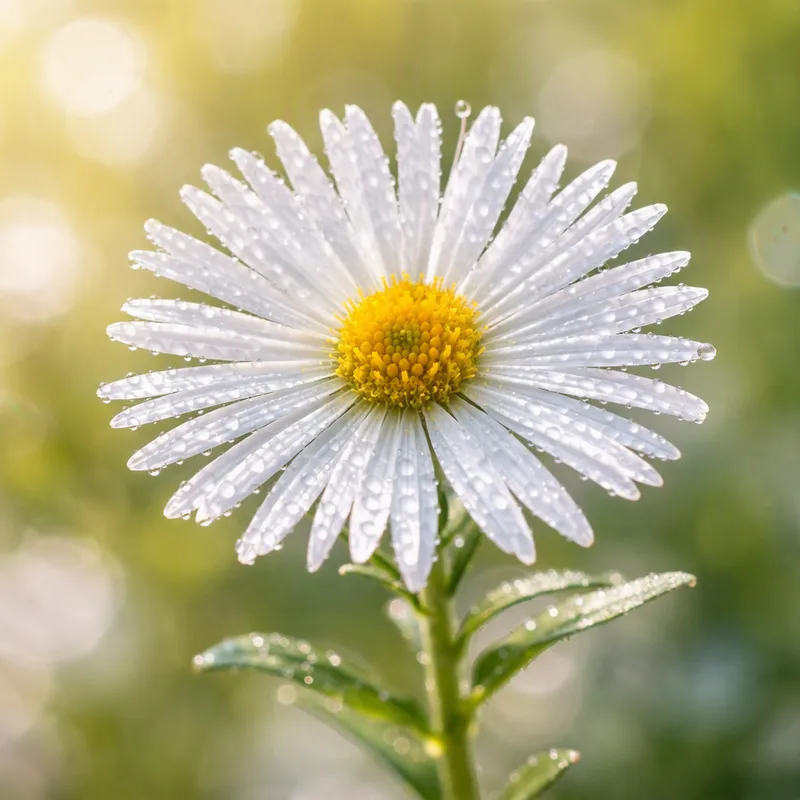
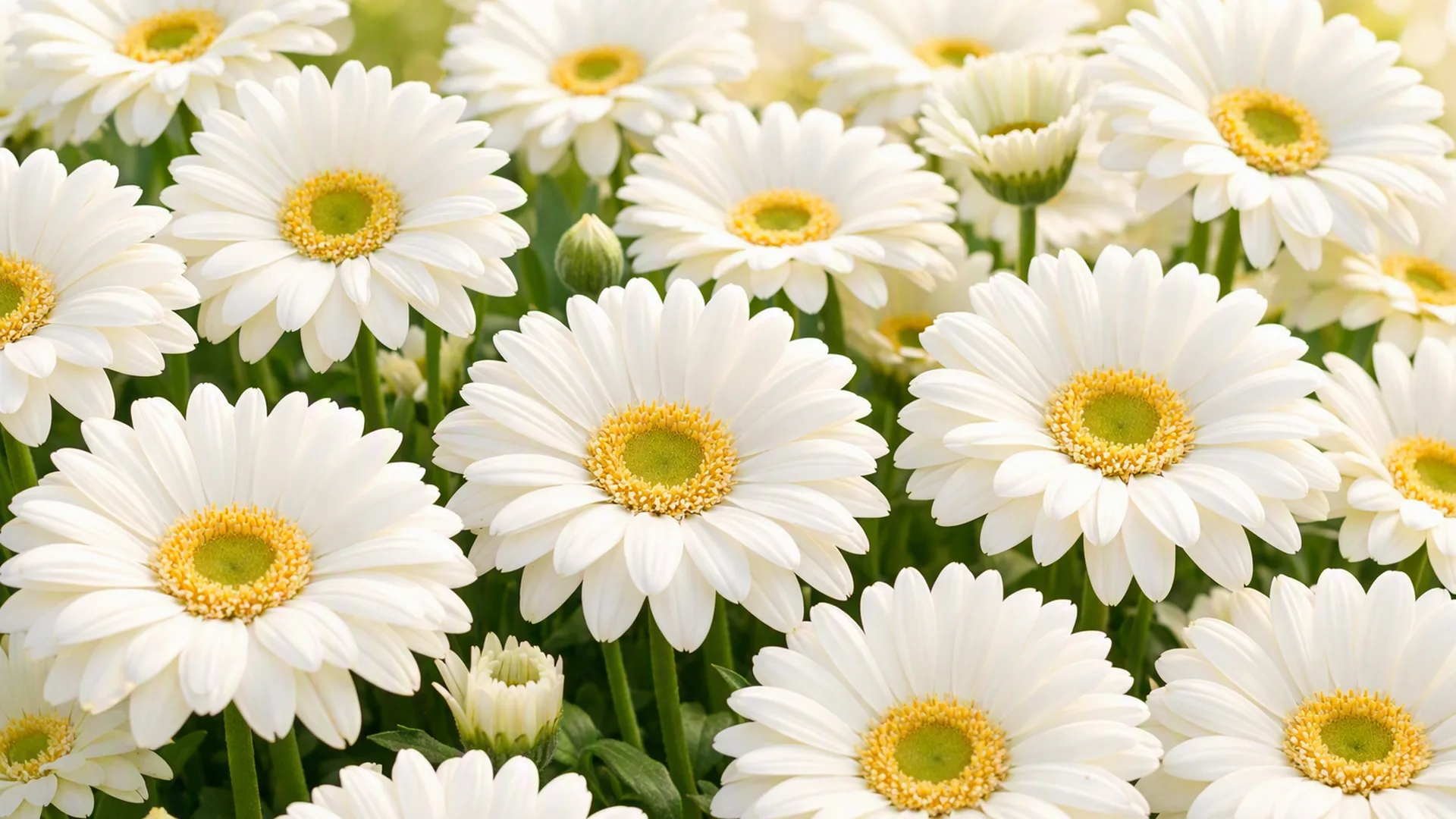
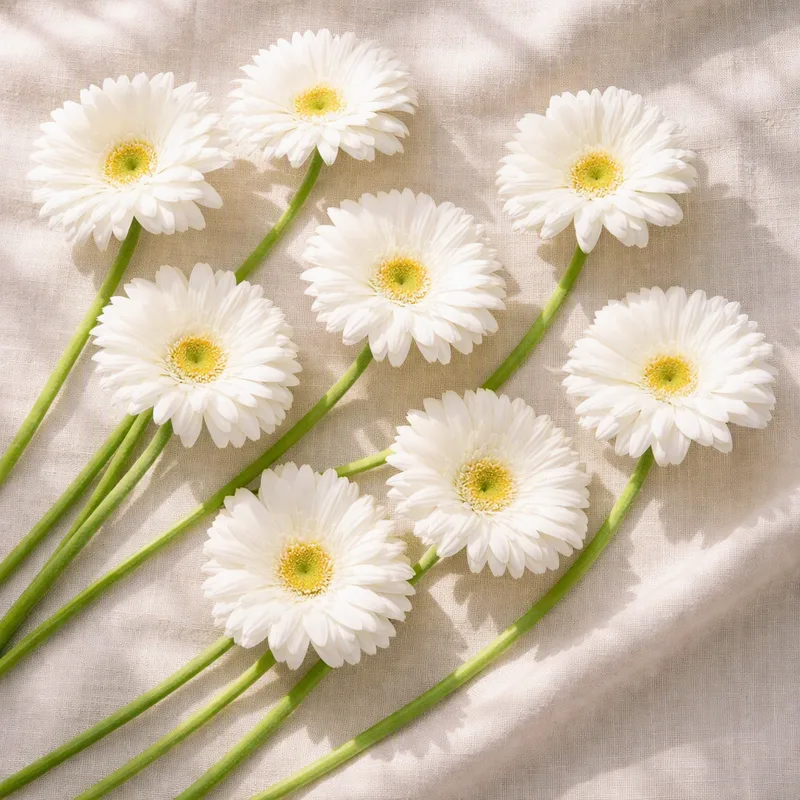
A white gerbera has a pale ring of ray florets around a darker, greenish-yellow or brownish eye. The effect is crisp and uncluttered, which is why white daisies turn up so often around First Communion and Confirmation in May and at spring and summer weddings. In the language of flowers white is associated with innocence and new beginnings, a reading that sits comfortably with those milestones.
The plant behind them is the same as in every other colour. Gerbera jamesonii grows wild in Mpumalanga, Limpopo and Eswatini, and wild flowers are normally orange-red. White is among the rarer natural shades, so the white gerberas you meet nowadays come from breeders working with the Cambridge-raised hybrid Gerbera × hybrida.
Making white blooms look their best
White shows up every mark, so a few details matter more than with darker colours:
- Remove any leaves that would sit below the waterline, since rotting foliage clouds the water and browns the stem ends.
- Rinse the vase with hot water and a drop of washing-up liquid before use.
- Give the stems a fresh angled cut every couple of days.
- Keep the vase out of direct sun, which can mark the outer florets.
If a bloom starts to nod, the weak spot is nearly always 10 to 15 cm below the head. A shallow fill of fresh water often steadies it.
Mixing white with other flowers
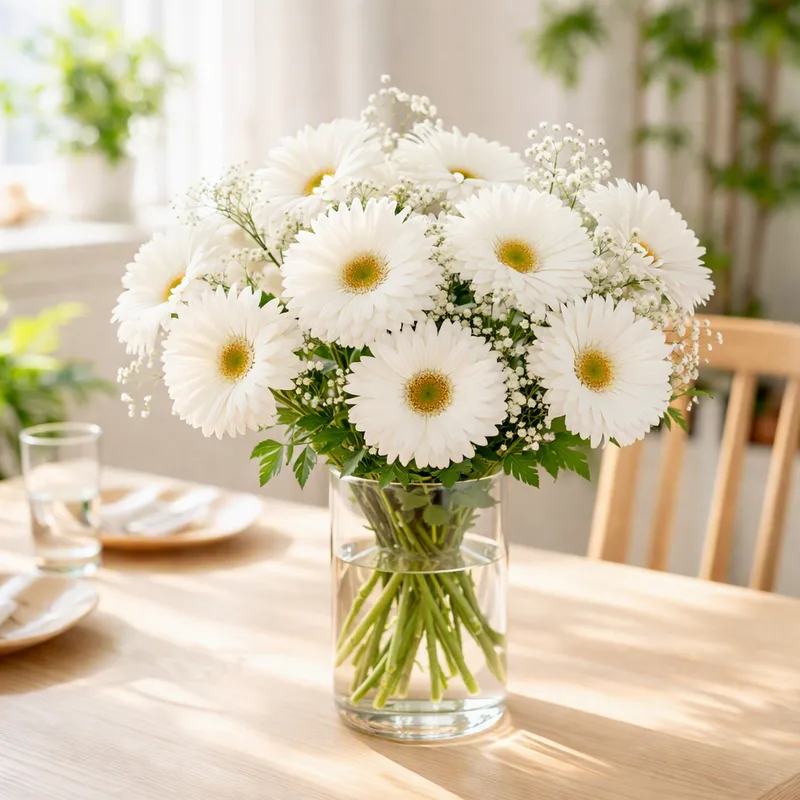
Because the centre is darker, white gerberas pair neatly with greenery such as eucalyptus or ruscus, and they sit well beside white roses, chrysanthemums or lisianthus. For something with more contrast, try them with deep blue or purple spikes. One bunch in a tall jug looks as good as a formal arrangement.
Gerberas and animals
According to the ASPCA, gerberas are non-toxic to cats, dogs and horses. White ones are no different from other shades.