White is not the wild form
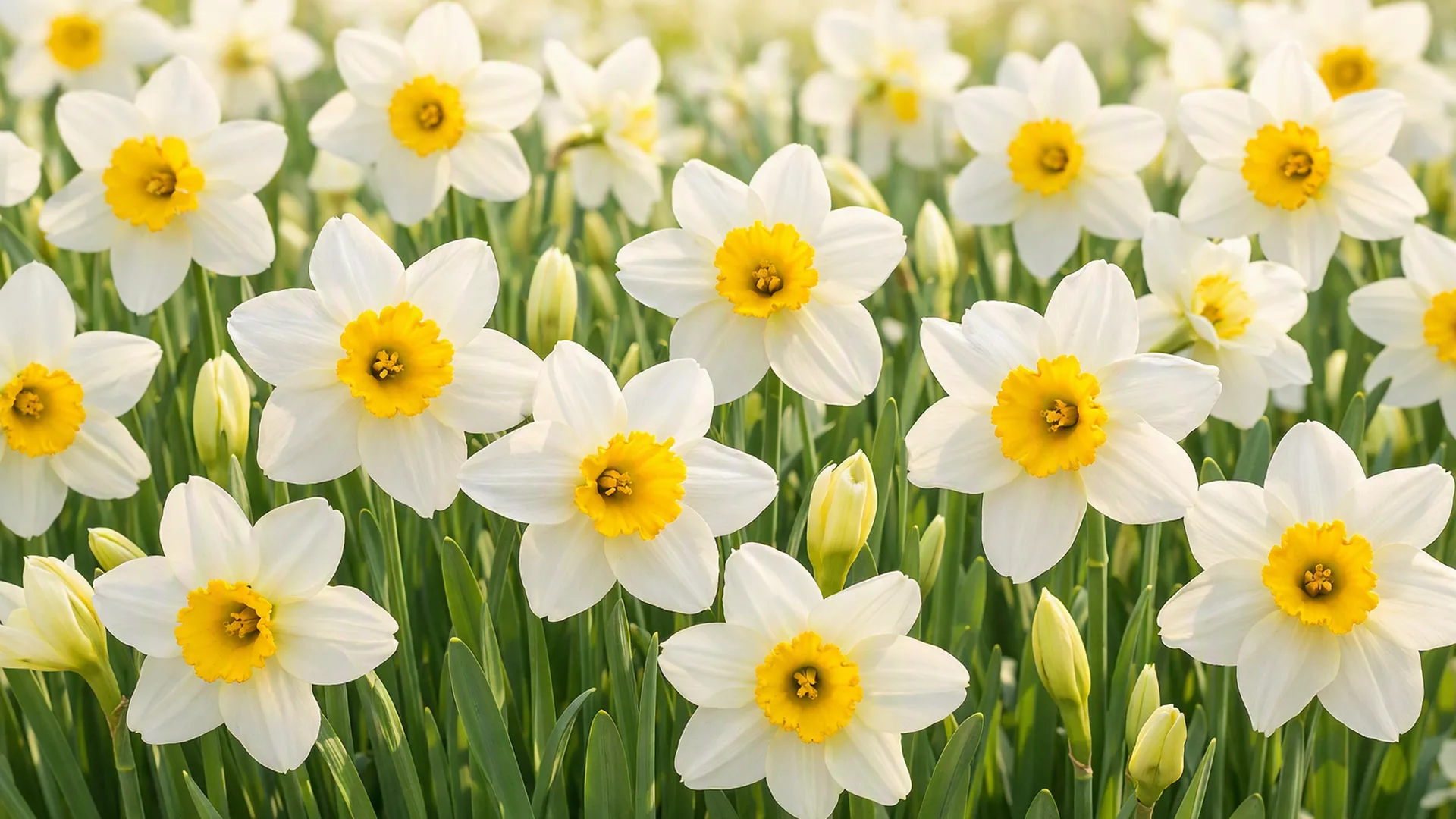
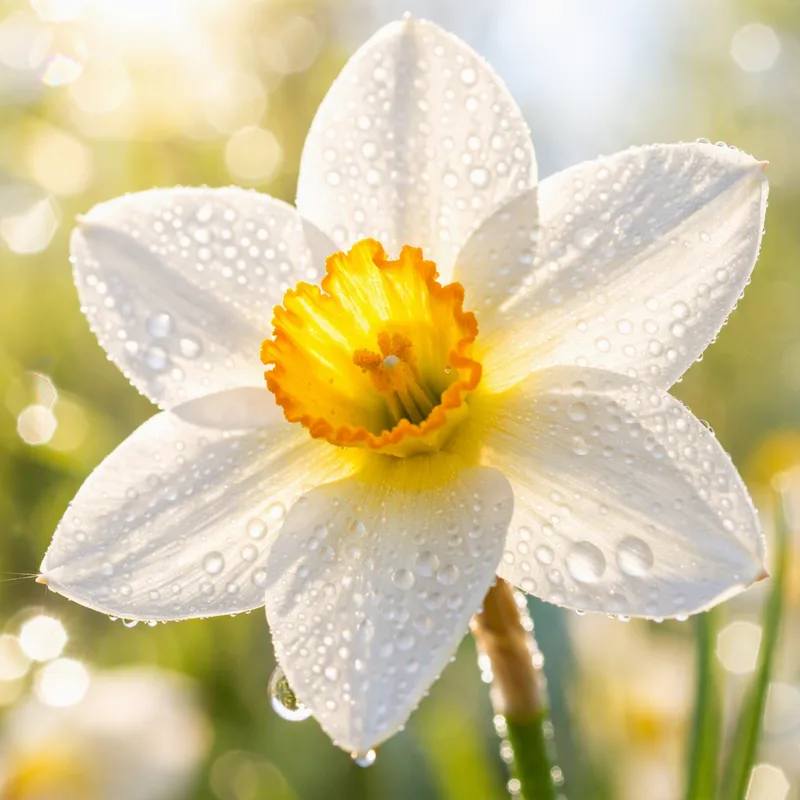
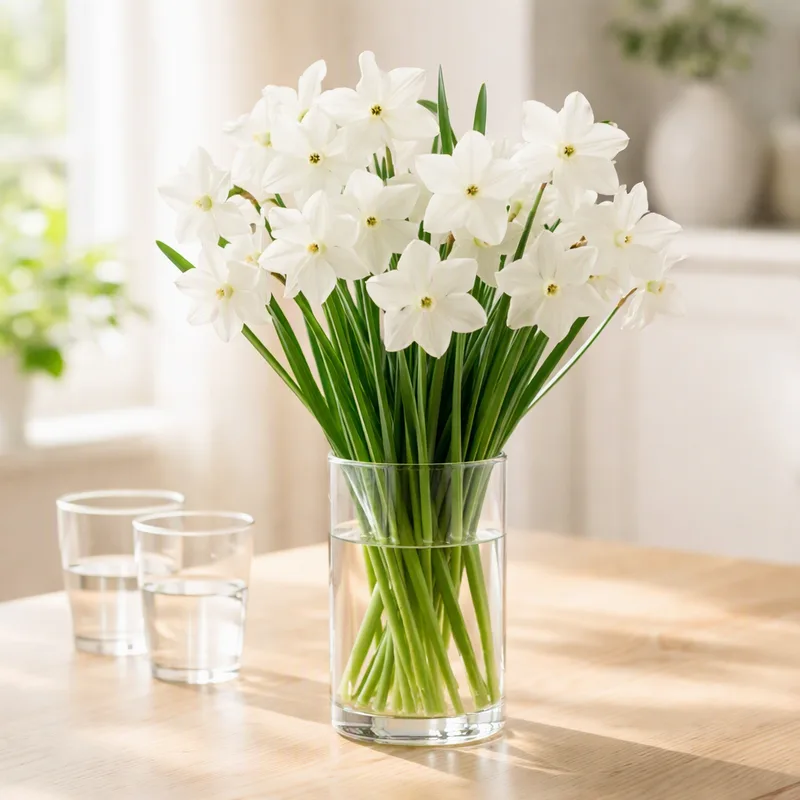
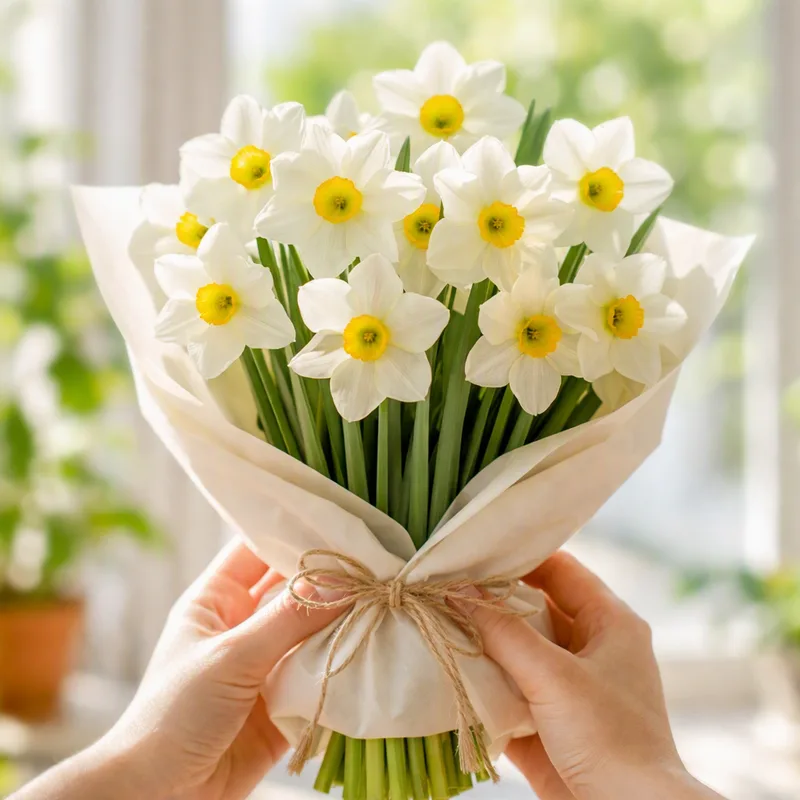
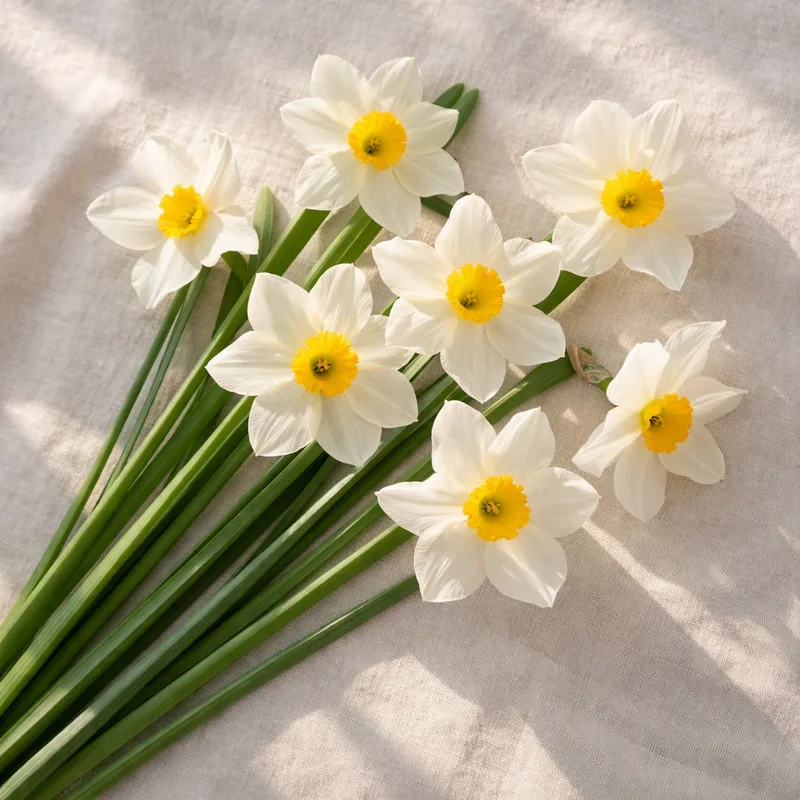
The wild daffodil, Narcissus pseudonarcissus, has pale yellow petals and a yellow trumpet. White trumpet daffodils are therefore cultivated forms, bred over generations. Many open with a yellowish tinge and brighten as the flower ages. 'Mount Hood' is a well-known example, with a creamy trumpet that turns white.
If you want the look in your garden, choose a variety with a white trumpet, not a plant taken from the wild. Digging up plants from hedges and verges harms natural populations and is best avoided.
What does a white daffodil stand for?
In the language of flowers, daffodils suggest new beginnings and spring, and white ones are chosen for their purity and calm. White varieties pair with snowdrops, grape hyacinths and white tulips for a pale arrangement. They look especially elegant on a table with branches and feathers.
Pots and borders
- Plant bulbs in autumn about three times their height deep, with a little sand in the compost for drainage.
- Partial shade stops the white fading and the petals from marking in rain.
- Leave the foliage until it has turned yellow.
- Give pots good drainage and let the winter cold do its work.
After cutting, keep stems alone in water for about six hours before arranging them with other flowers, and do not trim them again.
Safety
All parts contain lycorine and related alkaloids, with the highest level in the bulb. Eating daffodils can cause vomiting and diarrhoea in people; the National Poisons Information Centre can advise. The ASPCA lists them as toxic to dogs, cats and horses, so call your vet if a pet has chewed any part.