
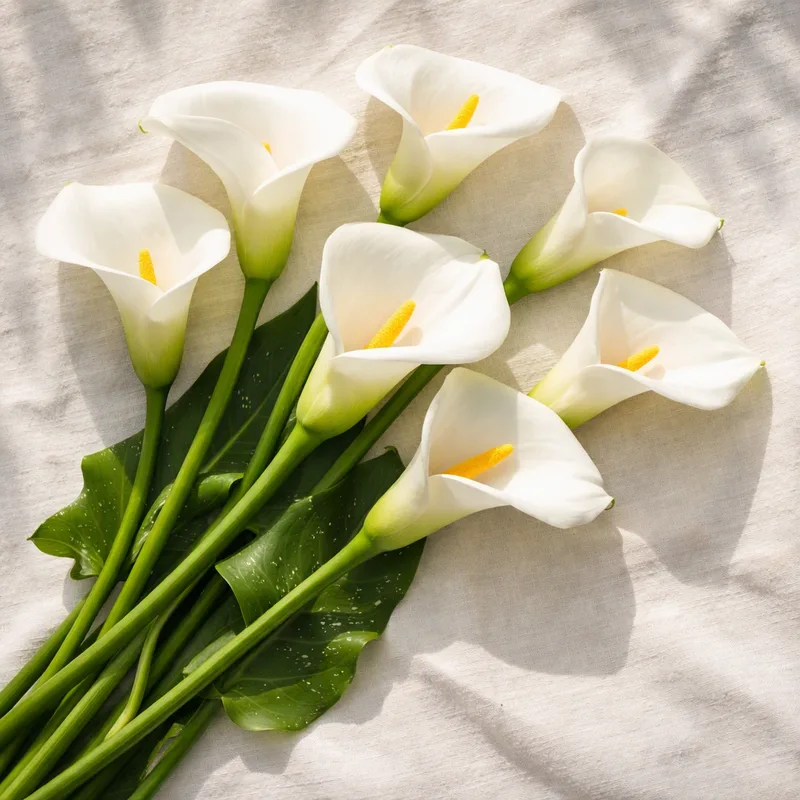
One spathe, many names
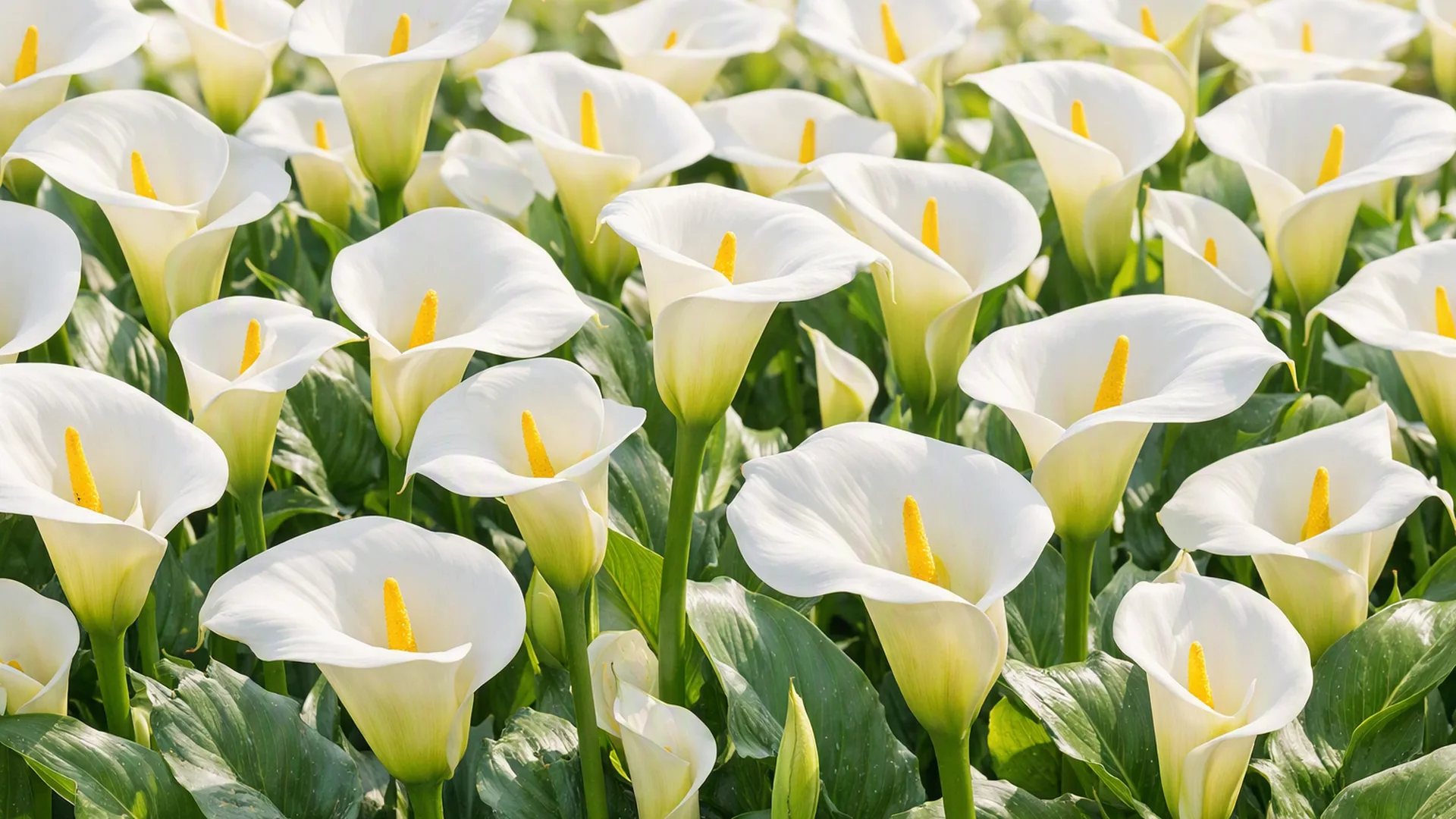
Searches such as "kalla flowers" and "kalla in english" show how often the plant travels under its Scandinavian or Latin spelling. In English the usual names are calla lily and arum lily, and the botanical name is Zantedeschia aethiopica. The genus name commemorates Giovanni Zantedeschi, a botanist from Italy. Strictly, calla lily and arum lily are shared across several species, and the pure white one is the giant white arum lily.
Anatomy of a white calla
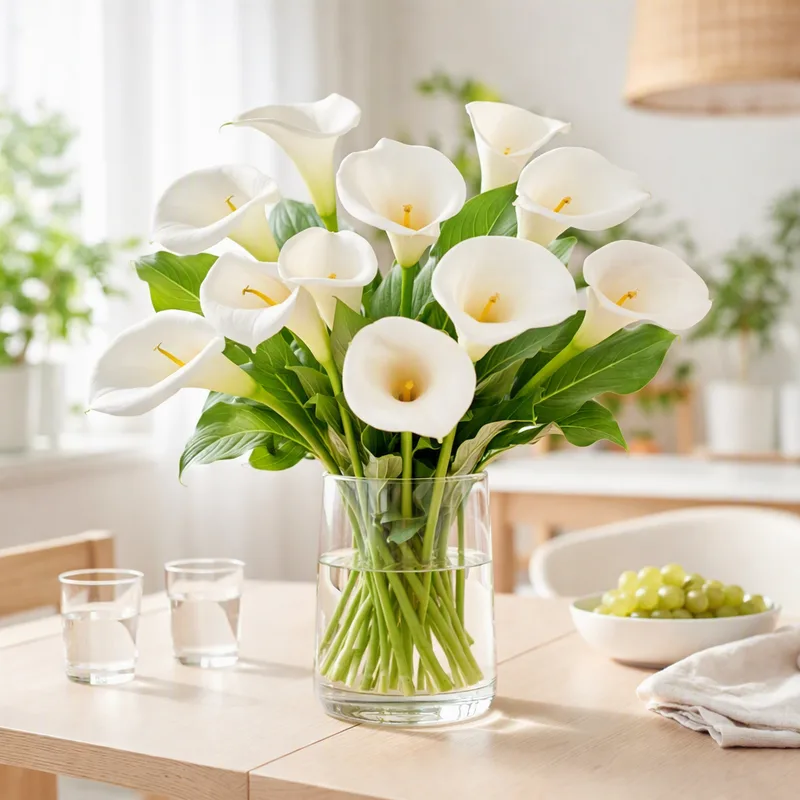
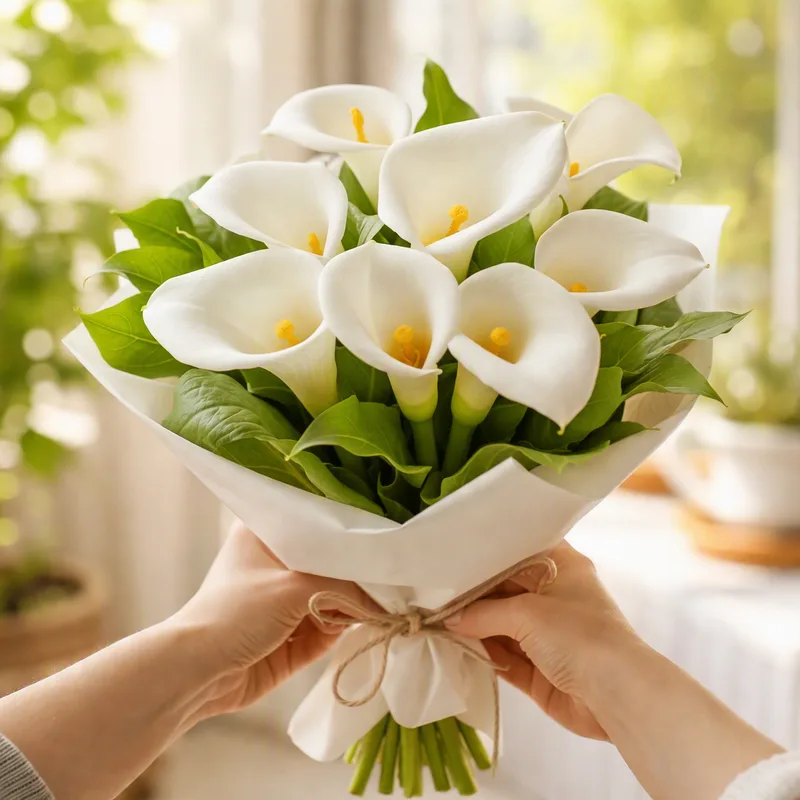
The "flower" is a funnel-shaped white spathe, which opens from green. Inside it stands a finger of yellow, the spadix, covered with tiny male and female flowers. The whole inflorescence sits on a fleshy stem above arrow-shaped leaves. Because the structure is so simple, a single stem in a tall vase looks dramatic, and a bunch makes an elegant, minimal bouquet.
Weddings, funerals and Easter
White callas are common at weddings because of their clean shape, and at funerals because they read as dignified and calm. Around Easter, in Ireland they are known as Easter lilies, the commemorative emblem of those who died in 1916.
Looking after cut stems
- Cut stems on a slant and stand them in deep, cool water.
- Pick stems when the spathe is just opening, as the colour fades from green to white.
- Keep them away from heaters and fruit.
- Handle with care; the sap can irritate the skin and mouth.
If someone chews it
The plant contains calcium oxalate. According to the ASPCA it is toxic to cats and dogs, causing oral irritation, intense burning of the mouth, tongue and lips, drooling, vomiting and difficulty swallowing. Eating raw plant material may cause burning and swelling in people. If a child has chewed it, rinse the mouth, offer water and seek medical advice; call 112 or 999 if breathing is affected. It is not a true lily, so it lacks the kidney danger of Lilium in cats, but it is still an animal hazard.