

First flower of the year
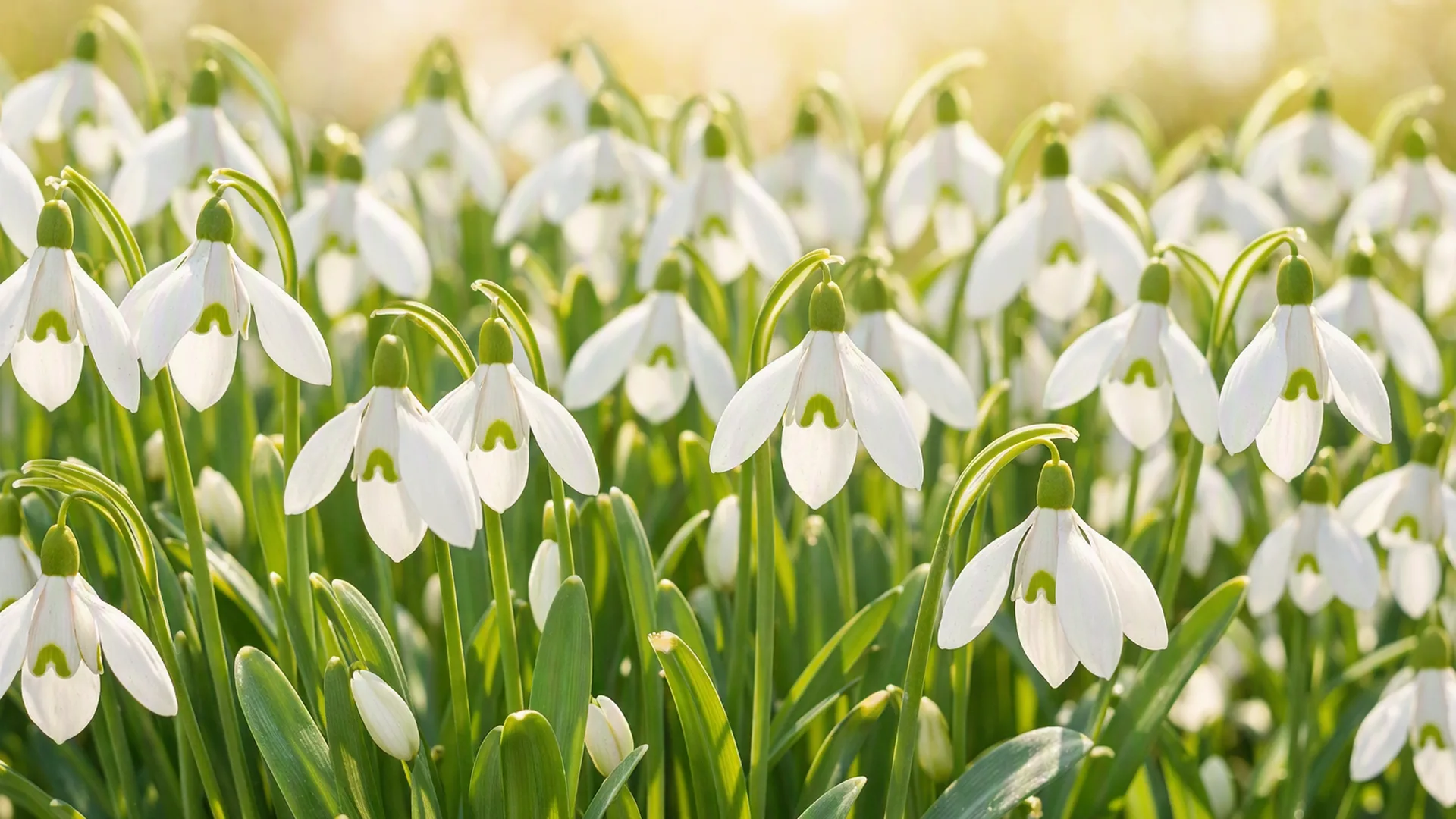
Galanthus nivalis grows only 10 to 20 centimetres tall. Each stem carries a single nodding white flower with three long outer petals and three shorter inner ones marked with green. It flowers from late January or February, often pushing through frost, and in Ireland the first drifts tend to appear around St Brigid's Day, 1 February, the traditional start of spring.
Snowdrop gardens
Many gardens across Ireland and Britain open in February for snowdrop displays. Common snowdrops spread by bulblets and seed and carpet old woodland, churchyards and estate lawns. Among British folk names it was also known as Candlemas bells, and the double 'Flore Pleno' is a familiar garden form.
Planting snowdrops properly
- Plant "in the green", meaning as growing plants just after flowering, because dry bulbs often fail.
- Choose a position under deciduous trees with leaf mould.
- Let the foliage die back naturally.
- Divide congested clumps after flowering.
A protected plant
All Galanthus species are listed in CITES Appendix II, which regulates international trade, so buy from nurseries that grow their own stock. Never dig up wild bulbs.
Poisons and medicine
Snowdrops contain alkaloids, including galantamine, which is used in medicine for mild to moderate Alzheimer's disease. In the garden the bulbs are the most toxic part and can cause nausea, vomiting and diarrhoea if eaten. Keep pets from digging them up, and ring your vet or the National Poisons Information Centre if anyone has eaten some.