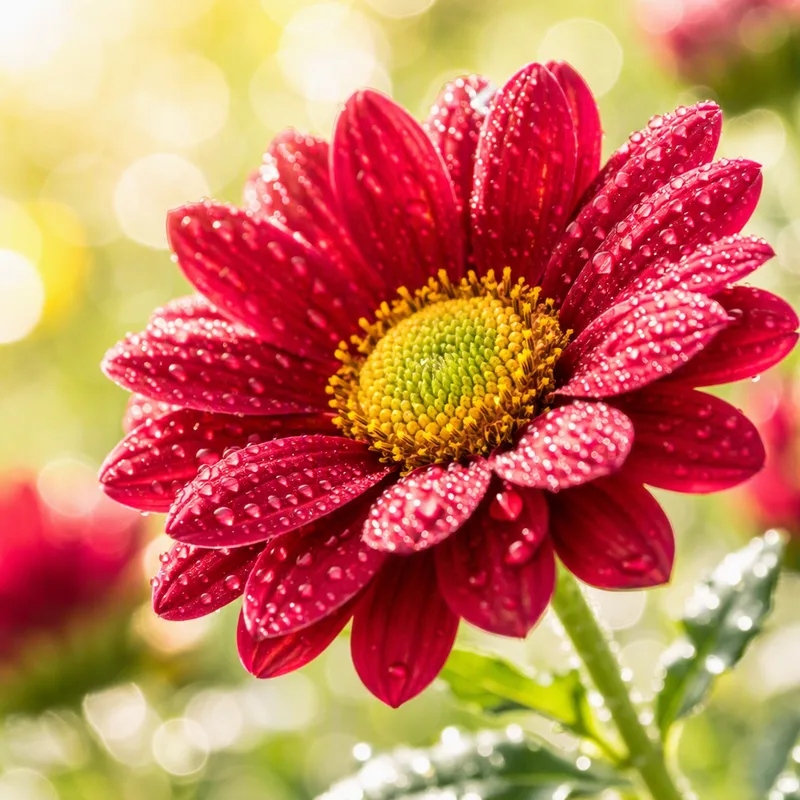
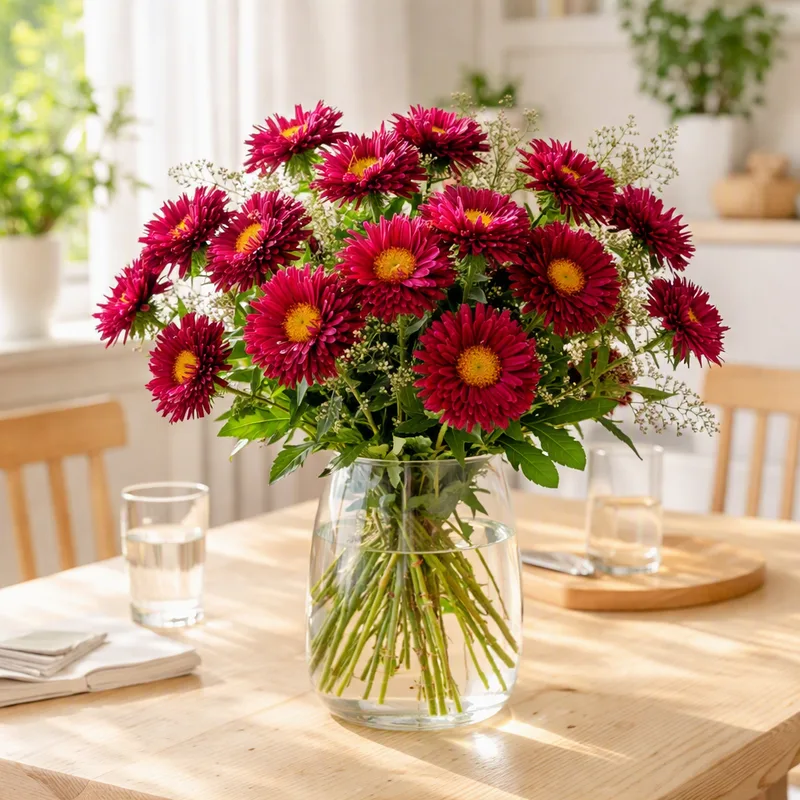

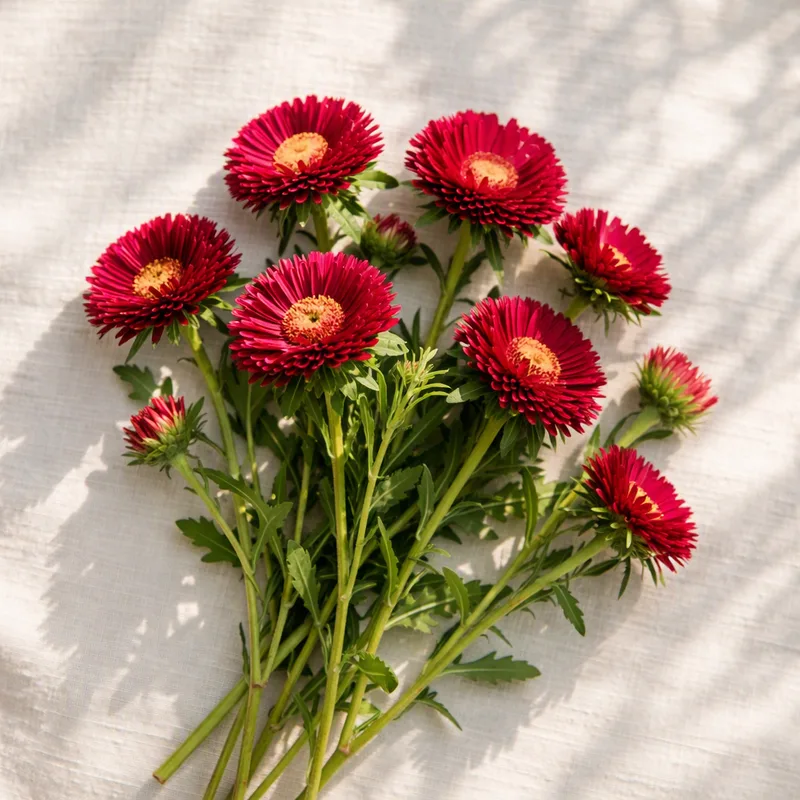
Is a red aster really red?
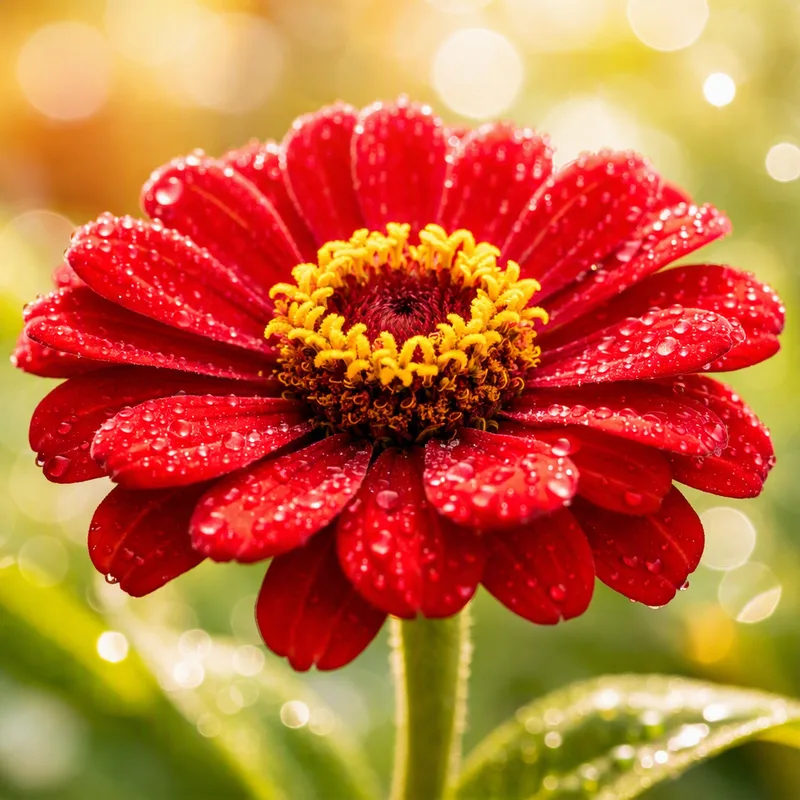
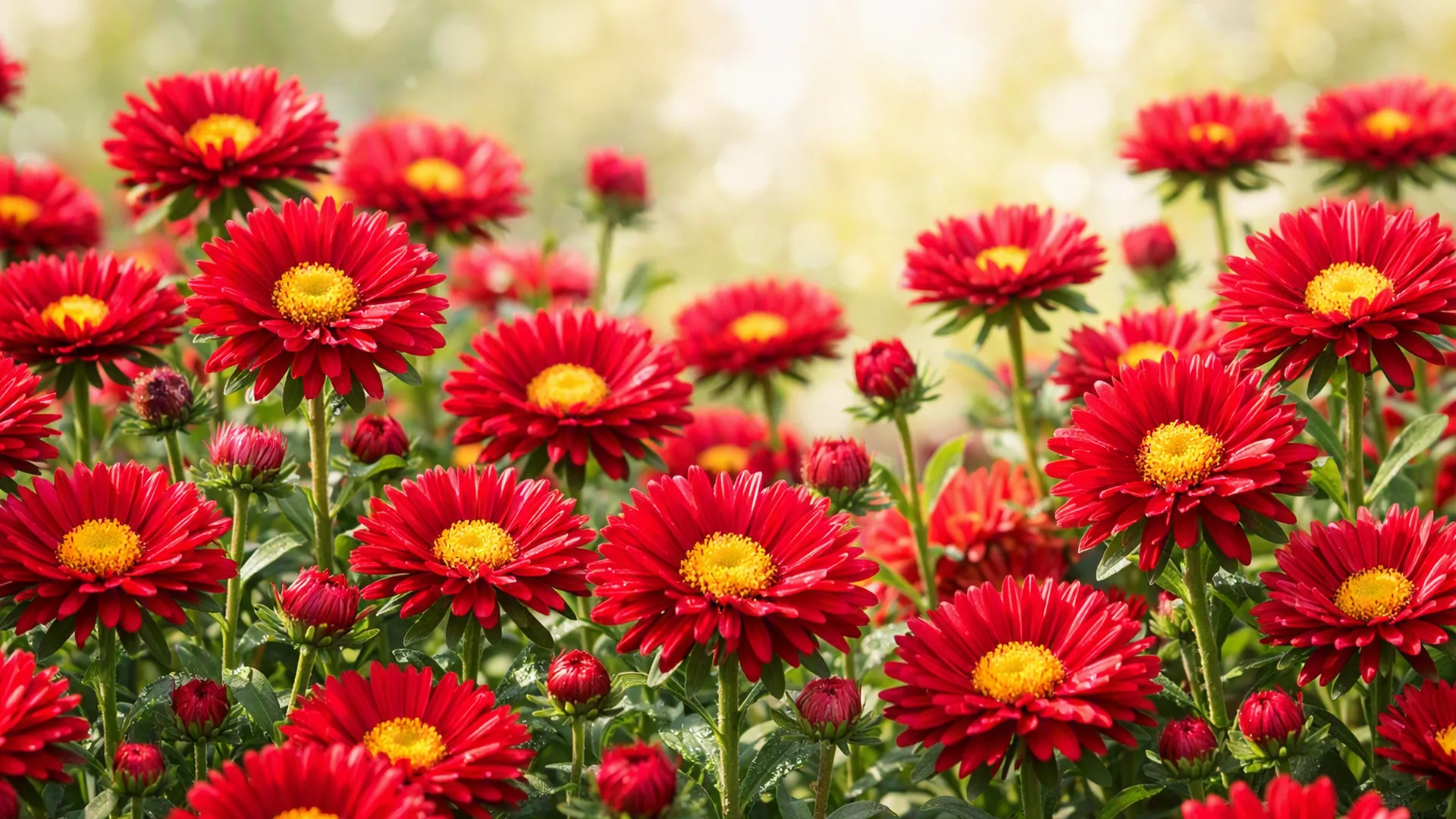
Truly scarlet asters are not found in nature. The reds sold under that name are deep crimson, ruby and magenta shades, and plant breeders have worked on them for decades. The China aster (Callistephus chinensis) has the most convincing reds, in a range of deep crimsons that are grown as annuals.
Because cool nights deepen the pigments, colour is usually richest in October, when the days are short and bright.
Varieties that come close
- Symphyotrichum novi-belgii 'Crimson Brocade' has semi-double, rosy-crimson flowers on a bushy plant.
- The New England asters include rich, rosy-red forms that stand taller and rarely need staking in a sheltered spot.
- 'Andenken an Alma Pötschke' is nearer to a glowing salmon-cerise than to red but is often placed with them.
Good companions
Red asters shine beside golden rudbeckias, bronze foliage and the cream plumes of ornamental grasses. Together they carry a border through the last of the autumn light.
Cultivation
Grow in sun in a rich, well-drained soil. In heavy, wet ground the crowns can rot over winter, and on very sour peat some added grit and organic matter help. Divide every few years and cut back in spring.
Flower colour can fade in strong sunshine, and cool autumn nights often deepen the pigment. Expect the best colour in the cooler weeks of October.
Pets
According to the ASPCA, asters are non-toxic to dogs, cats and horses.