

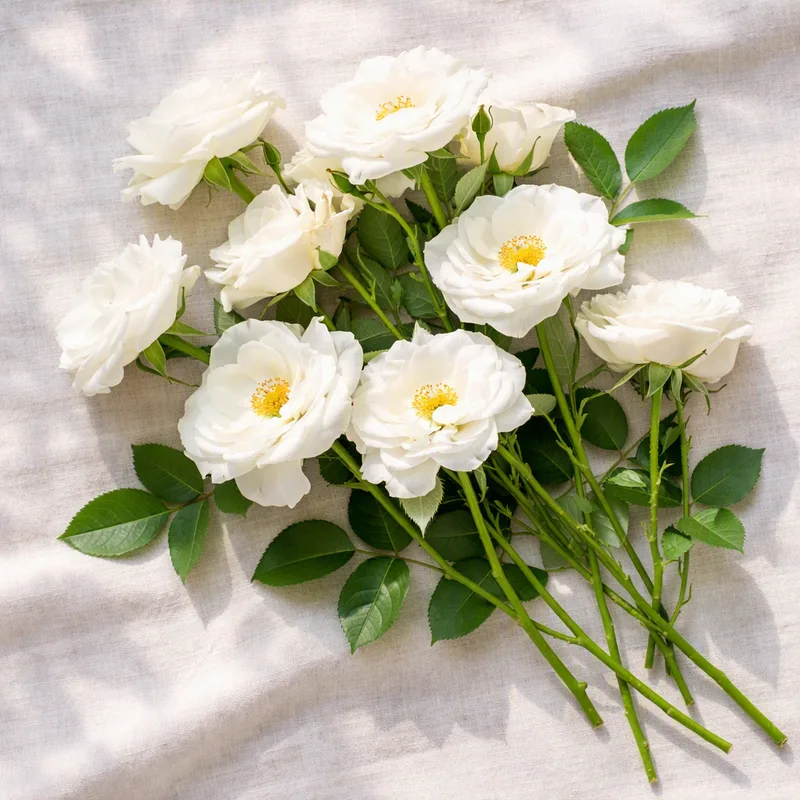
White roses and what they stand for
In the language of flowers a white rose traditionally symbolises purity, reverence and new beginnings, which is why it appears so often at weddings, christenings and First Communion celebrations, and at funerals as a quiet tribute. It is also associated with remembrance of someone's life rather than with passion.
Varieties worth knowing
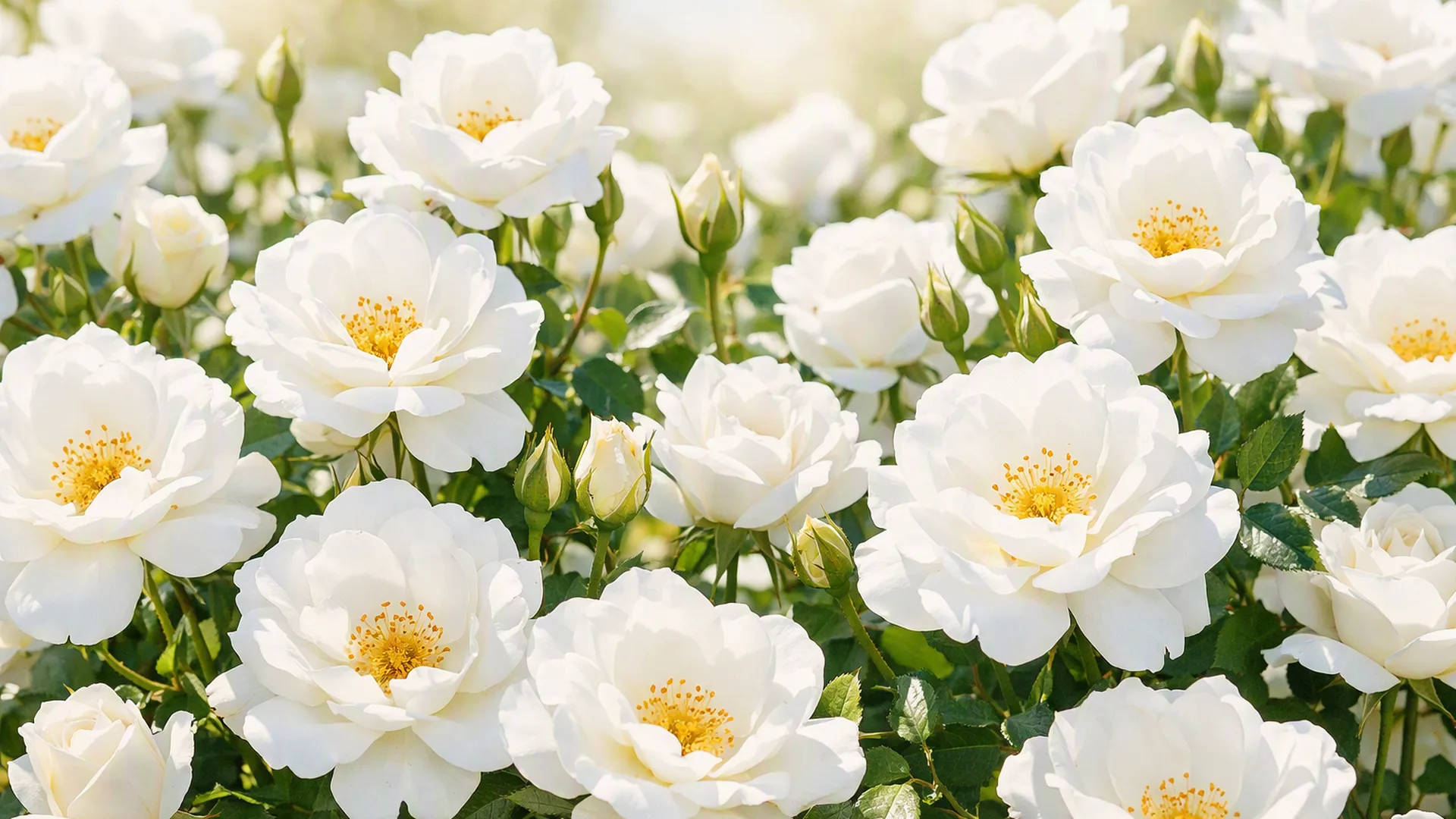
"White" covers a lot of ground, from ivory to a faint blush.
- 'Iceberg' is a long-flowering floribunda raised in the late 1950s and one of the most widely planted white roses in the world.
- 'Madame Hardy' is a white damask rose from the 1830s with flat, quartered flowers and a green eye in the centre.
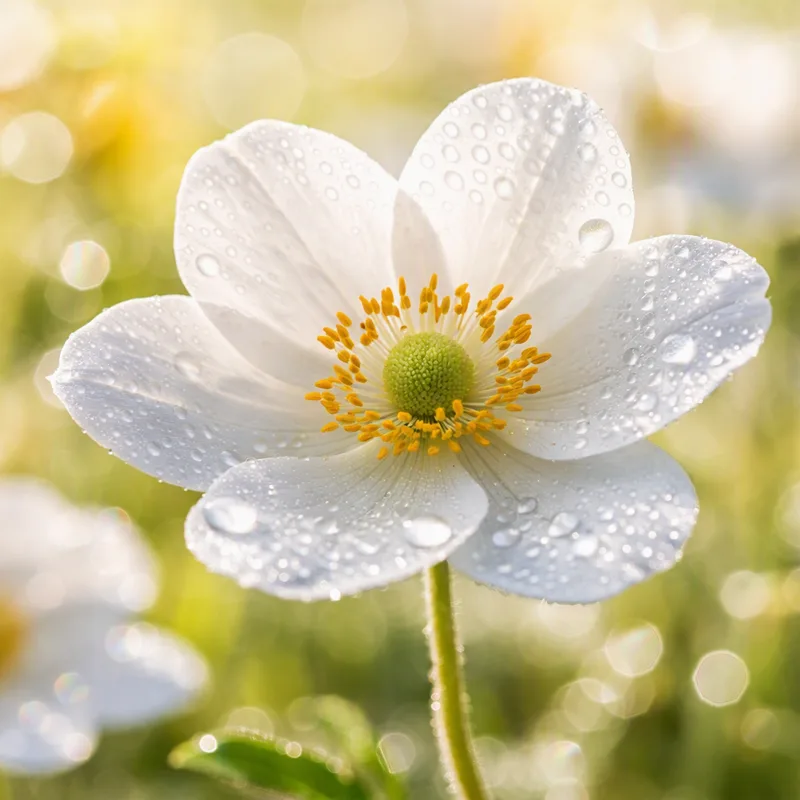
- Many wild-type white roses have just five petals and a boss of yellow stamens, the same simple form as the dog rose in the hedgerow.
Making white look its best
White flowers show every mark. Rain splashes and brown edges are more obvious than on darker petals, so a sheltered spot helps, particularly on the blustery west coast. Deadhead as blooms fade and remove any leaves showing black spot, a fungus that spreads quickly in mild, humid weather.
In the vase
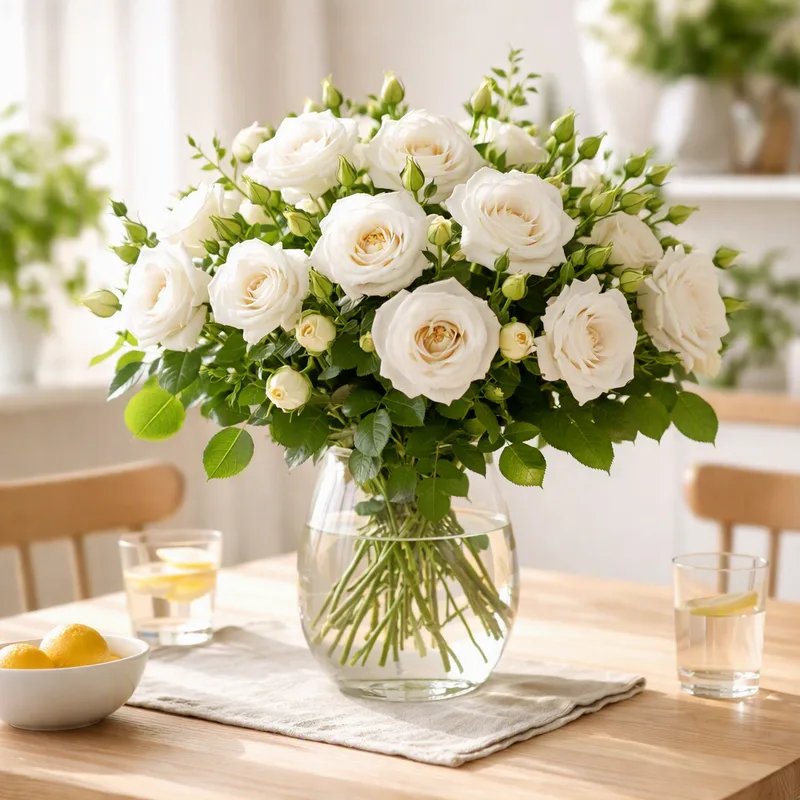
Cut stems on a slant and remove leaves below the water line. Fresh water every couple of days and a cool room can give a week or more of display. Prickles can be stripped with a rose stripper.
Safe around pets
Roses carry a non-toxic rating from the ASPCA for dogs, cats and horses, so watch the prickles rather than the petals.