Whites to look for
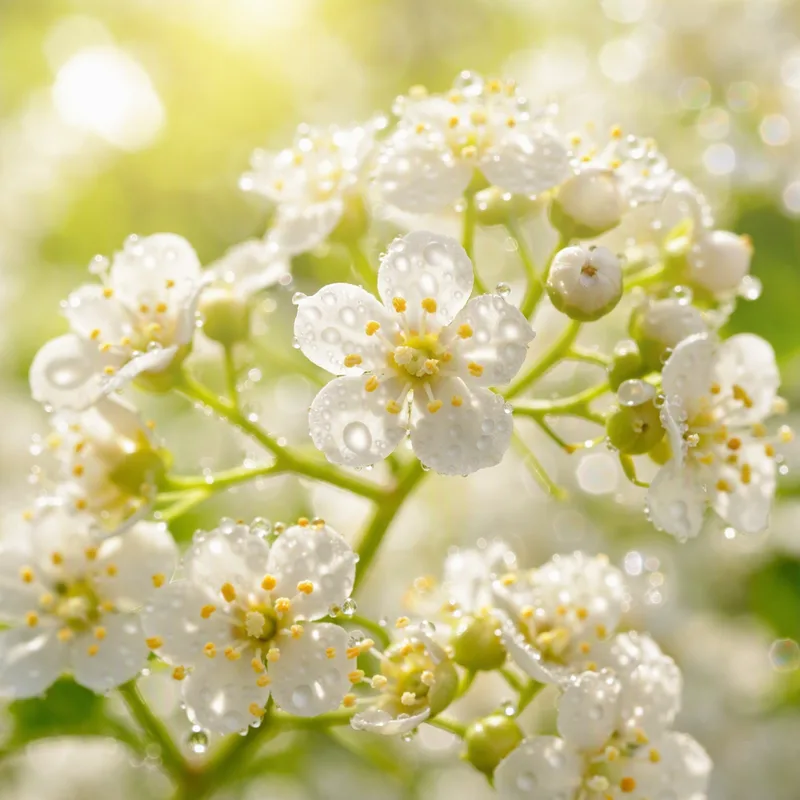
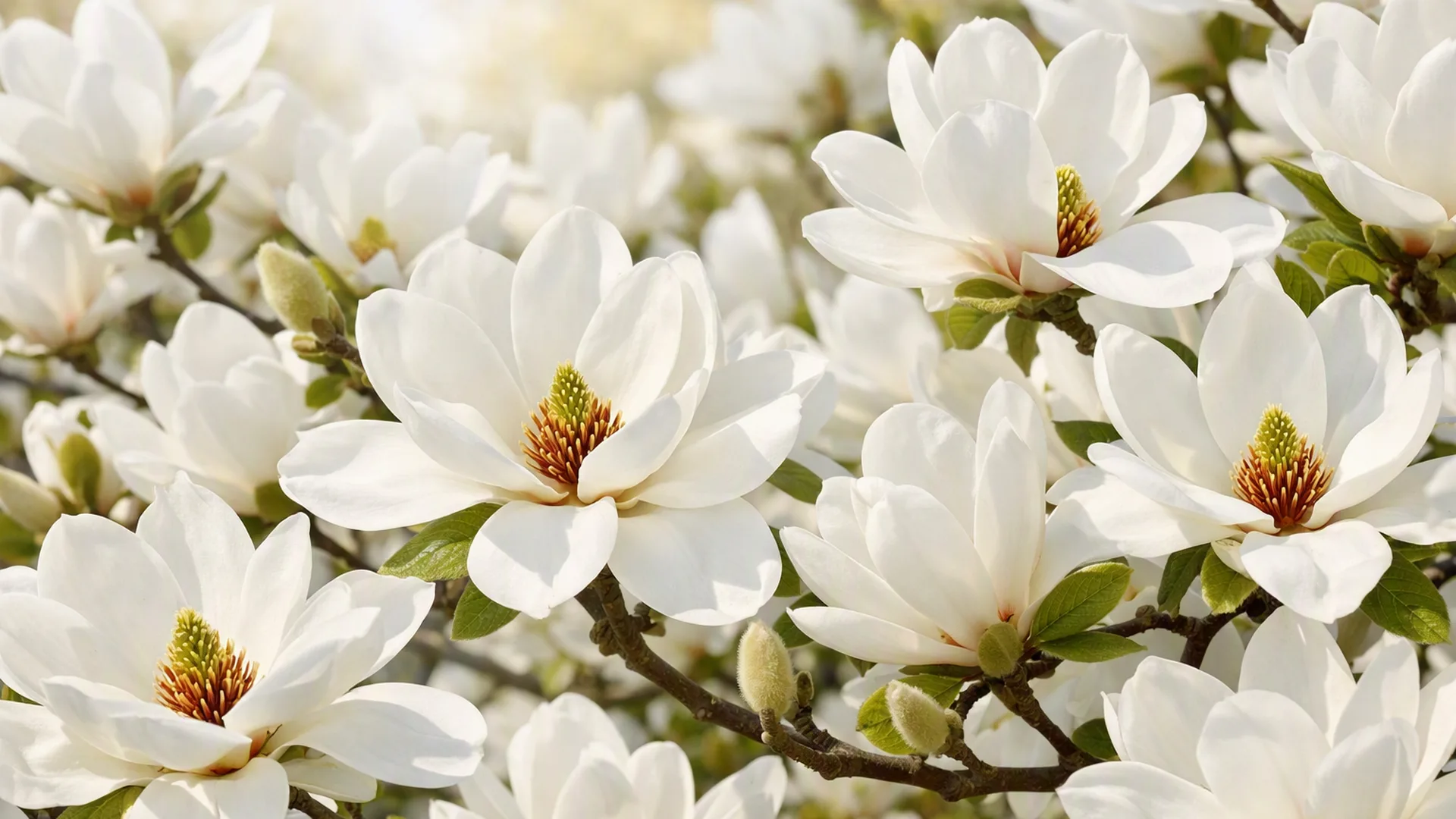
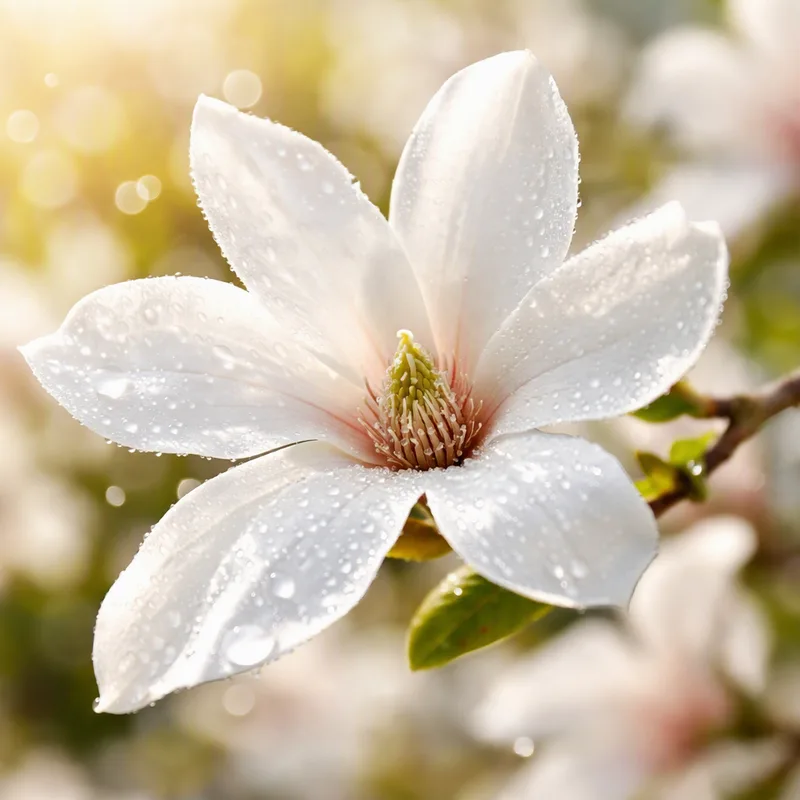
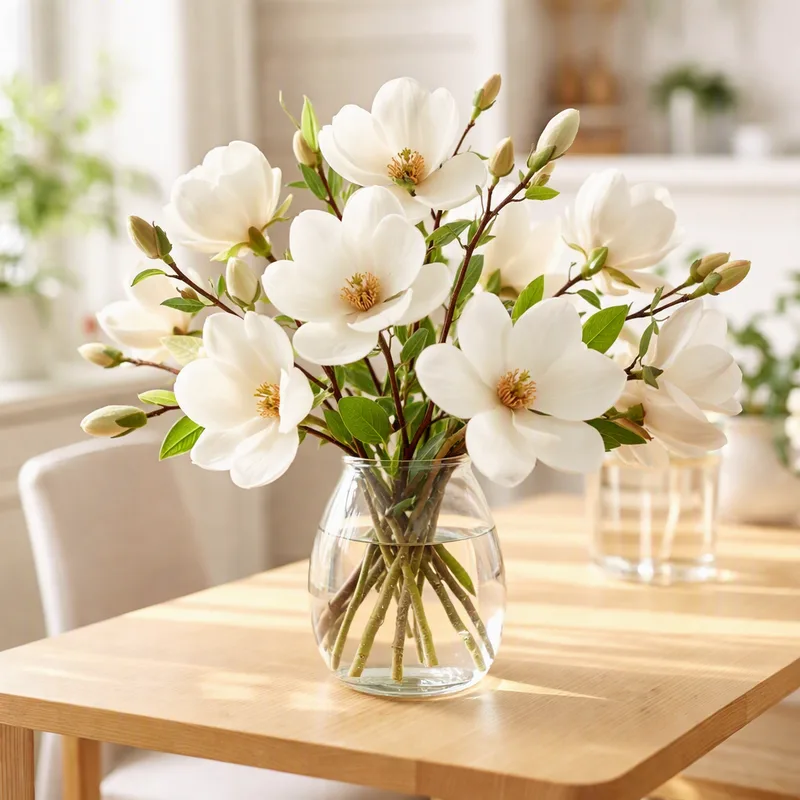
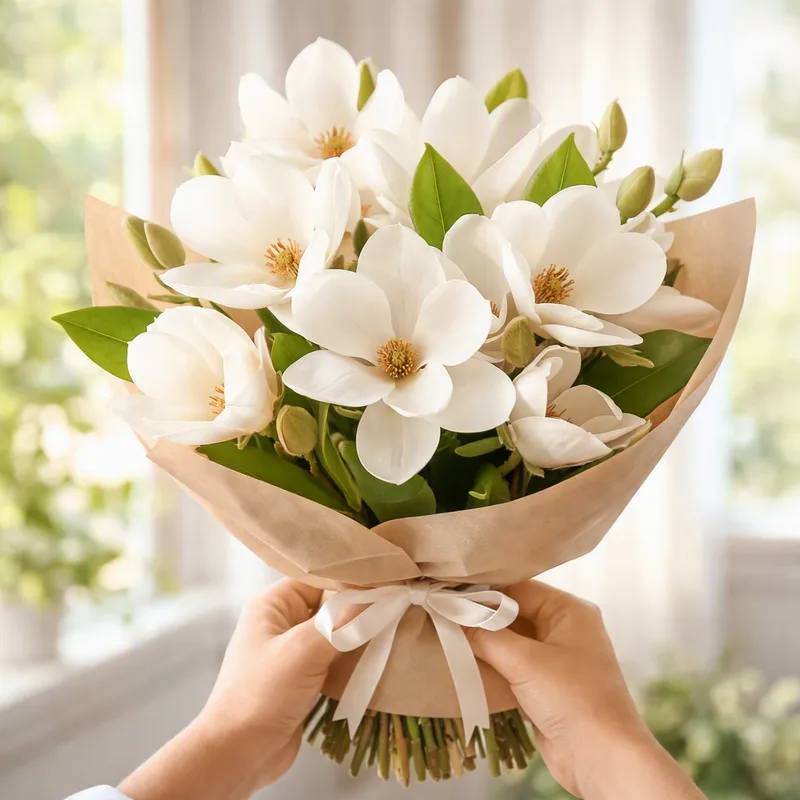
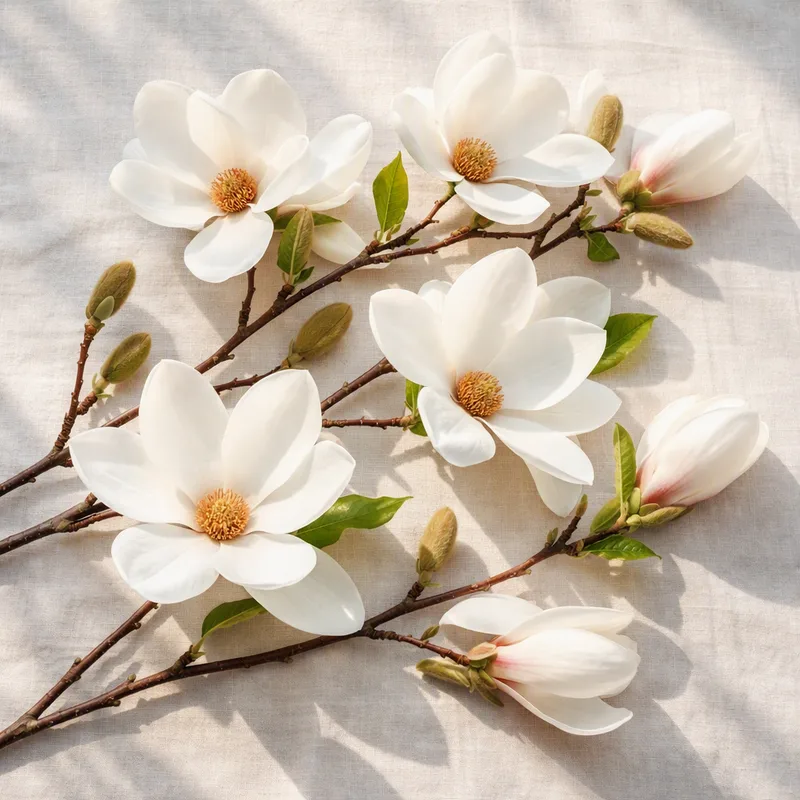
White-flowered magnolias come in a surprising range. The Yulan magnolia, Magnolia denudata, bears large, cup-shaped, pure white flowers on bare twigs. The star magnolia, Magnolia stellata, is smaller and covered in narrow, many-petalled, starry blooms. In summer, the evergreen Magnolia grandiflora carries huge, creamy flowers, often trained against a warm wall.
All of them show the family's old-fashioned flower structure: parts that are not split into petals and sepals but into similar tepals, arranged in spirals.
The frost problem is worse for white
A brown mark shows quickly on a white petal. In inland Irish gardens the clear nights of March and April are exactly when frost strikes open flowers, so site matters more here than with any other colour.
- Choose a sheltered, sunny site facing away from the early morning sun.
- Cover small shrubs with horticultural fleece on frosty nights during flowering.
- Plant a star magnolia in a container if your garden is exposed; it can be moved.
Against a dark backdrop
White magnolia stands out against dark conifers, brick or a slate-grey sky. That is why it shows up so often in front gardens and around churches. In the language of flowers, white blooms traditionally speak of purity and dignity.
Cut stems
Magnolia branches can be cut for the house just as the buds swell and will open in a warm room, although the petals bruise to brown if handled roughly.
Are the petals safe around animals?
White magnolia is generally treated as low risk for dogs, cats and horses. Even so, large amounts of any plant can disagree with an animal, so ask your vet if a pet has eaten a lot.