
What white hyacinth stands for
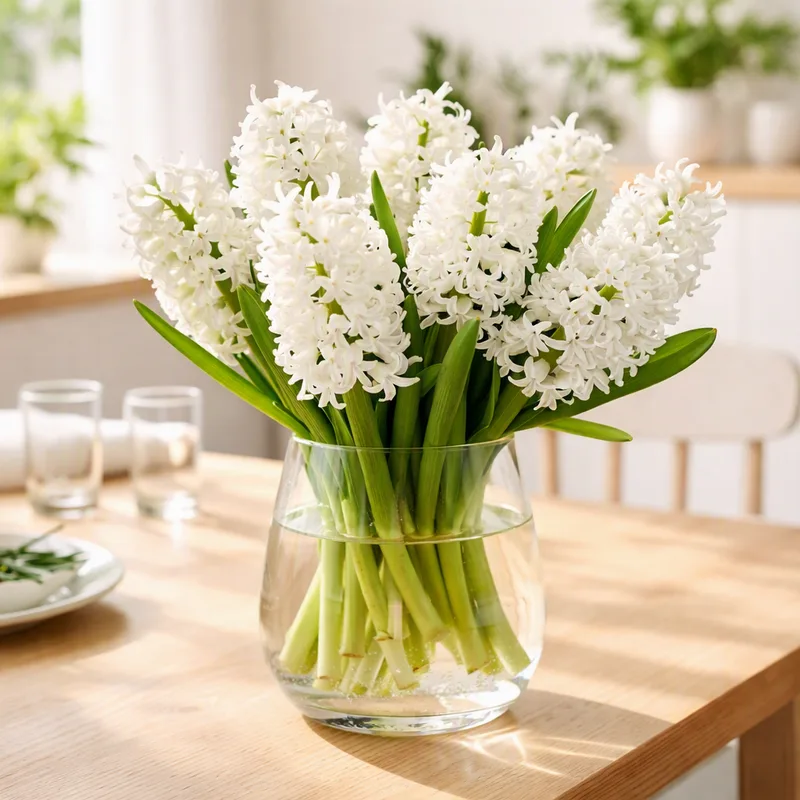
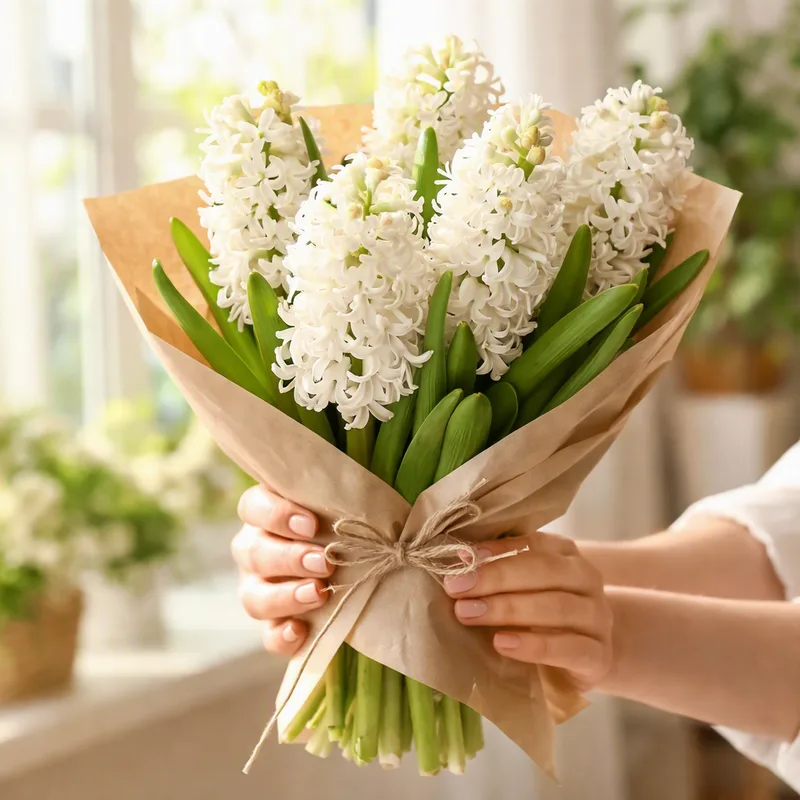
In the old language of flowers, a white hyacinth is traditionally linked with loveliness and with quiet prayer. That is one reason the flower turns up around christenings, First Communions and Confirmations, which fall in late spring in Ireland. A pot of white bulbs on a family table suits those occasions better than anything loud.
Choosing and growing white forms
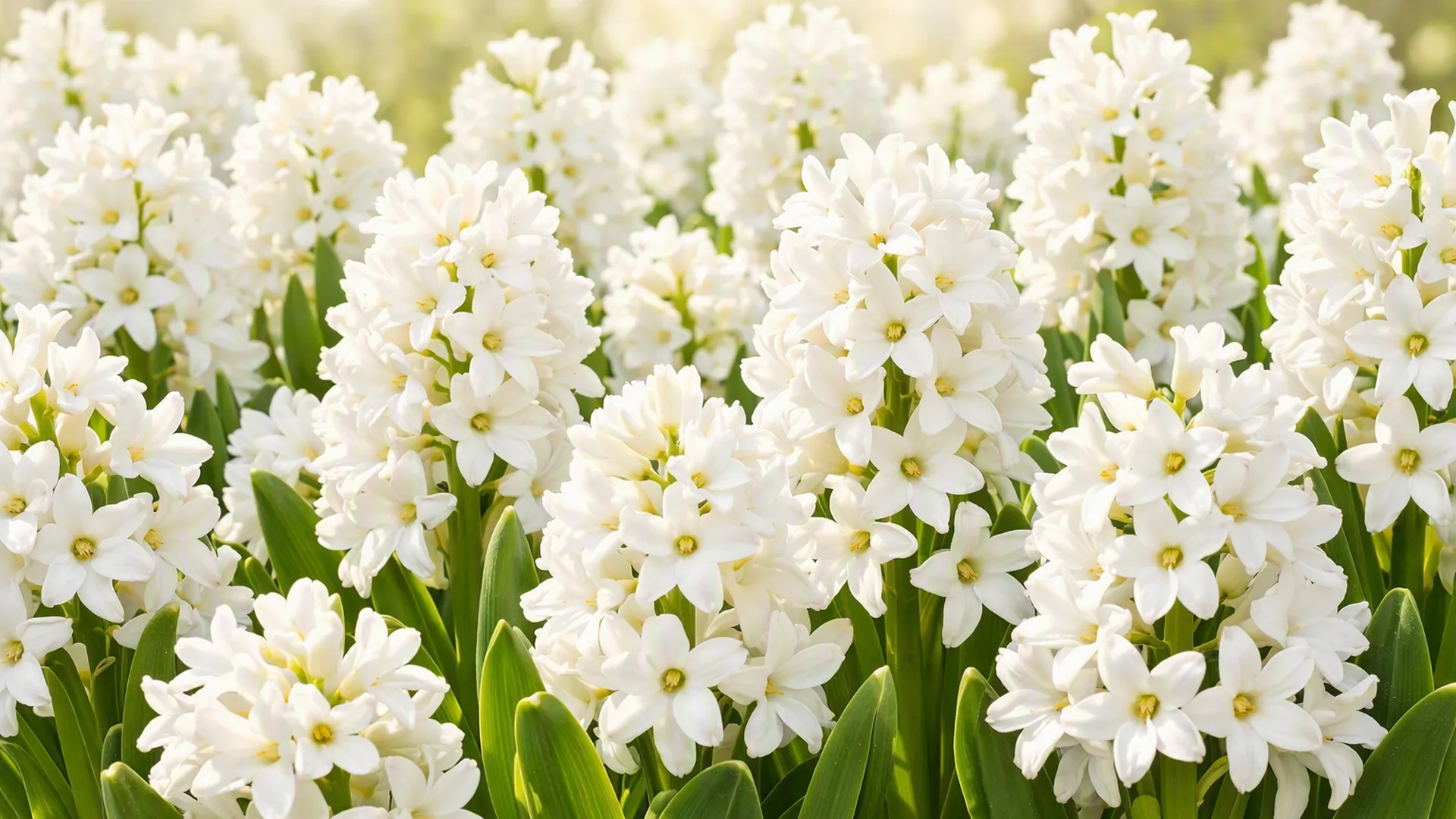
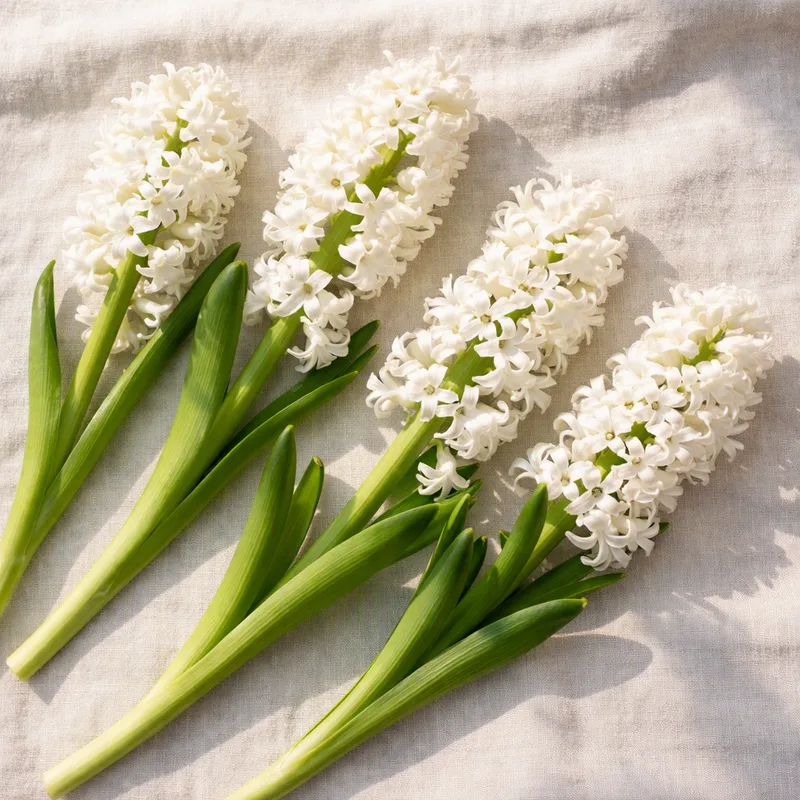
White hyacinths are selected garden forms of Hyacinthus orientalis, a bulb from southern Turkey, Syria, Lebanon and northern Israel. Look for varieties sold as 'Carnegie' or 'L'Innocence' if you want a pure white; some whites show a faint cream or green tinge as the buds open, which is normal.
A white spike glows against dark Irish winter light, so it is a good choice for a north-facing room. Follow the same basics as for any hyacinth:
- Plant outdoors in October, about 10 cm deep and 7.5 cm apart, as the RHS recommends.
- Use gritty compost in pots, with the neck of the bulb just above the surface.
- Keep the pot cool; a warm radiator shelf shortens the flowering by days.
Whites show rain splashes and bruises more than darker colours, so snap off a tired floret rather than leaving brown tips on the spike.
Safety for pets and children
All parts of hyacinth are classed by the ASPCA as toxic to dogs, cats and horses, with the bulb the worst. Vomiting, diarrhoea and tremors are the reported signs. Keep pots on a high shelf and call a vet if you think a pet has chewed one. For a person who has swallowed bulb material, the National Poisons Information Centre of Ireland can advise.