
Why white suits so many occasions
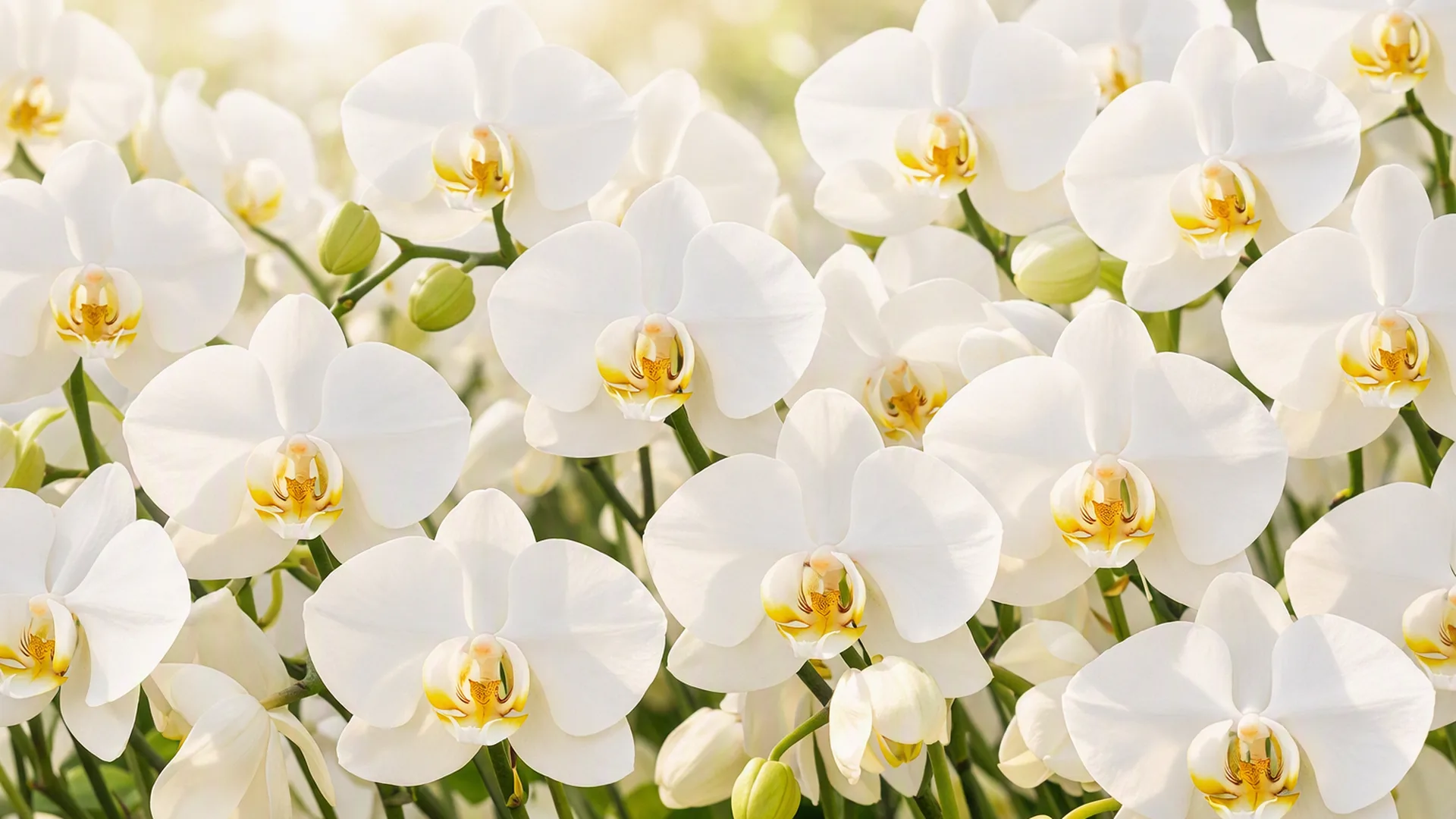
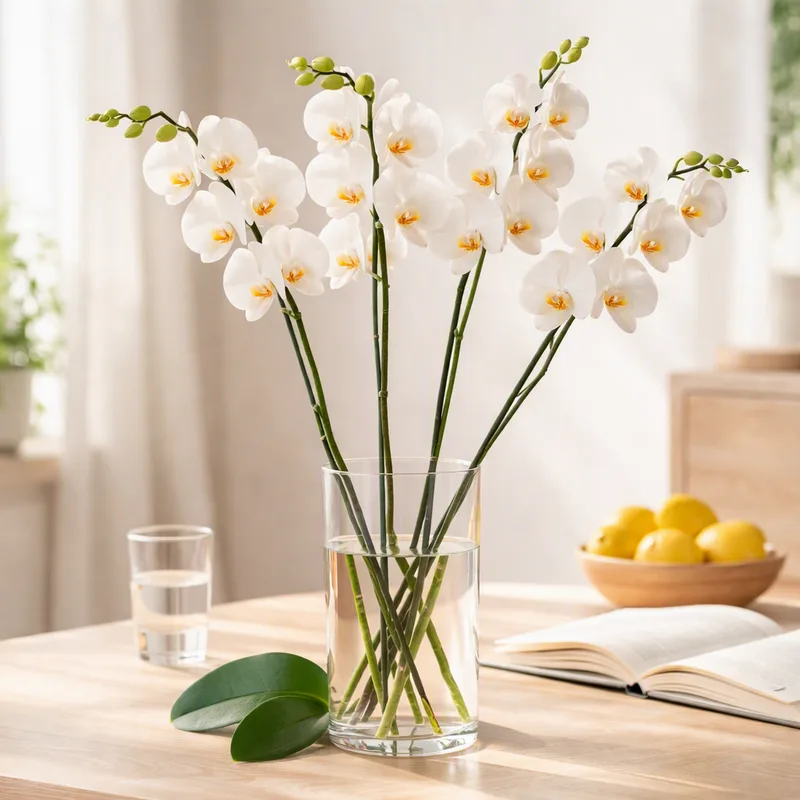
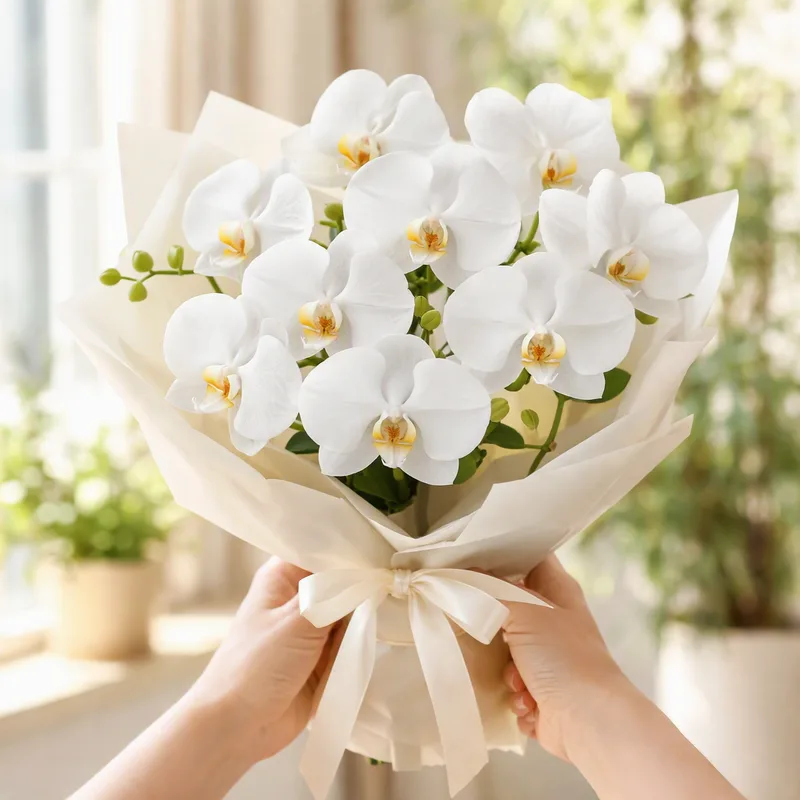
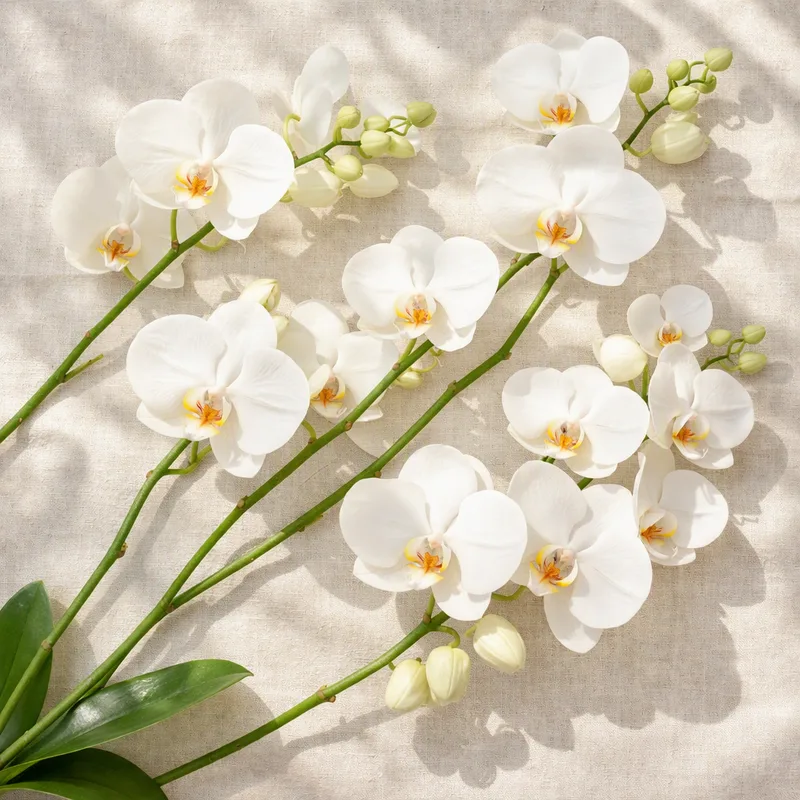
A white moth orchid reads as calm and formal, which is why it turns up at weddings, on First Communion and Confirmation tables and as a gift for a new home. In the language of flowers, white generally stands for purity and fresh starts, and a pot of white blooms keeps that message going for weeks rather than days. The shape also helps: broad, flat petals with a small lip in the centre give an uncluttered, modern look that sits easily beside candles or a christening cake.
Several wild moth orchid species are naturally white, and white hybrids were among the first to become popular houseplants. Most of the plants now sold are bred from those lines.
Showing it off
- White petals show every mark, so keep fingers off the open flowers and mop up any water drops.
- A pale wall or a dark wooden dresser makes the flowers stand out; a busy background hides them.
- A pot cover in glass or ceramic looks neat, but lift the plant out to water so the roots never sit in a puddle.
A quick care routine
Give it a bright place away from strong direct sun, and water only once the bark mix feels dry. Roots turn from green to silvery grey when the plant is ready for a drink. Feed lightly with an orchid fertiliser every second or third watering.
Once the flowers fade, a spike that is still green can be cut back to just above a node near the base, and it may branch into a second round of buds. If it has dried to brown, cut it off low down and let the plant rest.
Pets and children
The ASPCA lists the moth orchid as non-toxic to cats, dogs and horses. Tiny hands love to pull off petals, so a high shelf is still sensible.