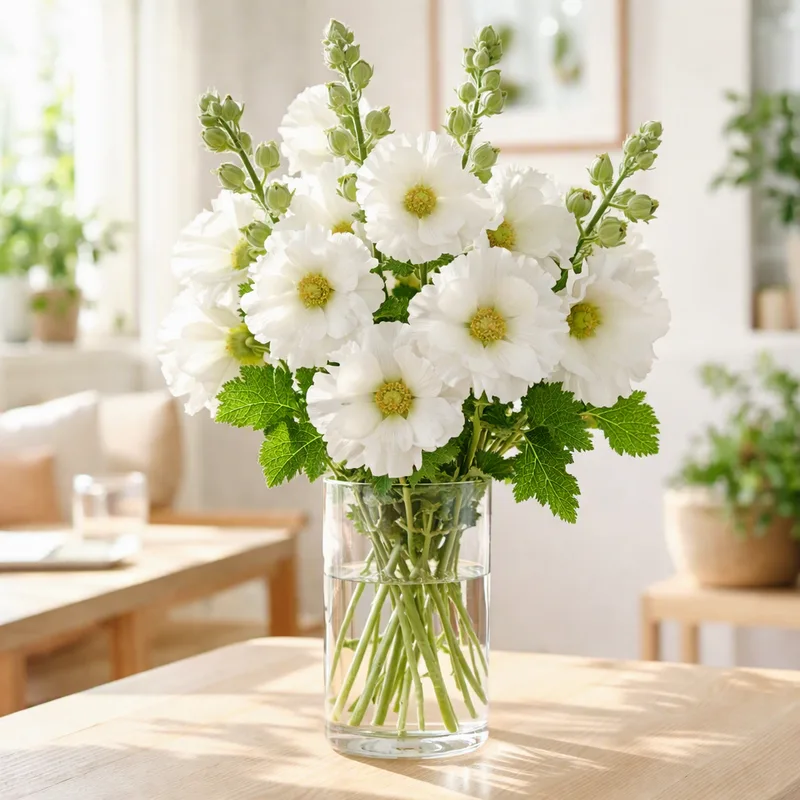
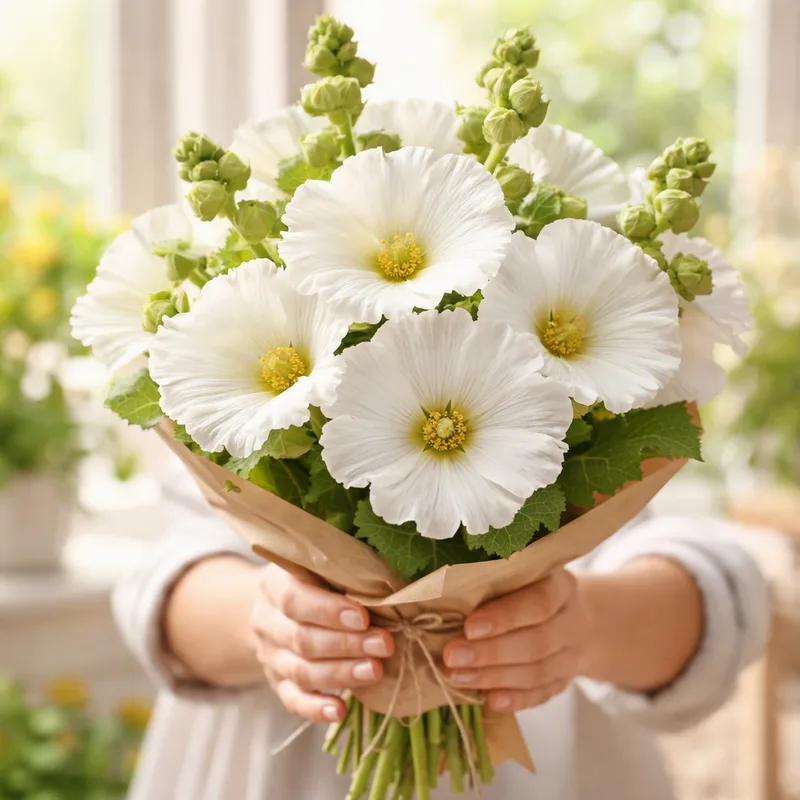
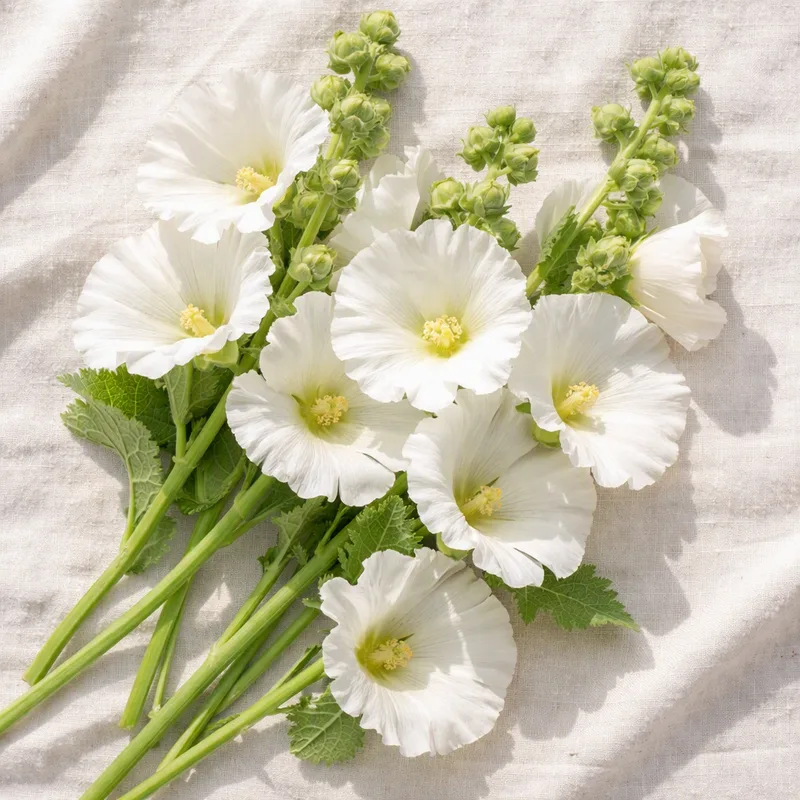
Pale against a dark background
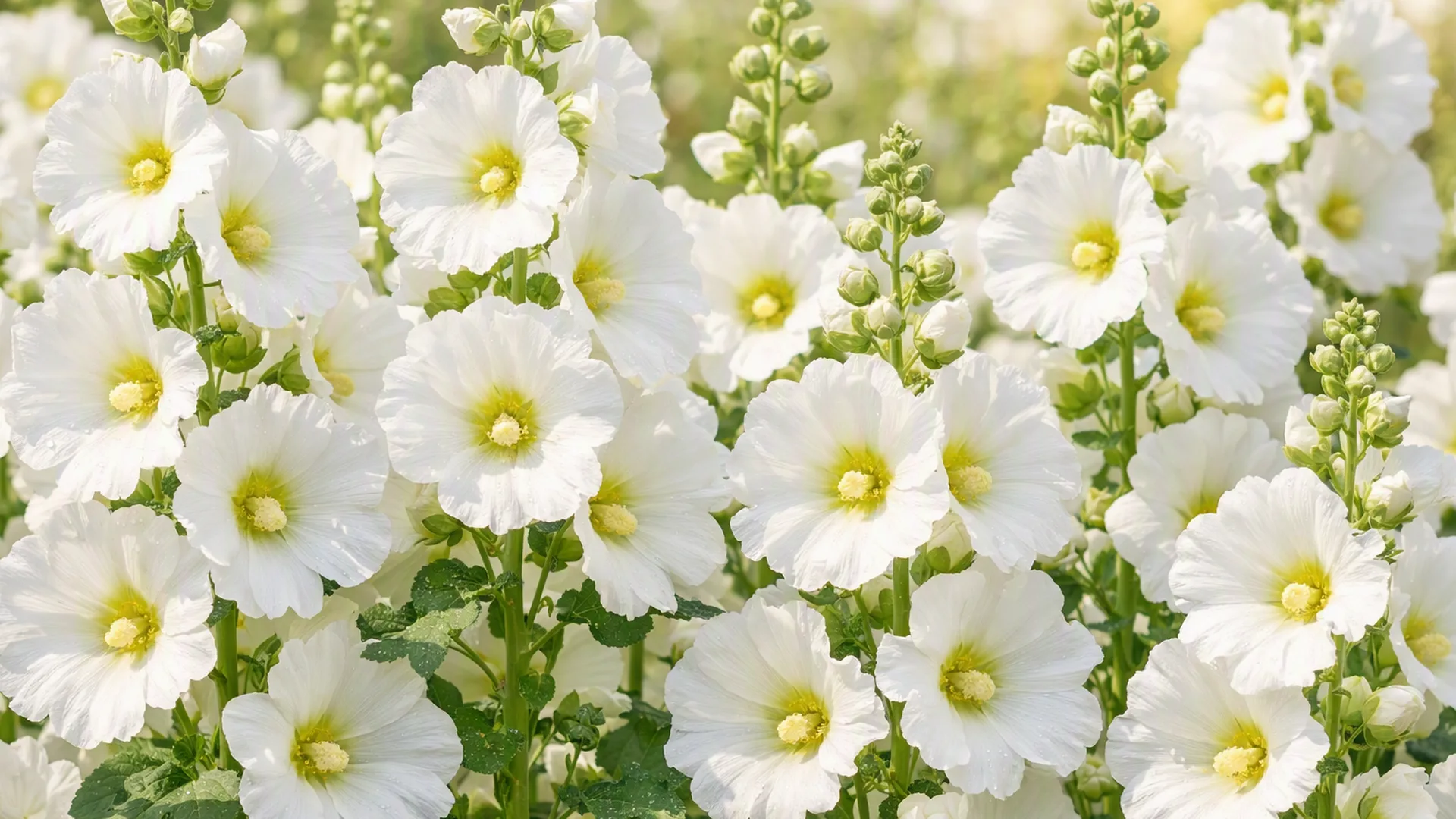
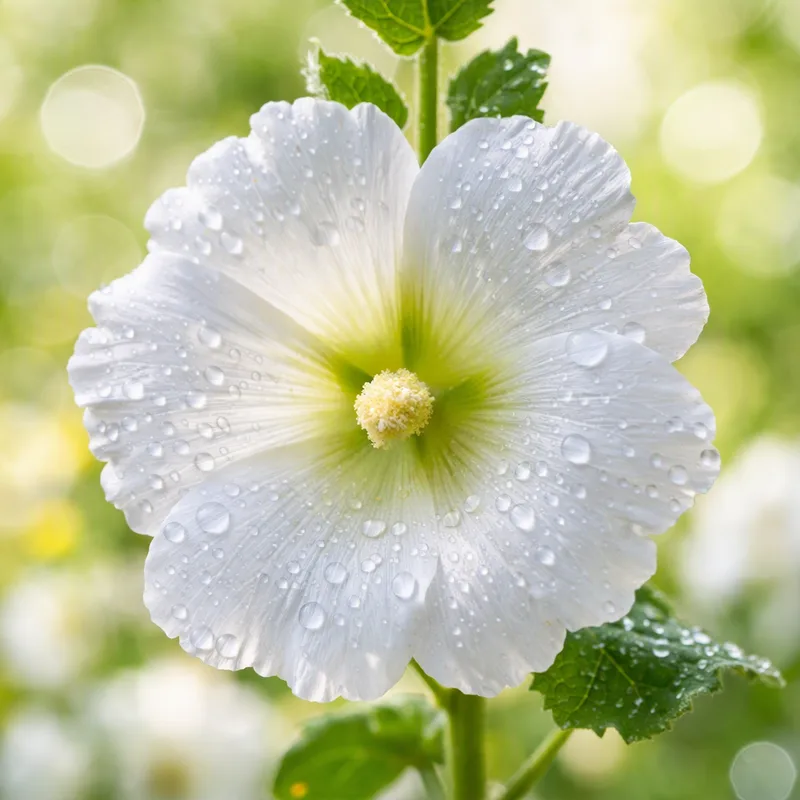
In the wild, hollyhock flowers are mostly pink, purple or very dark red; white and yellow are rare. In gardens white is firmly established, with single, saucer-shaped flowers and fully double ones. The blooms are packed along an upright spike and look their best in front of red brick, a yew hedge or a painted fence.
A row of white hollyhocks along a south-facing wall recalls the cottage gardens where the plant was grown for centuries. With blue delphiniums, lavender or purple sage, the effect is cool and fresh. Pink phlox keeps the cottage mood.
Growing white hollyhocks
- Sow in early summer so the plants build a strong rosette before winter.
- Seed saved from your own plants does not always come true; seedlings can turn out a different colour.
- Choose a sunny, sheltered place with fertile, well-drained soil.
- Tie tall stems to canes, especially on exposed ground in the west and on the coast.
- Watch for orange rust spots on leaves and pick off affected ones.
Hollyhocks are known to push up between paving and house walls in villages, using any narrow crack where a seed settles. If a seedling lands somewhere inconvenient, move it while it is young, because the long taproot dislikes disturbance.
Good to know
For pets, the ASPCA treats hollyhock as non-toxic (dogs, cats and horses). White hollyhocks are seldom used in a vase, since the flowers open in sequence and the stem is very long. The RHS notes that plants are fully hardy and flower in the second year after sowing.