How white a white tulip really is
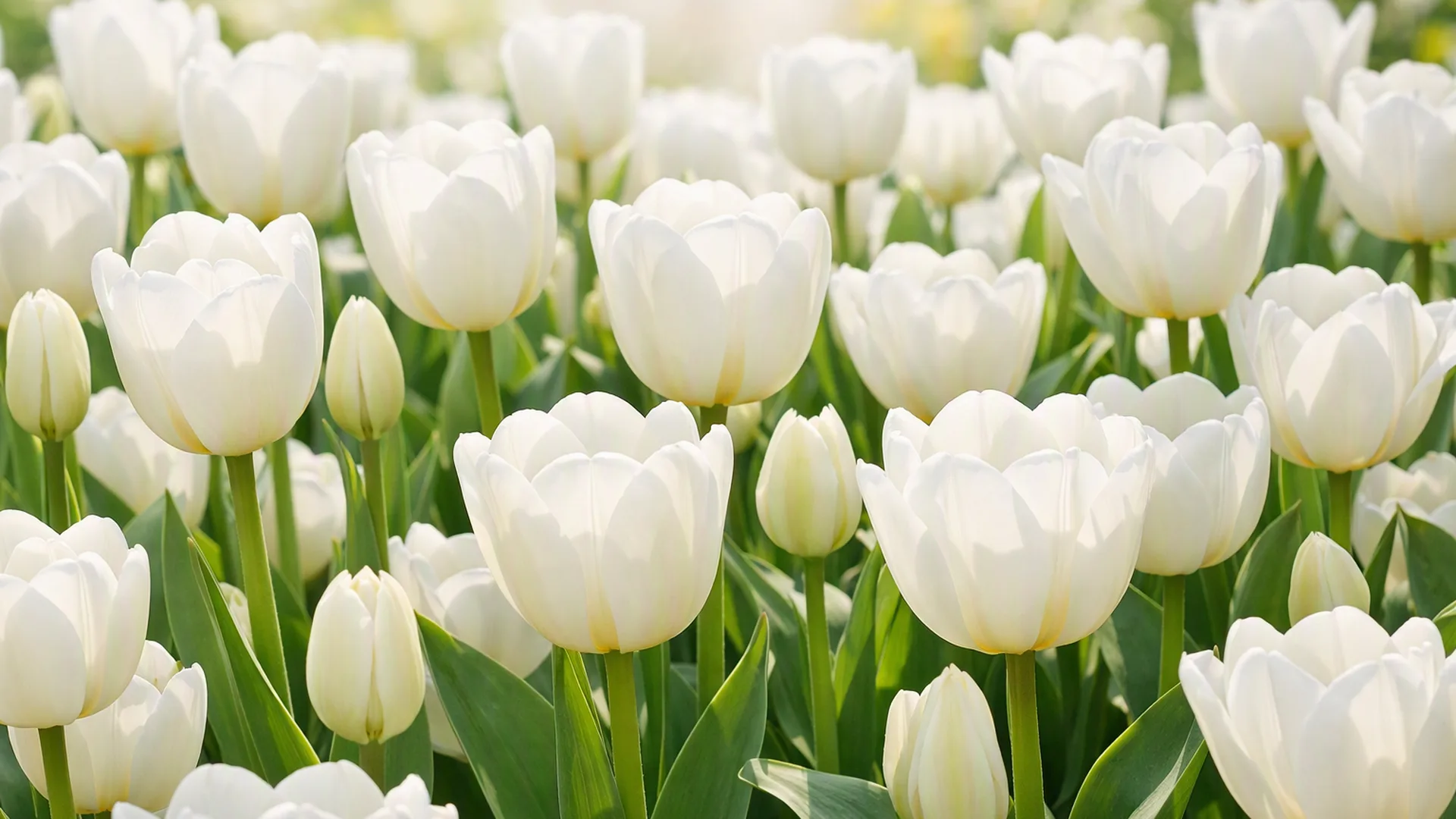
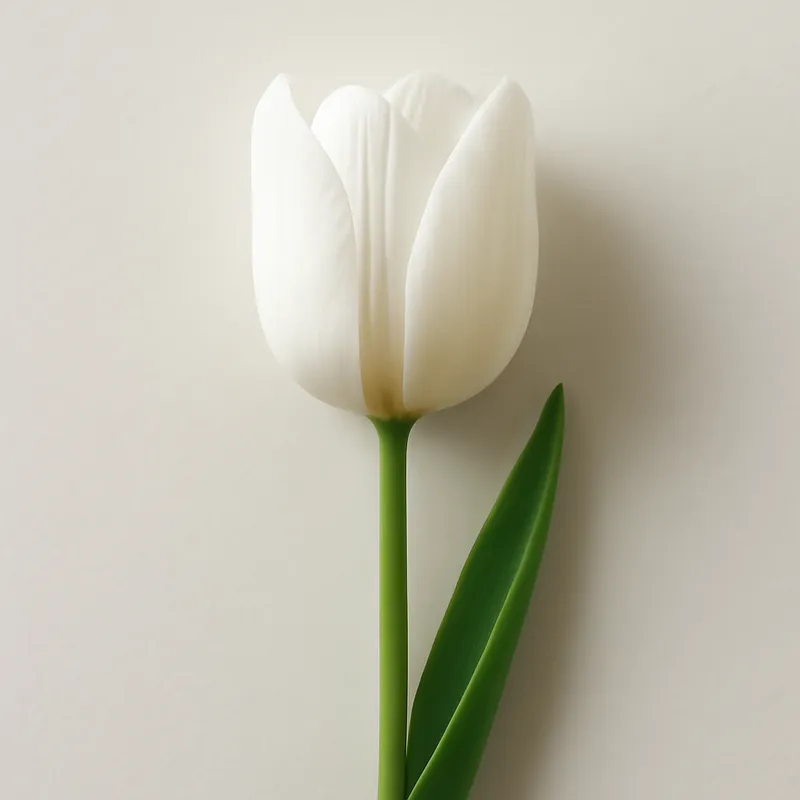
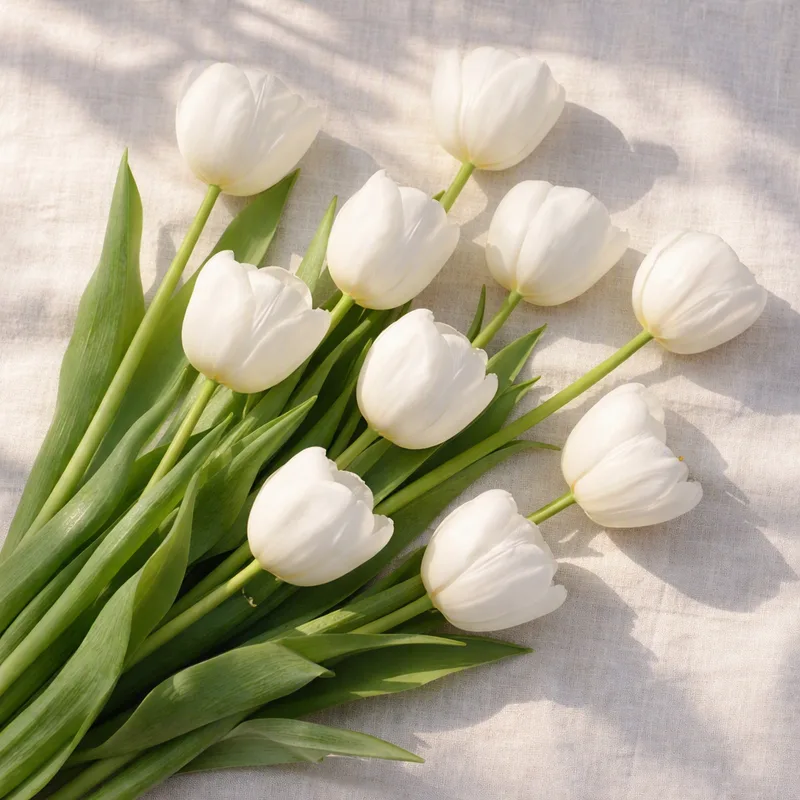
Most white tulips are not snow white. Some are creamy, some carry a green flush at the base, and a few fade to pink as they age. 'White Triumphator' is a well-known lily-flowered variety about 60 cm tall with pointed petals that curl back at the tips, and it holds the Royal Horticultural Society's Award of Garden Merit. 'Purissima' is an early, broad-petalled type. Reading the variety name matters if you want a uniform bunch.
Occasions that suit white
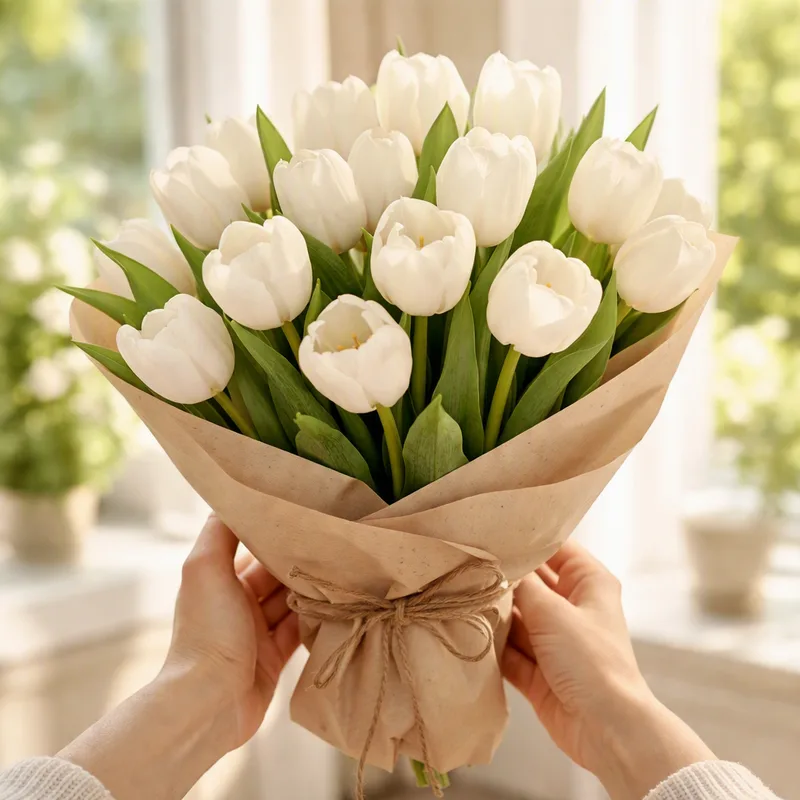
White is traditionally read as a colour of new beginnings and purity, which is why it appears so often at First Communion and Confirmation season in May, at spring weddings and at funerals. For a Mothering Sunday gift, white tulips with a few stems of pink make a gentler arrangement than a bunch of strong colours.
Looking after them
- Marks and brown edges show more on white petals, so keep the vase out of direct sun.
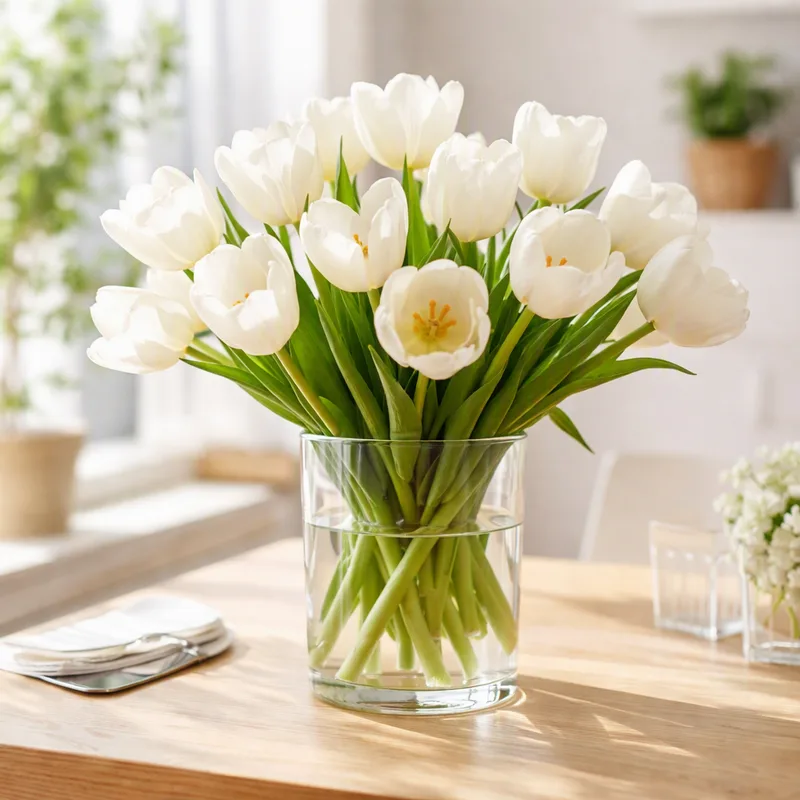
- Fill the vase with cold water about eight to ten centimetres deep and check it daily.
- Re-cut stems at an angle and remove leaves below the waterline.
A vase life of five to ten days is normal. Heated rooms shorten it, and a cool hallway lengthens it.
Growing white tulips outdoors
In an Irish garden, plant bulbs 10 to 15 cm deep in autumn, in a sunny spot where water drains away. Leave the foliage until it turns yellow so the bulb can recharge for next year.
Toxicity
The ASPCA lists tulips as toxic to dogs, cats and horses, and the bulb is the most potent part. White varieties are no different from the rest. Call your vet if a pet has eaten any part of the plant.