

Rhizome or bulb?
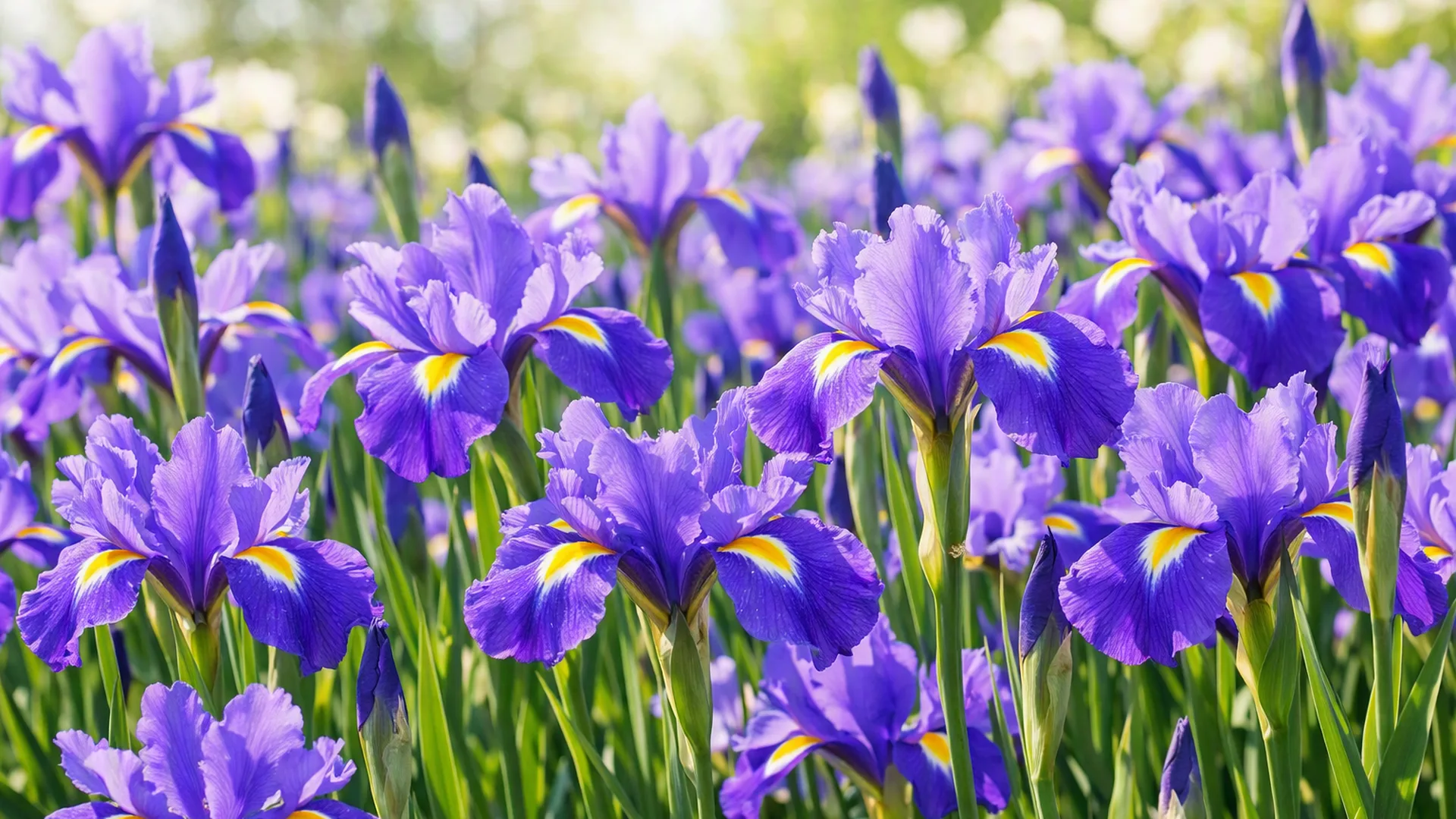
The name comes from the Greek word for rainbow and for the goddess who rode it. Wikipedia counts up to 300 species, found right across the northern hemisphere. The simplest way to tell the garden groups apart is to look at what lies underground:
- Bearded irises grow from a creeping rhizome and have a soft, hairy strip on the hanging petals. They want full sun, with the rhizome sitting on the surface.
- Beardless irises, such as the Siberian iris, have narrower leaves and prefer more moisture.
- Bulbous irises, including the Dutch types, are the ones usually sold as cut flowers.
One that grows wild here
Yellow flag, Iris pseudacorus, is one of the two iris species native to the British Isles and grows best in very wet conditions, in ditches, marshes and along water margins. Its bright yellow flowers, 7 to 10cm across, appear around May and June. Because it is a wild plant of wetlands, it is better to enjoy it where it grows than to pick it.
In the vase
Buy cut irises when the bud is showing colour. Each individual flower lasts only a few days, but another bud on the same stem often opens after it.
Pets
According to the ASPCA, iris is toxic to dogs, cats and horses. The highest concentration is in the rhizomes, and the signs are salivation, vomiting, drooling, lethargy and diarrhoea. Contact your vet if a pet has dug up or chewed a rhizome.