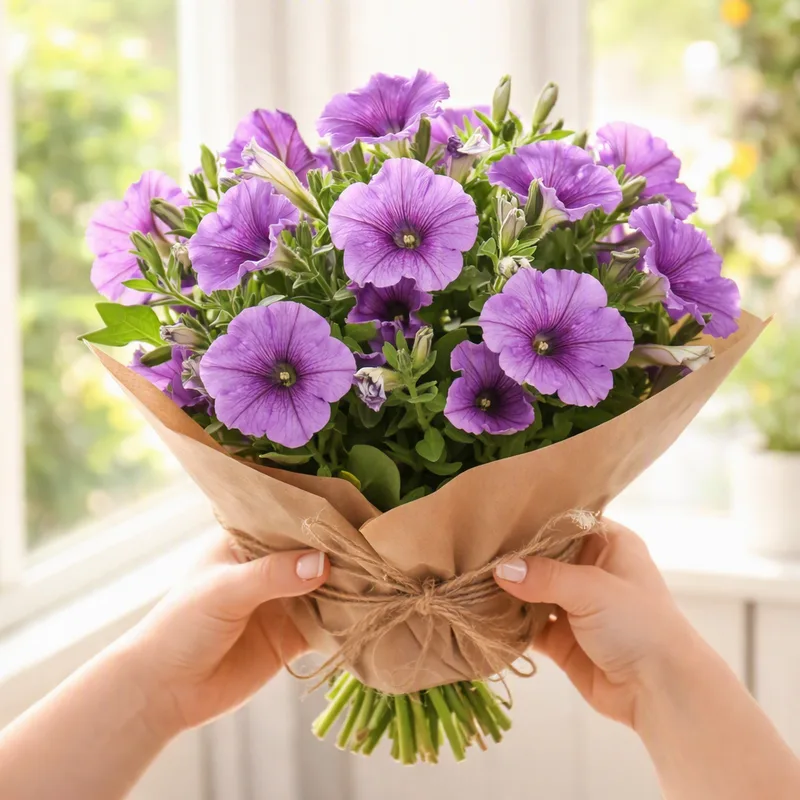
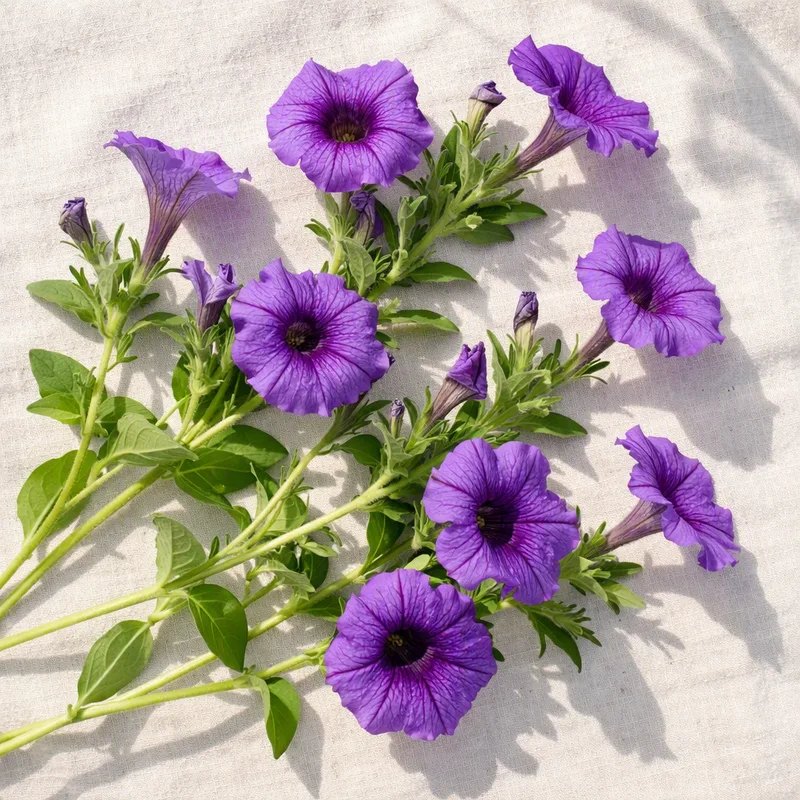
A cousin of the tomato
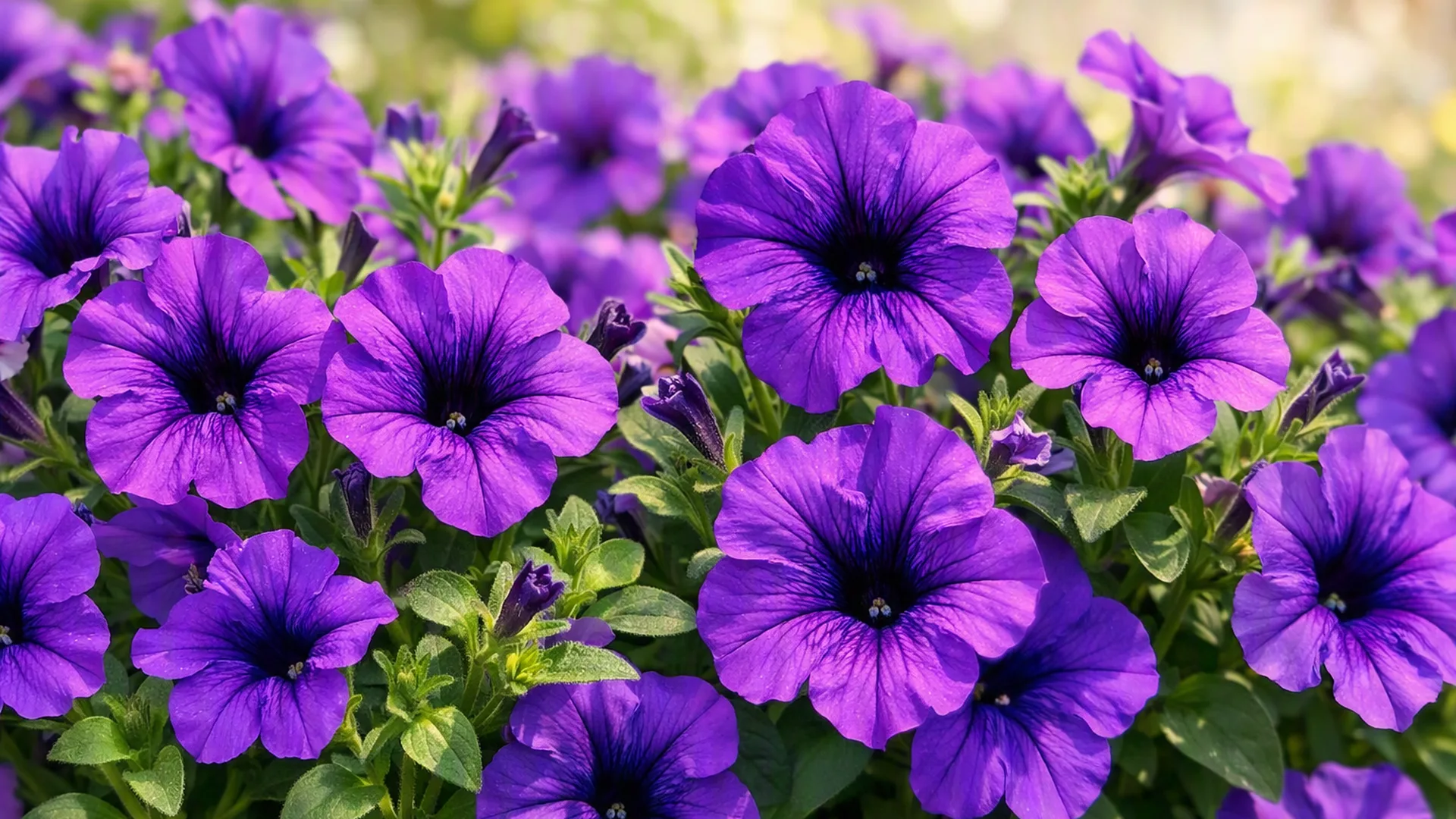
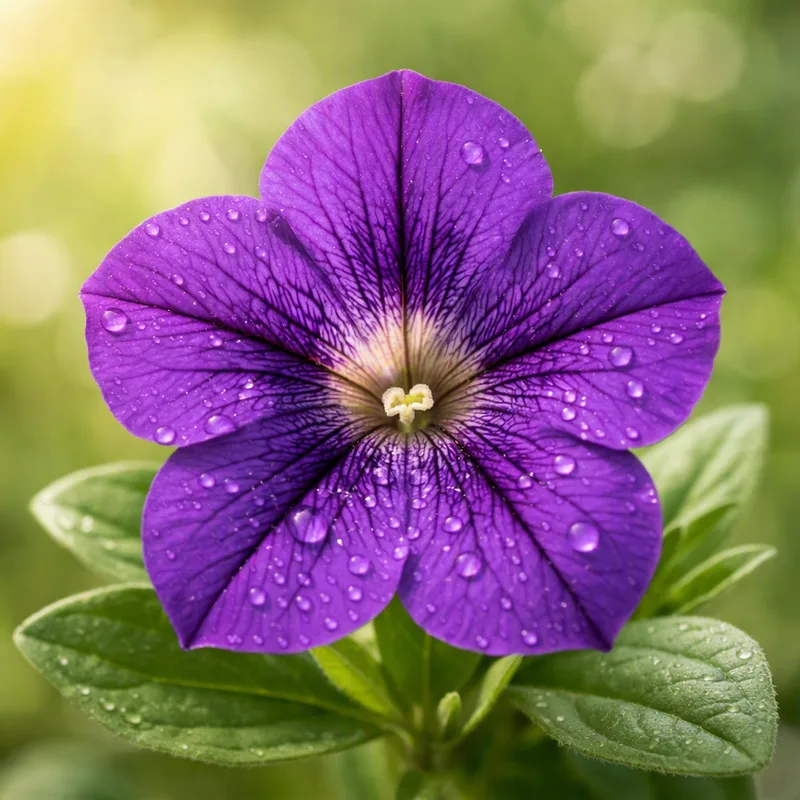
These plants are in Solanaceae, the nightshade family that gives us tomatoes, potatoes and tobacco. The genus has about 20 species, all of South American origin. The name comes through French from pétun, a Tupi-Guarani word for tobacco. The plants in baskets and window boxes are almost all hybrids called Petunia × atkinsiana, descended from a white-flowered species, Petunia axillaris, and a violet one, Petunia integrifolia. That is why purple counts as the classic petunia colour. Sticky hairs coat the foliage, and each bloom opens as a wide trumpet.
Choosing a type for an Irish summer
Our changeable weather matters more here than the exact shade. Three broad groups are on sale:
- Grandiflora types carry the largest blooms but are quickly battered by rain and wind.
- Multiflora types have smaller, more numerous flowers and cope better with a downpour.
- Trailing types are bred for baskets, tumbling down past the rim of the container.
If you garden on an exposed coast, a multiflora or trailing type in a sheltered corner usually looks better in August than a grandiflora in the open.
Keeping them going
Petunias are tender perennials, so they are grown as annuals here and planted out once frost has passed, typically late May. A site with a minimum of five sunny hours daily is ideal.
- Water thoroughly when the top of the compost feels dry, and avoid constant light sprinkles.
- Feed regularly, because a long flowering season uses up nutrients quickly.
- Pinch off faded flowers to stop seed forming.
- Cut leggy stems back by about half in late summer to bring on a fresh flush.
Hanging baskets dry out faster than borders, so check them daily in warm spells.
Cats and dogs
The ASPCA puts petunia among plants that are non-toxic to dogs, cats and horses. As a nightshade relative it is still sensible to discourage pets from chewing it, and to ring your vet if symptoms appear.