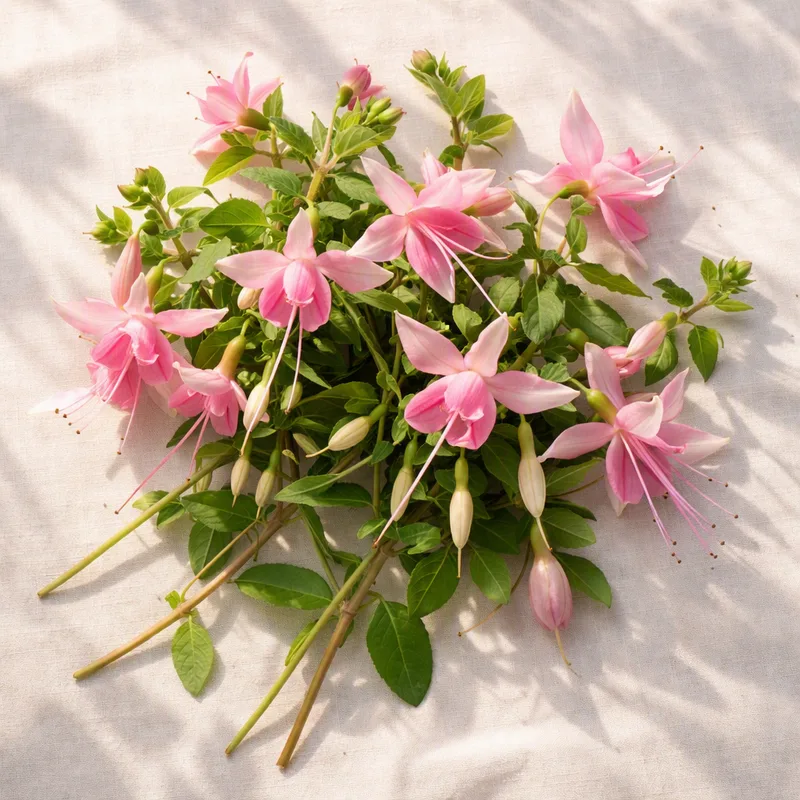
From South America to a West Cork hedge
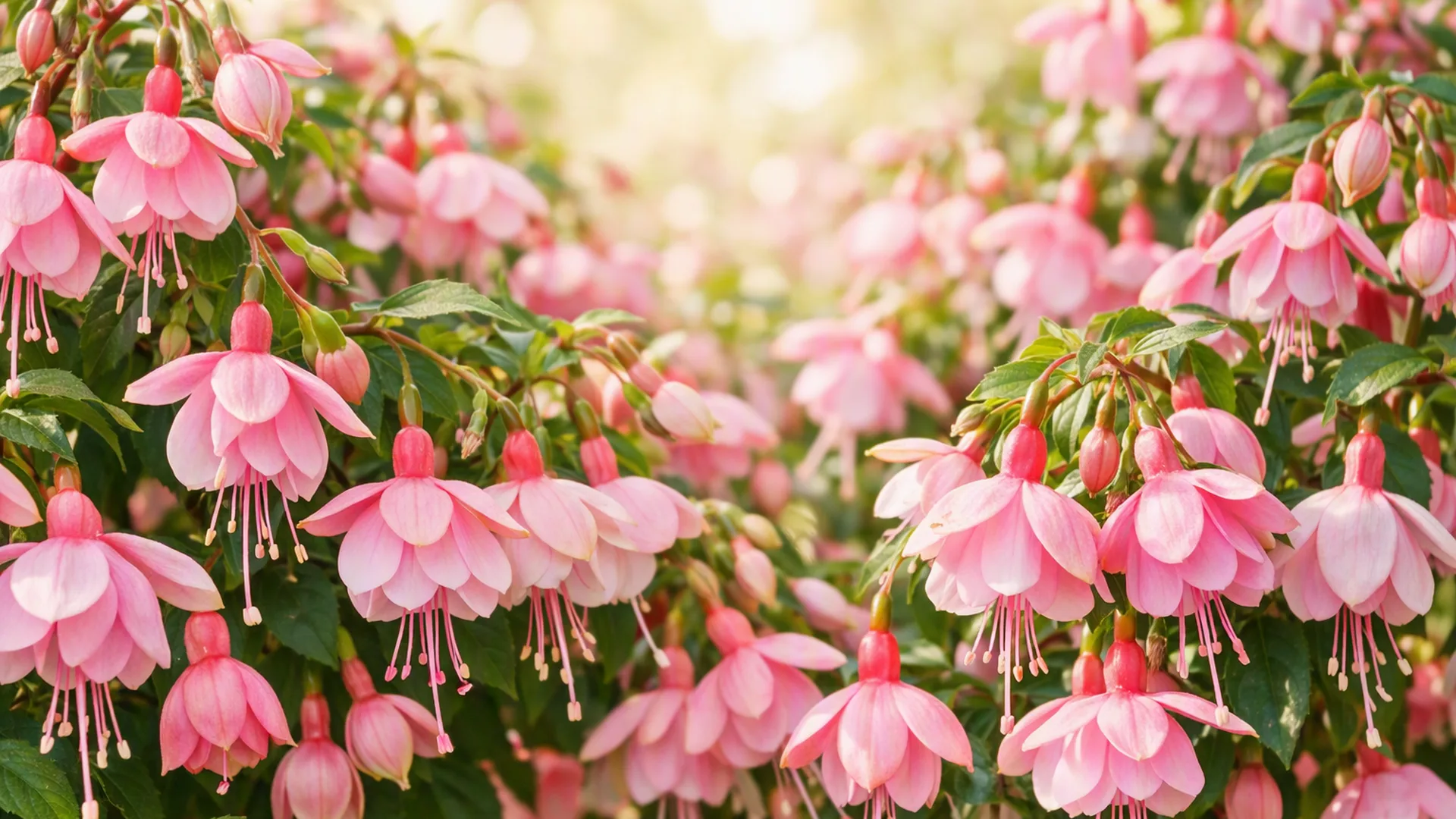
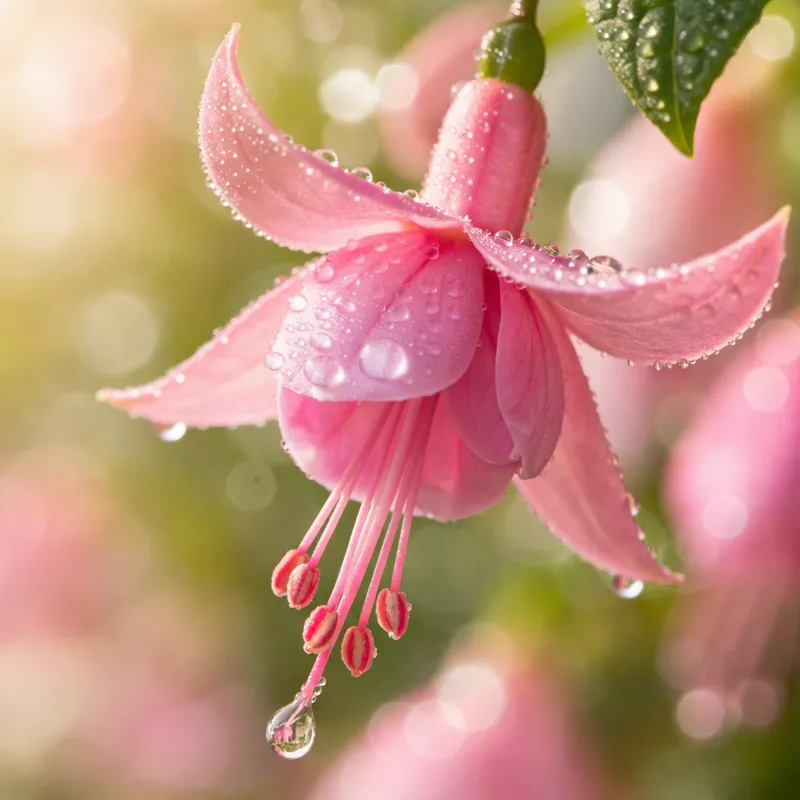
Almost 110 species of Fuchsia are recognised and most are native to South America, with a few in Central America, New Zealand and Tahiti. The genus is named after the German botanist Leonhart Fuchs, although the first species was found by the French friar Charles Plumier on Hispaniola in 1696 or 1697. The classic fuchsia flower is a pendulous teardrop, with slender red sepals above a skirt of shorter purple petals.
Ireland has a special relationship with the plant. Fuchsia magellanica has naturalised in the south-west, where it forms hedgerows so familiar that it has become an emblem of West Cork. West Kerry and West Cork suit it because the North Atlantic Current keeps the winters mild and wet.
What colour is fuchsia?
Searches for the colour have a straightforward answer: fuchsia is a vivid purplish pink named after the flower. The plant itself comes in many combinations, from white to dark red, purple-blue and salmon.
Choosing and growing
- Hardy garden types can stay outside in sheltered Irish gardens, where a mulch protects the base in a cold spell.
- Tender hybrids belong in hanging baskets and pots, and need a frost-free place from November.
- Most prefer partial shade or morning sun and compost that stays evenly moist without sitting in water.
- Feed about once a week in the growing season.
Winter care
Bring pots into a cool, bright, frost-free shed or porch before the first frost, water sparingly, and let them restart in spring.
Cats and fruit
In the ASPCA's plant list, fuchsia is marked non-toxic for cats. Fruit is a small dark berry, and in some species it is pleasant to eat, while in others it is bland, so do not assume every plant tastes good.