
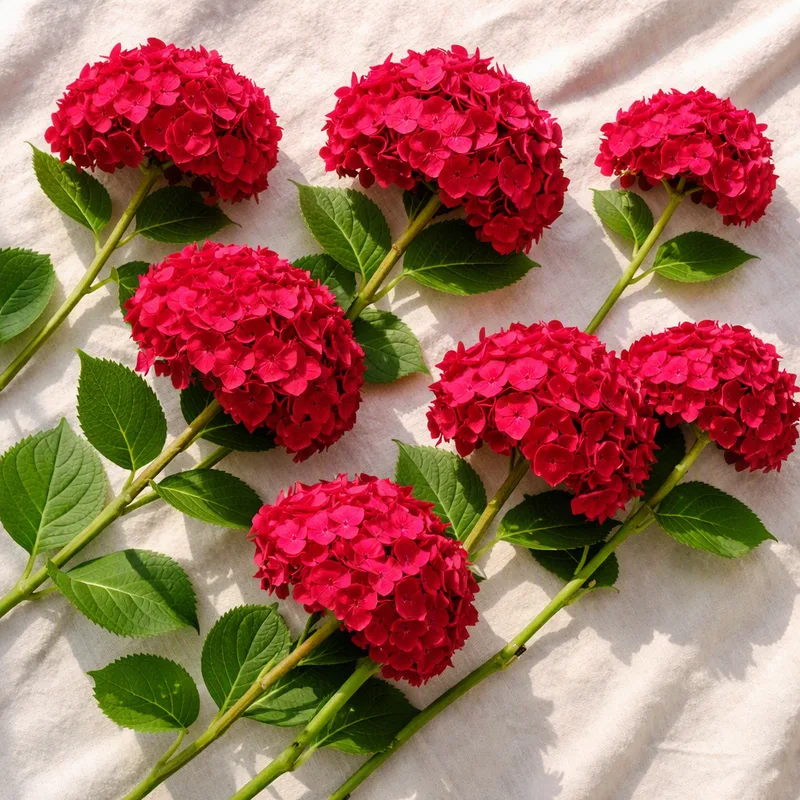
Can a hydrangea really be red?
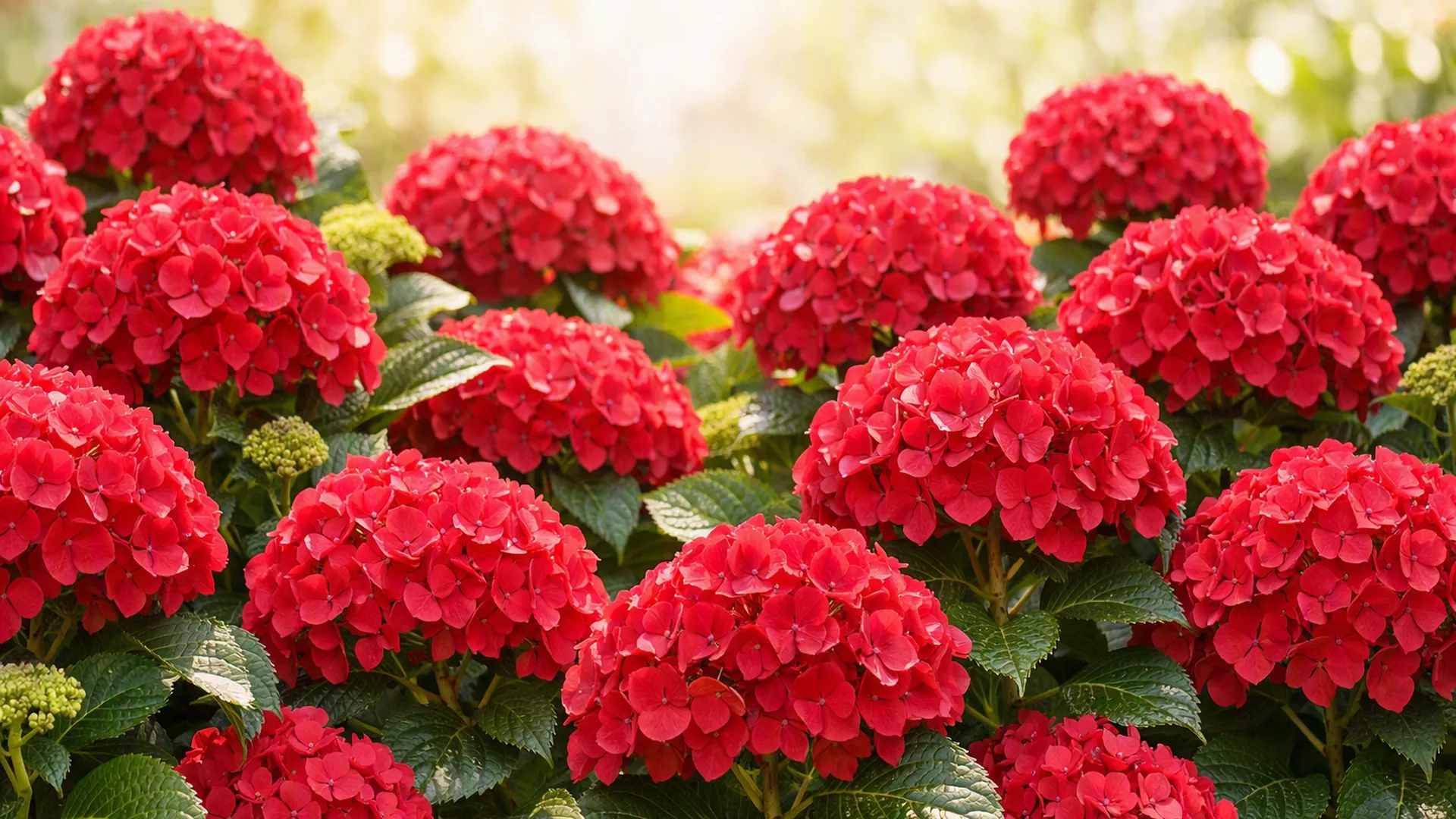
Yes, but it takes the right plant and the right soil. Alkaline soil above pH 7 tends to push Hydrangea macrophylla flowers towards pink or even red, whereas acidic soil leans blue. So a red variety grown in acid, peaty ground often ends up a muddy purple rather than a clear red. Gardens on limestone are the natural home for strong reds.
Keeping the red
- Choose a cultivar sold as red, rather than a generic pink one.
- Where the soil is acidic, grow it in a large container with ordinary multipurpose compost, which is usually close to neutral.
- Avoid products sold to make hydrangeas blue, as they push the colour the wrong way.
Even then, red heads age to burgundy and bronze as autumn arrives. Many people enjoy the late dark tones almost more than the early colour.
What red means
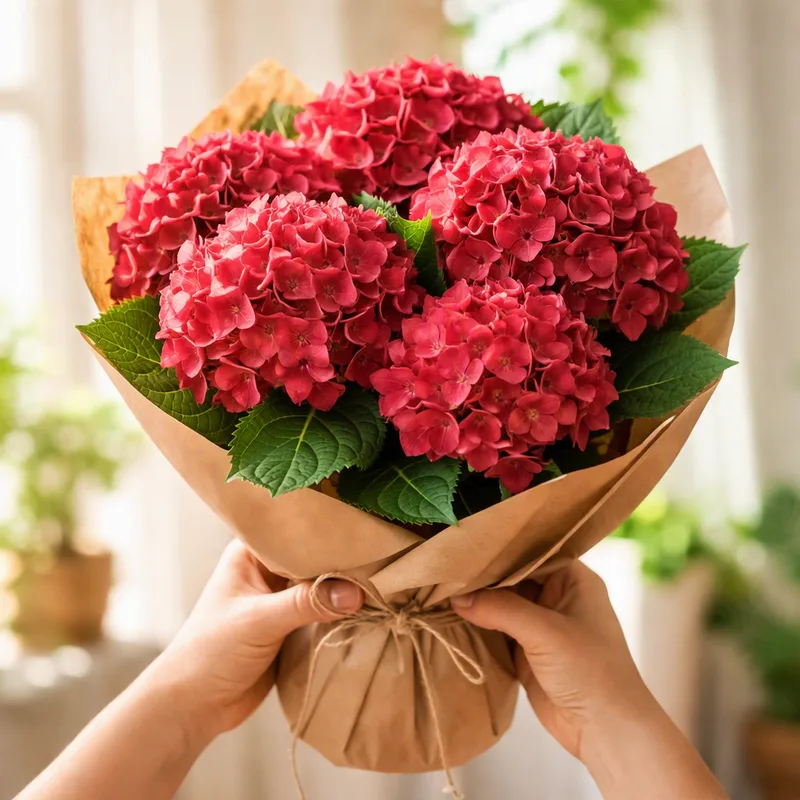
In the language of flowers the hydrangea sends a mixed message: it has been linked with gratitude, but also with boastfulness because of its showy size. A red bunch is mostly bought for its warmth and drama, and the meaning is whatever you wish it to be.
In the vase
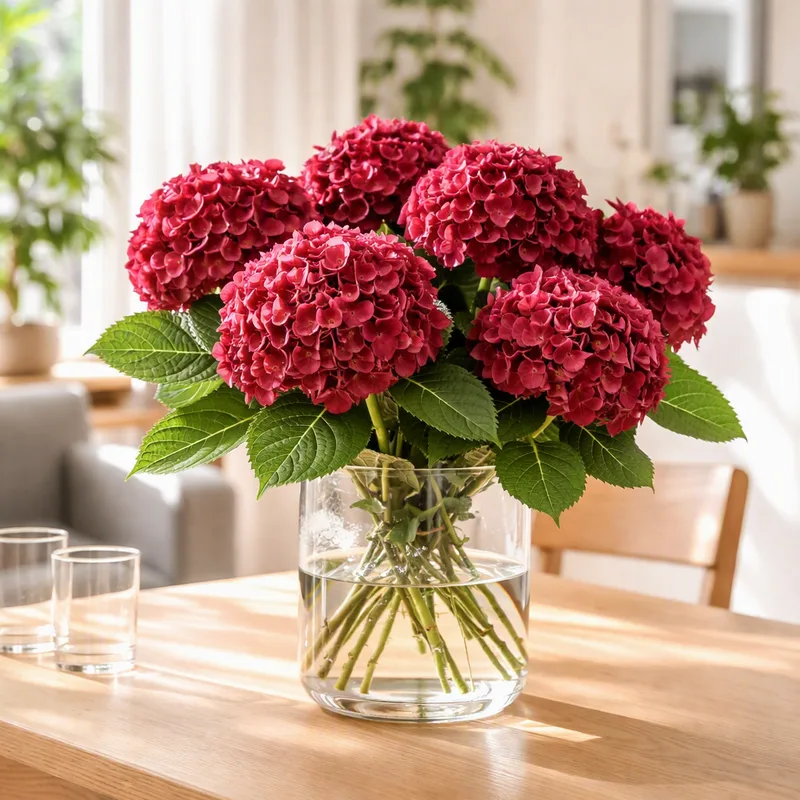
Cut heads when the florets feel firm, not papery. Stand them in cool water, change it often and re-cut the stems every couple of days. Give the vase a bright position out of direct sun.
A word about pets
Chewing hydrangea leaves or flowers can make dogs, cats and horses ill, with vomiting, diarrhoea and depression listed by the ASPCA. Garden pets should be steered away from shrubs, and bunches kept off low tables.