
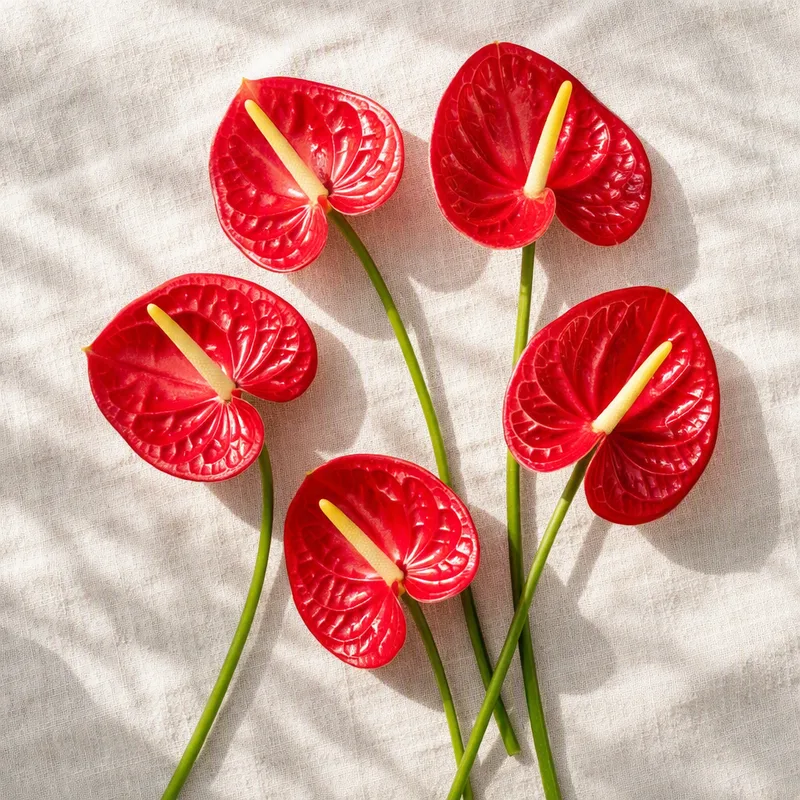
Wild red
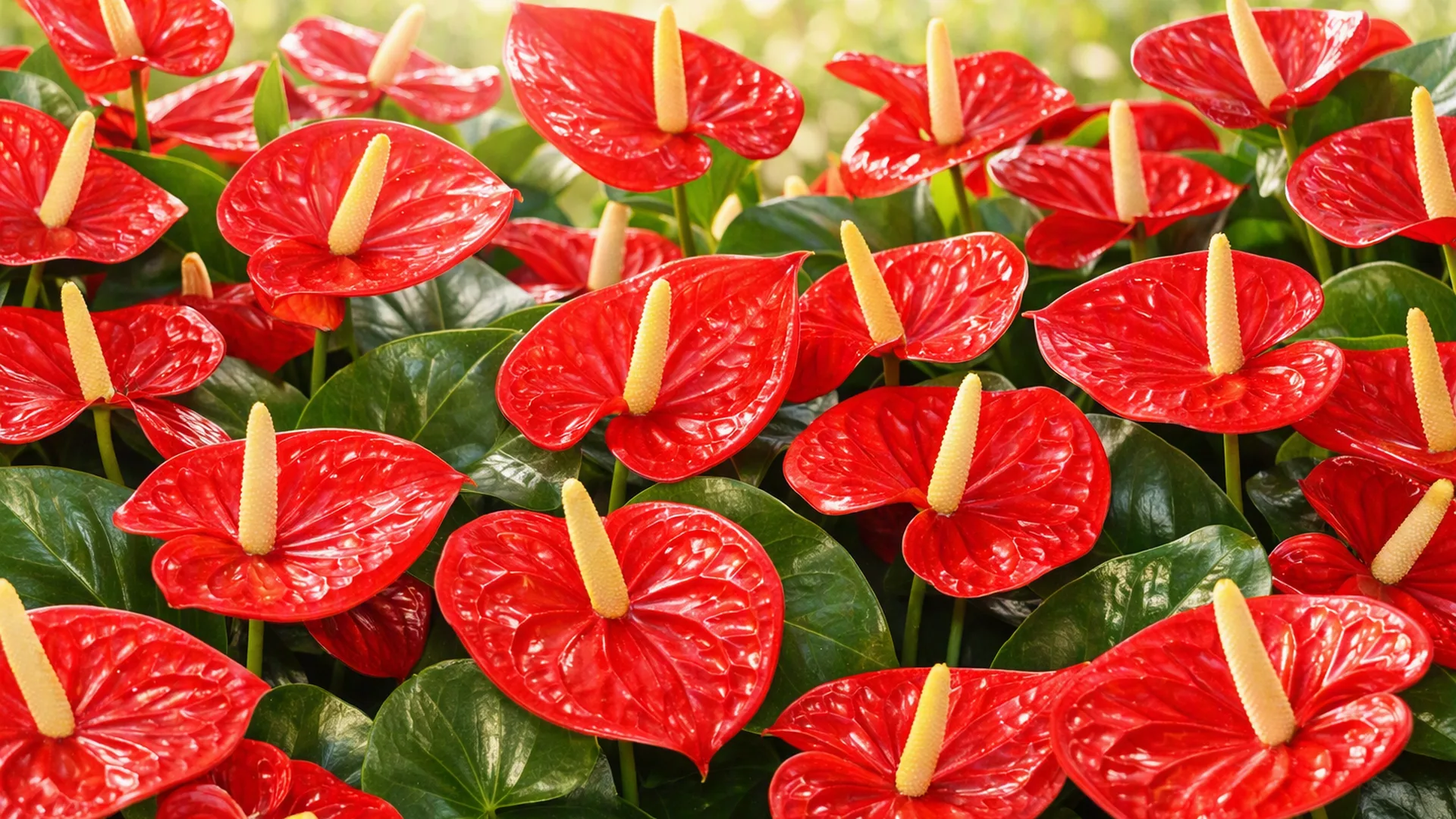
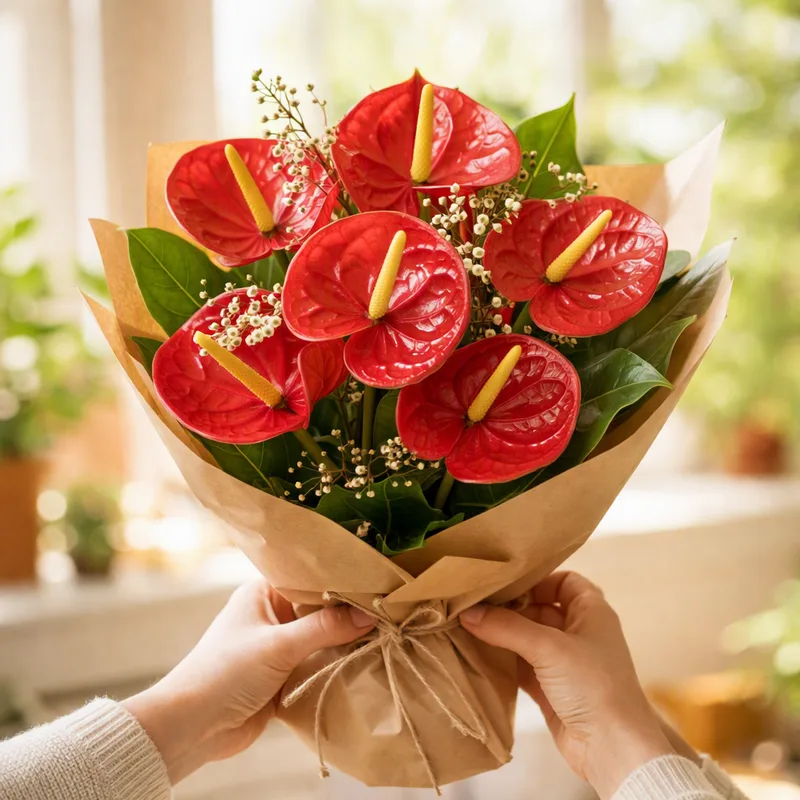
Red is the natural spathe colour of Anthurium andraeanum, a plant of the rainforests of Colombia and Ecuador. The shiny red heart sits above dark green, leathery leaves, with a pale yellow or white spadix rising from its centre. Traditionally red suggests passion, so a pot makes a lively gift for Valentine's Day, even though the plant is not a romantic bloom in the strictest sense: that bright heart is a leaf.
Getting repeat flowers
Red anthuriums flower most reliably when they get steady warmth, good light and regular moisture.
- Place near an east or west window, never in strong direct summer sun.
- Keep the room above about 18 degrees Celsius all year, including at night in winter.
- Water when the surface dries and empty the saucer.
- Feed with a weak houseplant fertiliser every few weeks in the growing season.
- Repot into a slightly larger pot every couple of years with bark-rich compost.
If the leaves go yellow, the cause is usually too much water or too little light. Brown tips mean dry air.
Red in a vase
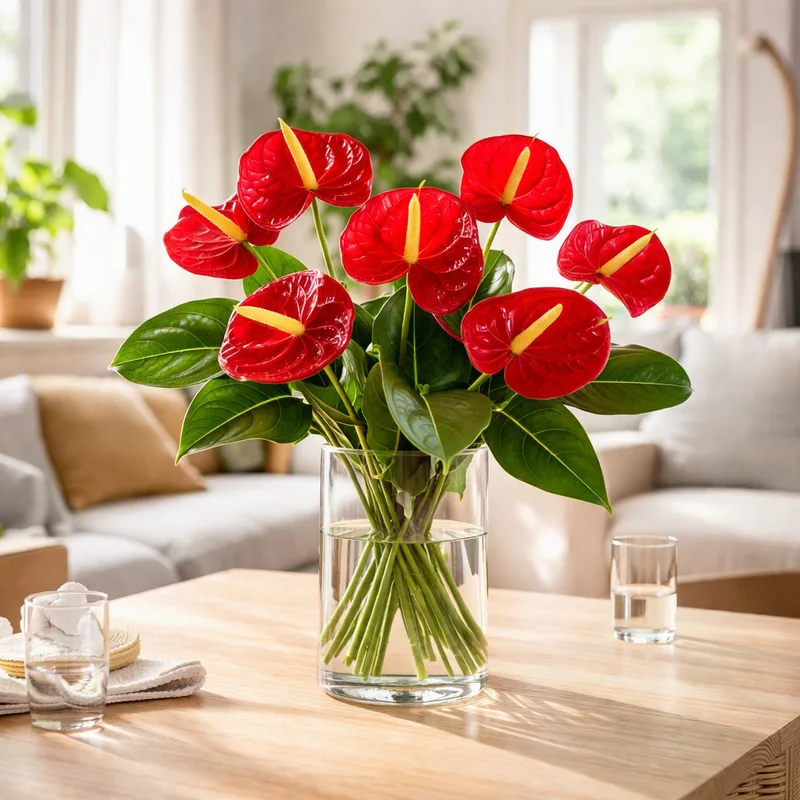
Cut anthurium holds its colour for two to three weeks, one of the longest vase lives of any flower. The glossy red works with green foliage and white blooms. Arrange them as a few big stems, not a crowd.
Handle with care
The plant contains calcium oxalate crystals in all parts, and the ASPCA lists flamingo flower as toxic to dogs, cats and horses. The sap may also irritate your skin. Wear gloves when you repot, and keep children from chewing the leaves. In an emergency contact the National Poisons Information Centre, or a vet for a pet.