
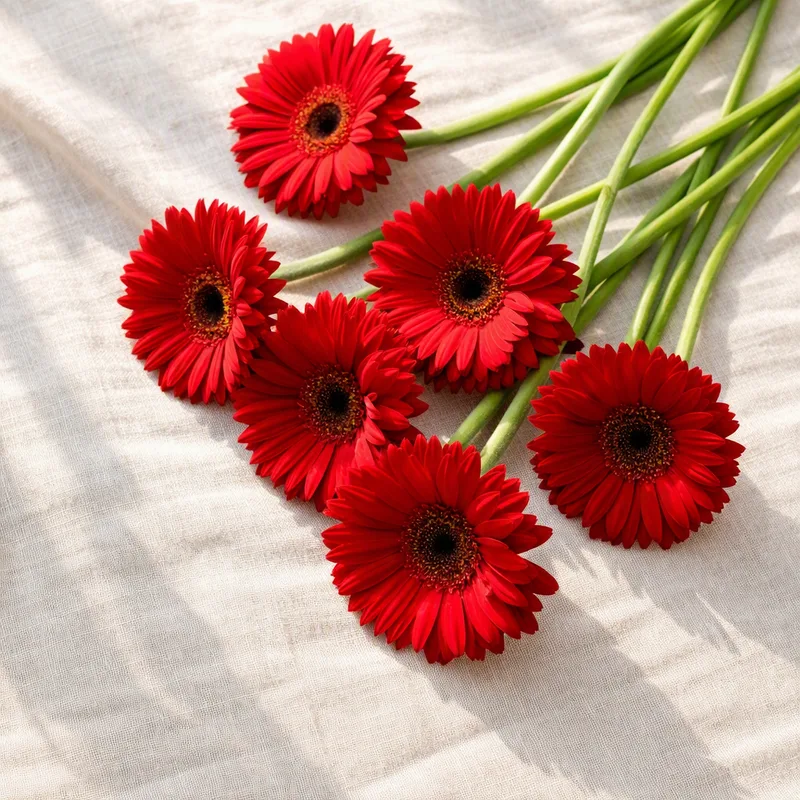
Close to the wild colour
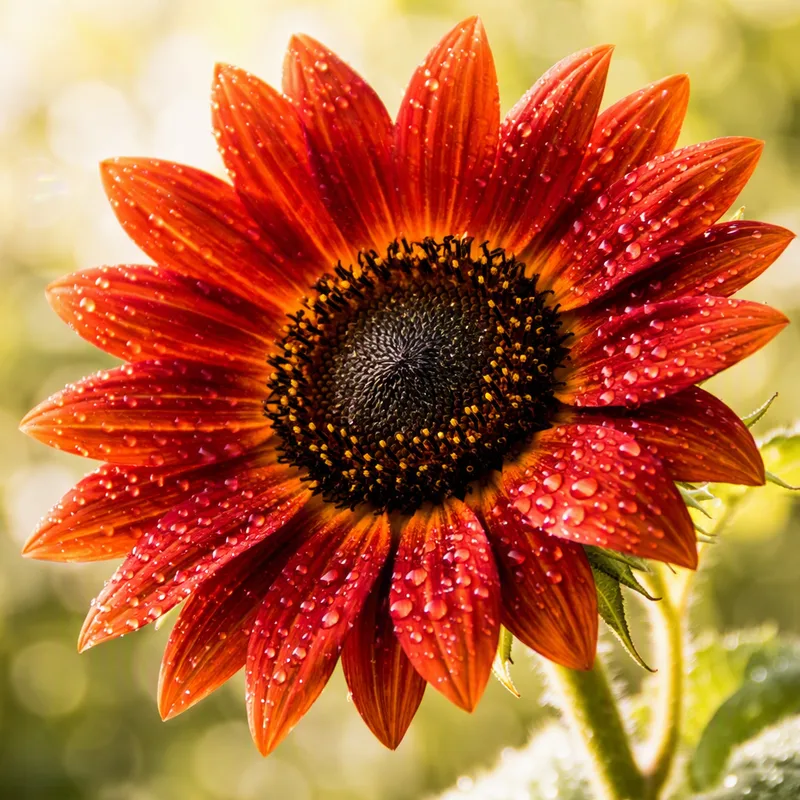
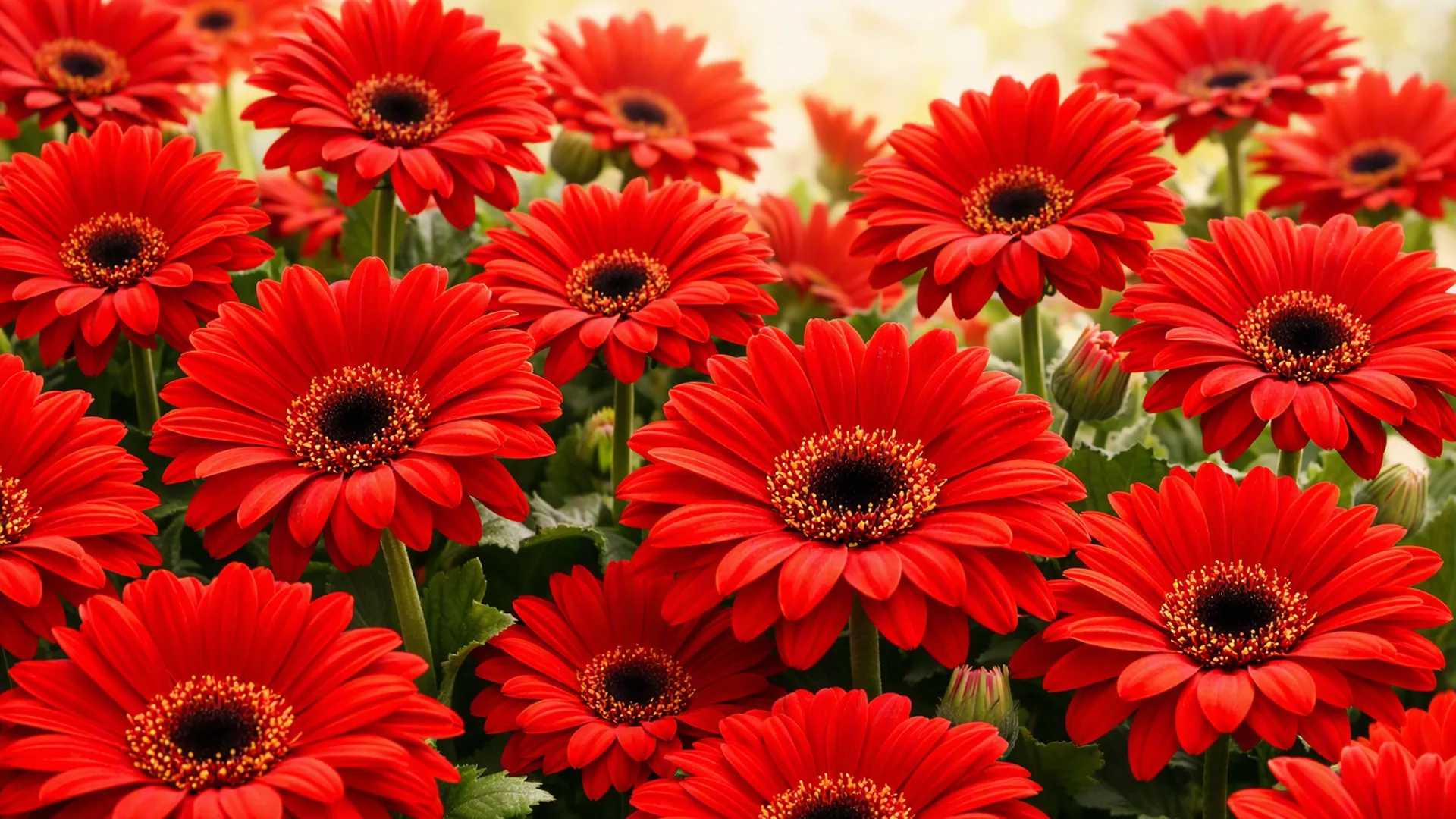
Red is not far from what nature produced. According to the botanical description, the wild Barberton daisy usually has orange-red ray florets, so a bold red gerbera is a shade that breeders have deepened rather than invented. The stems rise from a rosette of long, lobed leaves in the plant's homeland of Mpumalanga, Limpopo and Eswatini, and the flowerhead is built like a lawn daisy: a ring of rays surrounding a disc of tiny flowers.
What a red gerbera says
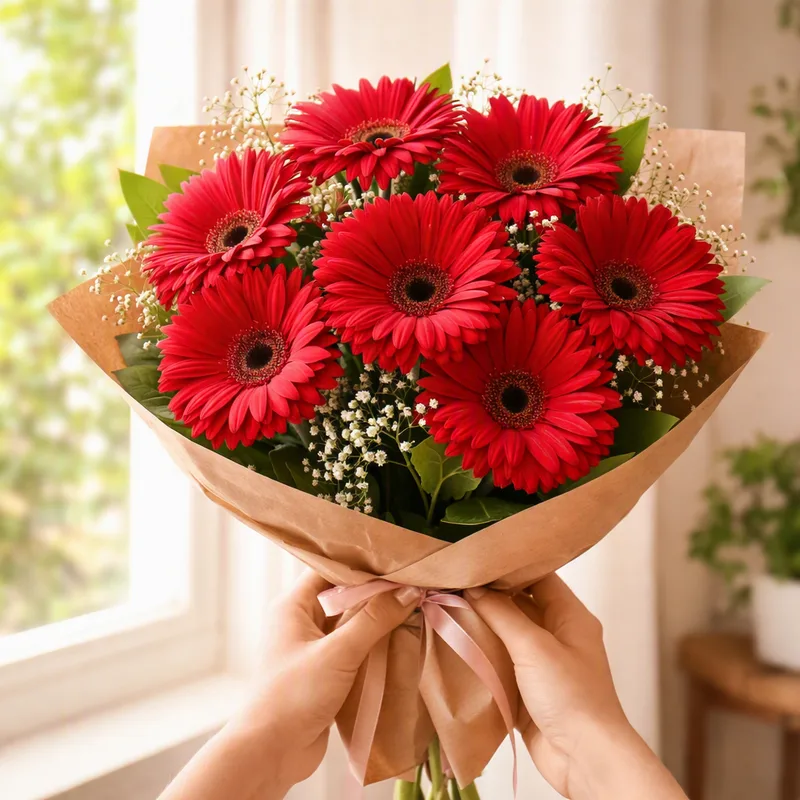
Meaning searches are common, and the honest answer is that gerbera has no ancient code. Florists commonly treat red gerberas as cheerful and warm, a more playful alternative to red roses. They suit Valentine's Day for someone who would roll their eyes at a dozen roses, and they also work for Mothering Sunday in March when you want something brighter than pastels.
Care in the vase
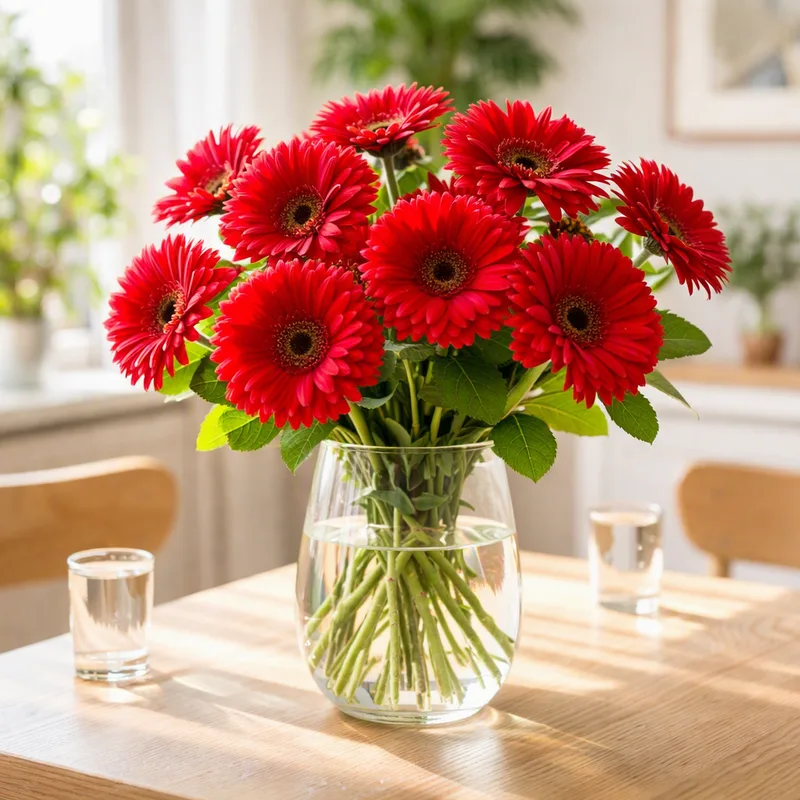
- Cut about 2 cm off each stem at an angle.
- Fill the vase only a few centimetres deep with cool water; deep water encourages rot.
- Replace the water every two days.
- Keep the arrangement away from fruit bowls, because ripening fruit gives off ethylene gas that ages cut flowers faster.
The stem tends to buckle some 10 to 15 cm below the flowerhead. If that happens, recut it and let it drink for an hour or two in cool water.
If you grow your own
Red gerbera plants make attractive patio pots. Choose a place with plenty of light, use gritty compost and avoid letting the pot stand in water. Gerberas are damaged by frost, so in Ireland they usually come indoors before the cold nights of October.
Safe around animals
The ASPCA gives Gerbera jamesonii a non-toxic rating for dogs, cats and horses.