
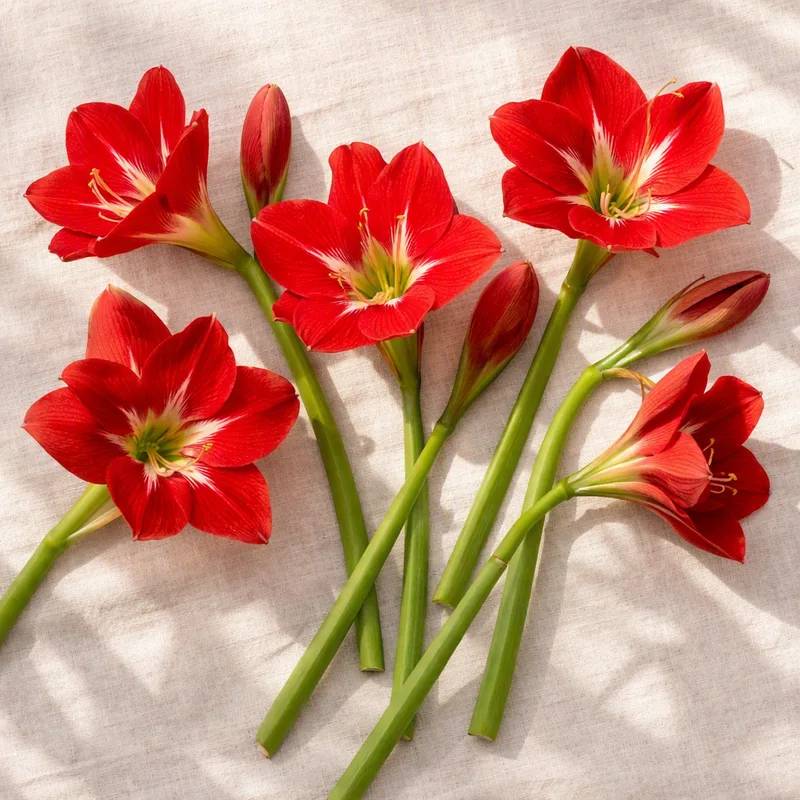
Amaryllis or Hippeastrum?
The bulb sold as amaryllis belongs to the genus Hippeastrum, from South America. The true Amaryllis is a different plant from South Africa that flowers in late summer. The two were separated botanically in the nineteenth century, but the shop name has stuck.
Why it suits the dark months
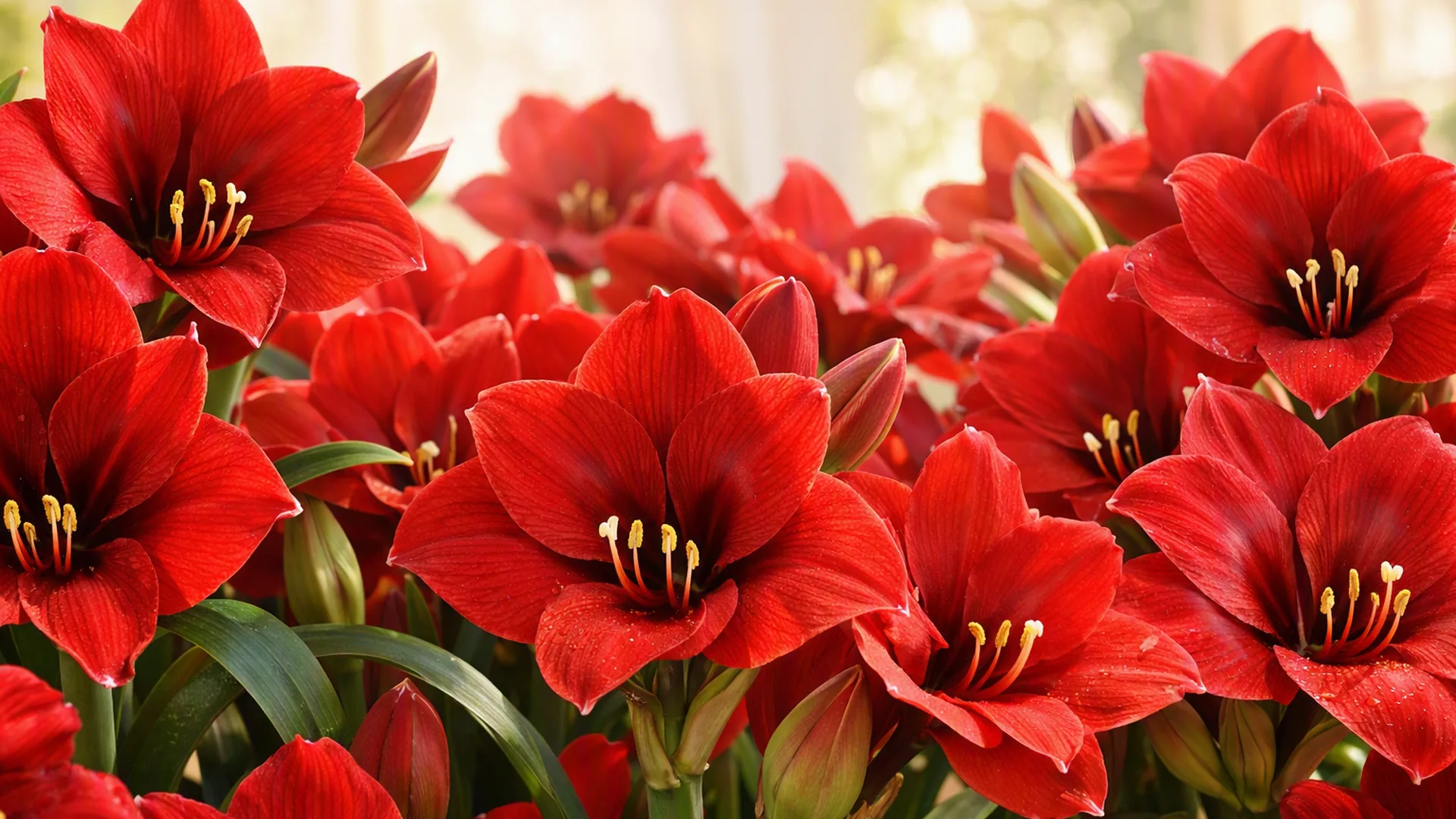
In Ireland the amaryllis earns its place by blooming in the gloom between December and February, when little else is flowering indoors. A single large bulb sends up one or two thick stems, each topped with several wide trumpets, and a flower can reach well over 15 centimetres across.
Potting and starting it off
- Choose a firm bulb with no soft patches, and the bigger the bulb, the more flower stems.
- Use a pot only slightly wider than the bulb and leave the top third above the compost.
- Water sparingly until a green shoot appears, then increase as it grows.
- Turn the pot regularly so the stem grows straight, and stake it if it leans.
Bringing it back next year
After flowering, cut off the spent stem and keep feeding the leaves through summer. In late summer stop watering and let the bulb rest for several weeks in a cool, dry place, then begin again. Many people discard the bulb after a single bloom, but with a rest period it can flower for years.
Pets and children
All parts contain lycorine and related alkaloids. The ASPCA lists amaryllis as toxic to dogs, cats and horses, with vomiting, diarrhoea, abdominal pain, drooling and tremors among the signs. Put the pot out of reach of pets, and for a child who has chewed a leaf, contact your doctor or the National Poisons Information Centre.