

Deep and strong colour
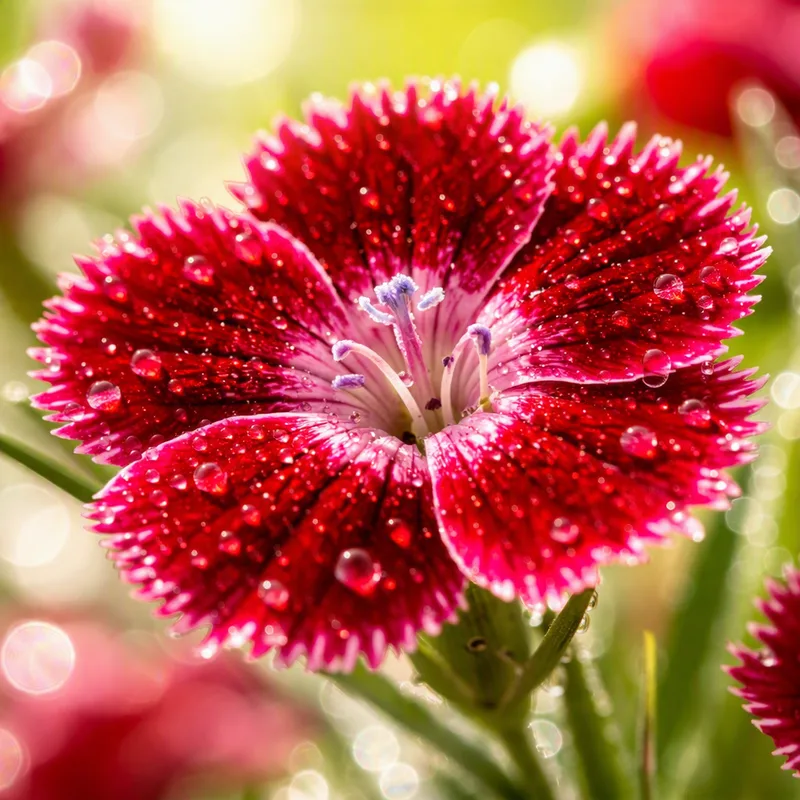
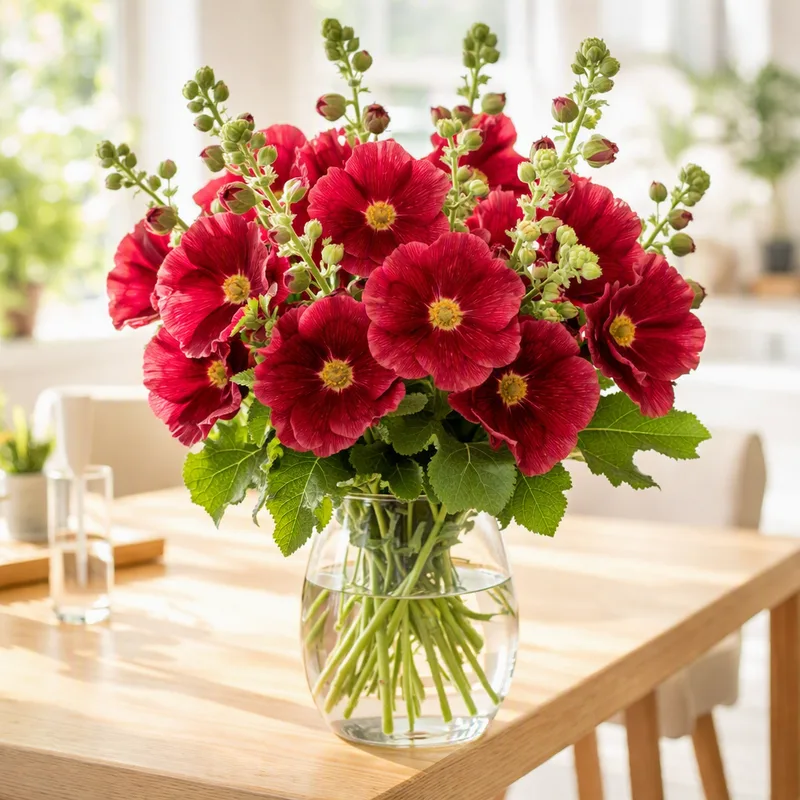
Red and dark maroon belong to the colours of the wild plant, whose petals run from pink to purple and near-black red. The variety 'Nigra' has a deep claret tone that looks almost black, and against the light it becomes velvety and translucent. The dark pigment in the petals is an anthocyanin and was once used as a dye.
Moving plants and designing with them
Hollyhocks form a taproot, so they resent being transplanted. The best time is the first year, when you can lift a small rosette with a large ball of soil, plant it into a loosened hole and water well. Older plants are better left alone, since they are short-lived anyway.
Dark red hollyhocks contrast with pale walls. With white gypsophila, silvery lamb's ears or yellow yarrow the reds look richer. Double varieties, shaped like small pompons on tall stems, give a fuller look.
Care
- Full sun and a warm spot, ideally against a south or west wall.
- Fertile soil that drains well; water thoroughly in dry weather.
- Support every spike, because the top becomes heavy in wet or windy weather.
- Rust can strike dark and pale varieties alike, so remove affected leaves early.
- After flowering, cut down the spikes or leave the seedheads to self-sow.
The RHS recommends protecting young plants from slugs, a good tip in the damp Irish climate.
Not poisonous, but scratchy
On pet safety, the ASPCA classes hollyhock as non-toxic for dogs, cats and horses. Bristly hairs on leaves and stems can irritate skin, so wear gloves when tying plants in.