
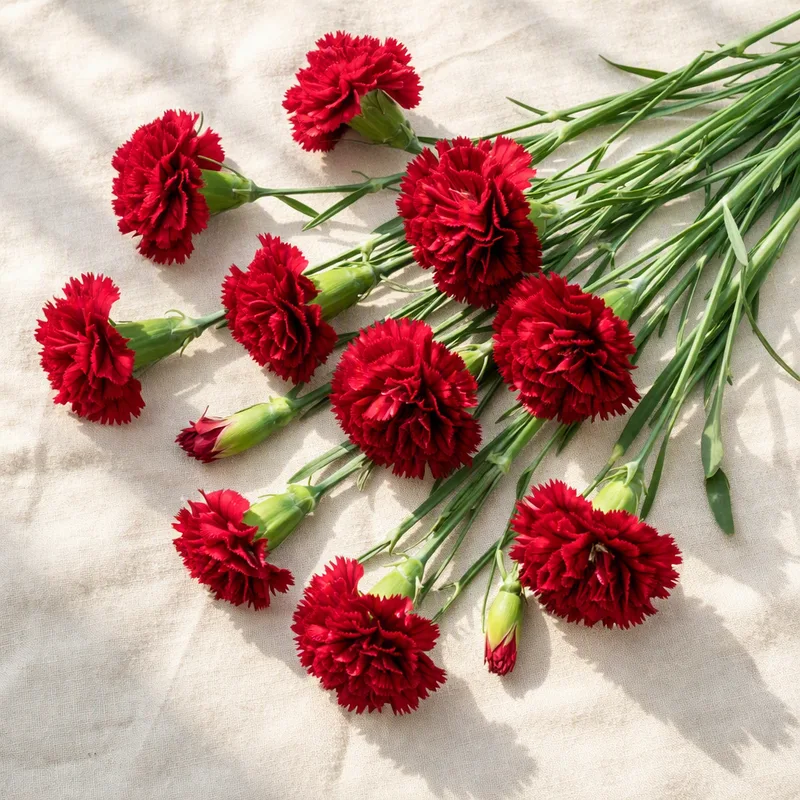
Admiration and deep love
In the language of flowers, a red carnation traditionally means deep love and admiration. Many people give them on Valentine's Day as a more lasting and less expected choice than roses. A medium to dark red also hides small blemishes better than pale shades, which is part of why red appears in so many formal arrangements.
A flower with political history
Red carnations have also been used as a political emblem: along with the red rose, they have been a symbol of socialism and labour movements. In Portugal the 1974 revolution is named after them, because soldiers and citizens carried the flowers. It is a reminder that the carnation is more than a decorative filler.
Getting the best from a bunch
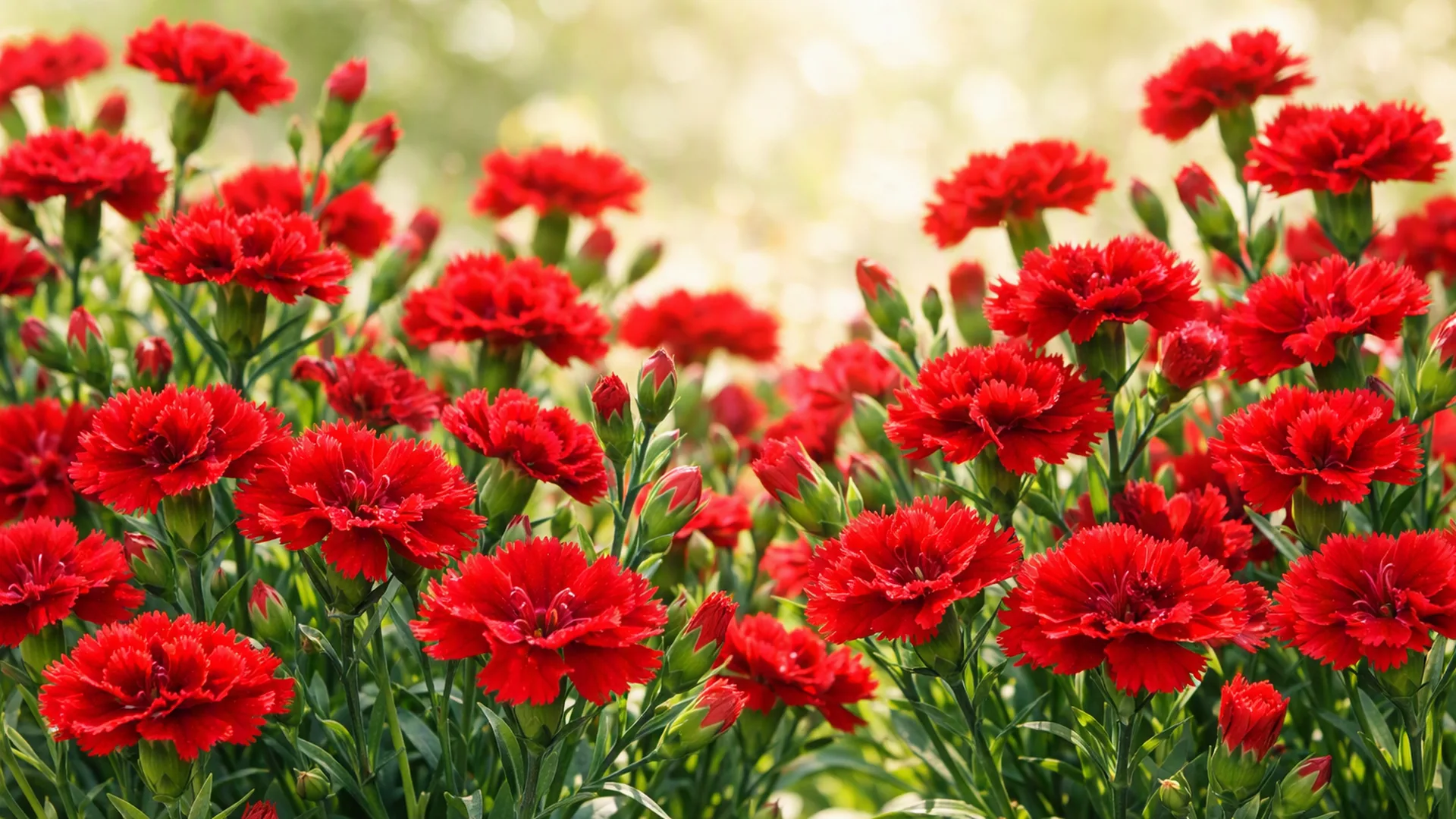
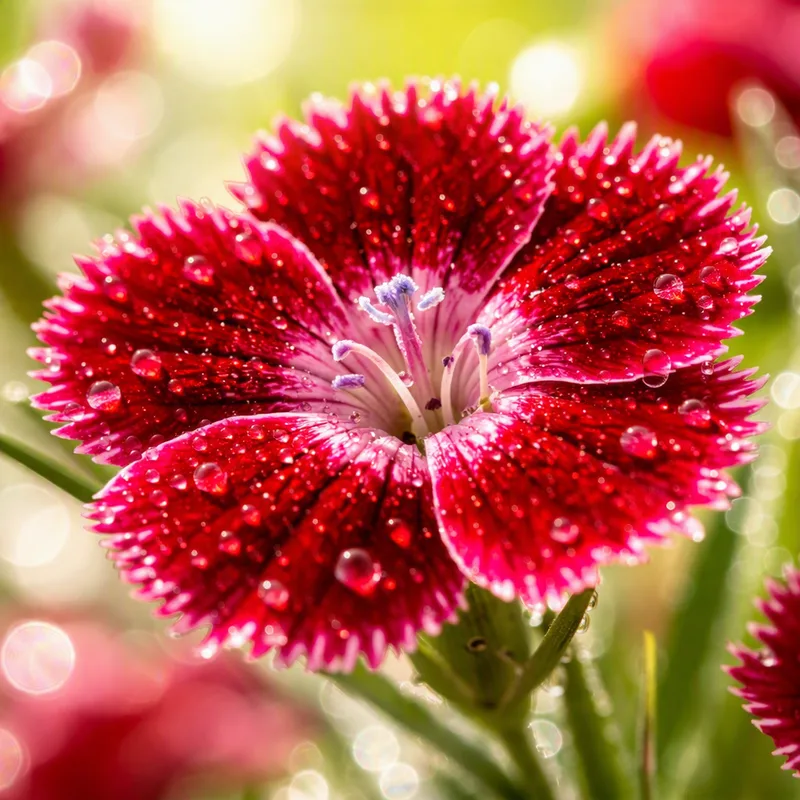
Red carnation (Dianthus caryophyllus) is a Mediterranean native and has been cultivated for around 2,000 years. The petals are fringed, and the stems have knuckle-like joints.
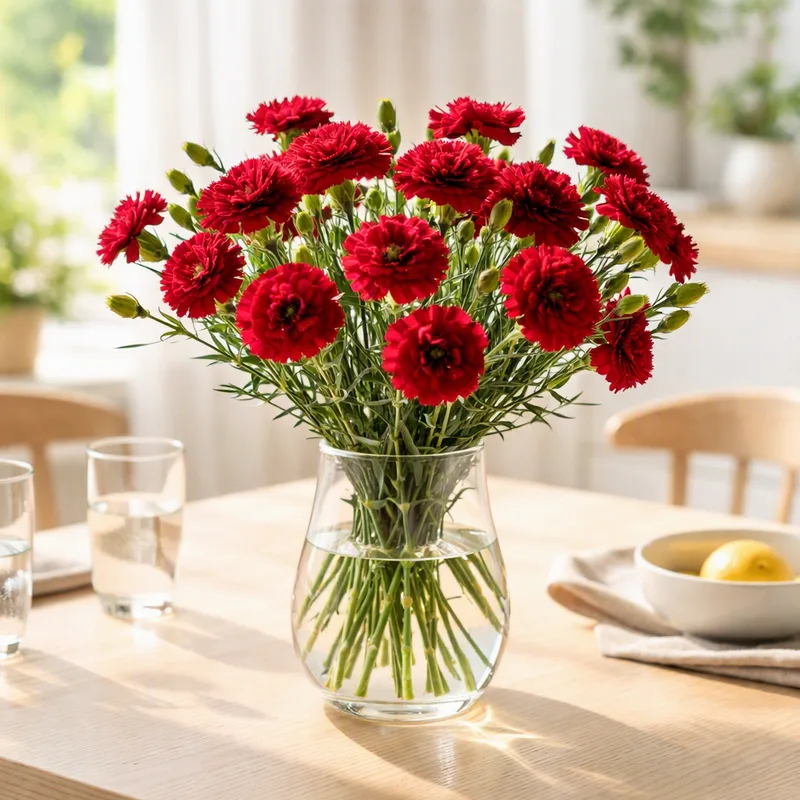
- Cut stems on a slant just above a joint.
- Use clean water with flower food.
- Stand them in a cool room, not above a radiator.
Under those conditions a bunch should reach a fortnight.
For households with animals
The ASPCA puts carnation in the group of plants toxic to dogs, cats and horses. The expected effects are mild gastrointestinal signs and dermatitis. A nibbling cat is not usually an emergency, but your vet will advise on dose and symptoms.