
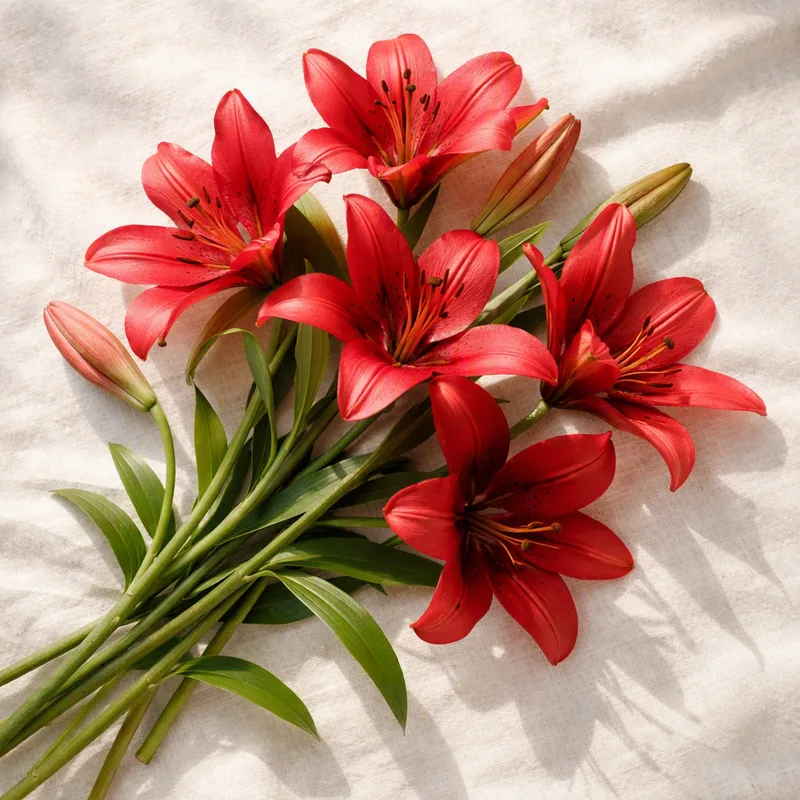
Red is a garden-bred shade
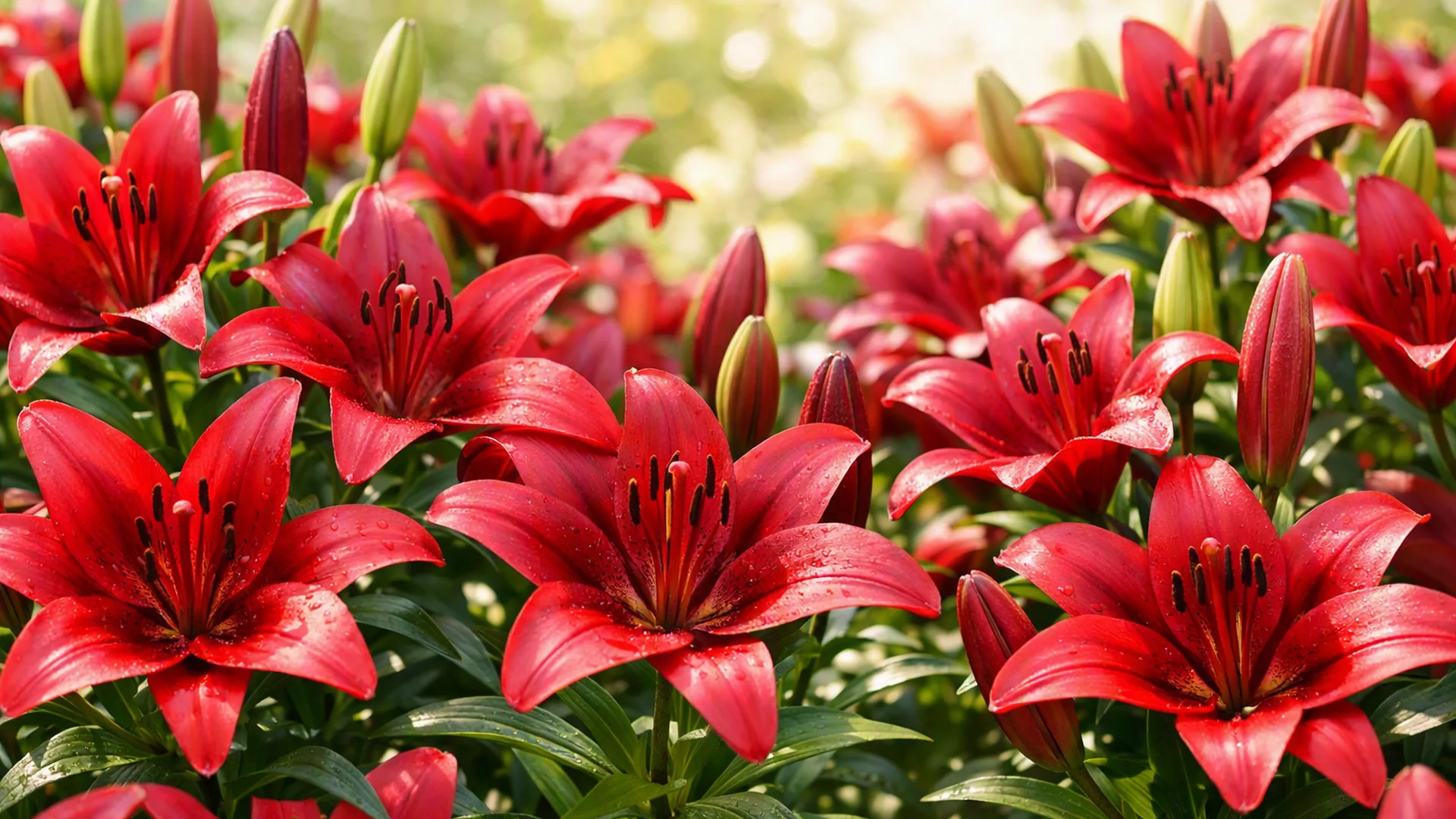
Most wild lilies are orange, yellow, white or spotted. The deepest reds come from breeders, who crossed species to create Asiatic hybrids with upward or outward-facing cups in strong red, and Oriental hybrids with crimson shading. For a reader asking what a red lily is, the honest reply is a cultivated hybrid of Lilium, sold under cultivar names rather than species names.
Meaning and when to give them
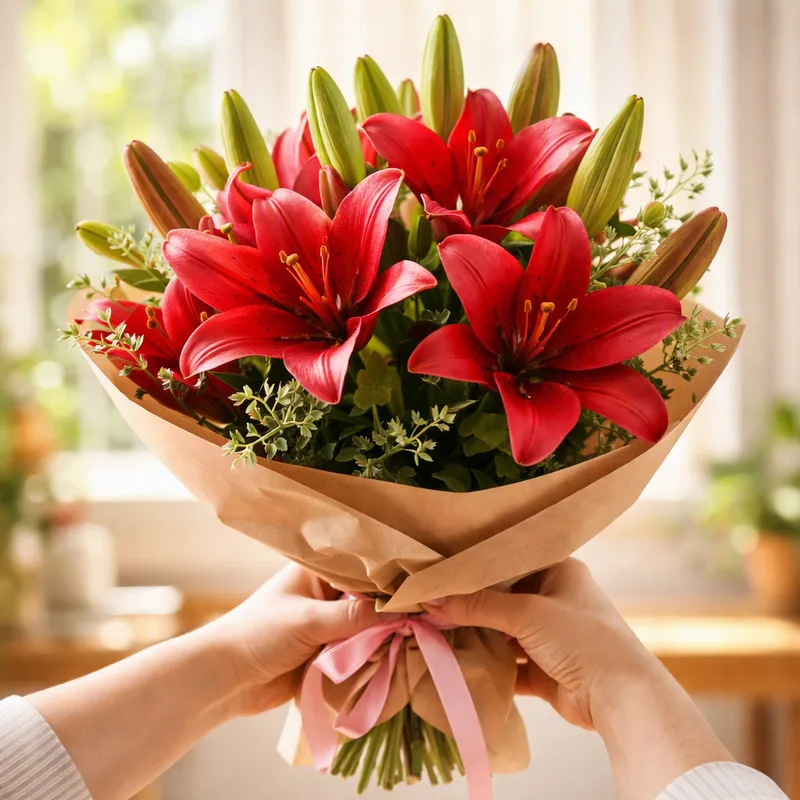
Red tends to be a language of warmth. In the language of flowers, red lilies traditionally say passion and deep feeling, though people will often choose them simply because they look so bold. In Ireland they work well for Valentine's Day, for an anniversary, or as a midsummer gift when the garden is at full tilt.
Placing red lilies at home
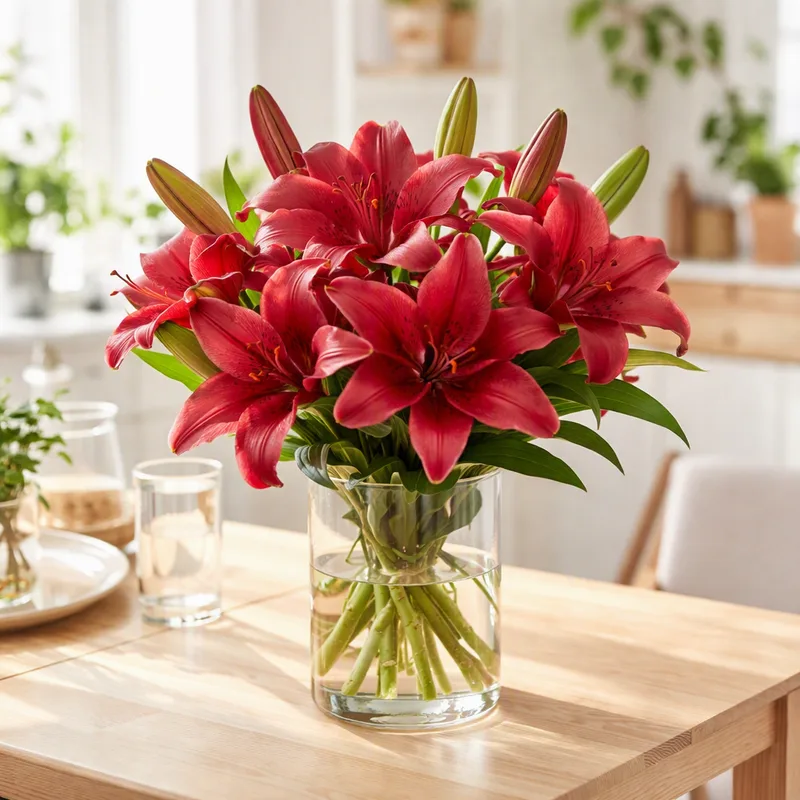
- Dark reds can look nearly black in a dim hallway, so give them a window.
- They pair well with white gypsophila or soft green foliage.
- Strip the stamens before the flowers open; red lilies stain skin and fabric as well.
Planting red lilies outdoors
If you want to keep the bulbs, plant them in autumn or spring in free-draining soil in sun. In the Irish climate the main risk is rot from winter wet, so raise heavy beds and add grit under the bulb. Slugs love the young shoots in a damp spring, so check on mild nights.
Cats and lilies
Cats are the one reason to be careful. Lilies of the genus Lilium are listed as toxic to cats, and kidney failure can follow from a small amount of pollen or vase water. If you suspect any contact, phone your vet immediately and do not wait for symptoms.