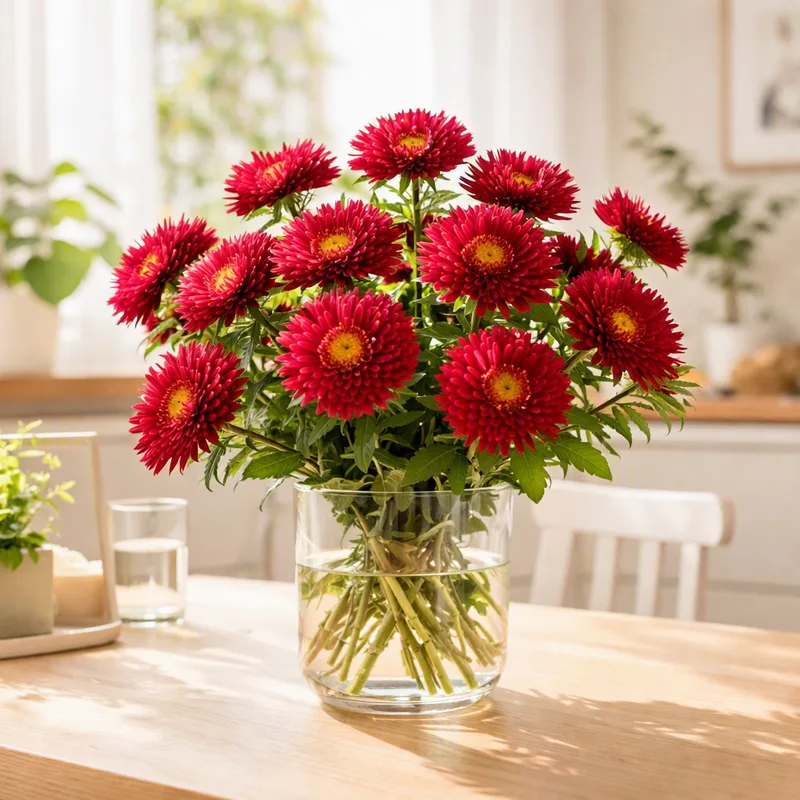
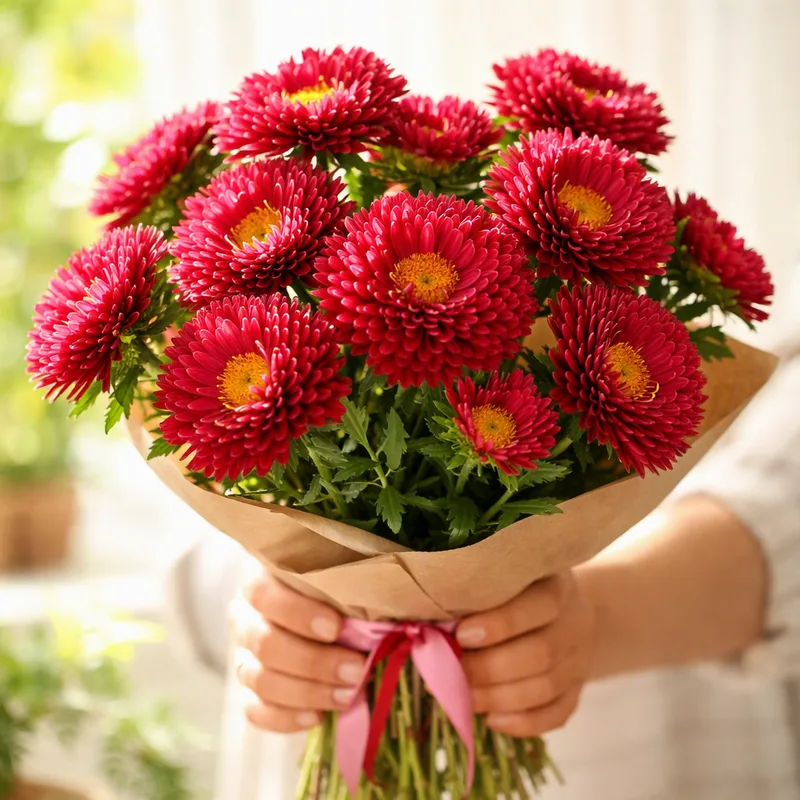
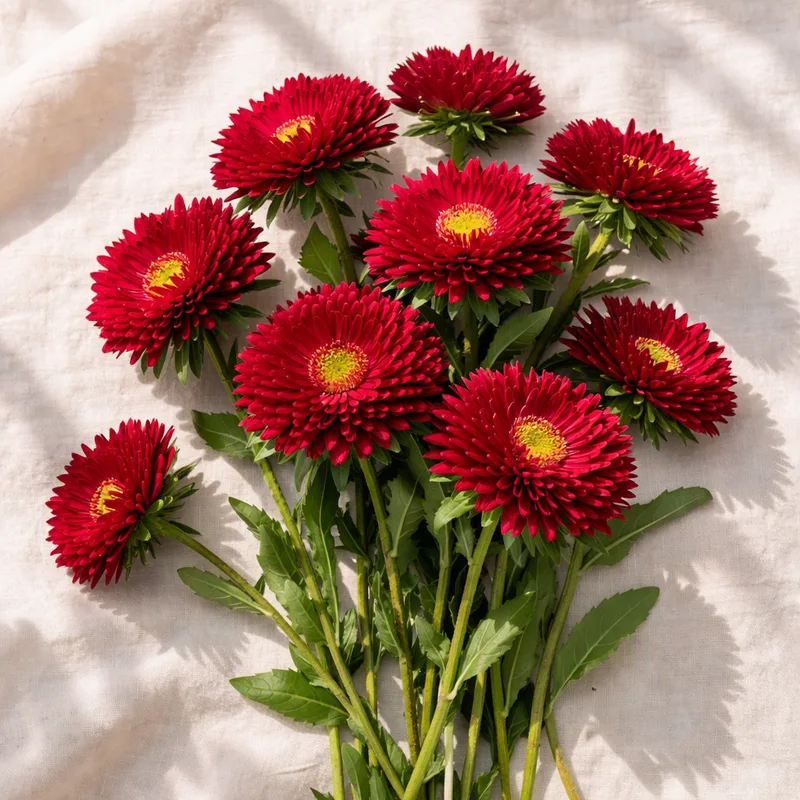
The red forms
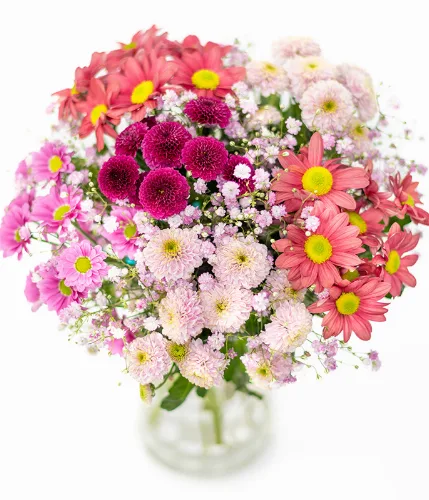
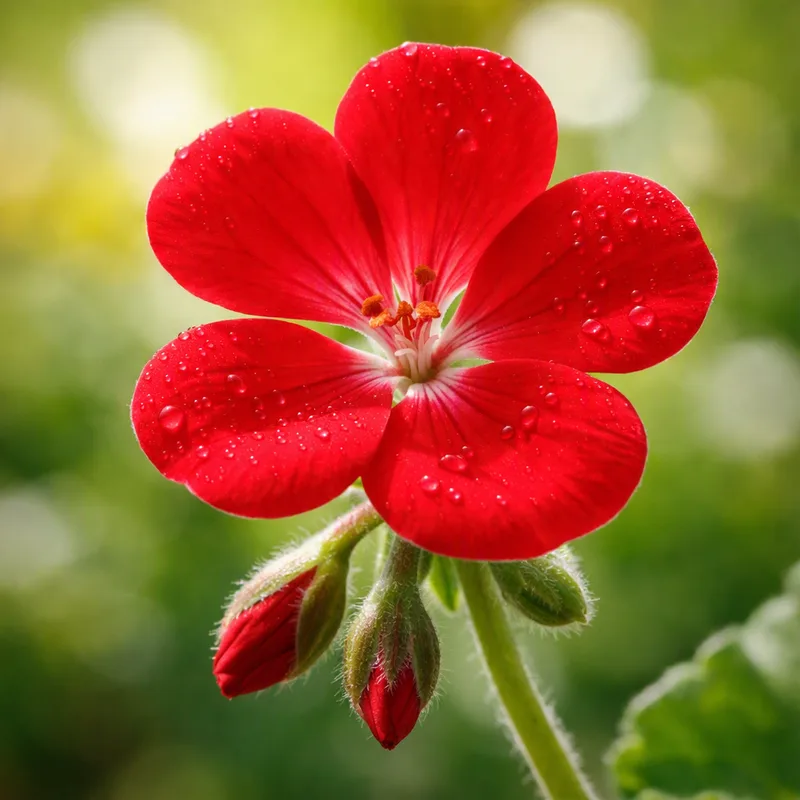
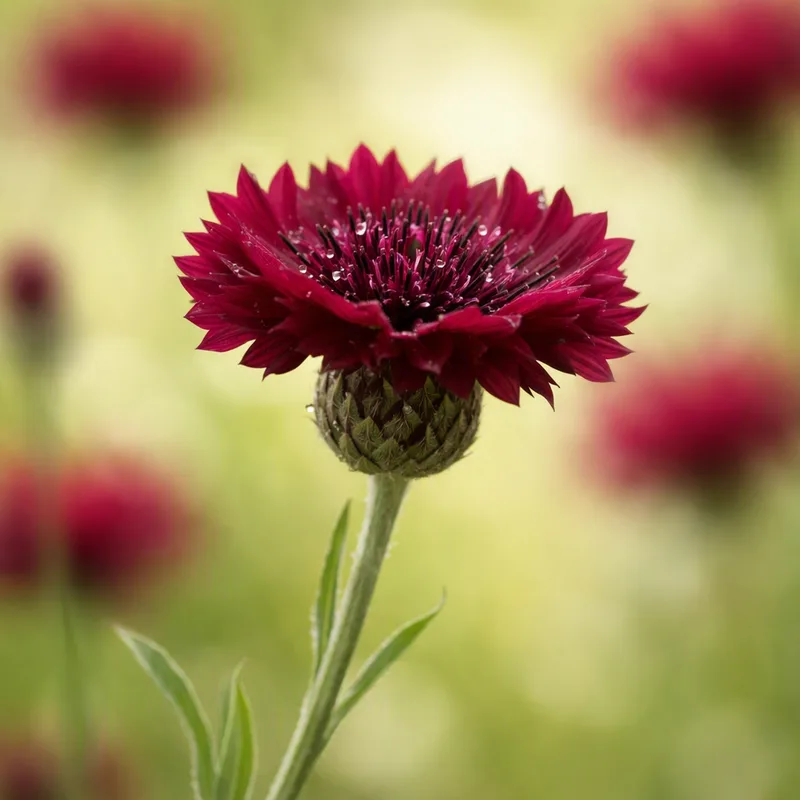
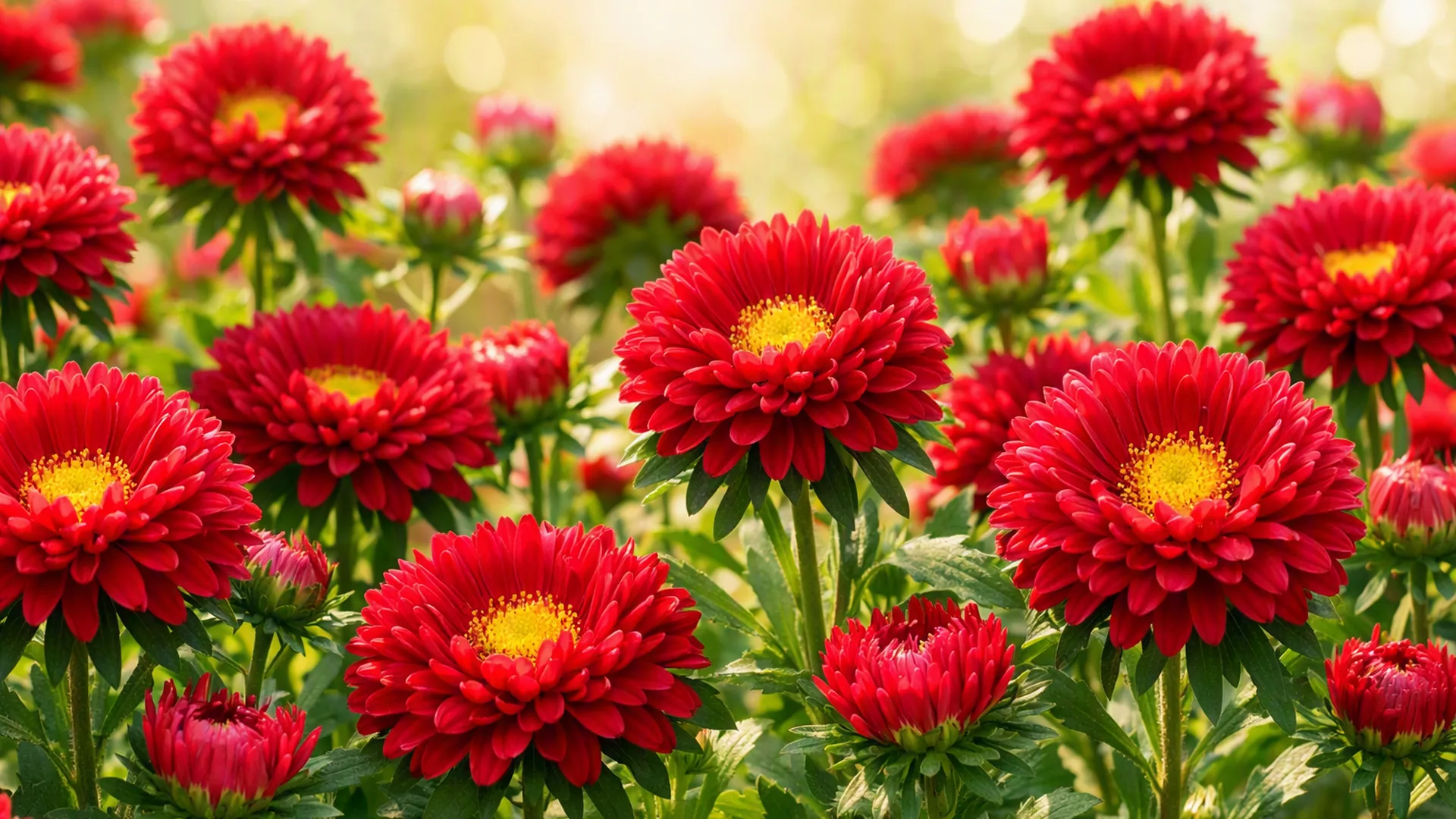
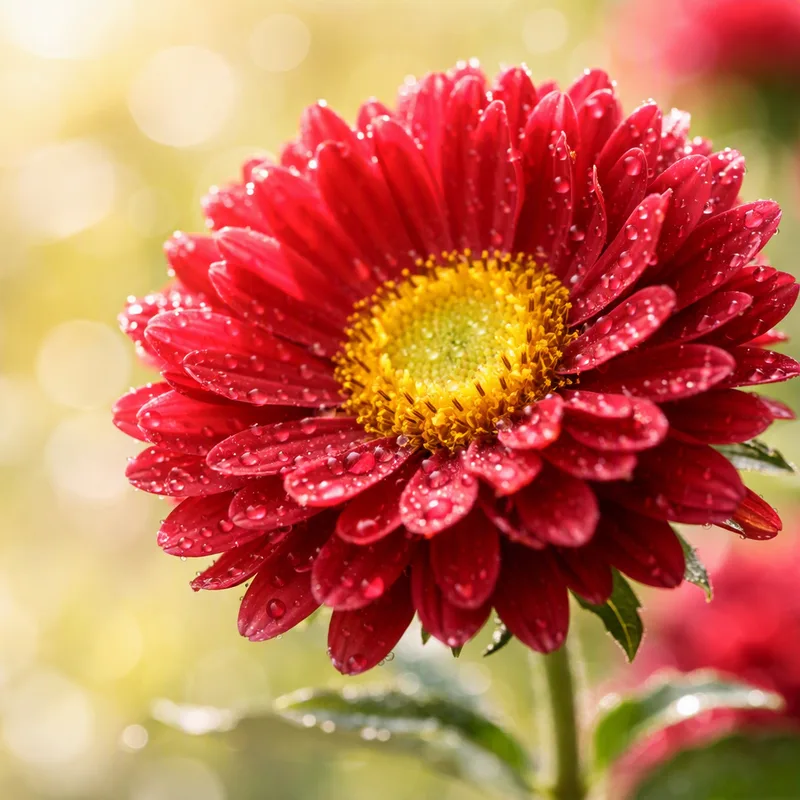
Red China asters come in dark crimson, wine and brighter scarlet, in single or fully double flower shapes. Plant breeders have worked on the species, Callistephus chinensis, for a very long time, as it has been grown in China for 2,000 years and in Europe since the 18th century.
Where reds work
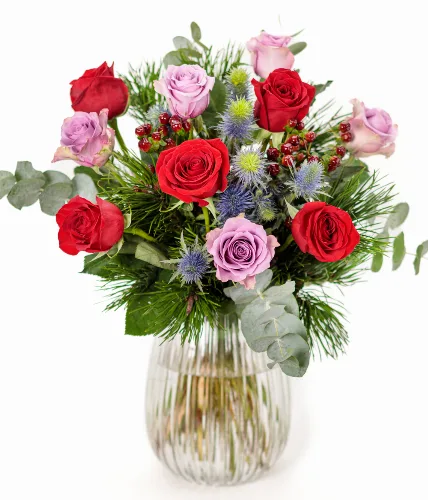
Dark red asters pair well with silvery foliage and with white or cream flowers, which stop the colour feeling heavy. In the garden they flower when many early perennials are spent, so they fill a gap from July onwards.
What the name 'aster' means
Search results often mix up China aster with the autumn perennial asters, but the plants are not the same. Callistephus is annual, so each spring you raise new plants from seed.
- Sow in March to April, then harden off.
- Pick a sunny, sheltered plot out of the strongest westerlies.
- Water at the base, not over the flowers.
- Rotate the bed; avoid replanting asters in the same soil.
Meaning
Asters generally suggest love and patience. A red flower strengthens the love side of the message, and few people mind the lack of an official meaning.
Seed catalogues group China asters by flower form: single daisies, anemone-centred, quilled and fully double pompoms. For cutting, pick a long-stemmed strain, usually 60 to 80 cm. For pots on a patio, dwarf kinds of 25 to 30 cm need no staking and cope better with wind.
For pets
The ASPCA classes China aster as non-toxic to dogs, cats and horses.