
Red does not occur
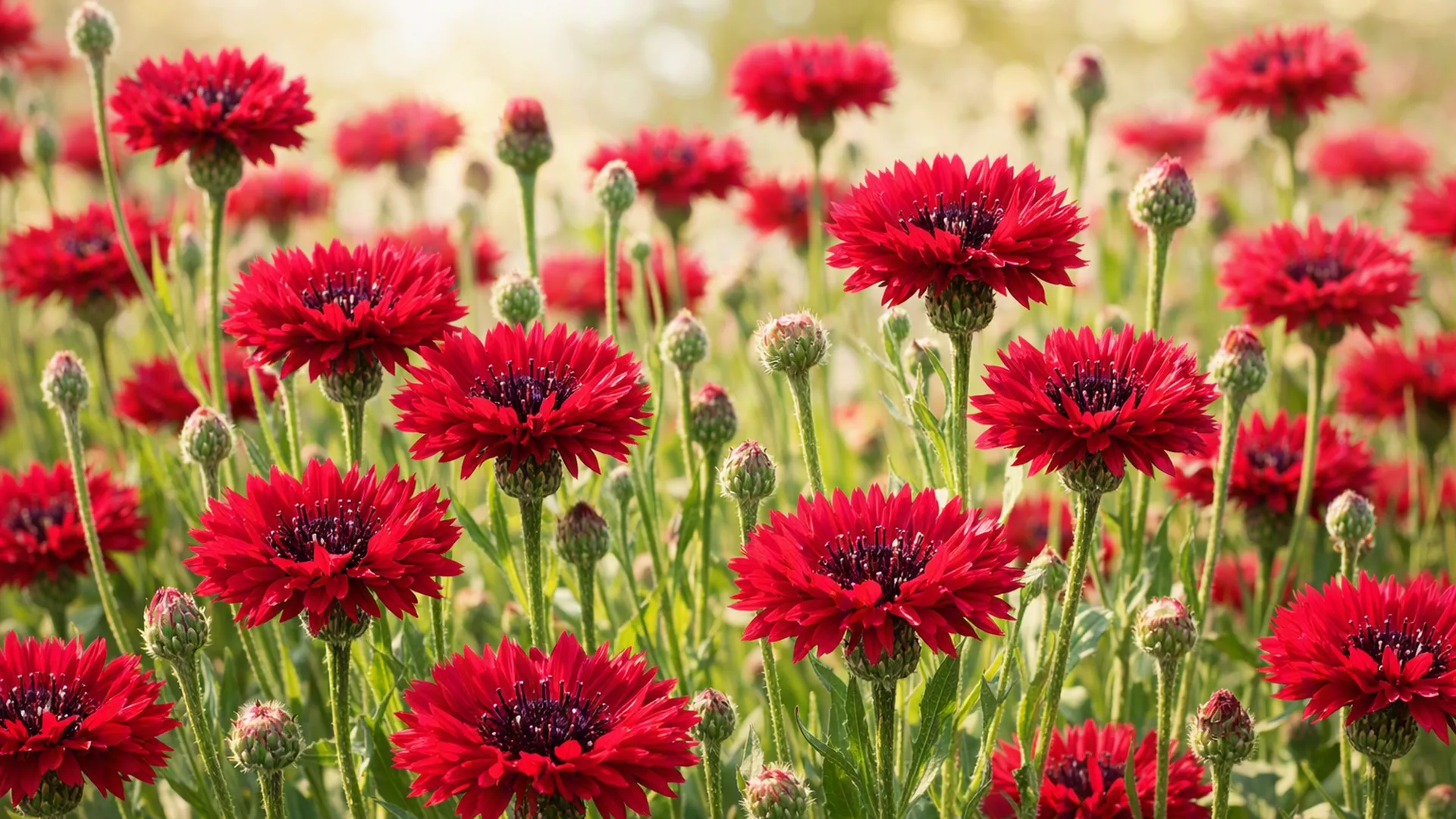
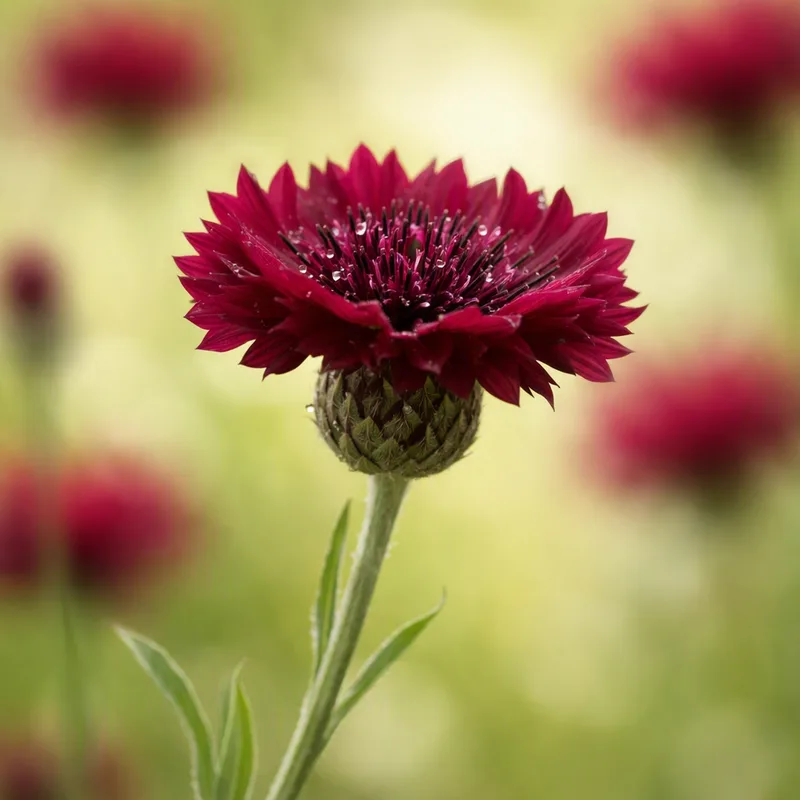
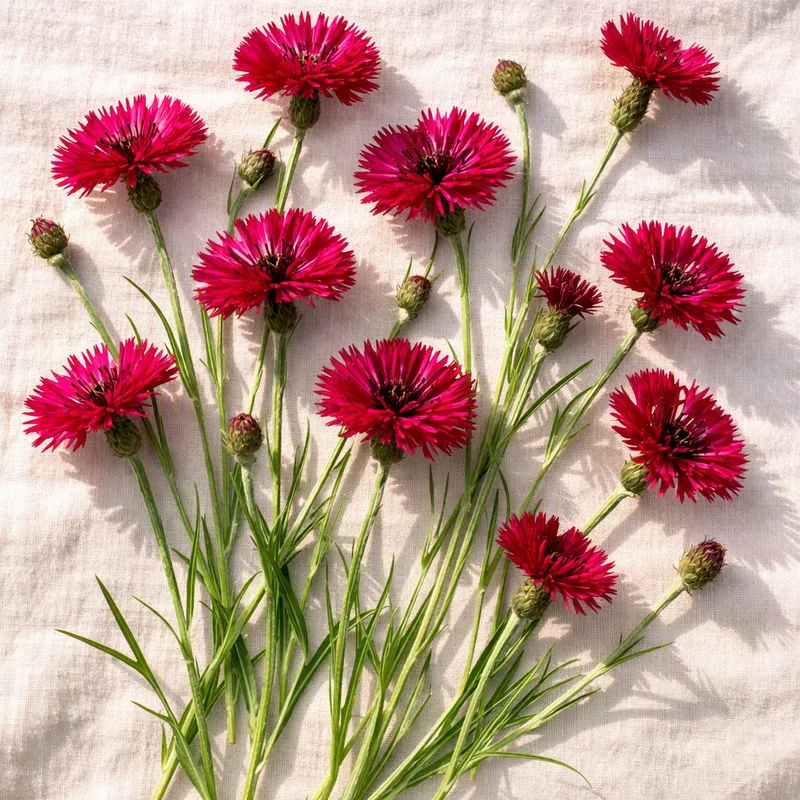
The wild Centaurea cyanus is blue, and cultivated variants cover white, pink, lavender and a deep maroon sometimes marketed as black. Truly scarlet cornflowers are not part of the species, so a seed packet that promises red is usually offering dark claret. Seen against sunlight the petals glow wine red, which can look close to red in a bouquet.
Where dark maroon works
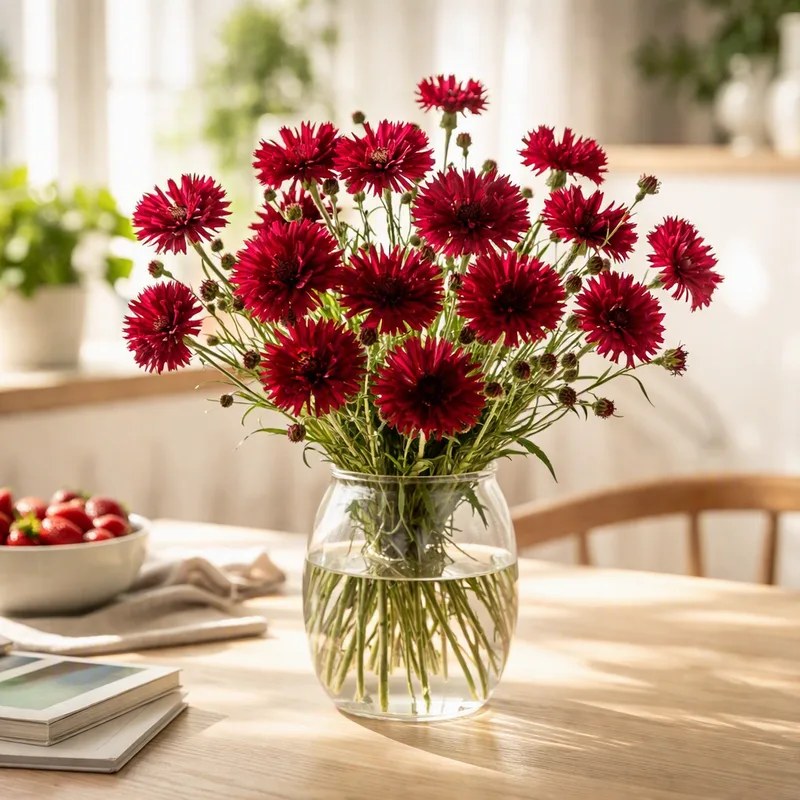
Dark cornflowers add depth to pastel mixes and give a dramatic effect beside lime-green foliage or golden grasses. In an arrangement they play a similar role to a dark chocolate cosmos. Planted with blue and white forms they create a layered meadow look.
Growing guide
- Sow from March in the ground or in pots, in full sun.
- Space seedlings 15 to 20 cm apart.
- Water sparingly; wet feet and rich food produce floppy stems.
- Remove faded flowers to keep buds coming from June to September.
Plants can reach 40 to 90 cm. Autumn sowing in sheltered areas can produce sturdy plants that flower earlier the following summer.
Cutting
Vase life is about a week in clean water. The ASPCA lists the cornflower as non-toxic to dogs and cats.
Setting expectations
Do not expect a flower in the red of a poppy. If you want a scarlet feature, plant poppies alongside the dark maroon cornflowers.