


A strong vertical
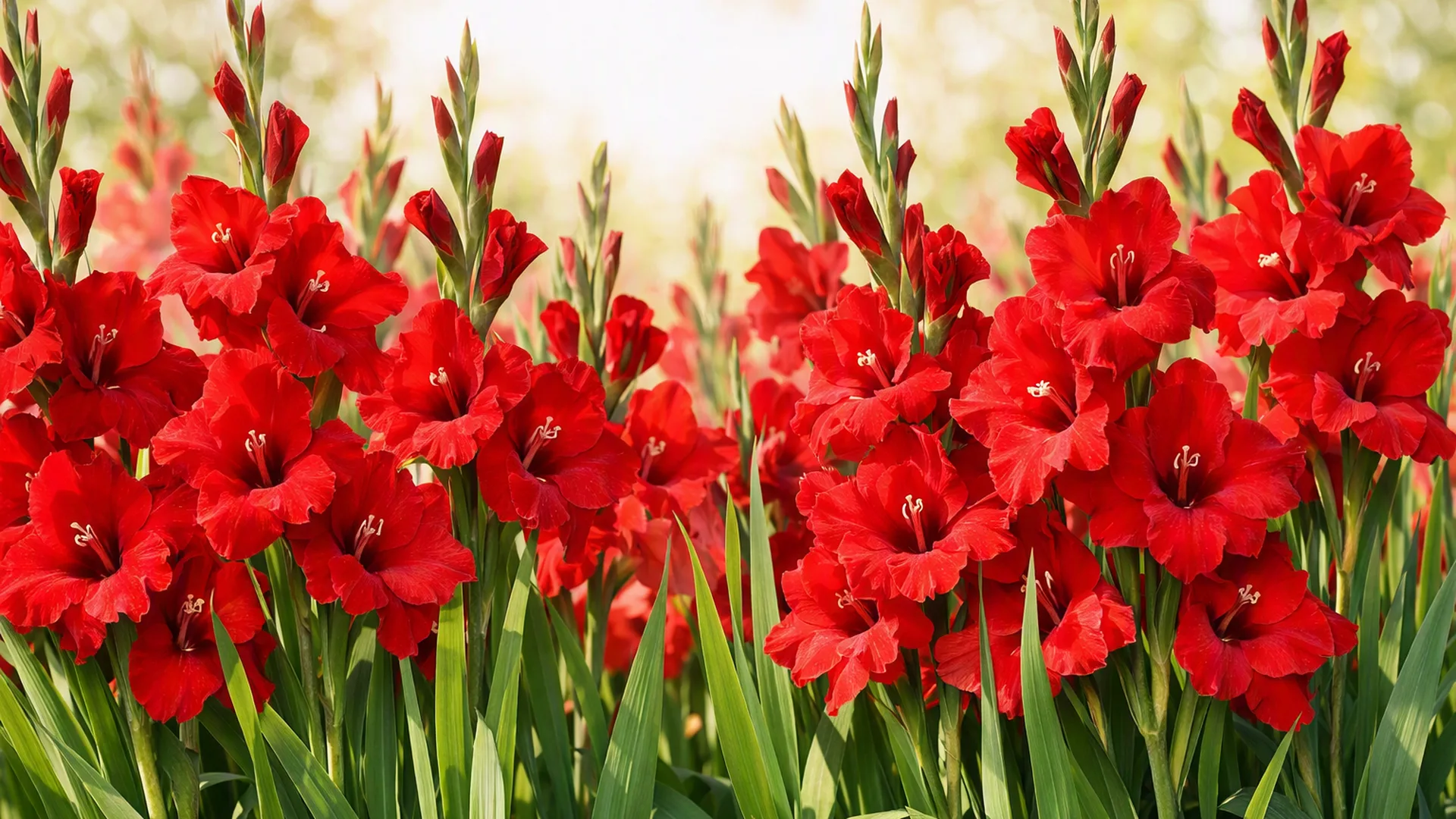
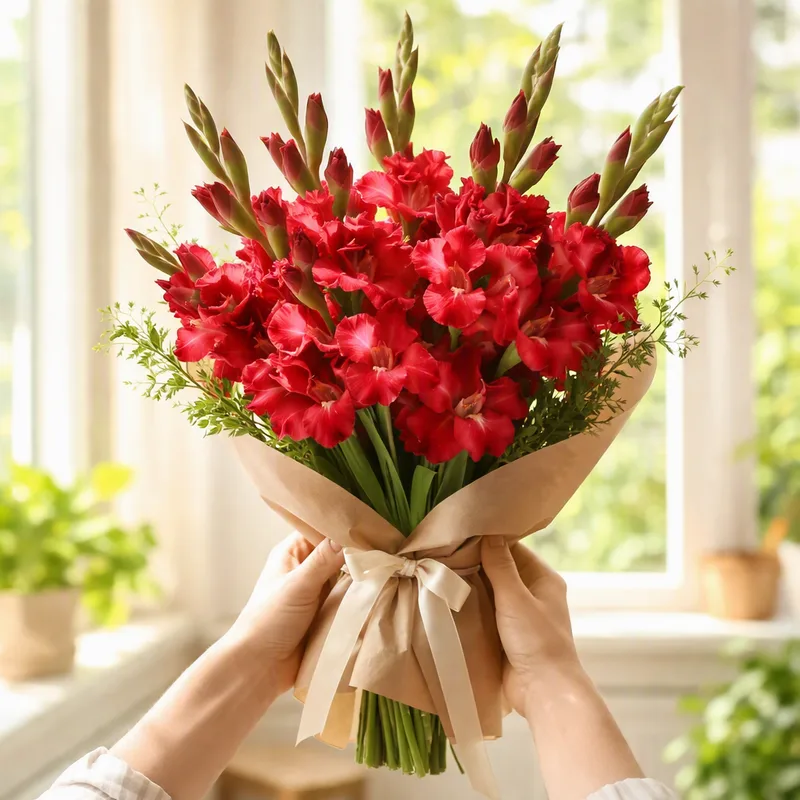
A red gladiolus spike has the visual weight of a small tree. Flowers open from the bottom of the stem upwards, so a spike can stay colourful for a week or more as the upper buds work their way open. The blooms are funnel-shaped and arranged on one side of the stem, which means they face the same way and look best against a wall or in a vase with a clear front.
Colour in the garden
Red against the lush green of an Irish July is a vivid combination. Plant the corms in groups of seven or more rather than in a line, because a clump looks natural. They go well with white daisies, blue delphiniums and silver-leaved plants. Plant a few corms every two weeks from April to June if you would like flowers into September.
Wind and wet
Large-flowered gladioli need support in exposed gardens, particularly along the western coast. Tie each stem to a cane when the flower spike begins to form. Keep the soil moist during growth, but avoid heavy clay where water stands. The leaves must die down before you lift the corms in autumn, because they feed the corm for next year.
Vase tips
- Cut stems when the first one or two flowers show colour.
- Use a tall, heavy vase so the top does not tip it over.
- Change the water and recut the base every few days.
Danger to pets
The ASPCA lists gladiolus as toxic to dogs, cats and horses, with signs including drooling, vomiting, lethargy and diarrhoea. The corm is most dangerous, so keep stored corms in a closed container.