


One name, three kinds of plant
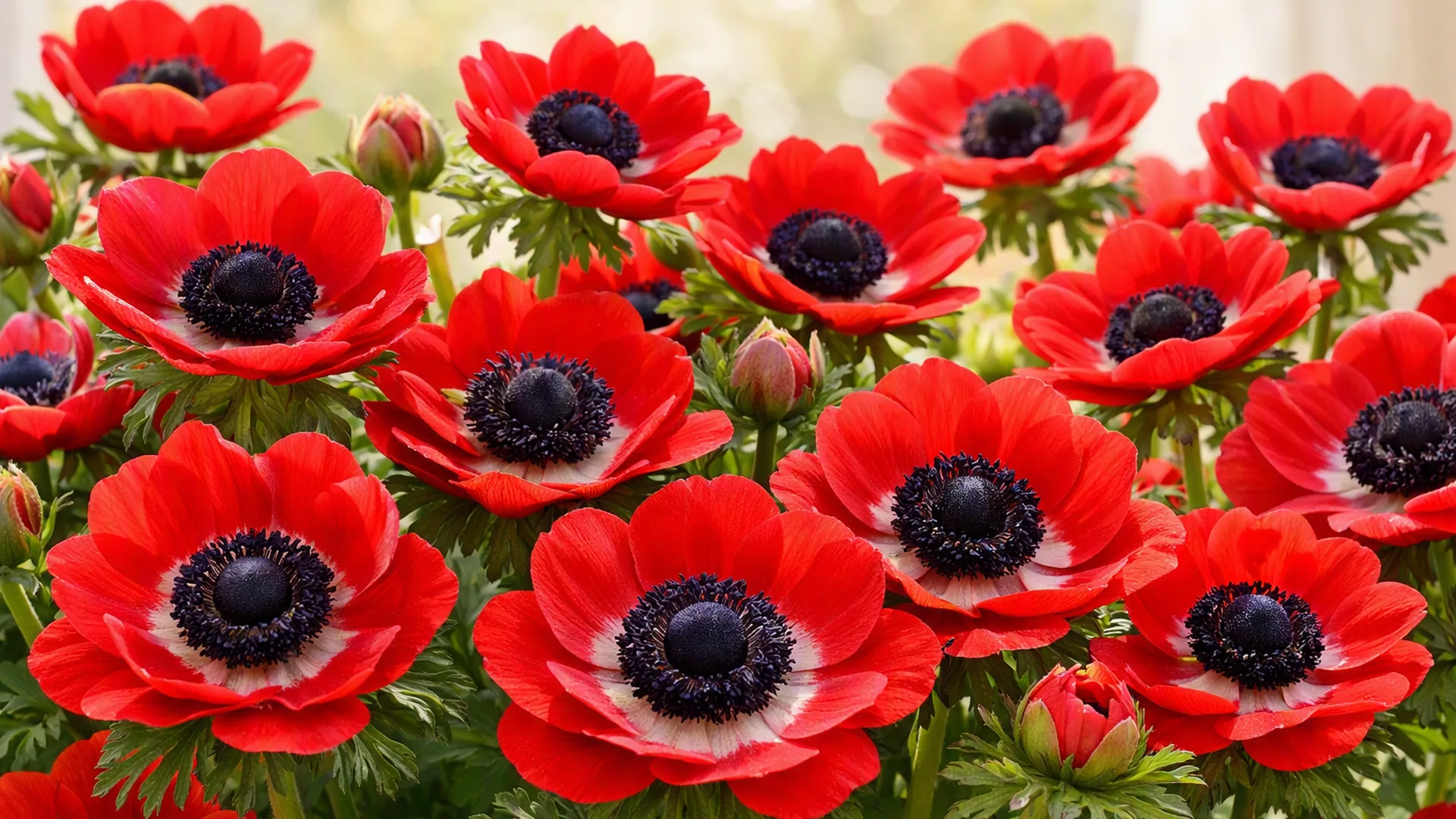
Anemone is a big genus of buttercup relatives. The wood anemone, Anemone nemorosa, carpets Irish woods in March and April with white nodding flowers. The poppy anemone, Anemone coronaria, comes from the Mediterranean and grows from knobbly tubers, 20 to 40 centimetres tall, with silky flowers in many colours. Autumn-flowering Japanese anemones are tall perennials for the border.
A touch of Irish history
Poppy anemones include the St Brigid group, whose cultivars were raised in Ireland and named after the country's patron saint. Two famous ones are 'The Governor' (red) and 'Lord Lieutenant' (a purple-blue). They are a nice reminder that the flower has a long garden history here.
Anemones in a vase
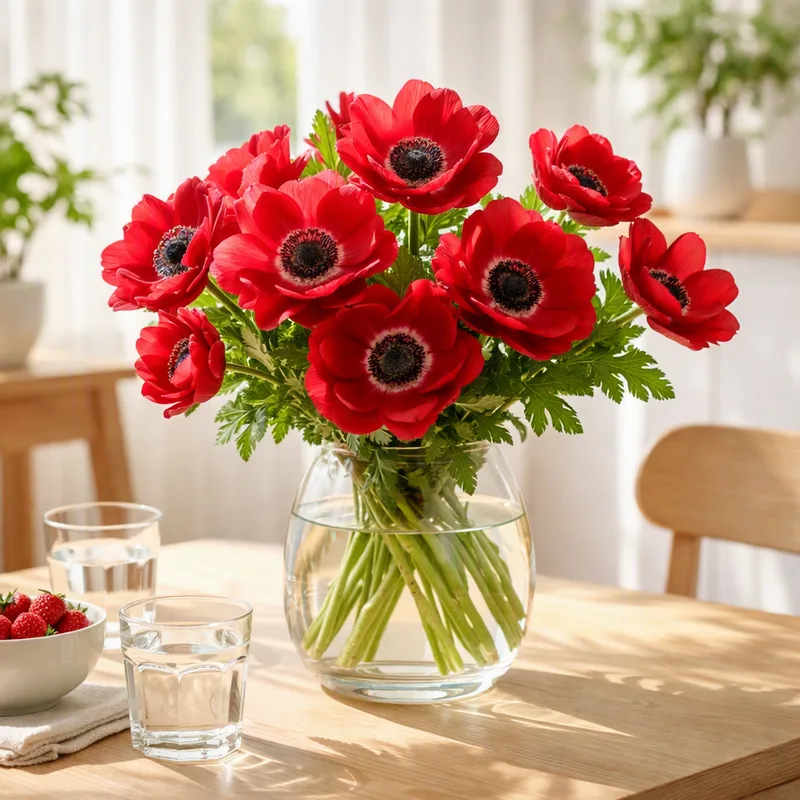
- Cut stems short and keep the water shallow and fresh.
- Expect five to eight days.
- Stems continue to grow and curve towards light, which gives bunches a loose, wind-blown look.
Growing the poppy type in Irish gardens
Plant the tubers in free-draining soil in sun or part shade in early spring, after soaking them for a few hours. They are not always hardy through a wet winter, so lift them or protect the bed. The mild coast is more forgiving than the midlands.
Handling and poisons
Anemones contain protoanemonin, released when the plant is crushed. The sap can blister skin and irritate the mouth, and it can upset the stomach if swallowed. Wear gloves when cutting and wash your hands after arranging. Pets should not chew the stems, and for any suspected poisoning in a person, ring the National Poisons Information Centre.