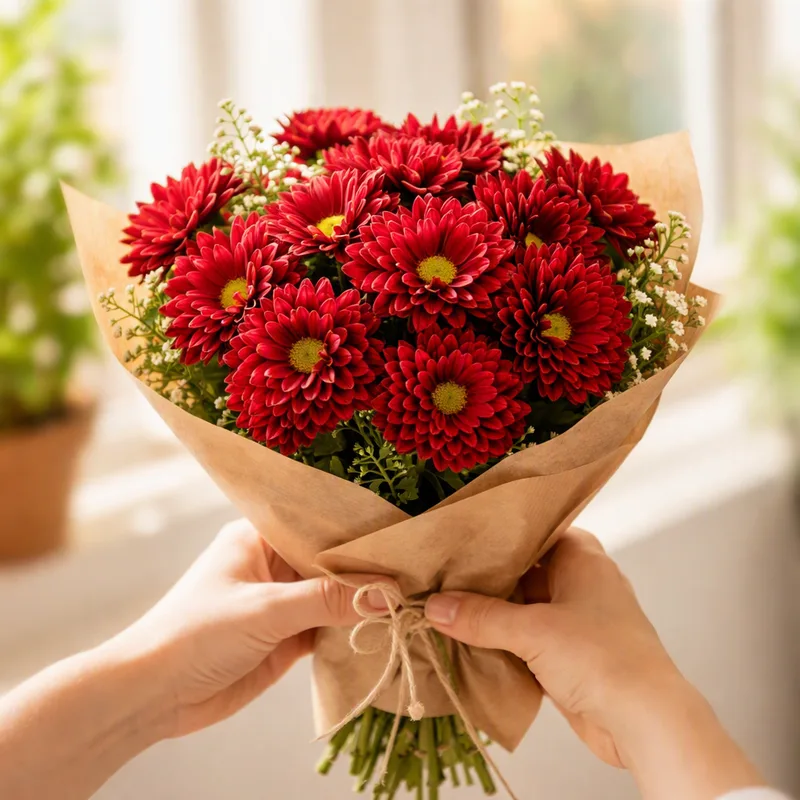

A whole range of reds
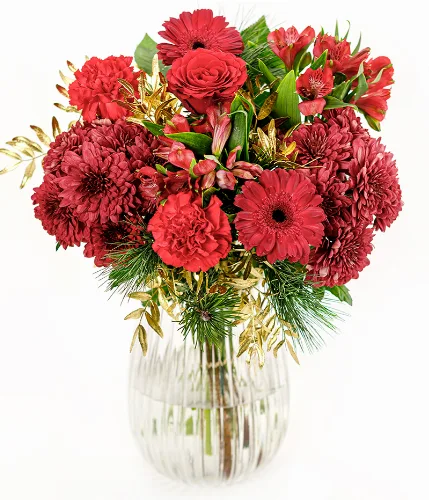
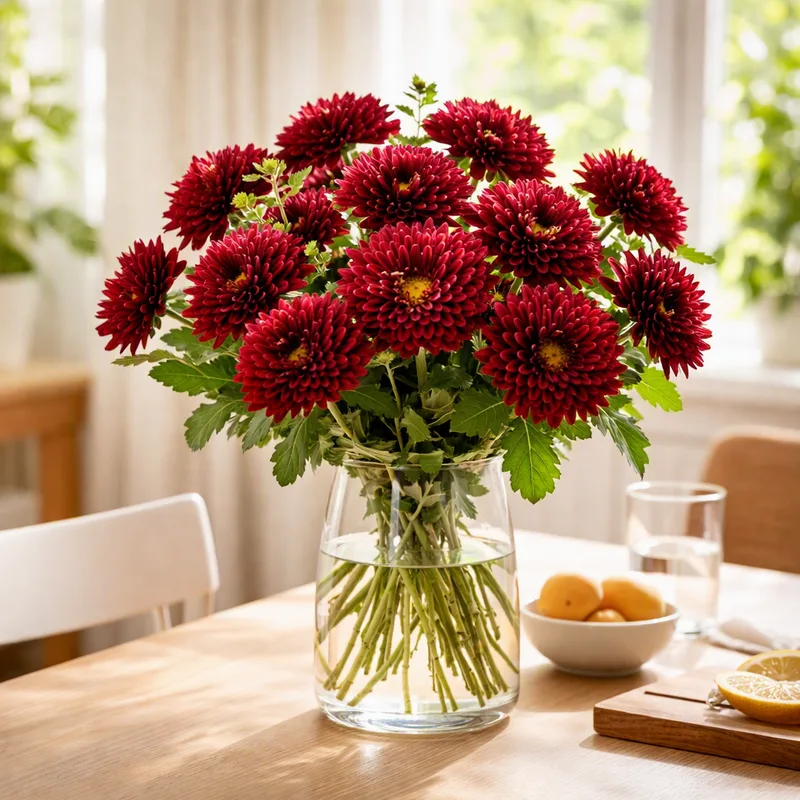
Red is not one shade in chrysanthemums but a scale: deep burgundy, strong crimson, copper and rust. Many varieties have a paler edge or a golden reverse to the petals, which makes the heads look lit up even under a heavy sky.
In a shop, quality shows in firm, full heads and fresh green foliage. Yellow leaves or brown petal edges mean the plant has stood for a while, and dark reds show ageing quickly because they turn brownish.
Colour matches for the season
Red chrysanthemums sit well beside the colours of October: yellowing maple leaves, rosehips, old-rose hydrangeas and brown grasses. In a pot by the door they combine with heather and ornamental kale to make a display that lasts until the first hard frost. The Irish coastal climate is mild and damp, so good drainage matters more than shelter; a pot standing in water will rot the roots long before the cold does.
For graves around All Souls' Day, on 2 November, white and yellow are more common, but red is also used.
Care notes
- Keep potted plants out of fierce midday sun, which can fade dark reds.
- Avoid waterlogging, but never let the root ball dry out completely.
- In a vase, remove lower leaves, re-cut the stems and keep the water clean.
- Cut stems usually last around two weeks.
Toxicity
The plant contains pyrethrins. According to the ASPCA, dogs, cats and horses can show vomiting, diarrhoea, drooling and unsteadiness after eating it. Skin contact with the sap may irritate. Keep vases out of reach of animals and small children.