The colour of the wild plant
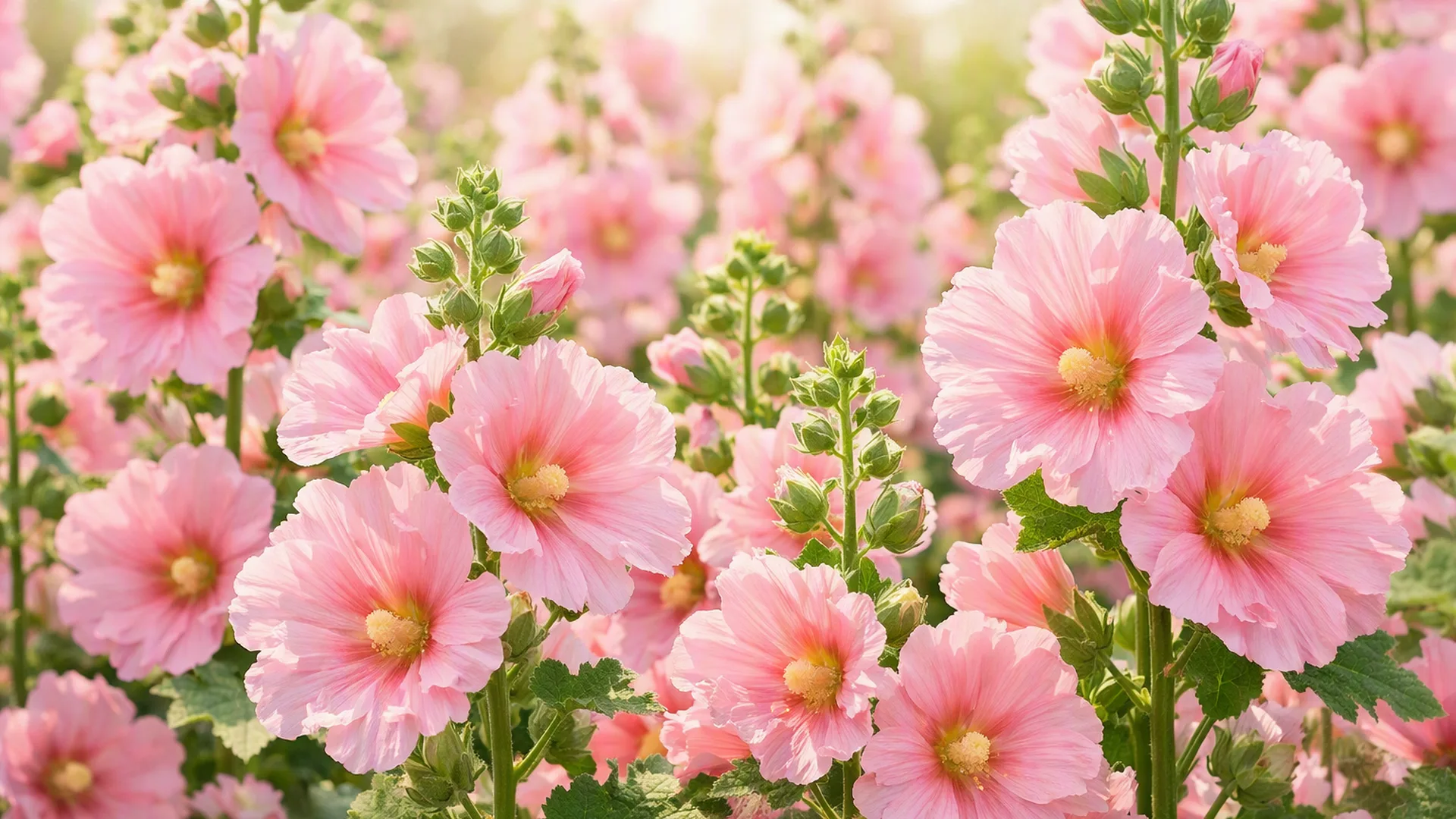
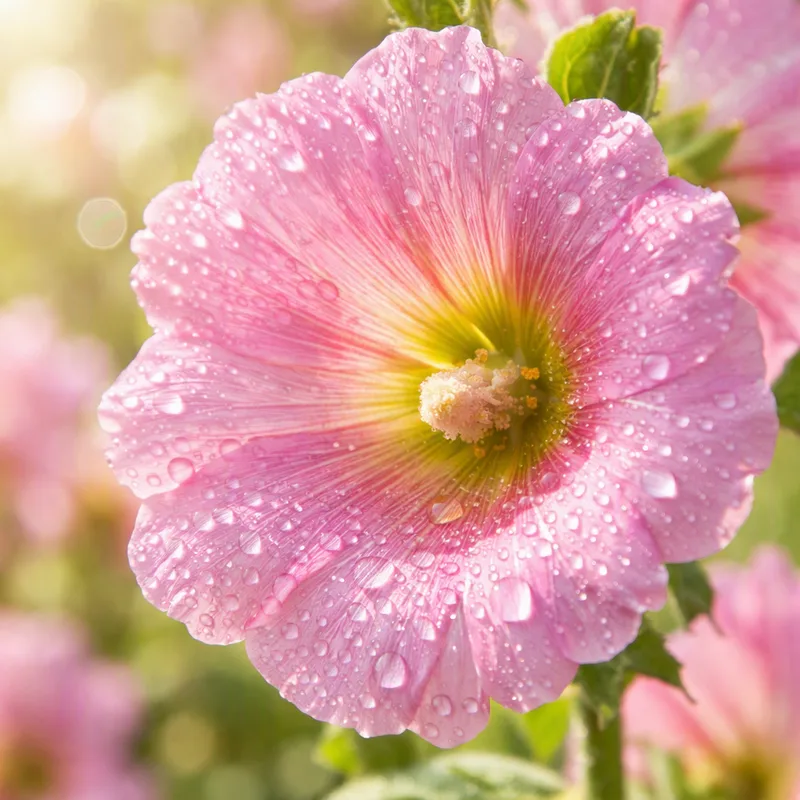
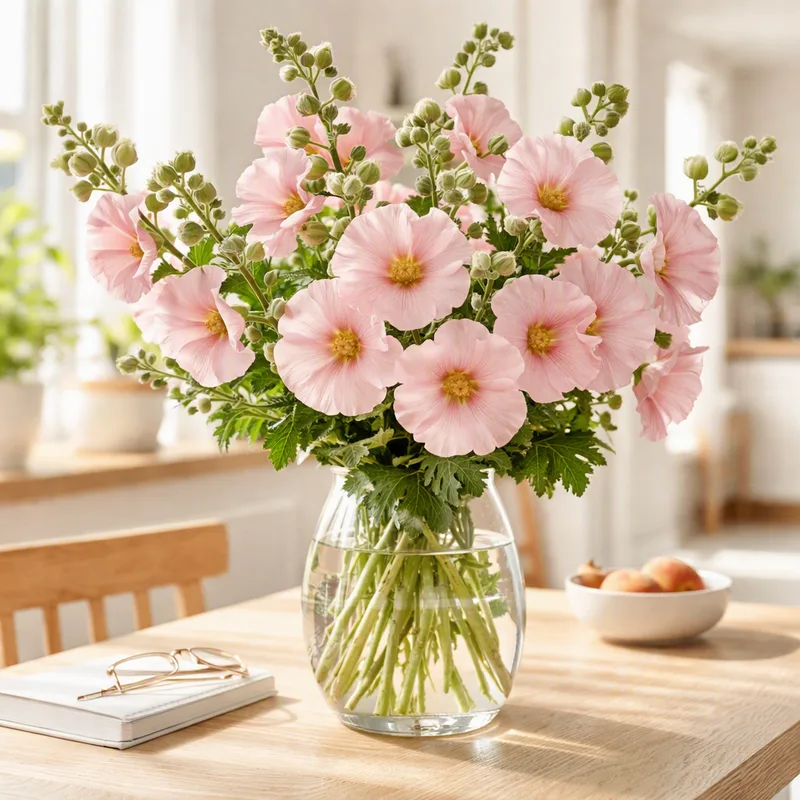
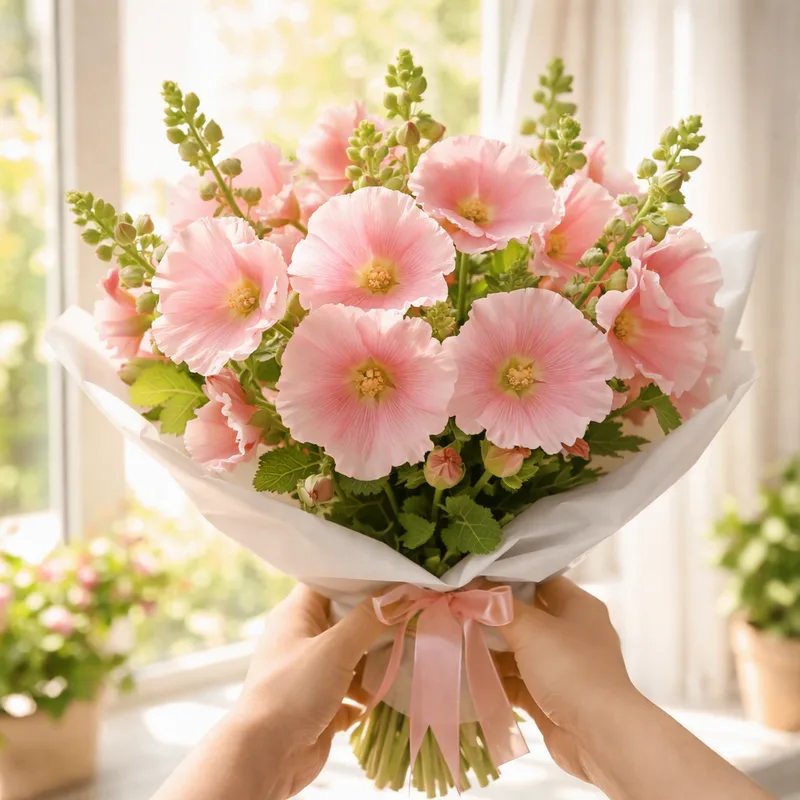
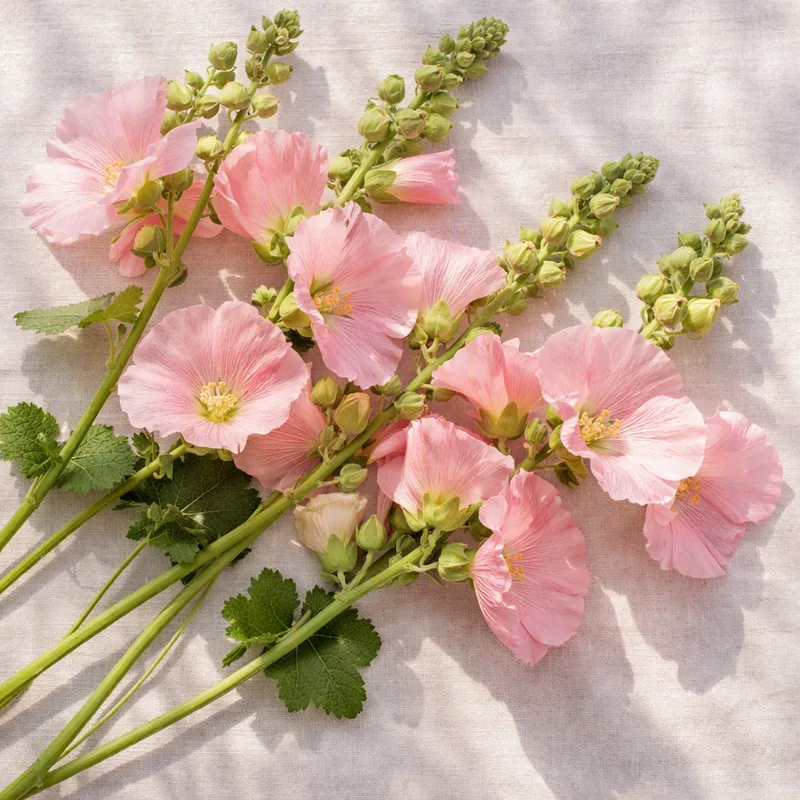
Wild Alcea rosea has pink to purple flowers, so pink feels like the natural hollyhock shade. Garden varieties range from the palest apple-blossom tint to a strong magenta. Double types, whose flowers look like small pompons, are especially popular, and 'Chater's Double' is a well-known strain.
Growing from seed
If you want more plants, collect the seed capsules in late summer once they are brown and dry. The flat, round seeds can be sown outdoors in early summer or in pots. Pink hollyhocks cross readily with neighbours of other colours, so seedlings do not always match the parent. For a particular shade, buy young plants of a named variety and set them out in spring about 50 centimetres apart, so that air moves between the leaves.
In the garden
Pink hollyhocks look good with roses, delphiniums and lady's mantle. By tradition they stand against the sunny walls of farmhouses, where it is warm and sheltered, and rise above the fence in summer. Bees and bumblebees visit the flowers, which open from the base of the spike upwards.
Quick pointers
- Sow between May and July; the first year brings only a leaf rosette.
- Flower spikes of up to two metres come in year two.
- Plant against a wall or give each stem a cane, particularly where Atlantic gales are common.
- Yellow-orange spots on leaves point to rust; remove affected parts and thin the plants.
Pets
Pets are fine around hollyhocks, since the ASPCA lists them as non-toxic to dogs, cats and horses. It is mainly a garden plant and rarely used in the vase.