

Climbing by leaf stalk
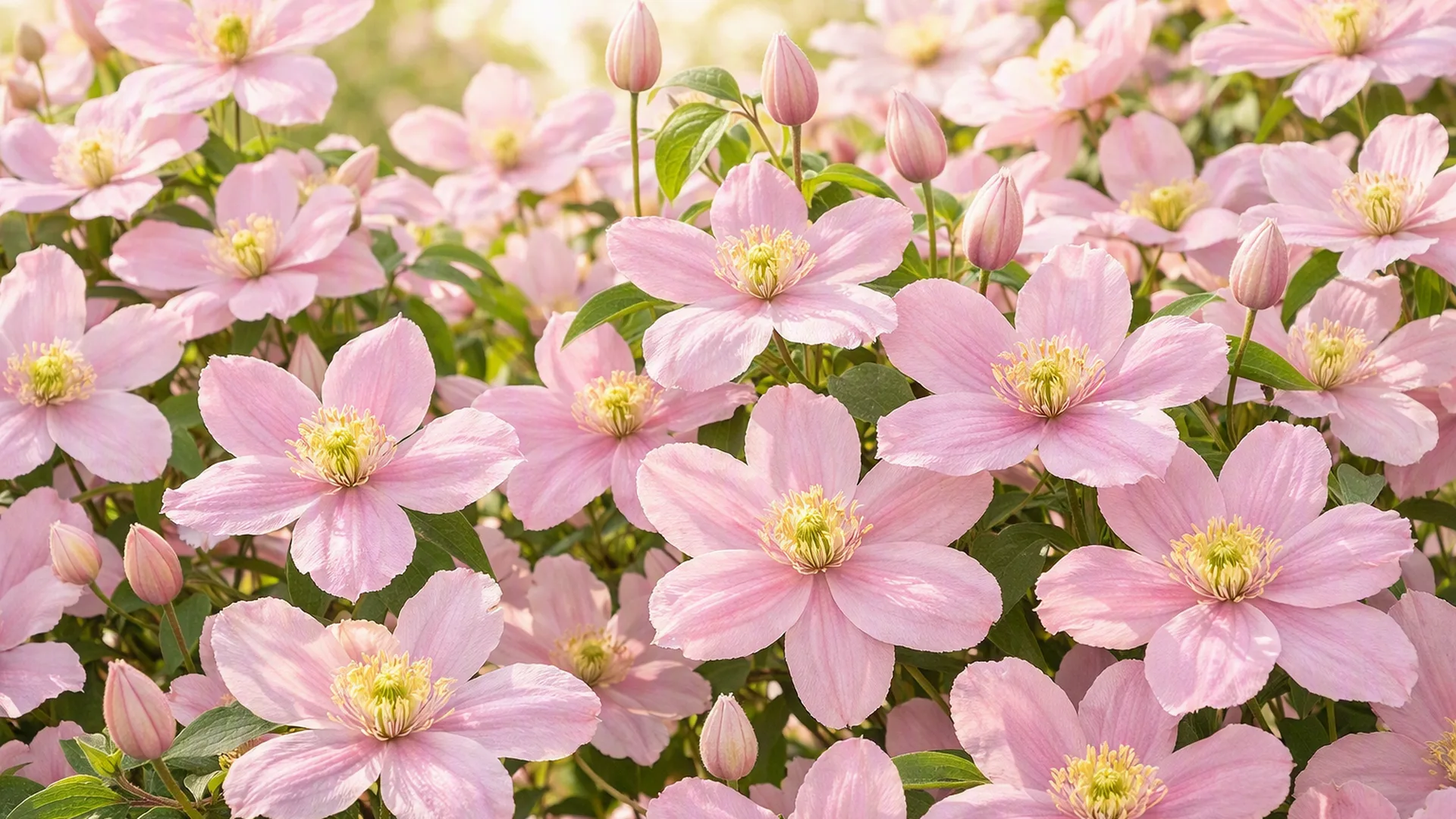
Clematis is a genus of more than 200 species, most of them woody climbers. They cling by twisting their leaf stalks around supports, so they need wires, trellis or a shrub to scramble through. What look like petals are actually coloured sepals. Silky seedheads follow in autumn and look good in low light.
Three pruning groups
Pruning depends on when the variety flowers, and the plant label usually says which group it belongs to.
- Group 1 flowers in spring on last year's wood, such as the vigorous Clematis montana. Prune lightly after flowering.
- Group 2 holds large-flowered hybrids that bloom in early summer. Tidy in late winter.
- Group 3 blooms late, on new growth. Cut hard to a pair of buds near the base in late winter or early spring.
Roots cool, head in light
Clematis wants sunshine on its flowers and shade at the base. Plant deeper than the pot, as the RHS advises, with the root ball 5 to 8 cm below the soil surface; this helps recovery from clematis wilt, a fungal problem that can kill stems of large-flowered hybrids. In Ireland's mild, humid climate a mulch of bark or a low plant in front keeps roots cool and conserves moisture.
Classic names
'Jackmanii' is a purple Group 3 clematis that has been grown since the 1860s, and 'Nelly Moser' is an old favourite from the 1890s.
Sap and pets
The ASPCA classes clematis as toxic to dogs, cats and horses because of an irritant called protoanemonin, which can cause drooling, vomiting and diarrhoea. Handle with gloves, as the sap can irritate skin.