
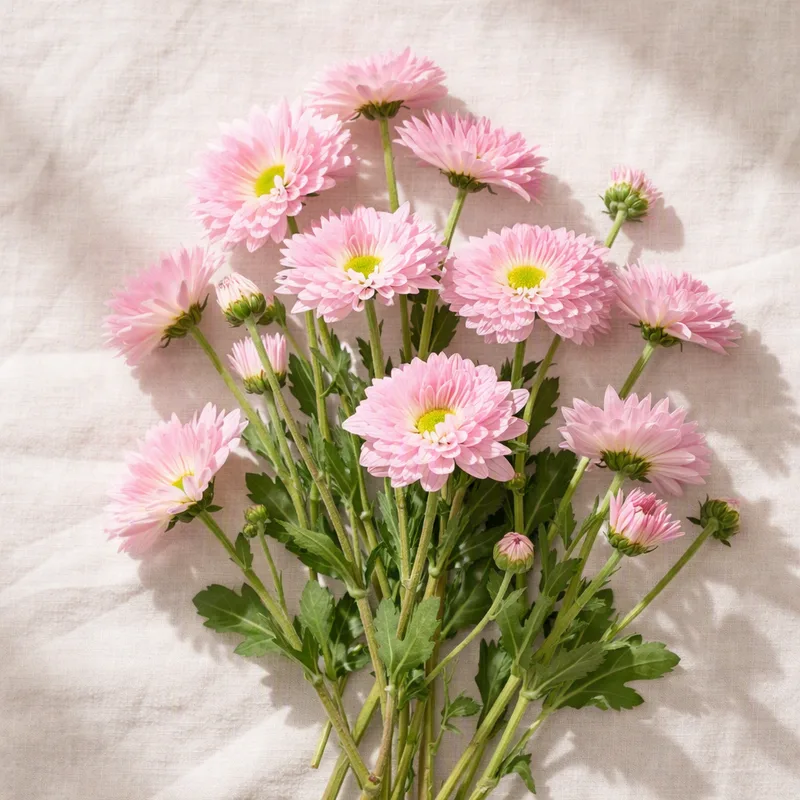
A flower that waits for the long nights
Chrysanthemums are short-day plants, which means they only set buds once the nights lengthen. That is why garden and pot varieties peak from September to November, long after most summer flowers have faded. Growers can control the light, so cut stems are available all year, but the plant itself still keeps to the calendar.
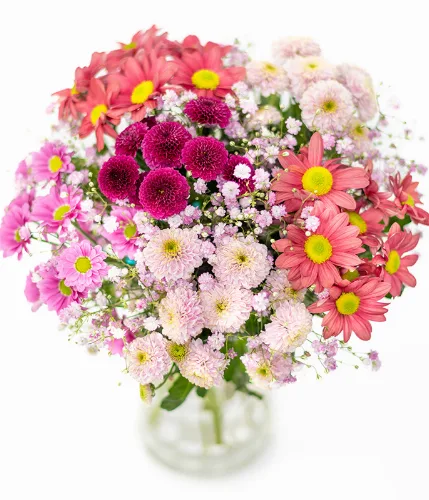
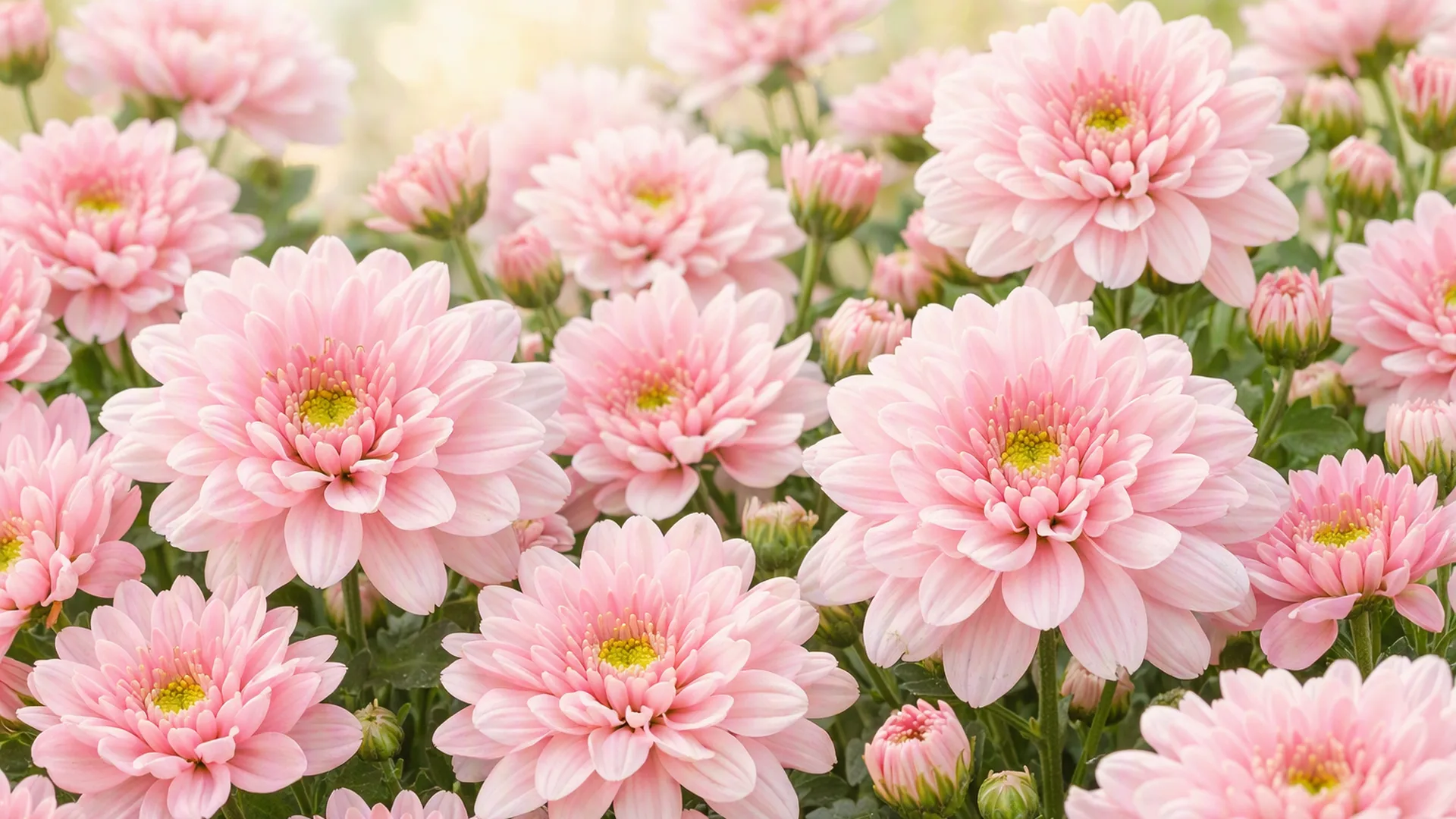
The genus is native mainly to East Asia, and its name comes from the Greek words for gold and flower. The chrysanthemums sold in garden centres are almost all cultivated forms of the florist's chrysanthemum, which has been bred in China for roughly 1,600 years. Heads range from simple daisy shapes to tight globes and small pompons.
Autumn in an Irish garden
Ireland's mild, damp Atlantic climate suits pot chrysanthemums well, and coastal gardens often escape the first hard frost until late. In frost pockets inland the flowers can be caught out, so move potted plants to a sheltered wall or porch on clear, cold nights. Garden chrysanthemums left in the ground vary in hardiness, and a mulch of leaves helps in wet, cold soil.
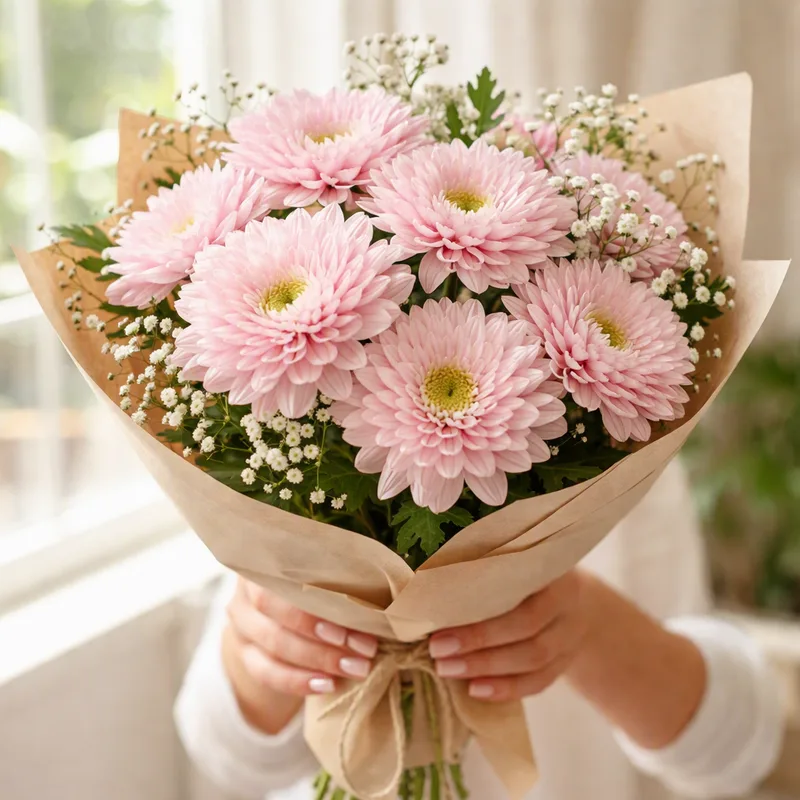
In much of Europe chrysanthemums are linked with All Souls' Day on 2 November, so in some countries they are seen as a flower for remembering people rather than for celebrating. It is worth keeping in mind if you are choosing them as a gift.
Making cut stems last
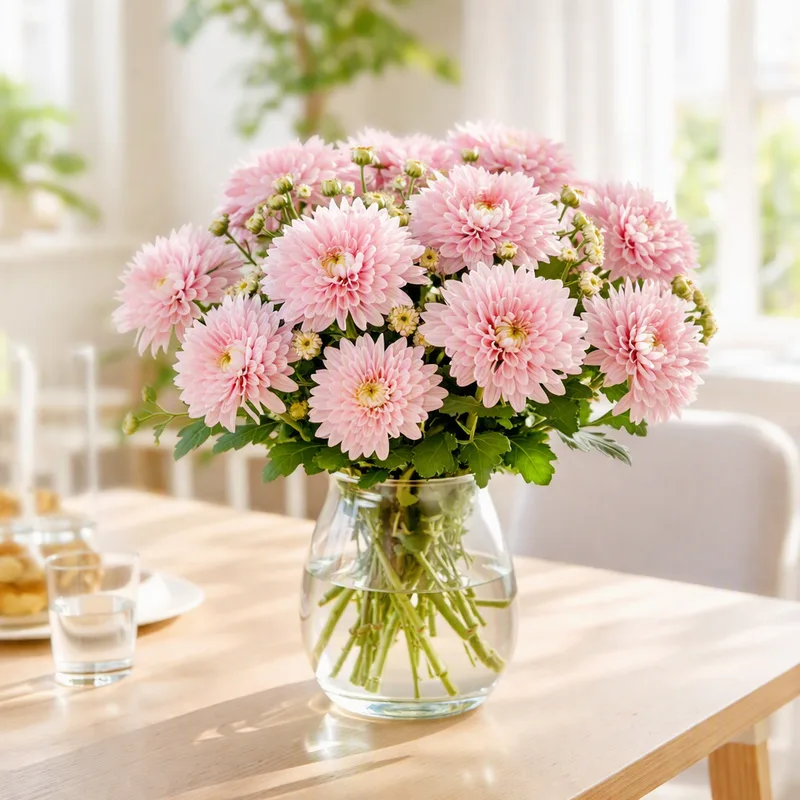
- Cut the stems at an angle with a sharp knife.
- Strip every leaf that would sit below the waterline, because they rot quickly.
- Change the water every few days and add flower food.
- Keep the vase cool and away from radiators.
With that care, cut chrysanthemums often last 10 to 14 days, which makes them one of the longest-lasting cut flowers.
Pets
The ASPCA lists chrysanthemum as toxic to dogs, cats and horses. Typical signs are vomiting, diarrhoea, drooling, loss of coordination and skin irritation, so call your vet if a pet has chewed any part of the plant.