


Spires for the back of the border
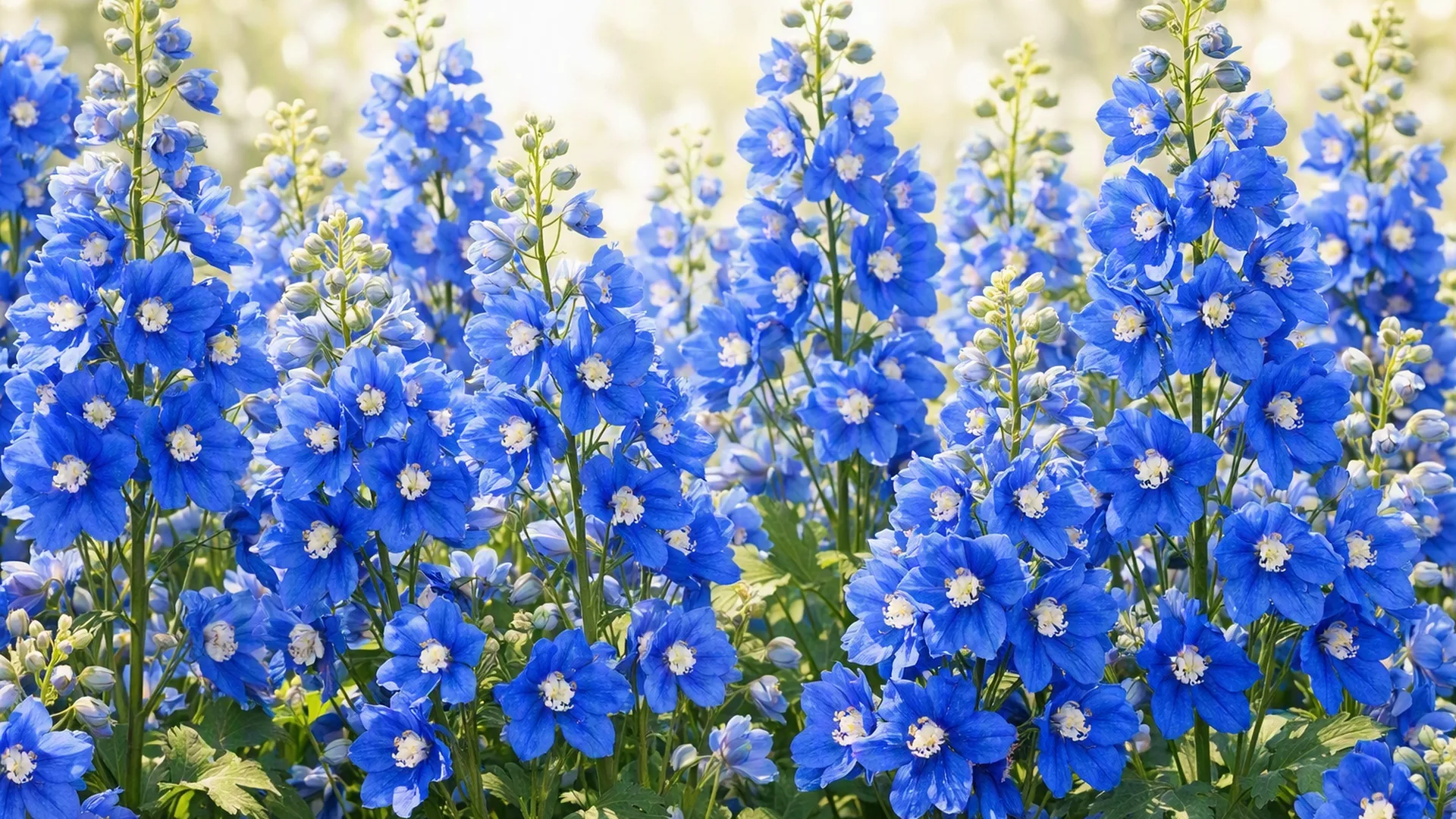
Delphinium is a genus of around 300 to 450 species, depending on whose count you accept, but the plants most gardeners grow are hybrids of Delphinium elatum, bred in the nineteenth century and since. They throw up flower spikes of 1 to 1.8 metres in June and July, and blue is the colour everyone expects. The name comes from the Greek for dolphin, a reference to the shape of the flower buds.
Beating Irish weather
Delphiniums are tough in the cold but weak against wind and slugs.
- Stake early with canes or a framework, before the stems reach waist height.
- Give them rich, moist, well-drained soil in full sun; they appreciate a neutral to slightly alkaline soil, so acid peat or bog soil usually needs lime.
- Protect new shoots from slugs and snails in spring, because a single night can ruin a young plant.
- Cut spent spikes to the base, feed and water, and a smaller second flush often follows in late summer.
Delphinium and larkspur
Larkspur is the name used for the annual Consolida, whose flowers are looser and more delicate. Many people use the two names interchangeably for the cut flowers.
Poisonous in every part
Delphinium is on the ASPCA list of plants toxic to dogs, cats and horses. People should also avoid eating it, and the sap can irritate skin, so wear gloves when cutting. If someone swallows part of the plant, call the National Poisons Information Centre or seek medical advice.
In a vase
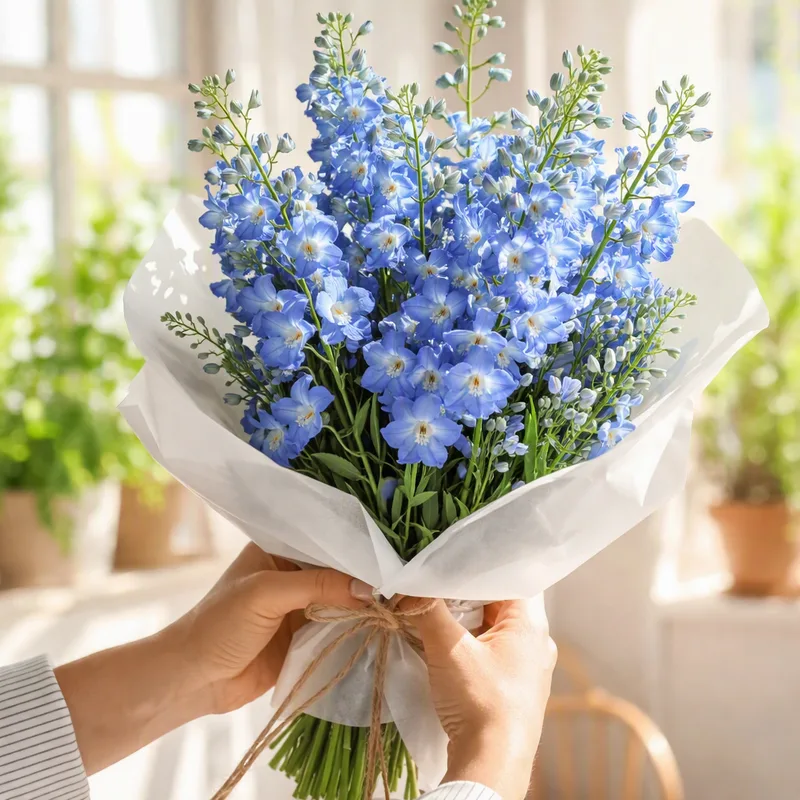
Expect around five to eight days, and place the stems out of draughts.