

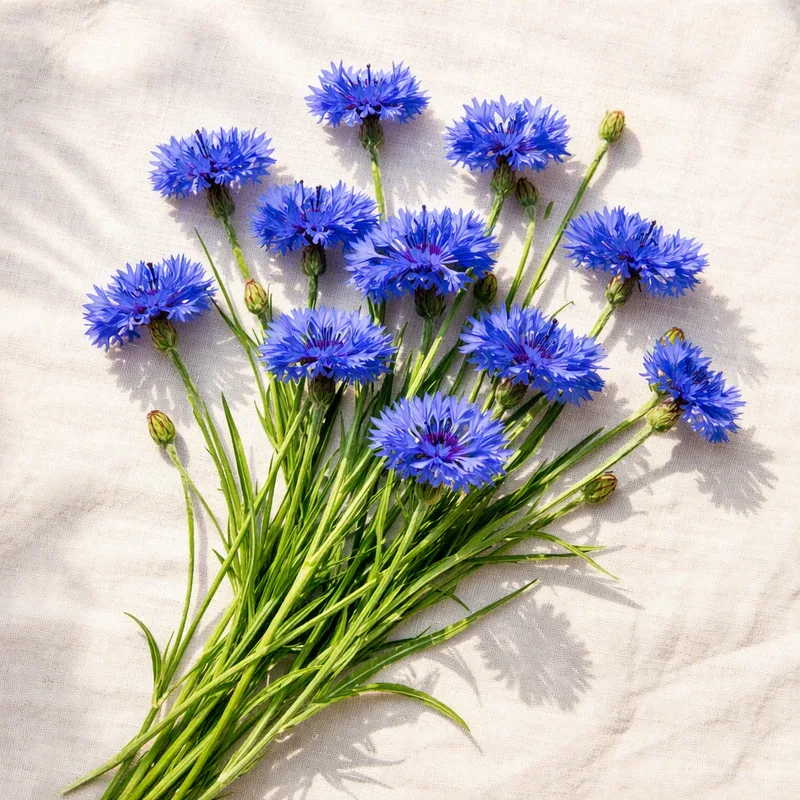
A field flower with Iron Age roots
Centaurea cyanus is an annual in the daisy family, native to Europe, and it has grown in Britain and Ireland since the Iron Age as an archaeophyte, an ancient introduction. It once travelled with grain and flourished in cornfields: records show it was abundant in the north-east of Ireland before the 1930s, while in County Clare it is noted as very rare and almost extinct in arable fields. Modern seed and herbicide use did the damage, and now most plants you meet come from gardens.
Why blue stands out
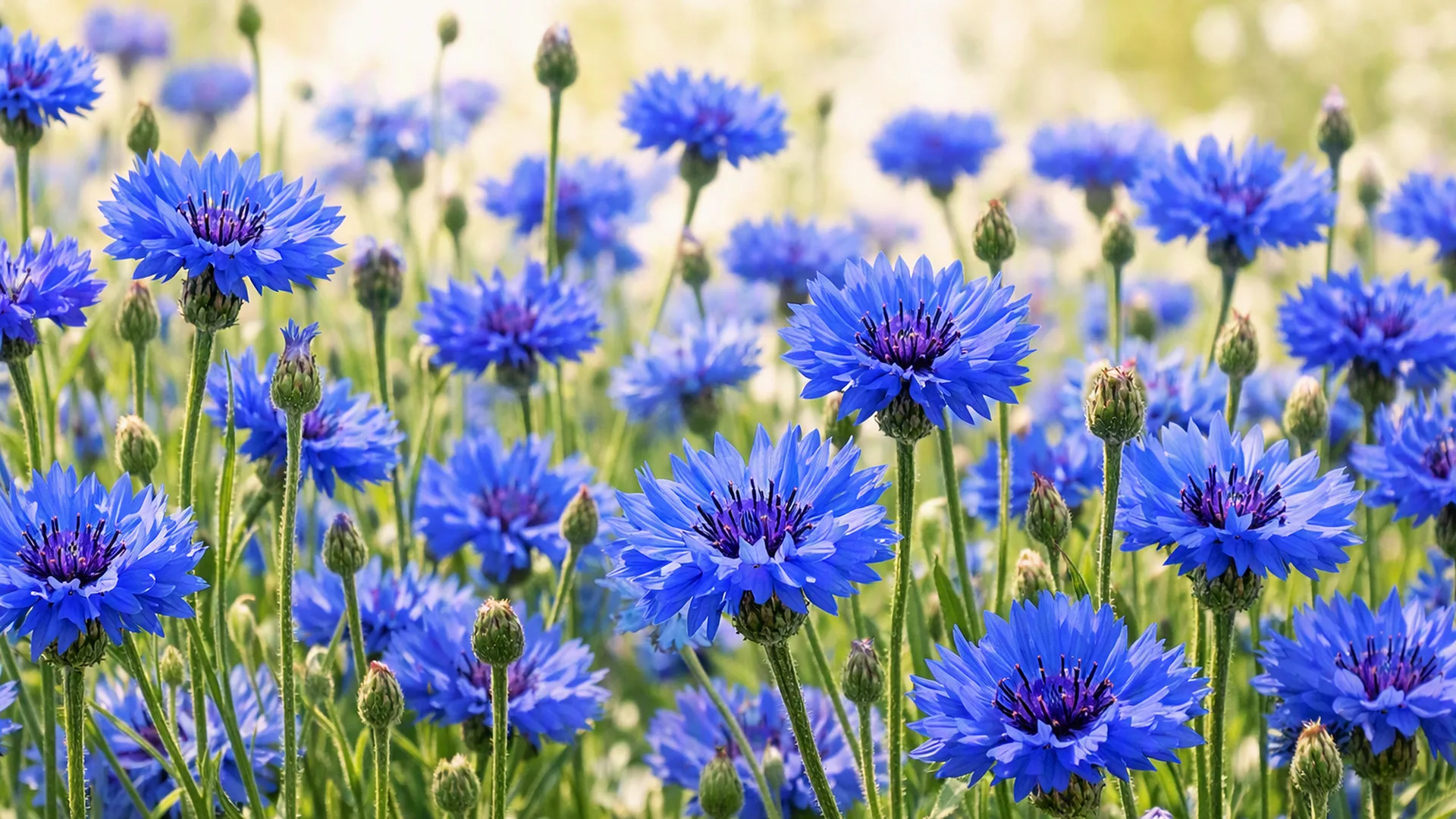
The Greek word kyanos means dark blue, and the flowers are most often an intense blue, held in heads 1.5 to 3 cm across. Plants range from 20 to 100 cm tall with grey-green stems. Bees and hoverflies visit often, and beekeepers value the plant for its nectar.
Sowing for summer
- Sow outdoors in spring where the plants will bloom.
- Choose sun and ordinary soil; rich ground only produces soft growth.
- Deadhead to keep flowers coming from June until September.
- A sowing in autumn can give earlier plants the next year in mild districts.
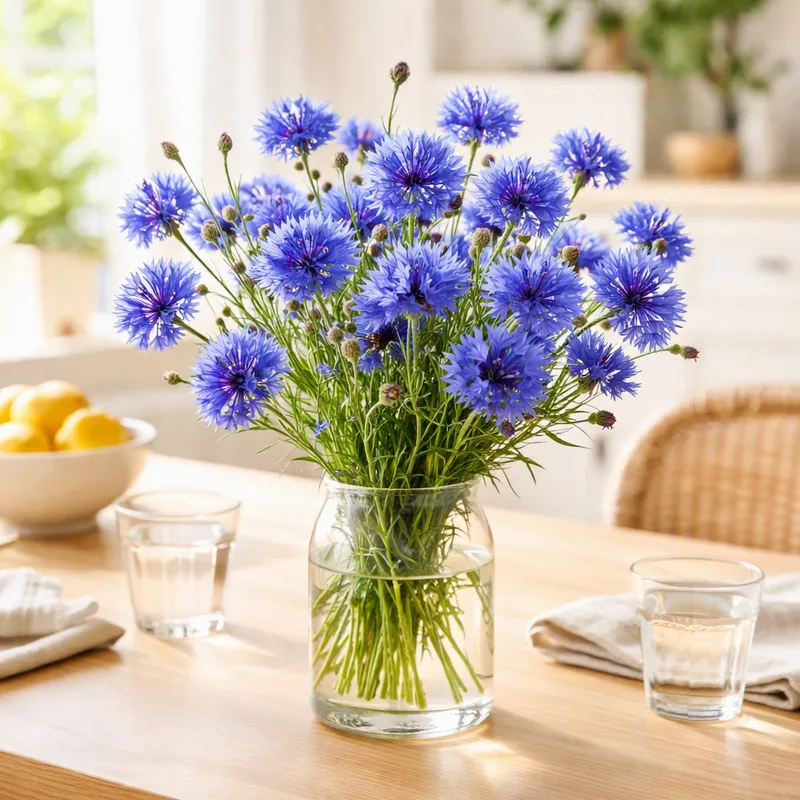
Doubles such as 'Blue Boy' are the usual choice for cutting.
Cutting and pets
Stems last about five to seven days in water. Change the water every other day. The ASPCA lists the cornflower as non-toxic to dogs and cats, so it is among the more relaxed choices for homes with animals.