
Cultivars that lean pink
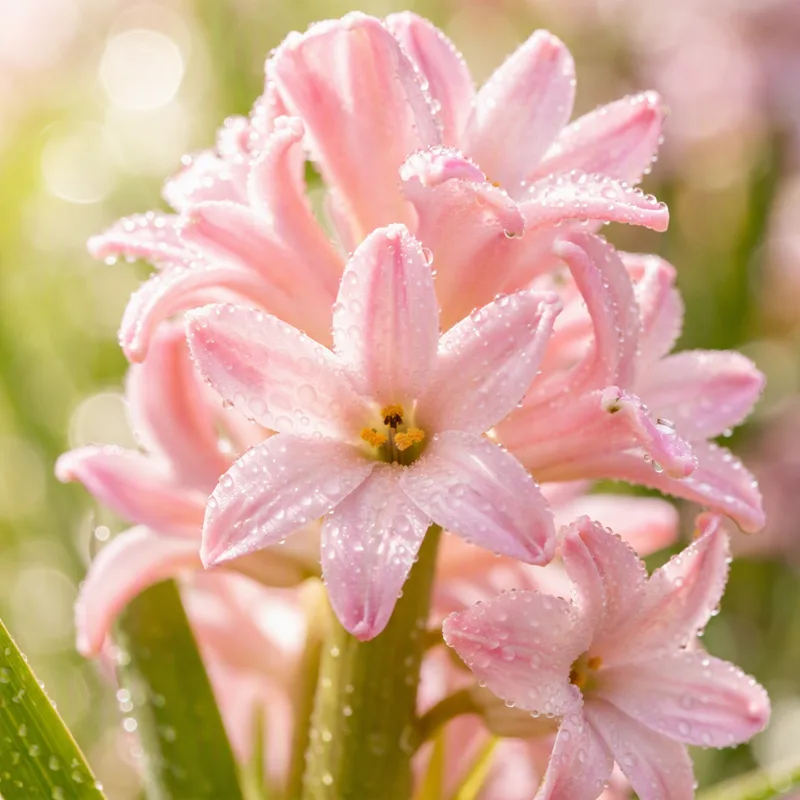
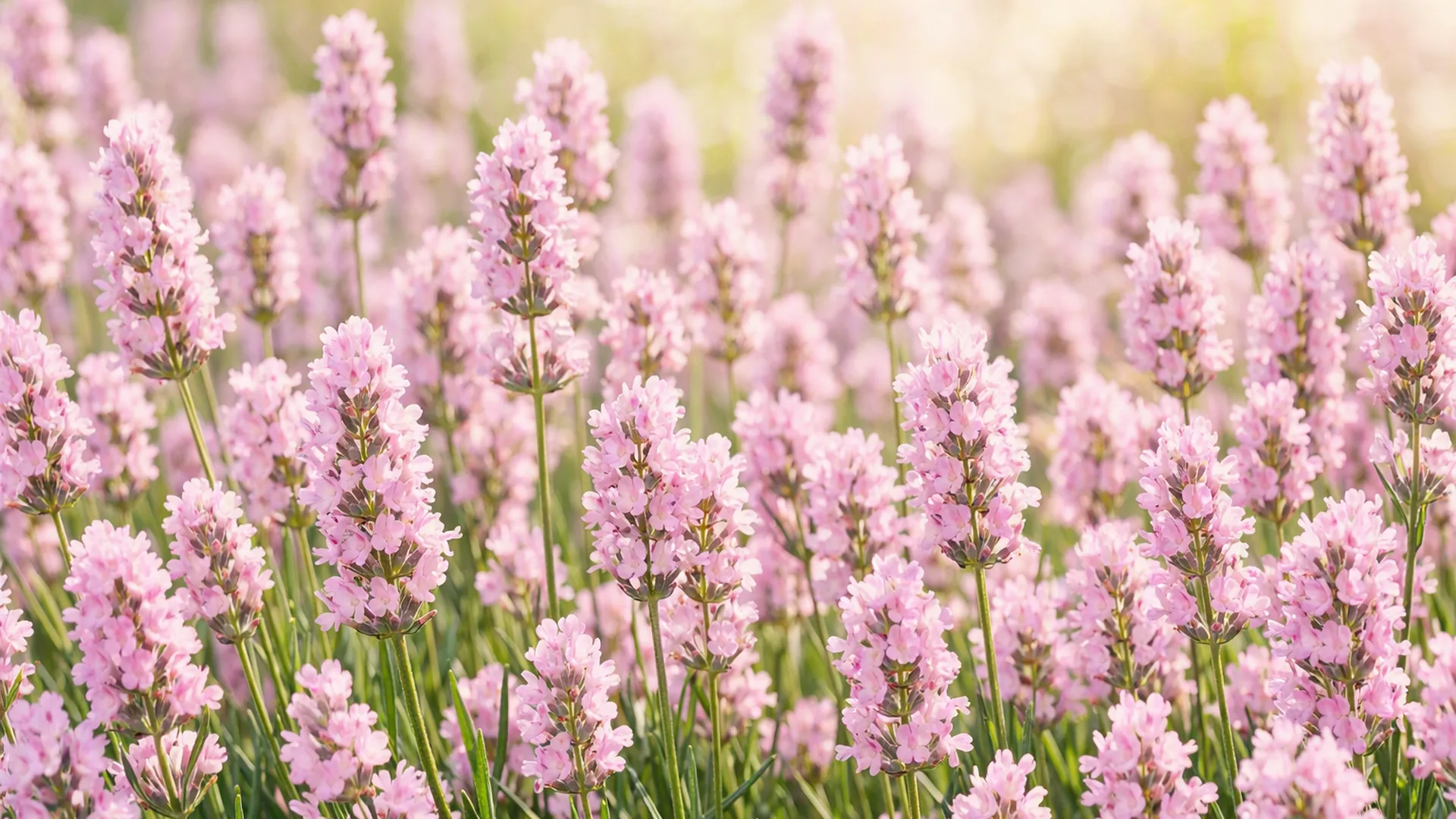
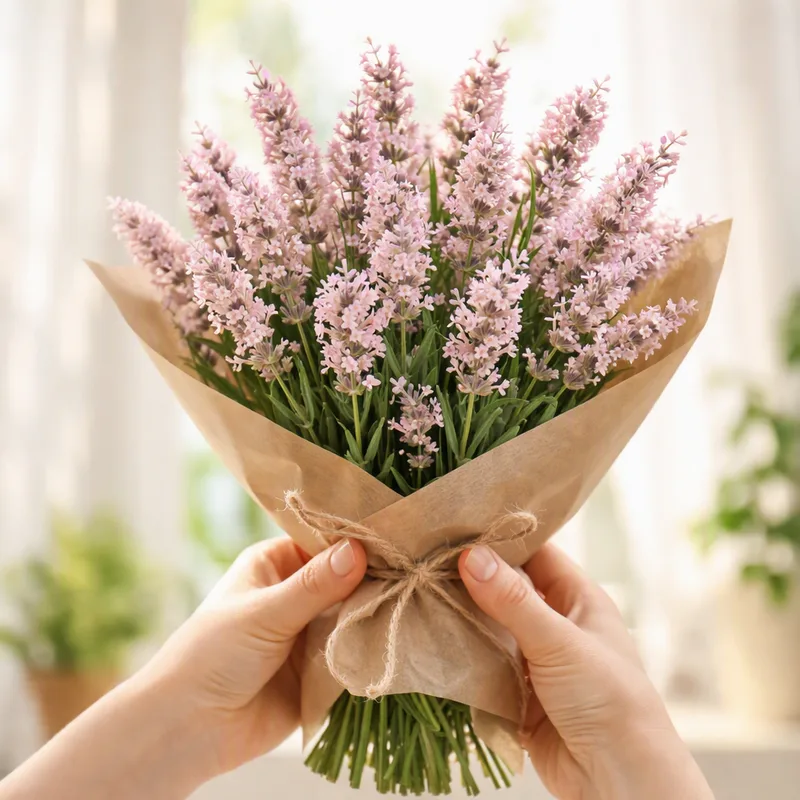
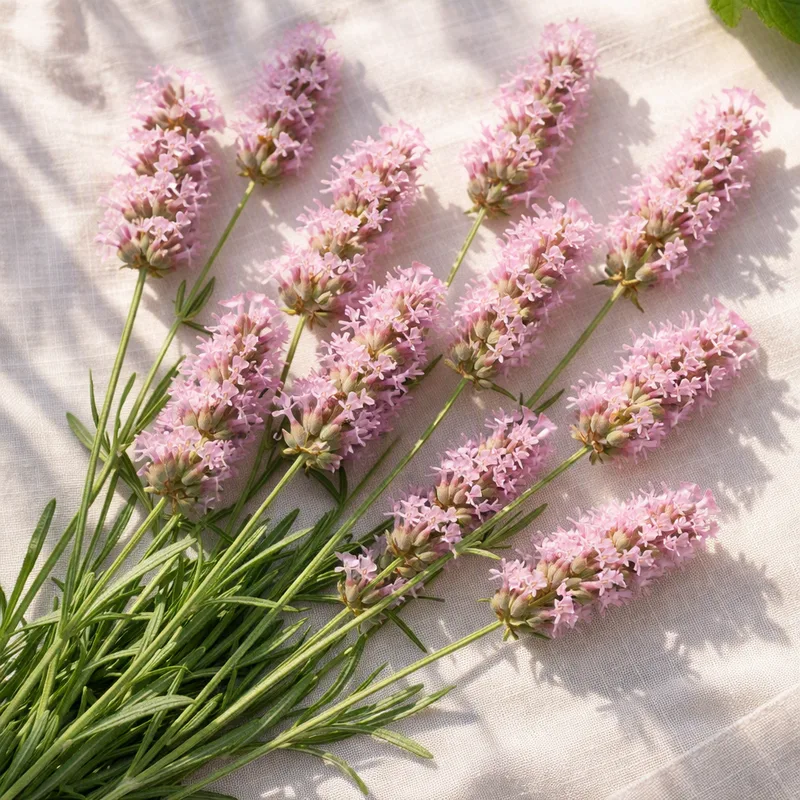
Most English lavender is violet, but pink selections have been developed. 'Jean Davis' is a pale pink with a fruity taste in culinary use, and 'Pink Perfume' grows to around 60 cm by 45 cm. 'Rosea' is another violet-pink form. Colour can look pale in strong light and richer in cool weather, and individual spikes often fade to cream as they age.
In the border
Pink lavender fits cottage-garden beds with roses, catmint and silver foliage. The flower spikes appear in July and August. Because lavender flowers are small, plant in groups of three or five to give impact. Pink forms seem less common in nurseries, so look for names on labels.
Practical care
- Plant in sun with grit-rich soil.
- Avoid planting in a low spot where water gathers.
- After flowering, cut the stems back to the leaves.
- Replace woody plants after eight to ten years, if growth becomes sparse.
Drying
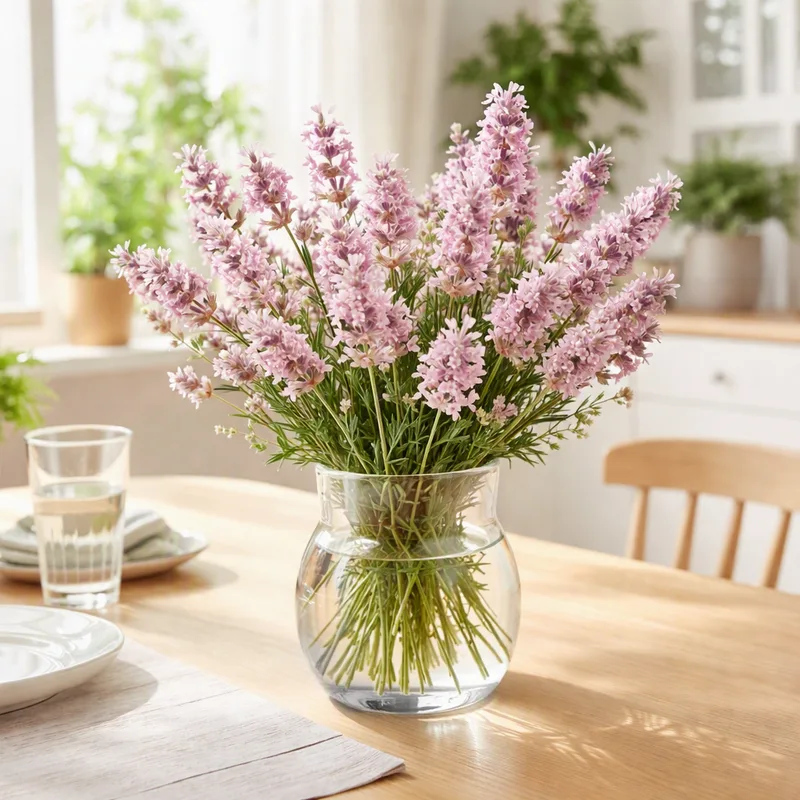
Cut when a few buds on each spike have opened, then hang bunches upside down. Pink lavender keeps a faded, powdery colour that is lovely in a sachet.
Keeping pets safe
The ASPCA also puts lavender on its toxic list. The principles are linalool and linalyl acetate, which may cause nausea, vomiting and loss of appetite. Store dried bundles and oils where animals cannot reach them.