Where pink comes from
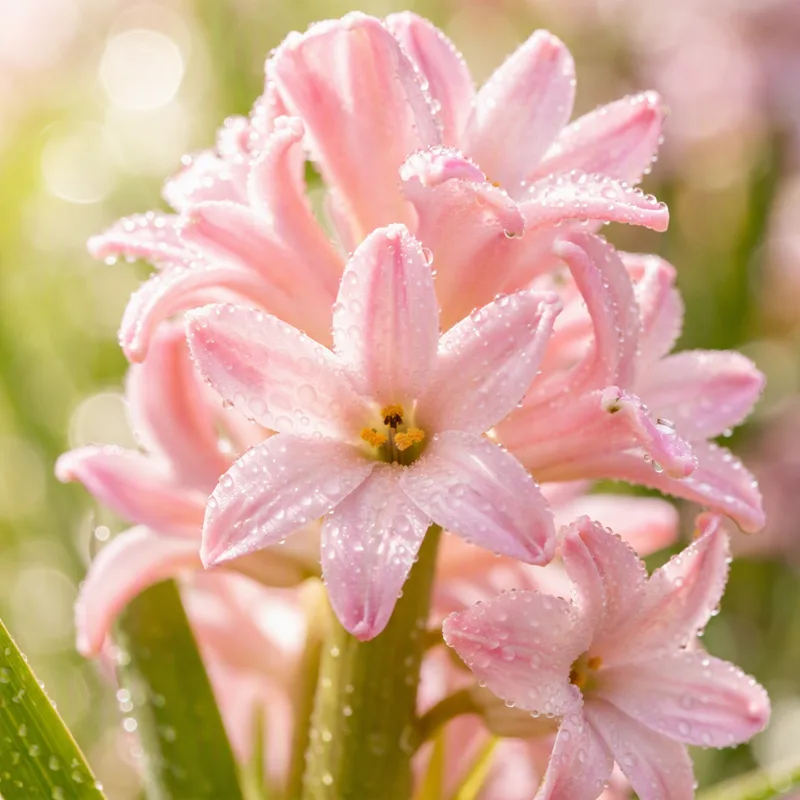
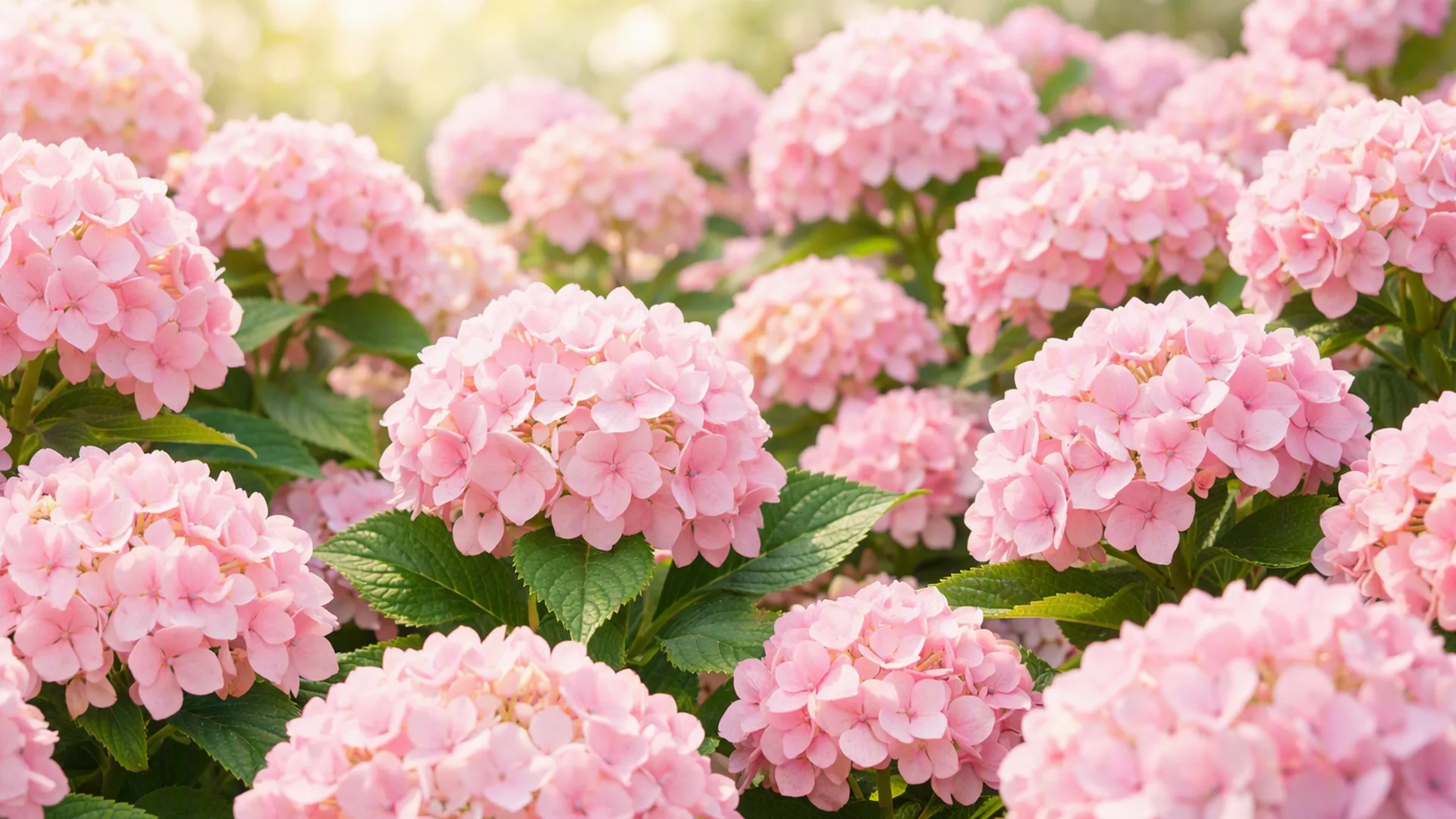
In Hydrangea macrophylla the pink shade appears in neutral to alkaline soil, above pH 7, where the plant cannot take up aluminium. Gardeners on limestone, including the lime-rich ground around the Burren, find pink the natural result. On acidic peat it tends to drift blue or lilac, so those growers either choose a pot and ordinary compost or accept a mix of colours.
Pink through the year
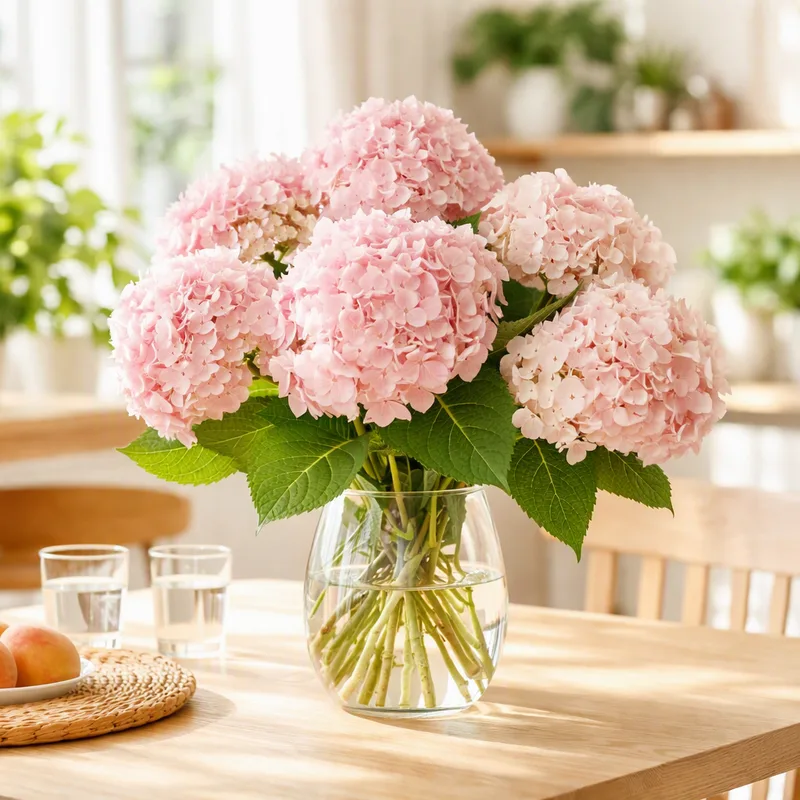
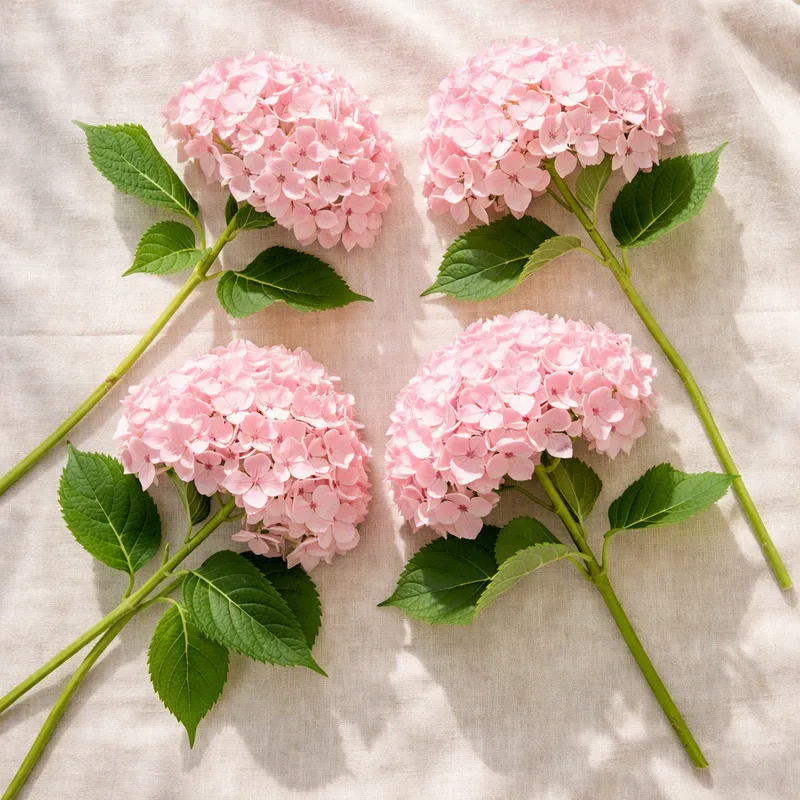
A pink head rarely stays one shade. Buds open soft and green-tinged, mature to a clear pink, and may harden to crimson, green and bronze as autumn comes. Pick the moment you like best for the vase; the antique stage is the one that dries well.
Easy pink routine
- Plant in dappled shade with shelter from wind.
- Water generously in dry spells, because the broad leaves lose a lot of moisture.
- Feed lightly in spring and mulch, then prune only lightly once frost danger passes.
- Add garden lime only if a soil test shows the soil is too acidic and you want to hold pink.
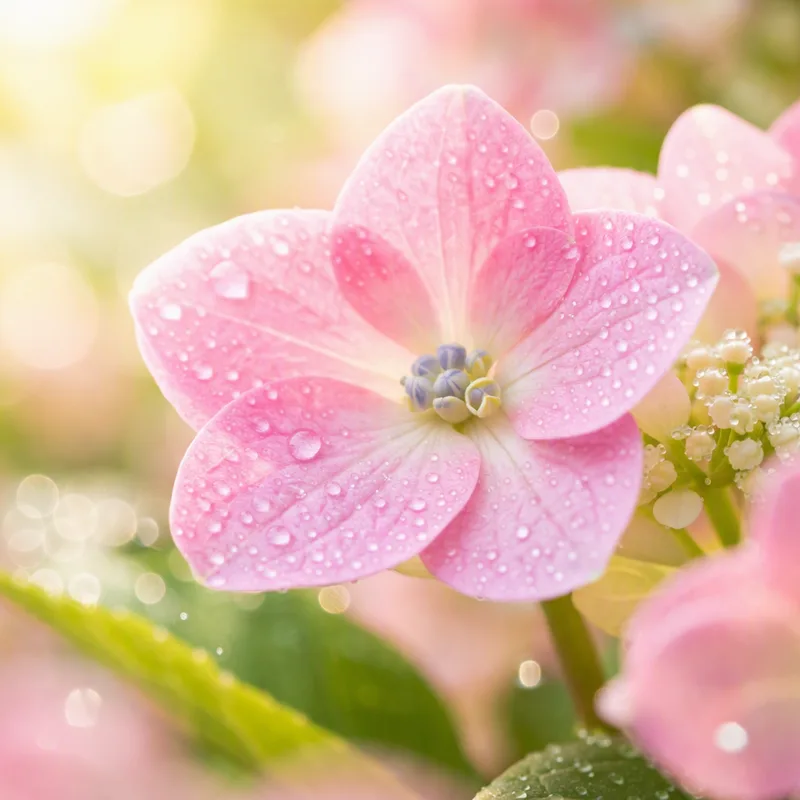
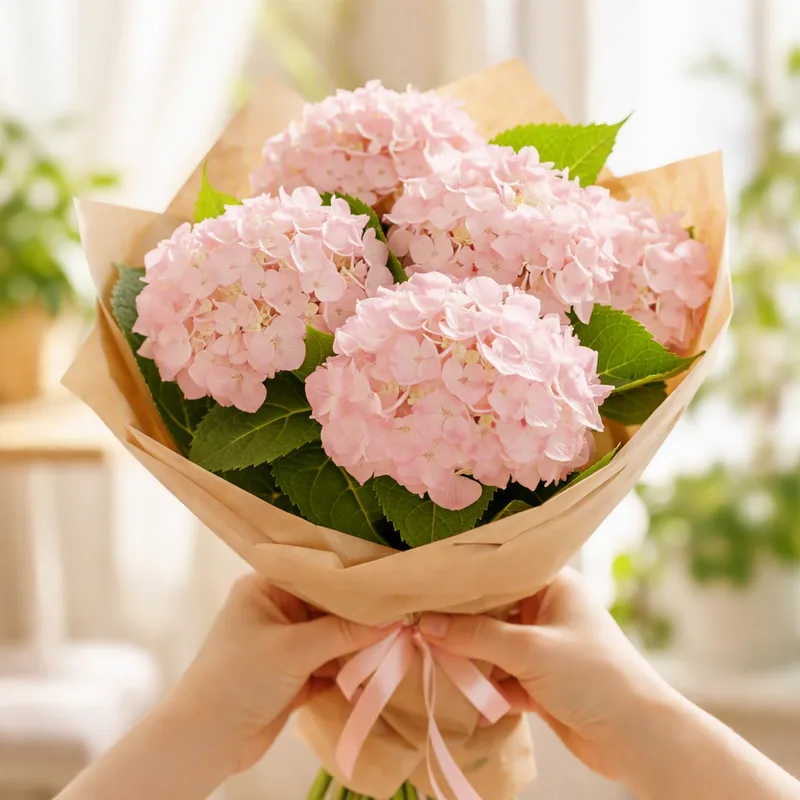
Mopheads give the round, pillowy pink ball. Lacecaps have flat plates with small buds at the centre and a ring of showy flowers, which look lighter and wilder beside a hedge.
Drying the heads
Leave the heads on the shrub until the petals feel papery, then cut and hang them upside down in a cool, airy place. They keep their soft, aged colour for months.
Dried and fresh stems
Because hydrangea carries cyanogenic glycosides, the ASPCA classes it as an irritant to dogs, cats and horses. This applies to dried heads as well as fresh ones, so display them where pets cannot reach.