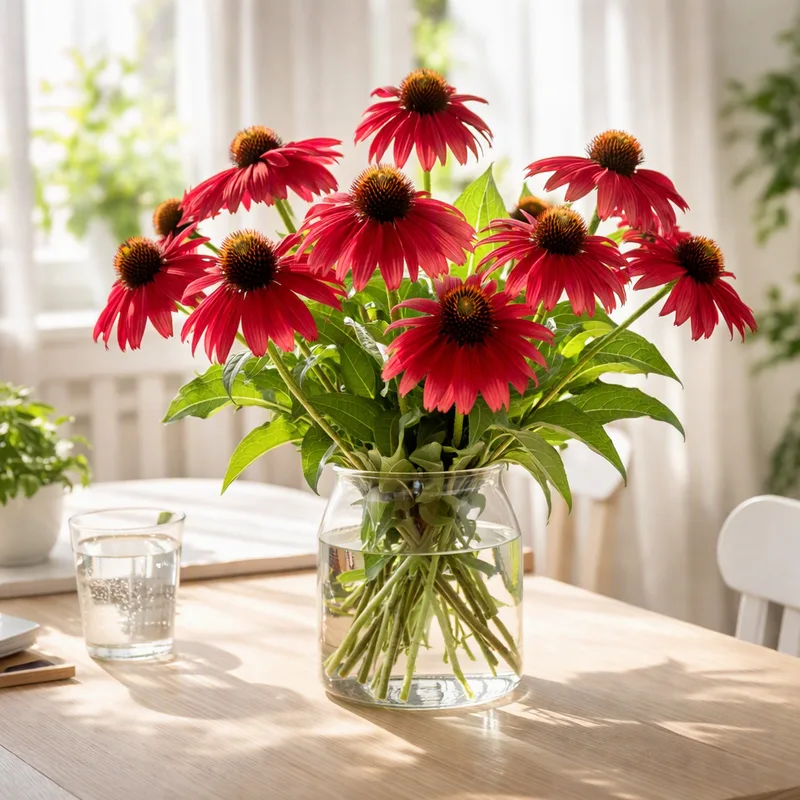

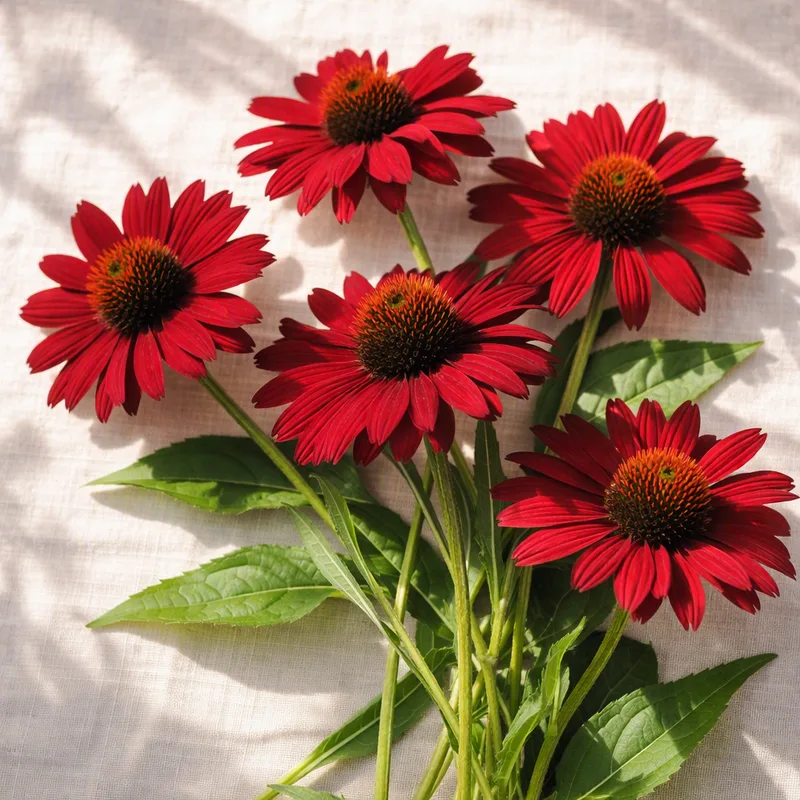
A prairie plant in an Irish border
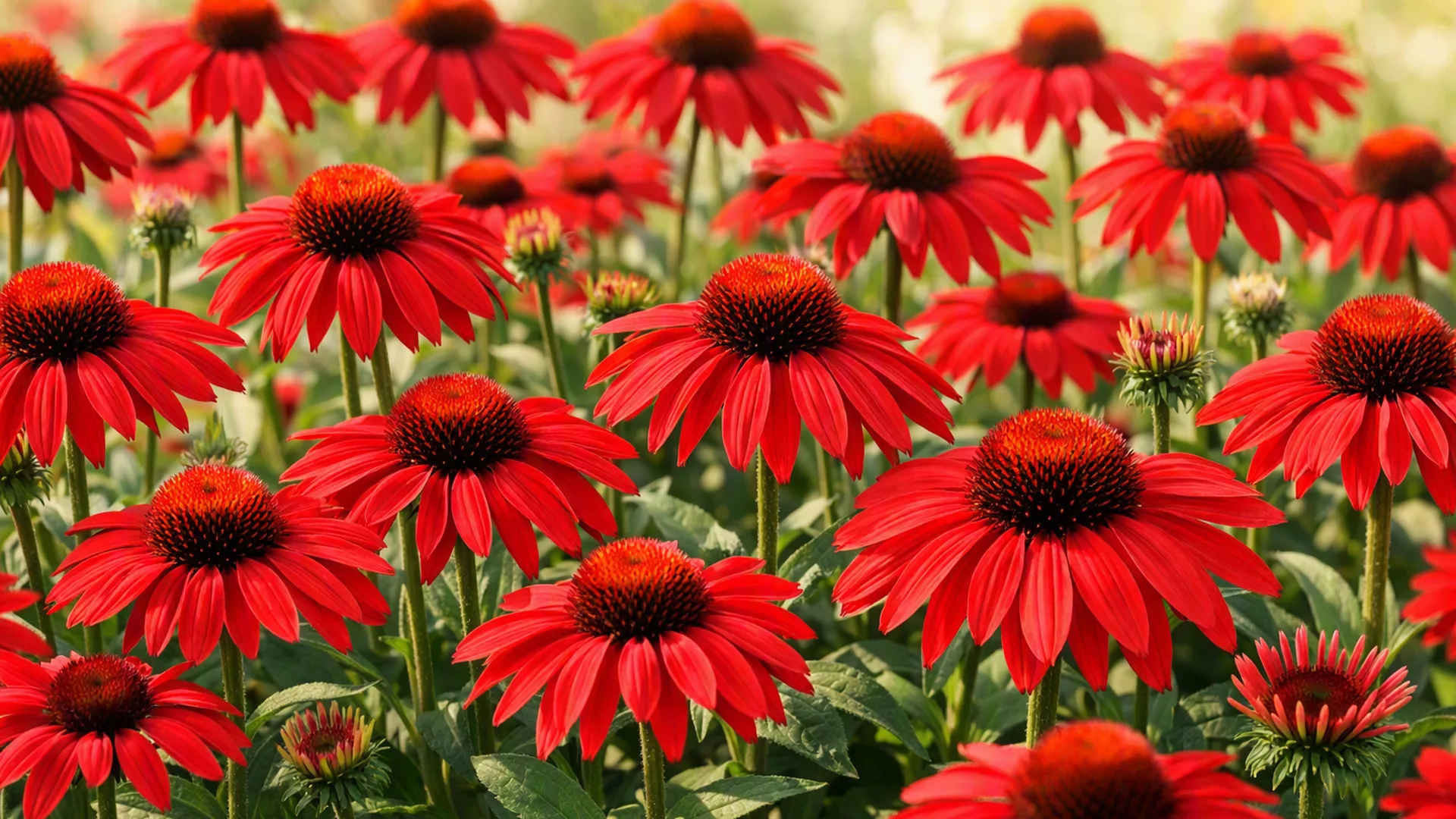
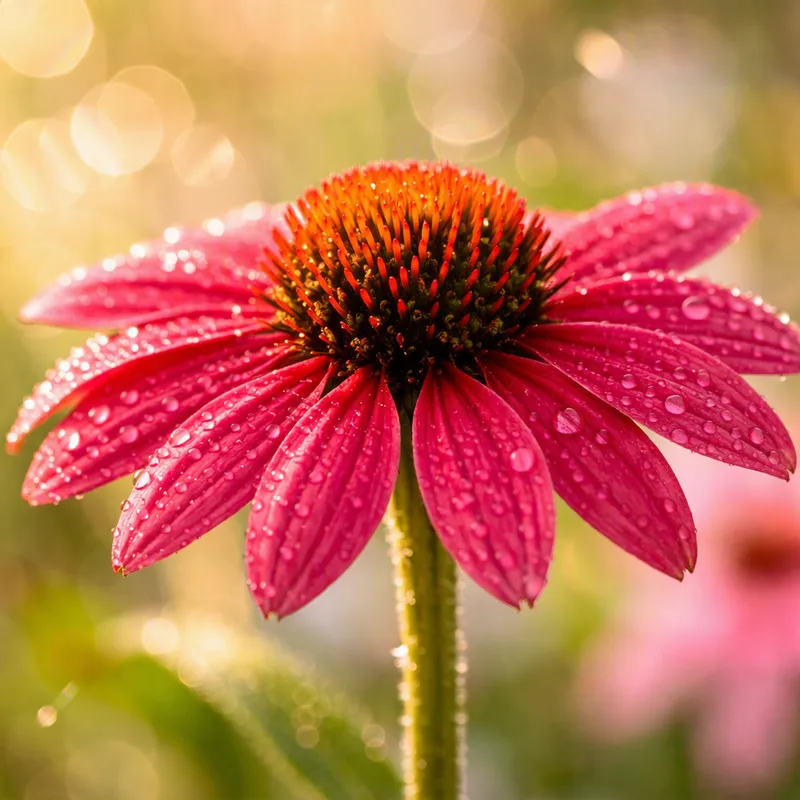
Echinacea has around ten species, all native to North America, where they grow on prairies and in open woodland. The name comes from the Greek word for hedgehog, a reference to the spiny cone in the middle. The species most often grown is Echinacea purpurea, which reaches 60 to 120 centimetres, has rough, oval leaves and flowers from July to September, sometimes into October. Despite the common name "red coneflower", the wild petals are pink to purple.
Do not mix it up
Coneflower is sometimes confused with black-eyed Susan (Rudbeckia), a similar perennial with yellow petals. Echinacea belongs to a different genus and usually has pink to purple petals around an orange-brown centre.
Site and care
- Full sun and fertile, free-draining soil where water does not stand.
- Water new plants in their first summer; later they cope with dry spells.
- In heavy Irish clay or wet winters, add grit when planting, because waterlogging is the usual cause of losses.
- Slugs and snails like the young shoots in spring.
- Leave the seedheads over winter for birds, then cut back in spring.
Bumblebees, honeybees and butterflies visit the flowers, which makes the plant useful for pollinators in late summer.
In the vase and in the cabinet
Cut stems last about 7 to 10 days. Echinacea is sold as a remedy for colds, though studies show at best a weak effect. The plant itself is listed by the ASPCA as non-toxic to dogs, cats and horses, but check with a vet before giving any herbal product to an animal.