From blush to hot pink
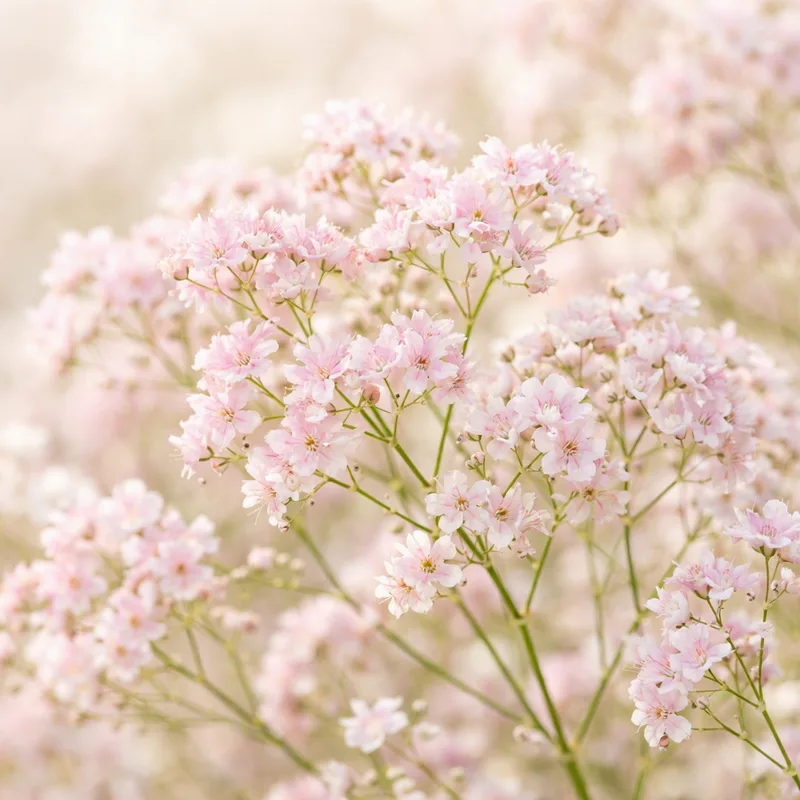
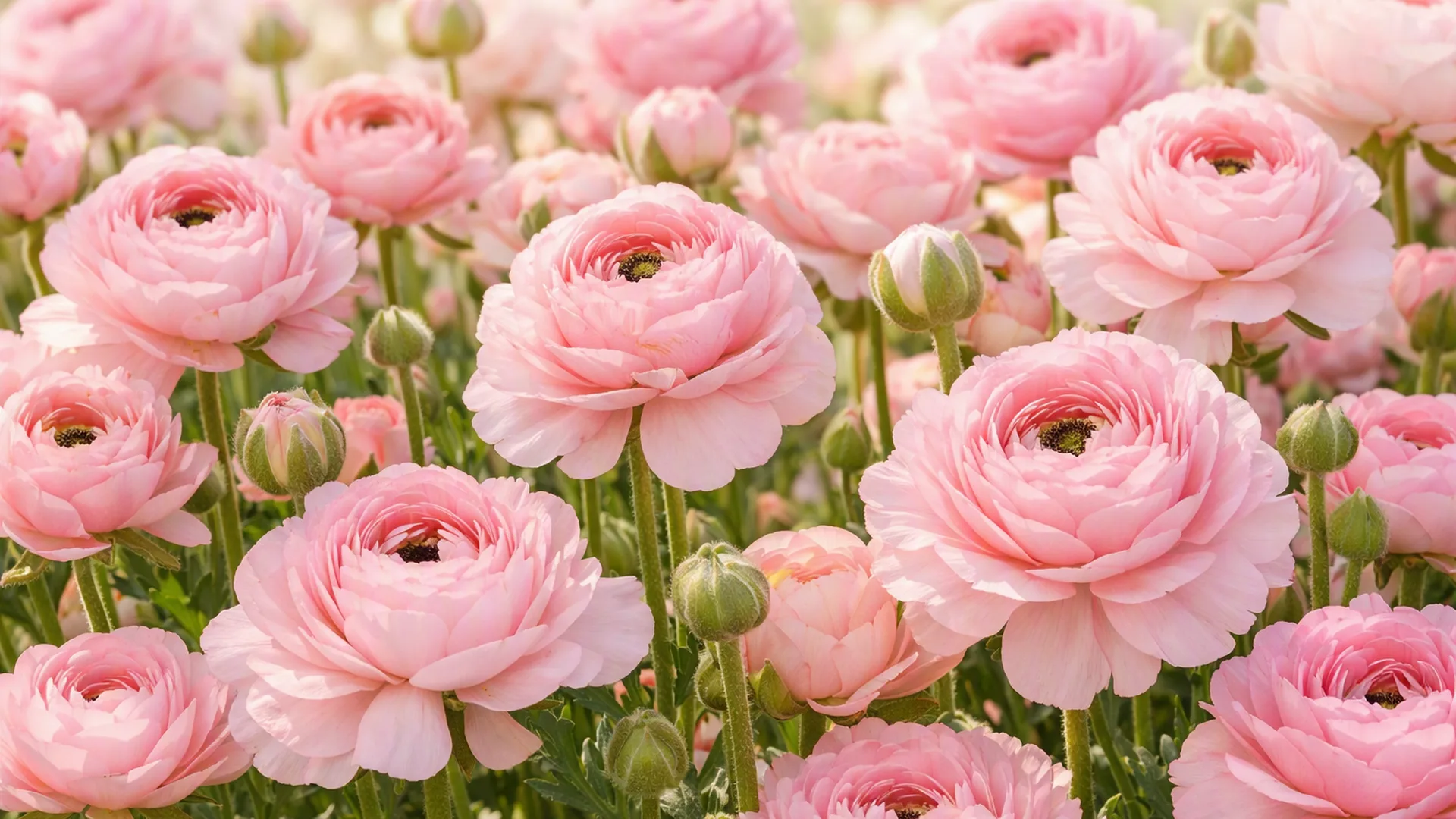
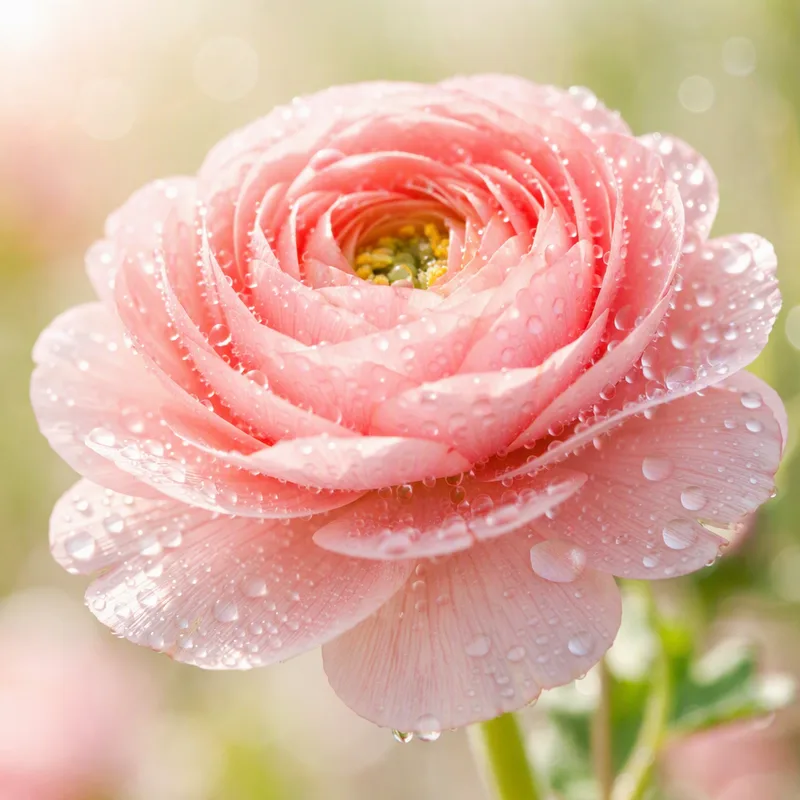
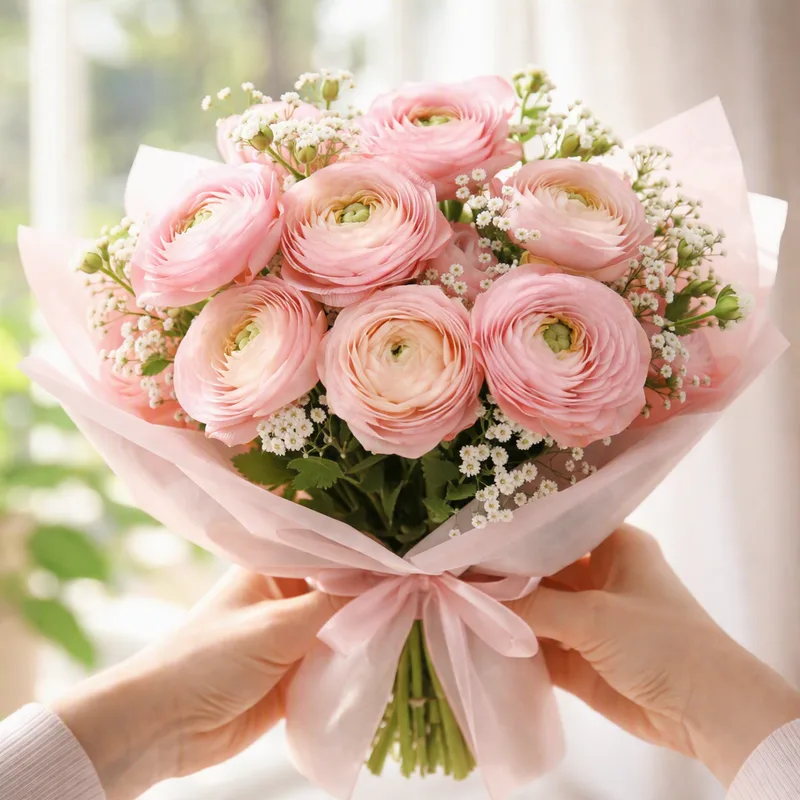
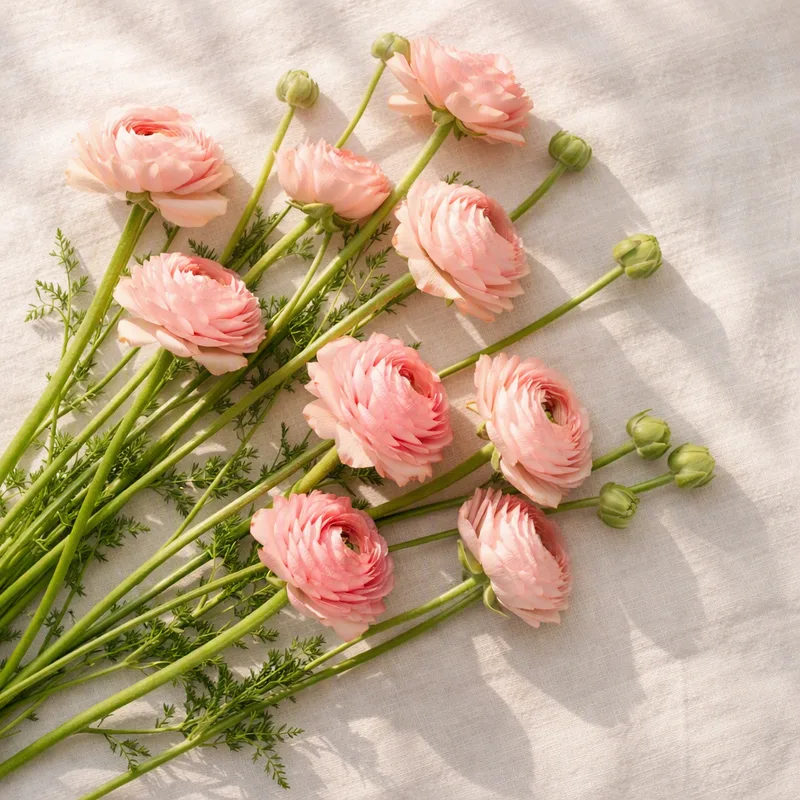
Pink is another of the natural colours of Ranunculus asiaticus, so pink flowers are part of the species rather than a modern novelty. In cultivation the double forms cover a range from the palest blush through candy pink to a strong fuchsia. Some, called picotee types, have a deeper pink line round each petal.
A spring flower for spring occasions
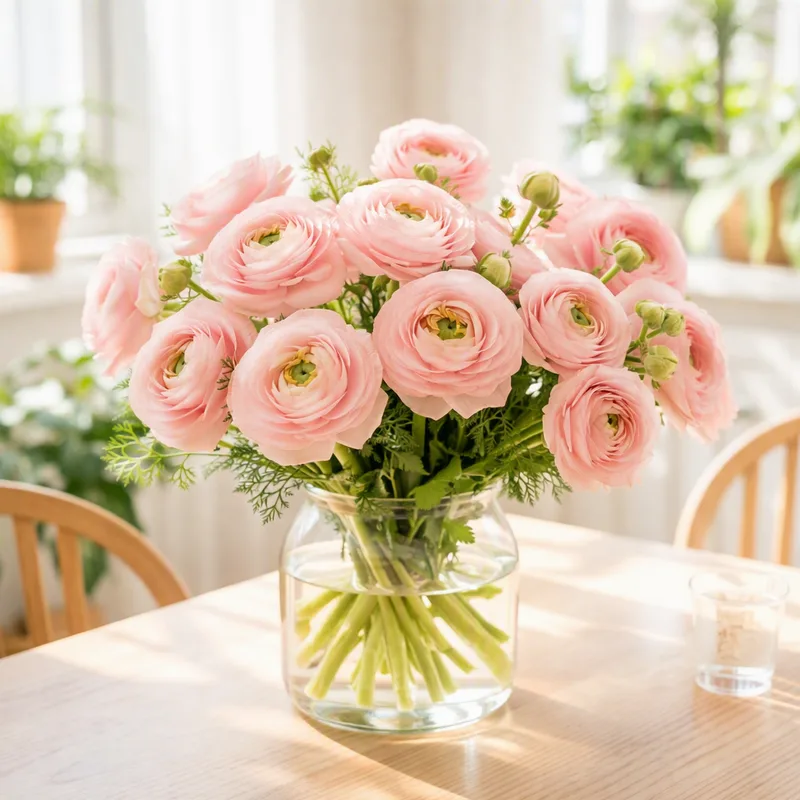
Ranunculus are a cool-season flower, in the shops from late winter, and they fit Mothering Sunday, Easter and communion parties. In the language of flowers they are traditionally associated with charm, so a pink bunch reads as a warm, affectionate present.
Colour changes
Pink doubles often open lighter than the bud suggests, and the outer petals fade a little as the flower ages. Sunlight bleaches them faster, so a cool, bright spot gives the longest show.
Growing the tubers
- Soak the dry, claw-shaped tubers for a few hours before planting.
- Place them claws down in free-draining compost or soil, about 5 cm deep.
- Water sparingly until shoots show, then regularly in dry spells.
- Pots under cover protect from cold, wet ground, which is the main threat in Ireland.
Pink ranunculus are not reliable in hard frost, which is why pot growing is popular. Mild coastal gardens fare better than inland frost pockets.
A caution for animal lovers
Ranunculus sap contains an irritant called protoanemonin. The ASPCA says it can cause vomiting and mouth ulcers in dogs, cats and horses, so keep vases and fallen petals where animals cannot get at them.