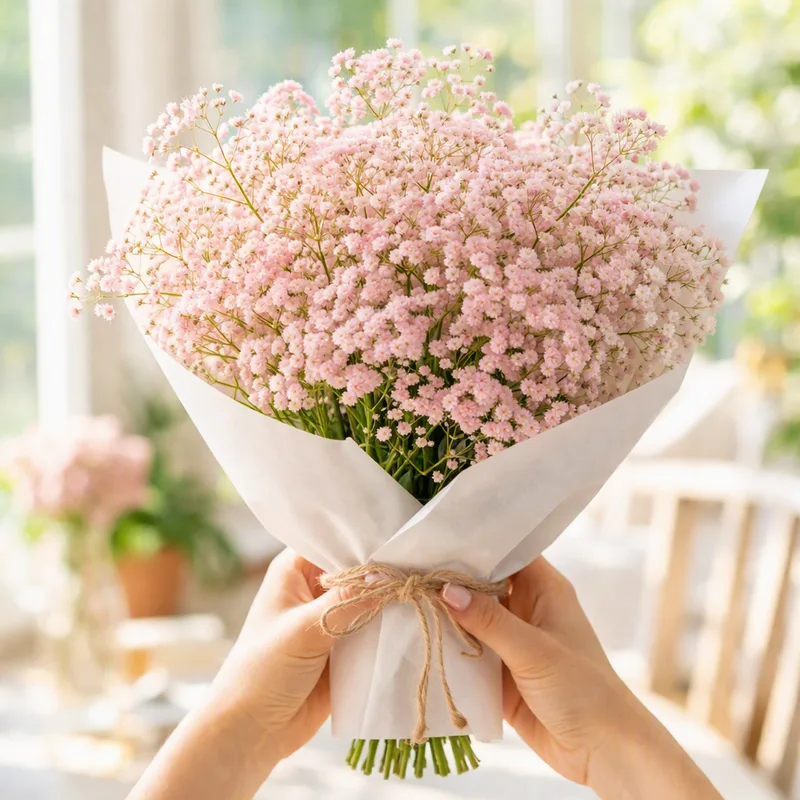
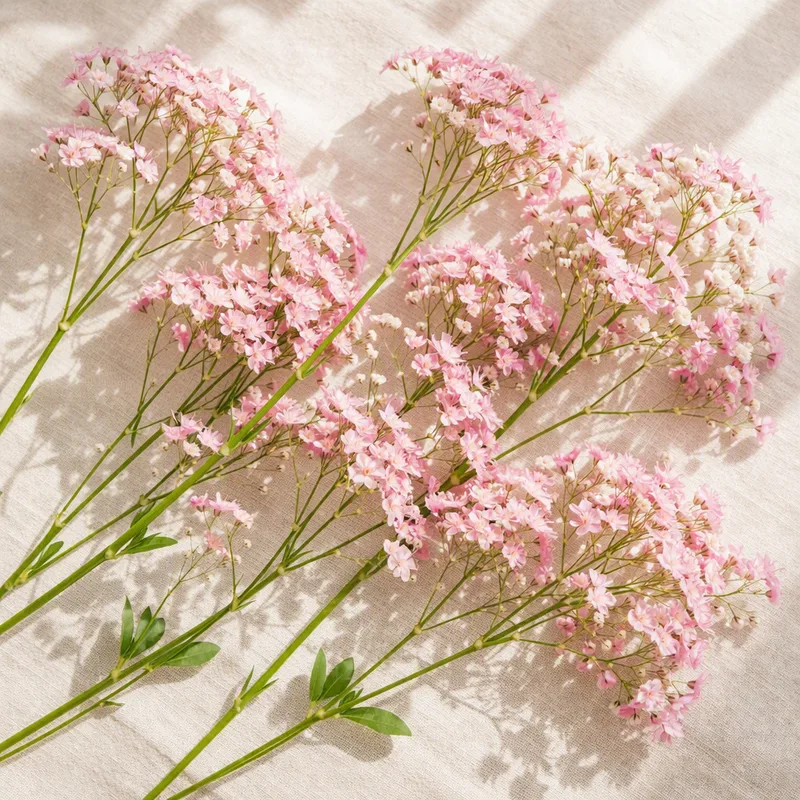
Natural pink and dyed pink
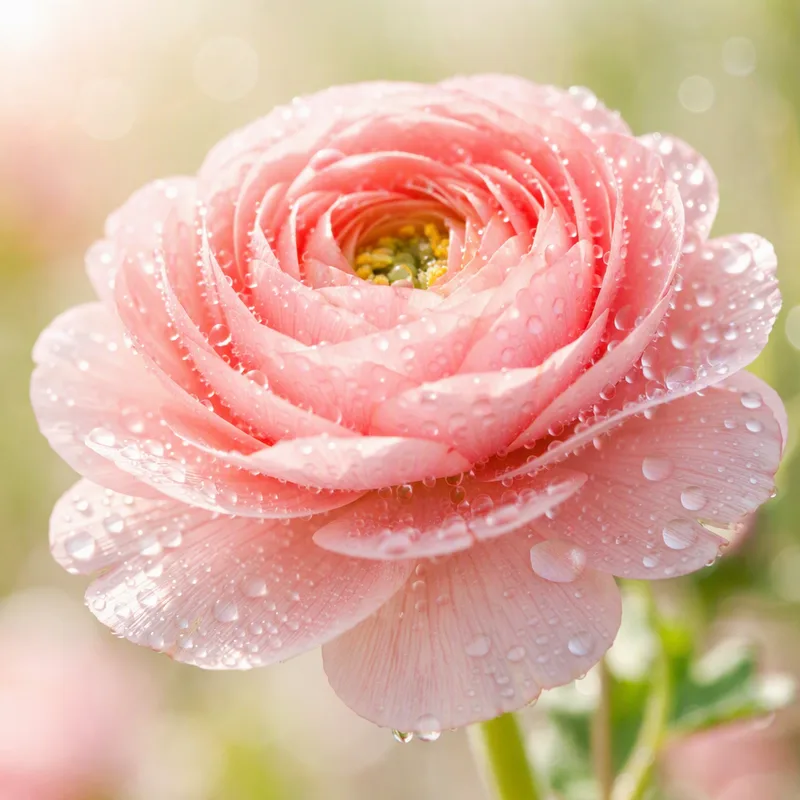
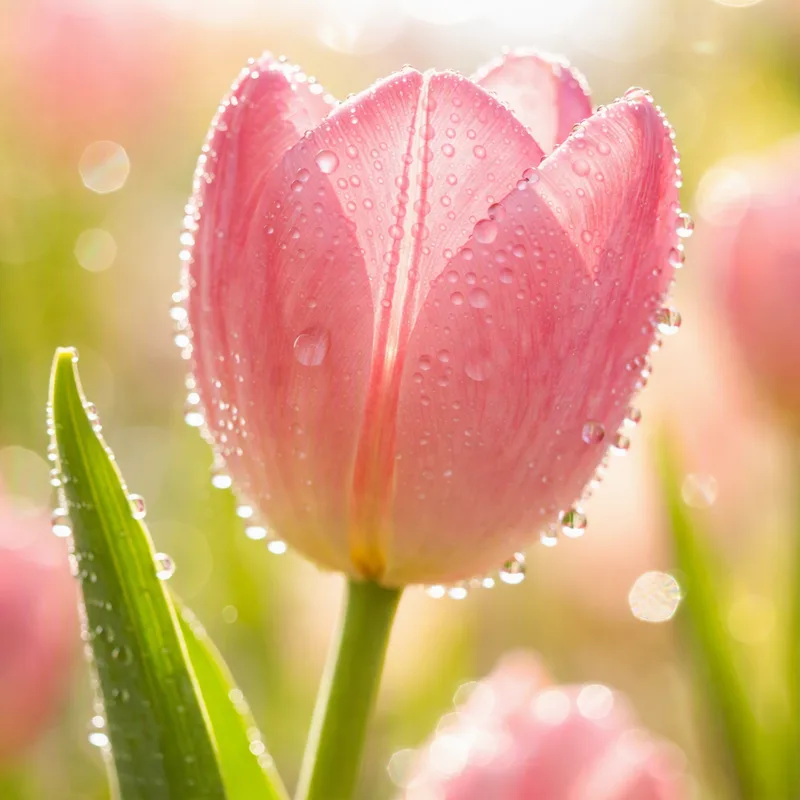
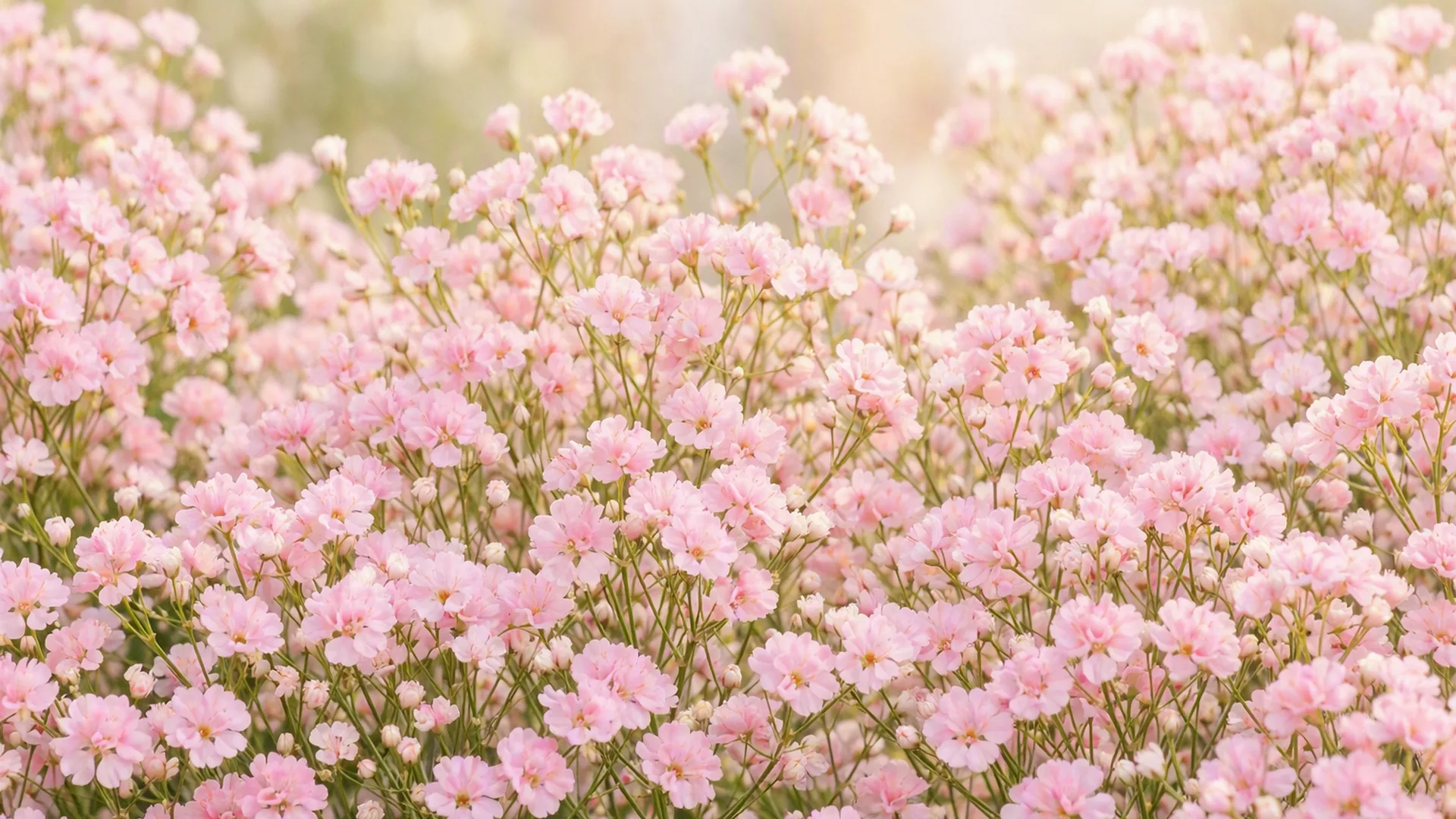
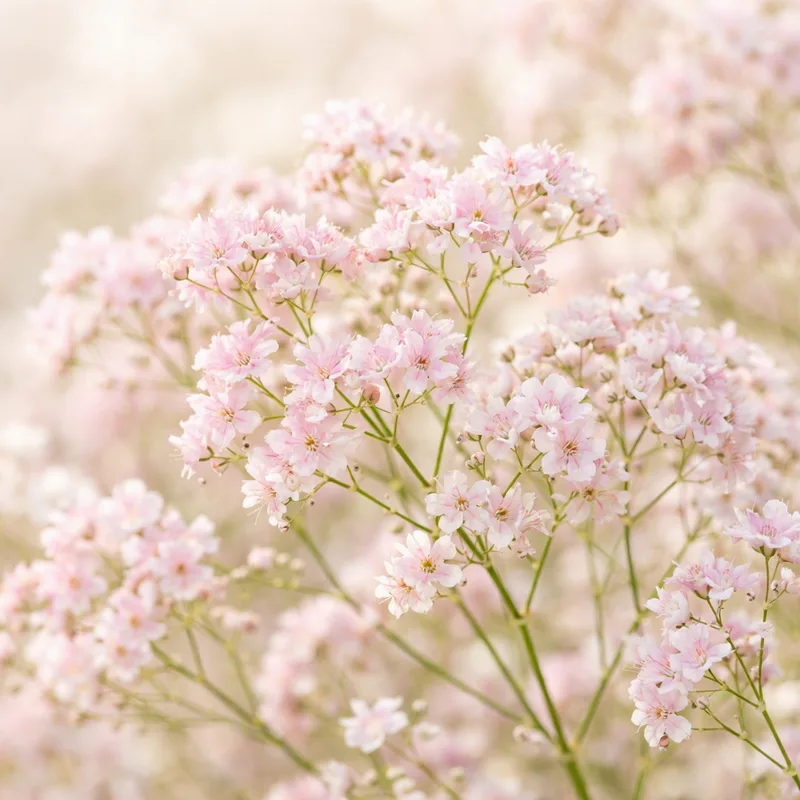
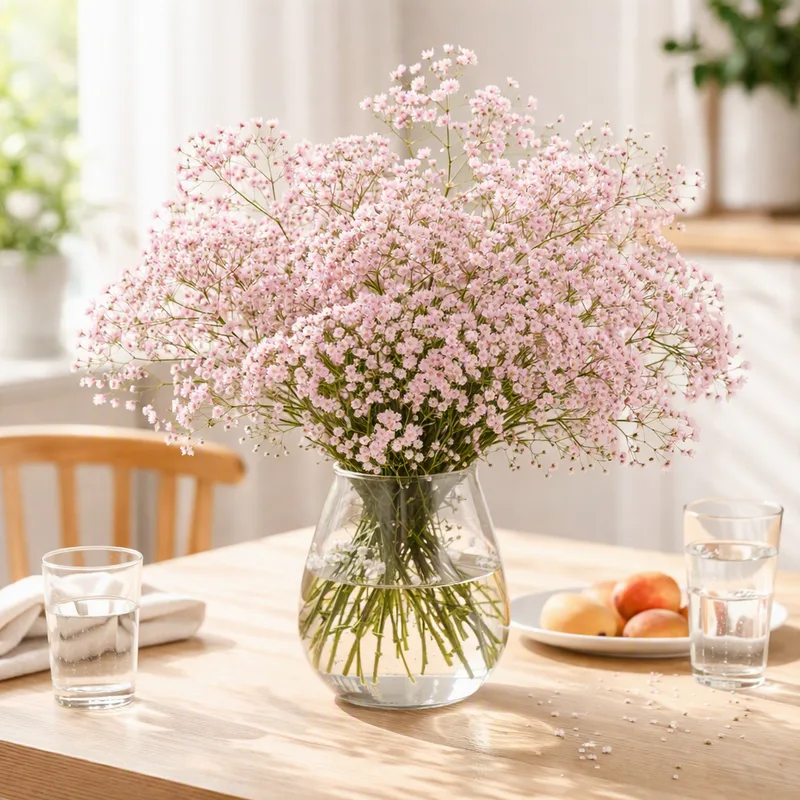
The wild plant is white, but pink cultivars of Gypsophila exist, with blush to rose flowers. Florists also sell white stems that have been tinted pink, so check the product: a dyed stem can drip colour into the vase and onto a tablecloth.
In the language of flowers pink suggests affection and tenderness. It brings a romantic note to a bunch without being as loud as roses, and it is a pretty touch for a spring birthday or a visit to a new baby.
Styling ideas
- Pair with cream or peach roses for a vintage palette.
- Use with white baby's breath for a two-tone cloud.
- Set a single pink bunch in a milk bottle or a glass jar.
- Add to green foliage such as eucalyptus for contrast.
Keeping it fresh
Cut stems at an angle, remove leaves below the waterline and use clean water. Replace the water every day or two; stale water starts to smell sour. Keep the vase away from warm radiators and ripening fruit. Pink flowers should last about a week to ten days, and they dry well when hung upside down in a dark place.
In the garden
Perennial gypsophila needs sun and drainage. In Ireland's rainy winters it does best on light, limy ground or in a raised bed, because wet roots rot. The plant branches into a large airy mound and looks charming with lavender and pinks.
Safety
The ASPCA says baby's breath is non-toxic to dogs, cats and horses, though vomiting or diarrhoea may follow if eaten. The plant may irritate skin, so wear gloves when you handle it a lot.