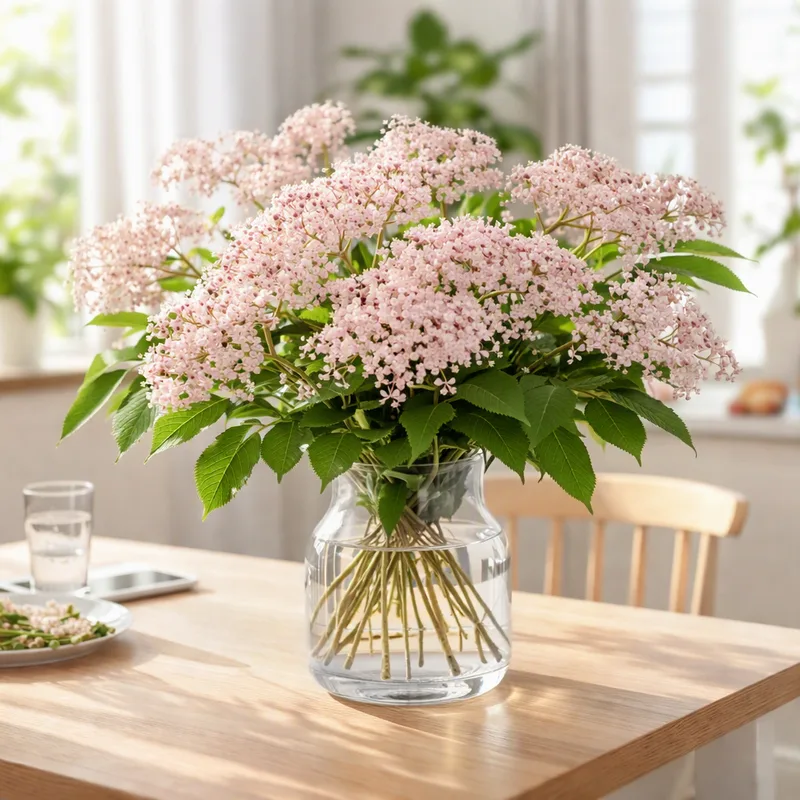
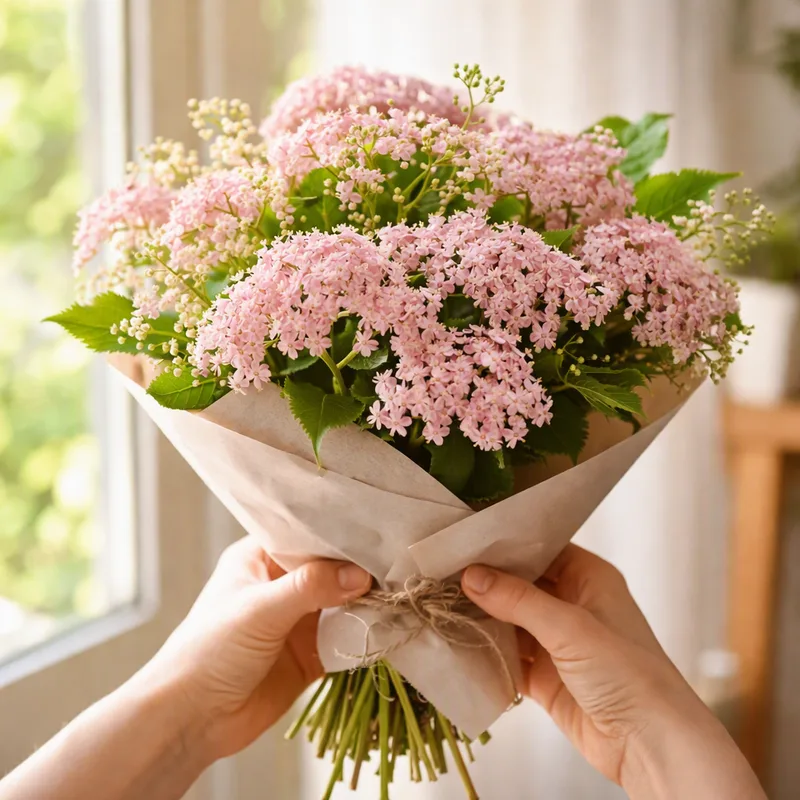
A pink elder is a garden form
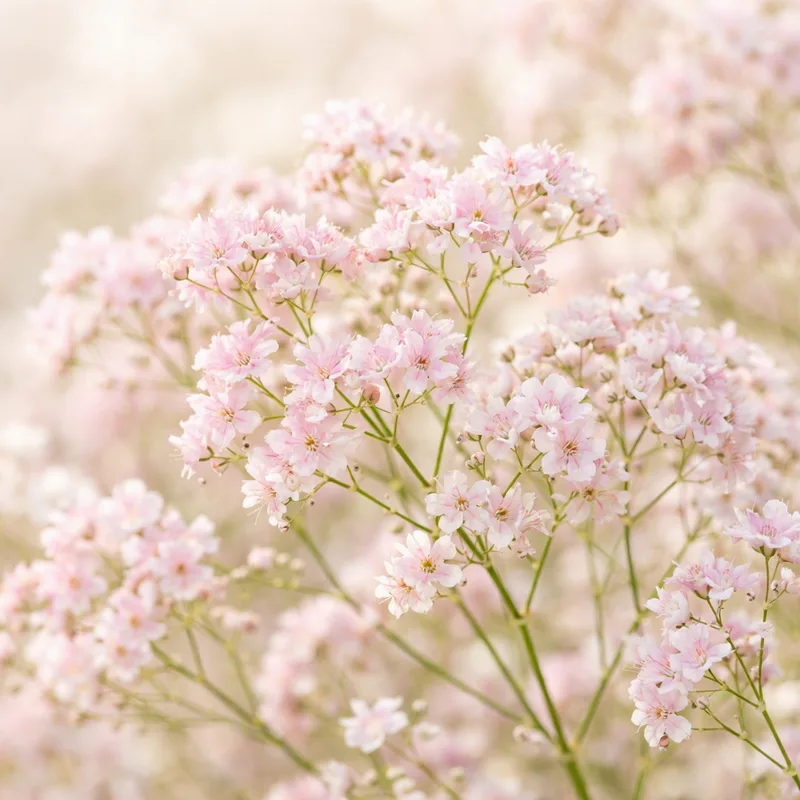
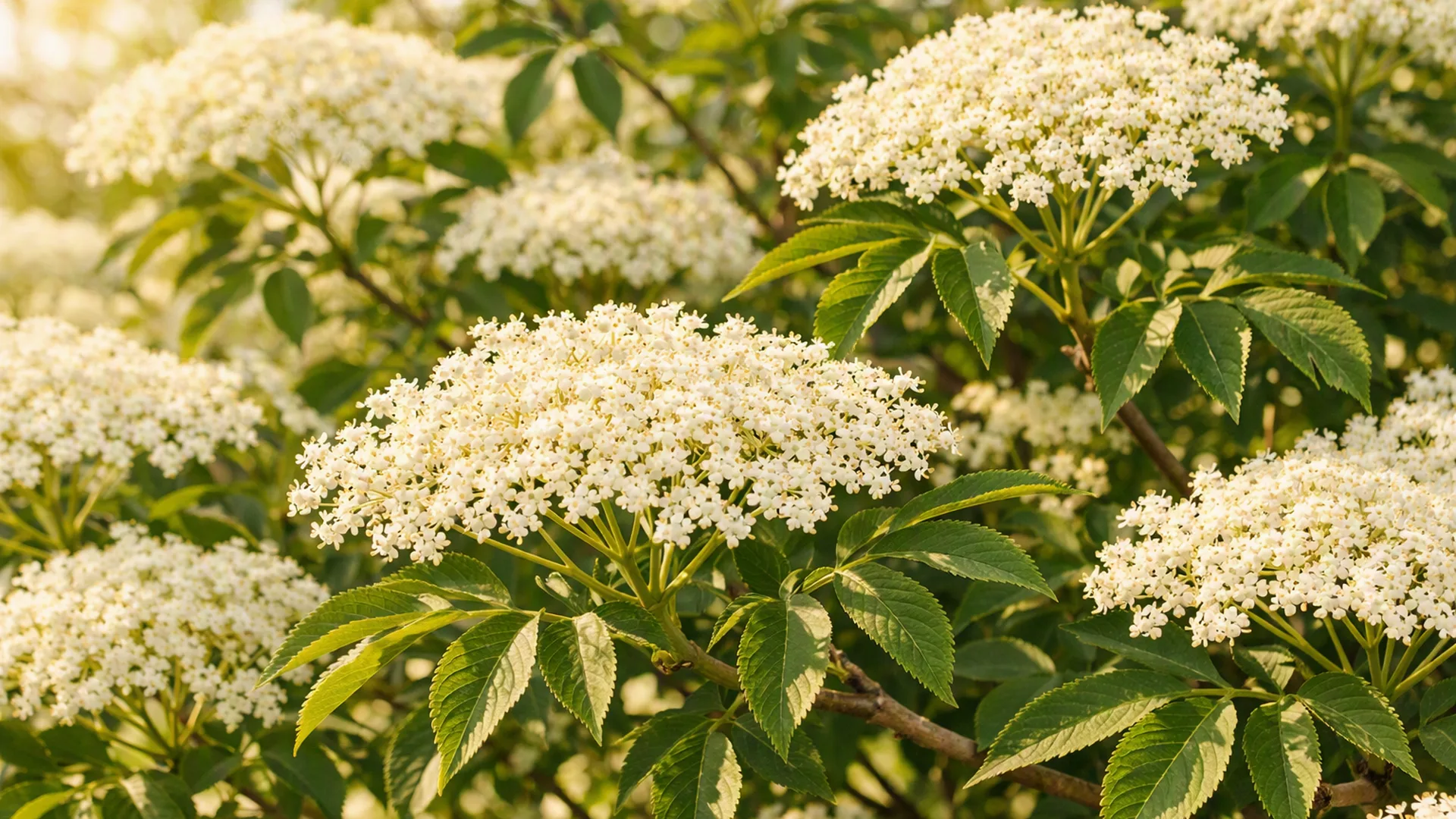
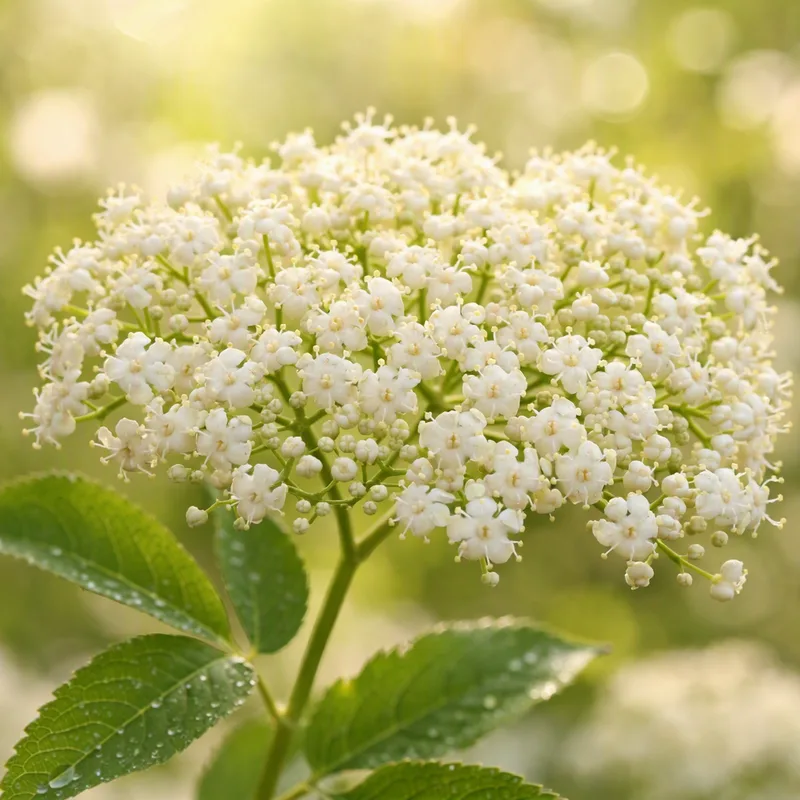
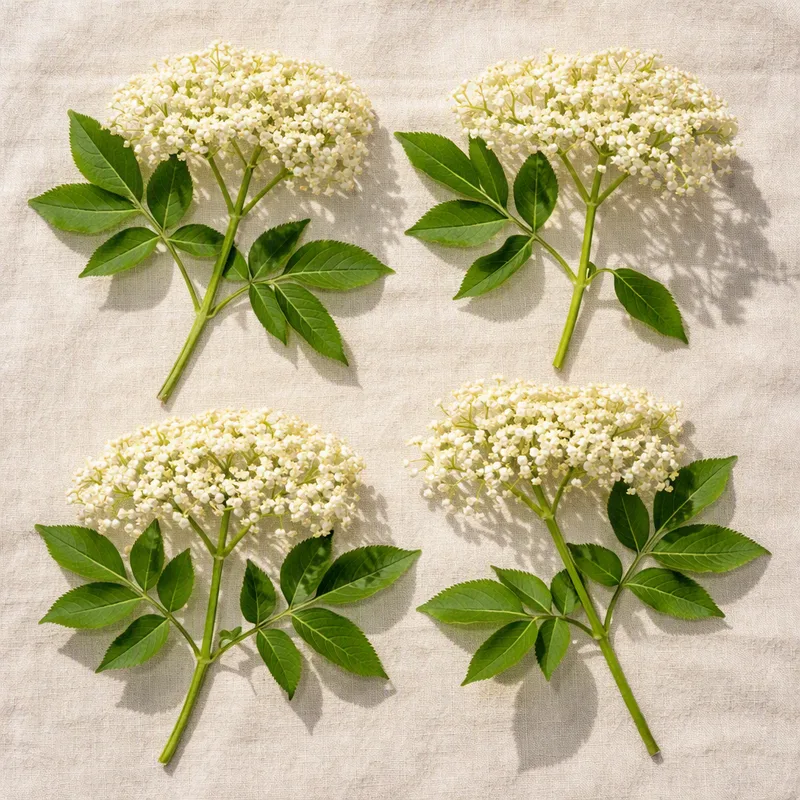
The wild common elder has ivory-white flowers. Pink comes from ornamental selections: Sambucus nigra f. porphyrophylla has dark maroon to black leaves and pale pink flowers. Named cultivars such as 'Black Lace' follow the same theme, with finely cut dark foliage and pink-tinged flower heads.
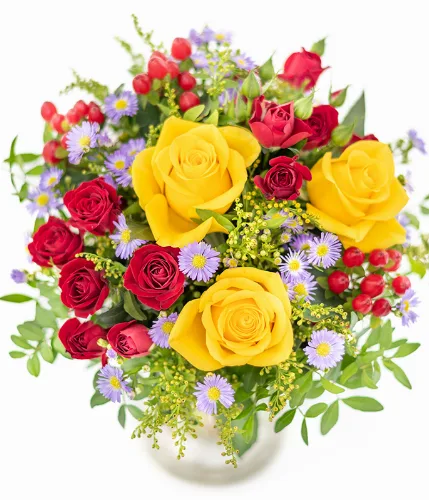
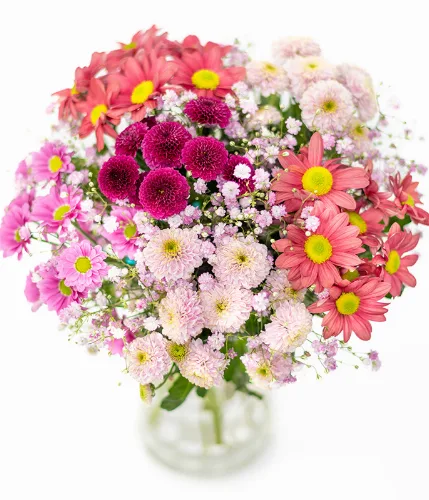
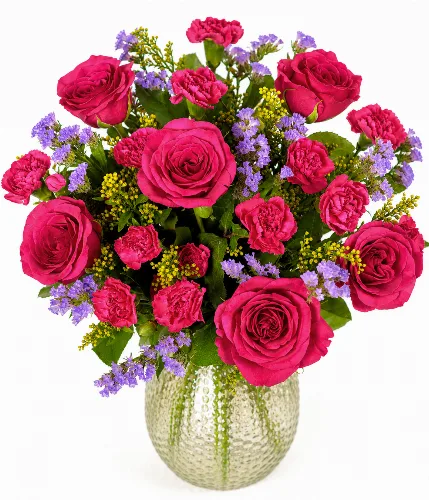
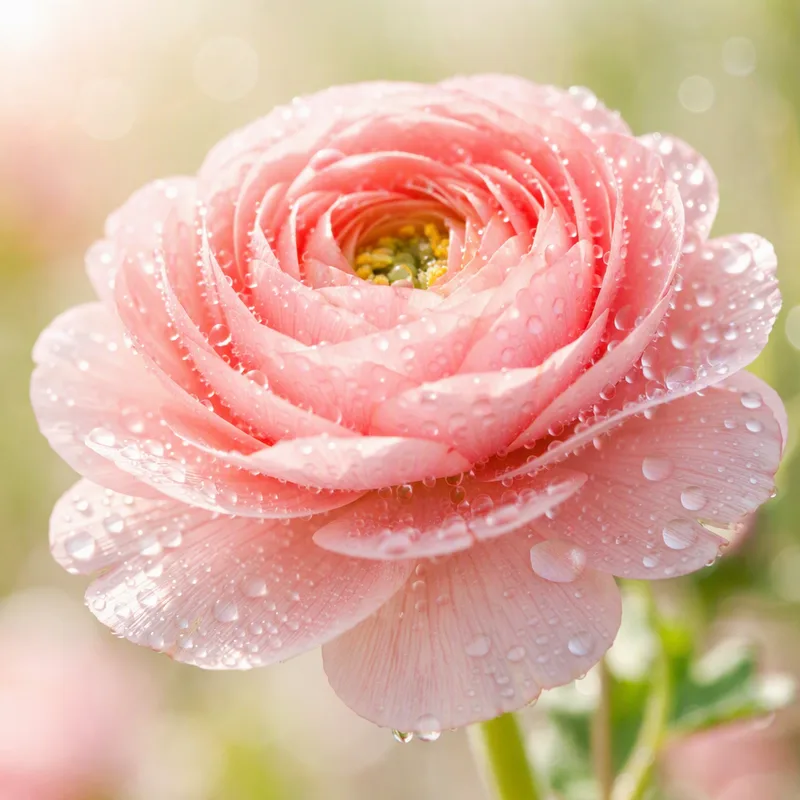
So a pink elderflower bouquet is usually a mix of purchased stems and garden cuttings; the delicate pink is more a blush than a bold colour.
Growing a dark-leaved elder
- Plant in full sun for the darkest foliage. Leaf colour in purple-leaved forms is strongest in full sun.
- Elder tolerates most soils but prefers fertile ground and a place where the root zone is not too dry.
- Hard pruning in late winter or early spring keeps it compact and encourages fresh, richly coloured growth, though it will reduce flowering for a season.
Established plants need little care, and the shrub copes with the damp air of western gardens.
Eat only what is edible
As with the wild plant, flowers and ripe berries are the only parts safe to eat once prepared. Leaves, stems and unripe berries are poisonous to mammals. Ornamental forms are not selected for flavour, so most people grow them for looks and leave the cordial to the wild green-leaved type.
A bonus for wildlife
Flowers draw in hoverflies, beetles and bees, and the berries feed many birds in late summer.
Livestock and prunings
Dark-leaved elders share the wild plant's chemistry: leaves, stems and unripe berries are poisonous to mammals. Pile prunings where horses, goats and dogs cannot reach, and never feed them as browse.