


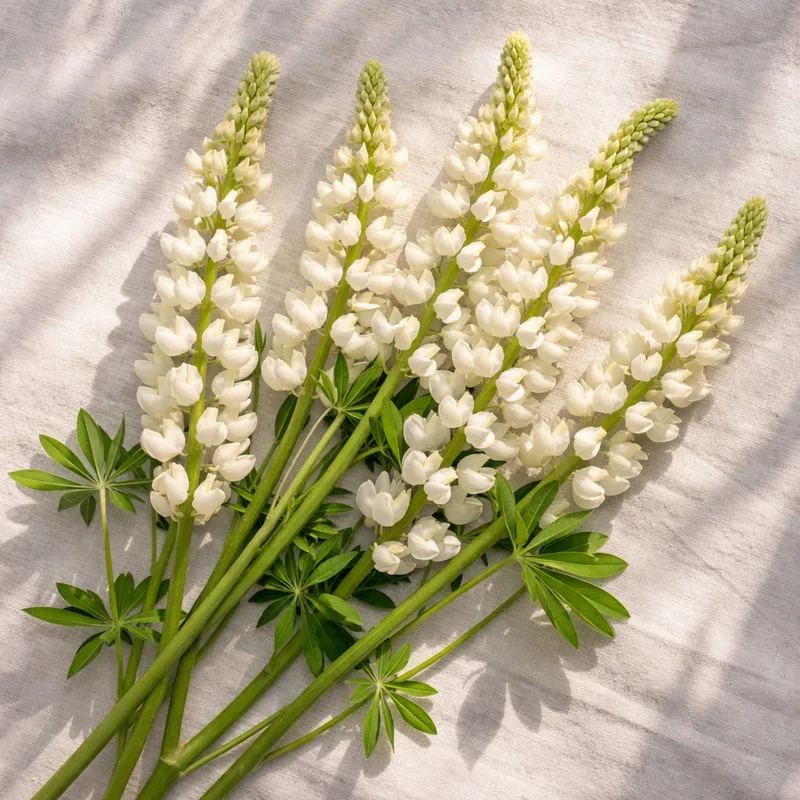
White is part of the species
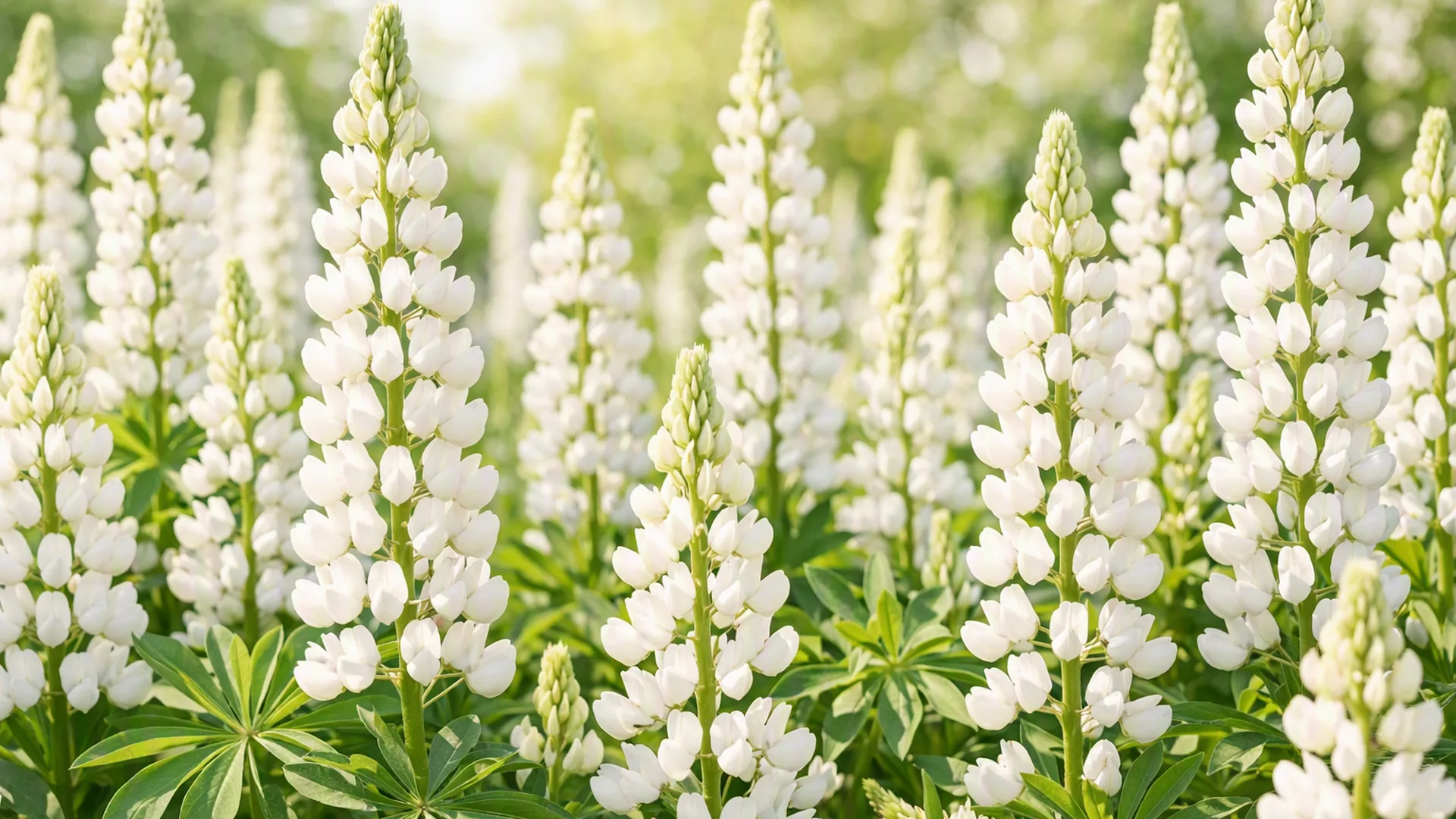
White is not a modern fashion in lupins. The plant flowers naturally in blue, pink and white, although blue and violet dominate in the wild. A pure white plant in a garden is therefore usually a selected form. Named white varieties give the most even colour, whereas plants grown from mixed seed may revert to other shades.
Getting it to thrive
- Choose a sunny spot, because shade makes spikes thin and stems weak.
- Aim for loose, well-drained soil that is neutral to slightly acid.
- Plant in spring or late summer, roughly half a metre apart.
- Go easy on fertiliser, since lupins make their own nitrogen.
- Guard the young shoots from slugs in spring, which in Ireland is a real task.
White spires in a border
Tall white spikes, often over a metre, bring light to a perennial bed and stay visible as the evening darkens. They combine well with blue lupins, delphiniums, cranesbills and ornamental grasses. Bumblebees visit the flowers eagerly. As a cut flower a white lupin is short-lived, so pick when the lower flowers are open and stand it in cold water.
Caution
Garden lupins are toxic because of their alkaloids, and the seeds are the main concern. If a child has eaten any, contact the National Poisons Information Centre or your doctor. If a pet has eaten seeds, ring a vet.