Red is the work of breeders
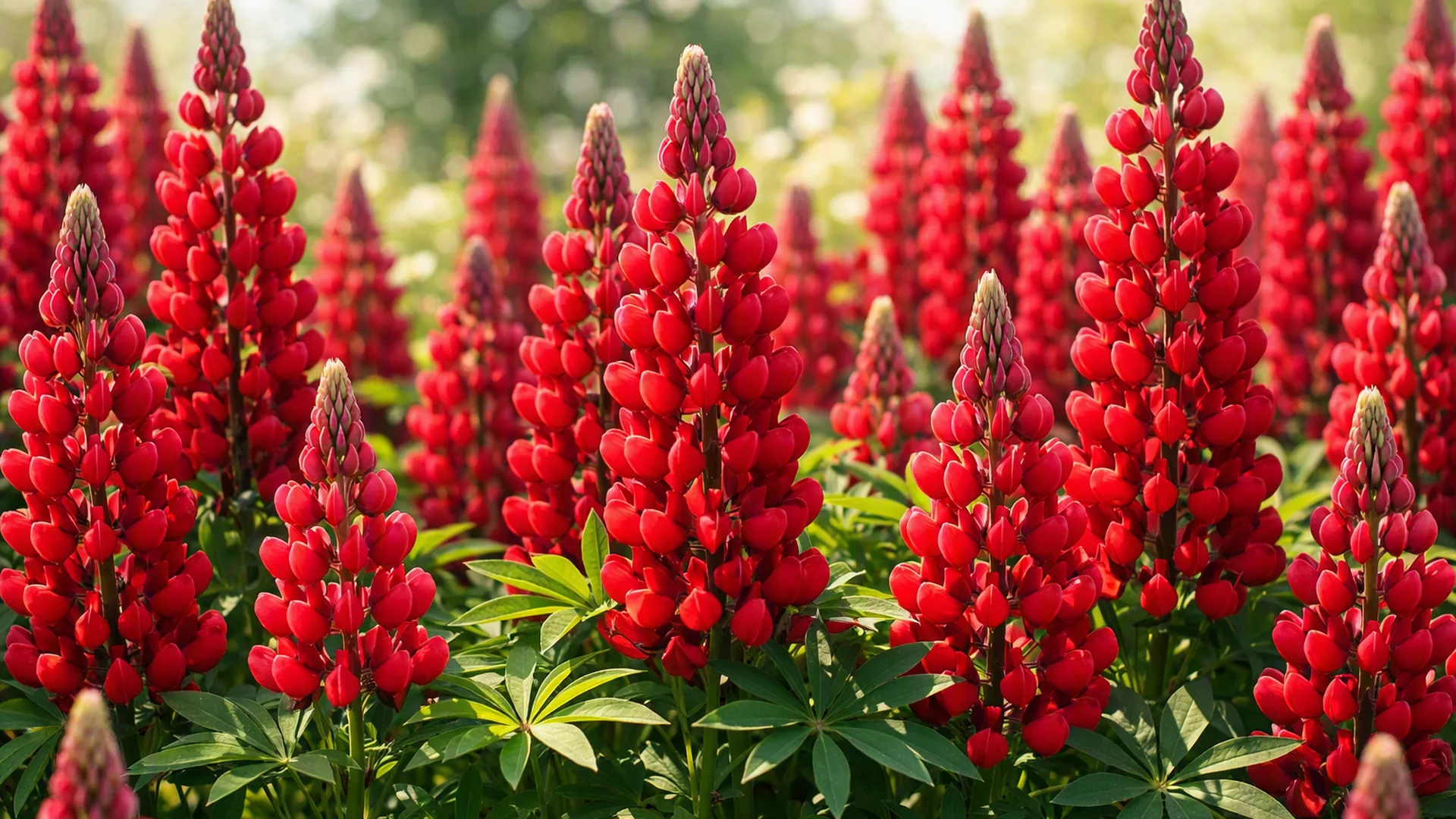
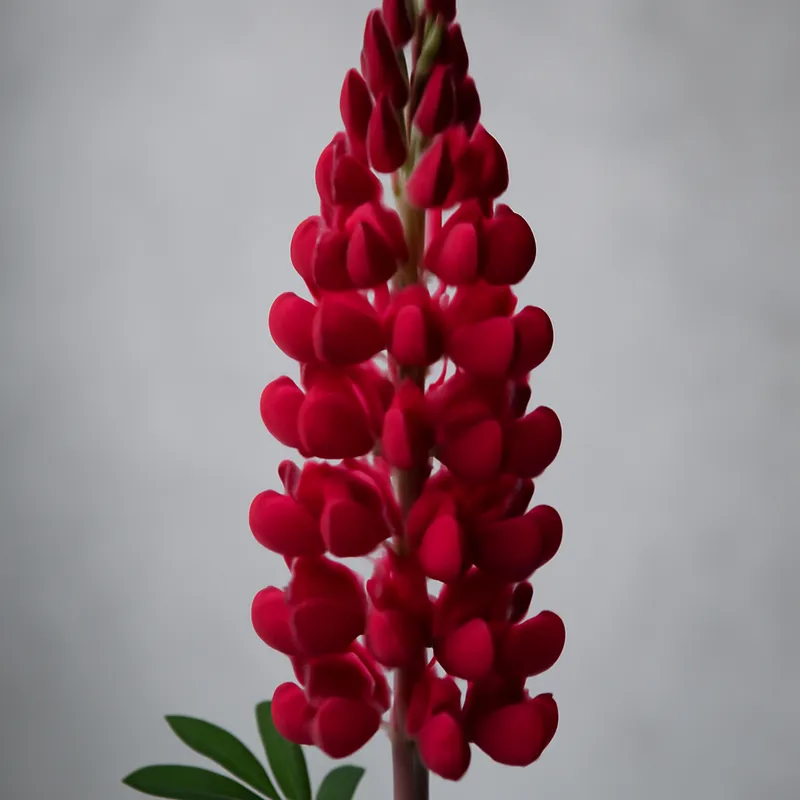
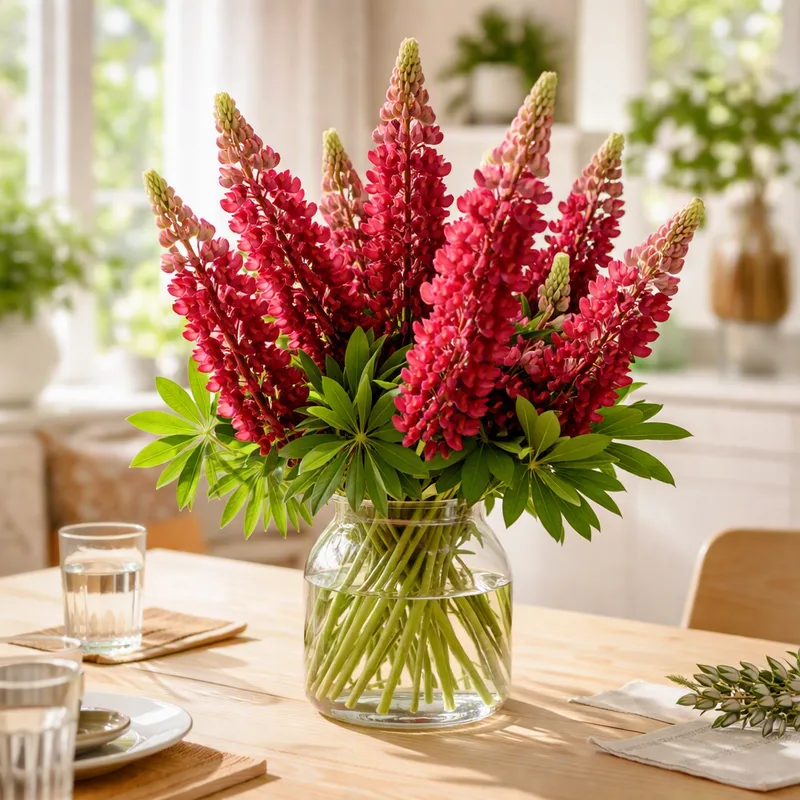
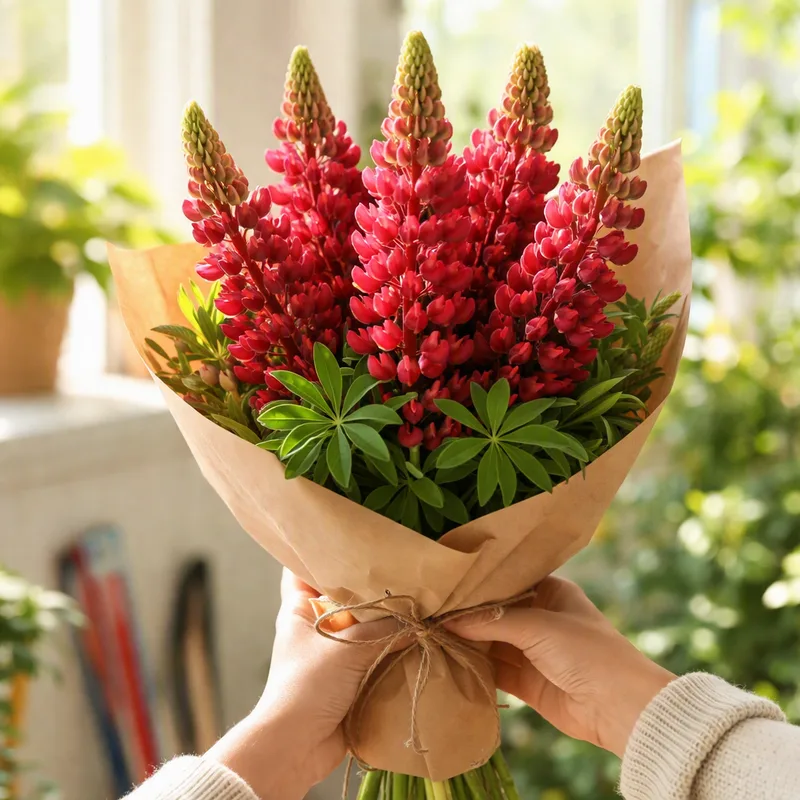
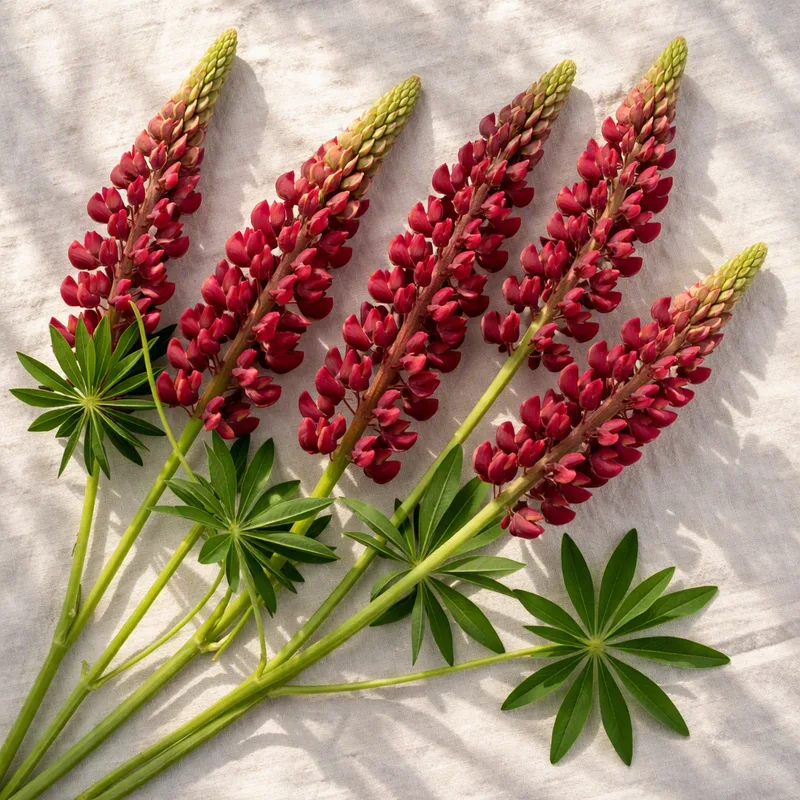
Wild Lupinus polyphyllus flowers mostly blue to violet. Red lupins are garden forms, above all the Russell hybrids named after George Russell of York, who widened the palette to red, pink, white and bicoloured spikes. Do not expect tomato red. Most lie somewhere between carmine, brick and wine, and many have a paler or yellowish patch on the upper petals.
Holding on to the red
Lupins seed themselves readily, but seedlings of hybrids seldom match their parent. After a few years a red border can drift back to blue and violet. If you want to keep the exact shade:
- Remove spent spikes before the seeds ripen.
- Take cuttings of young shoots at the base in spring.
- Buy named red varieties rather than mixed seed.
Site and soil
A sunny spot and loose, free-draining ground suit the plant. On heavy, wet clay it tends to die off after a few seasons, so raise the bed or add grit if your soil holds water. A deep taproot means it dislikes being moved once established.
Not for the kitchen
Lupin seeds contain alkaloids, and newer garden hybrids are rich in them. Do not let children play with the pods. In an emergency involving a person, ring the National Poisons Information Centre or your doctor, and for a pet call a vet.