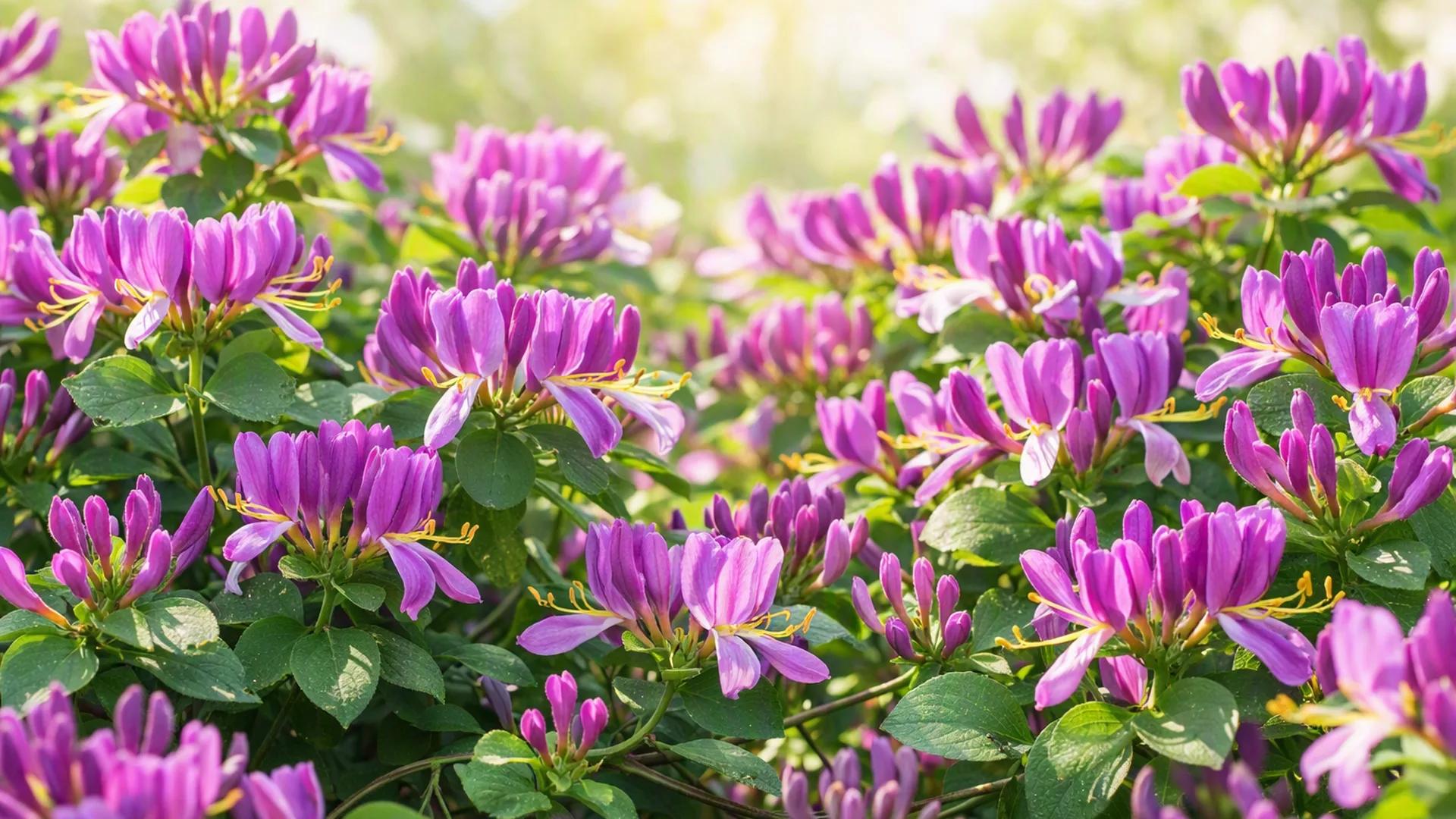


More a garden plant than a bouquet flower
The genus Lonicera contains about 200 species across North America, Europe and East Asia. The flowers are tubular and two-lipped, full of nectar, and followed by berries. The climbing species are the ones most people think of: they clamber over walls, fences and pergolas, while shrubby types are used for loose hedges. Honeysuckle is not a usual cut flower, so you buy it as a plant and enjoy it year after year.
Species to know
- The common honeysuckle or woodbine (Lonicera periclymenum) climbs hedges and woodland edges and has cream and pink flowers with a strong evening scent.
- The Italian honeysuckle (Lonicera caprifolium) has creamy, richly scented flowers.
- Fly honeysuckle (Lonicera xylosteum) is a shrub with pale flowers and glossy red berries.
Where and how
Climbers need support such as trellis, a pergola or wires. They like sun or partial shade at the top and cool, moist soil at the roots, which suits the damp Irish climate. Mulch the base to hold moisture. The scent is strongest in the evening and at night, when moths visit; the common honeysuckle can reach several metres, so plan the space. Woodbine appears in Shakespeare's A Midsummer Night's Dream.
Berries and safety
Most honeysuckle berries are mildly poisonous to people. Eating a quantity can cause nausea, stomach pain and vomiting. If a child has swallowed berries, contact the National Poisons Information Centre or your GP, and ring emergency services if the child is unwell. Keep dogs and cats from eating the berries too and call your vet if you are worried.