
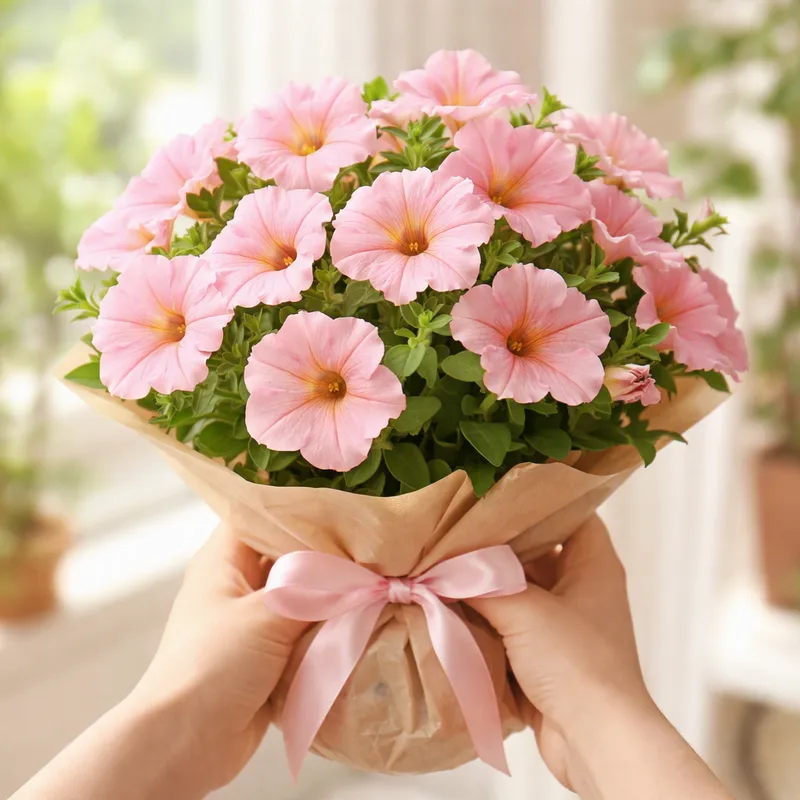
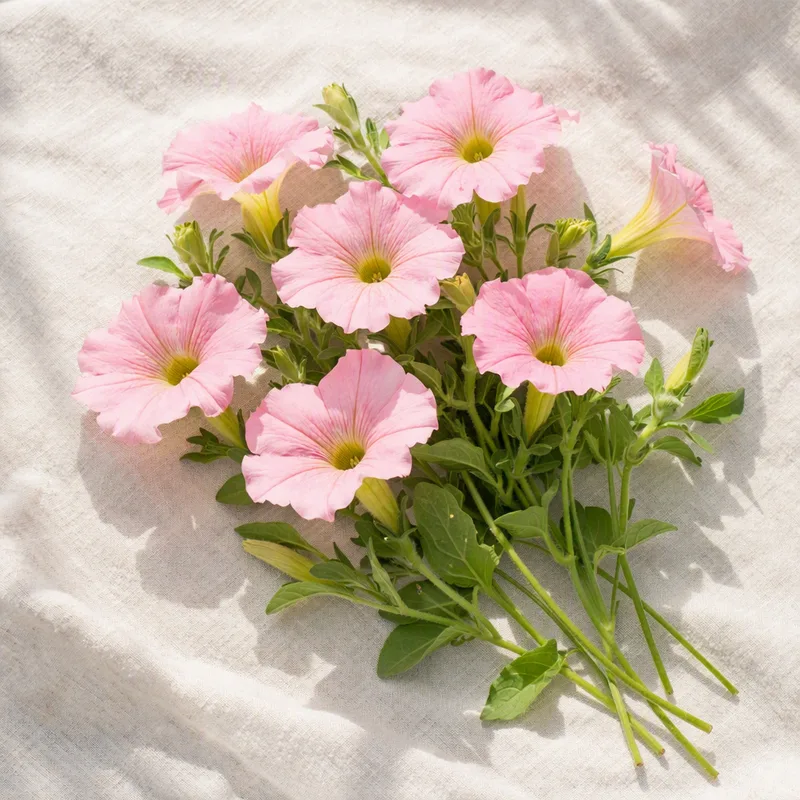
A soft shade from tough plants
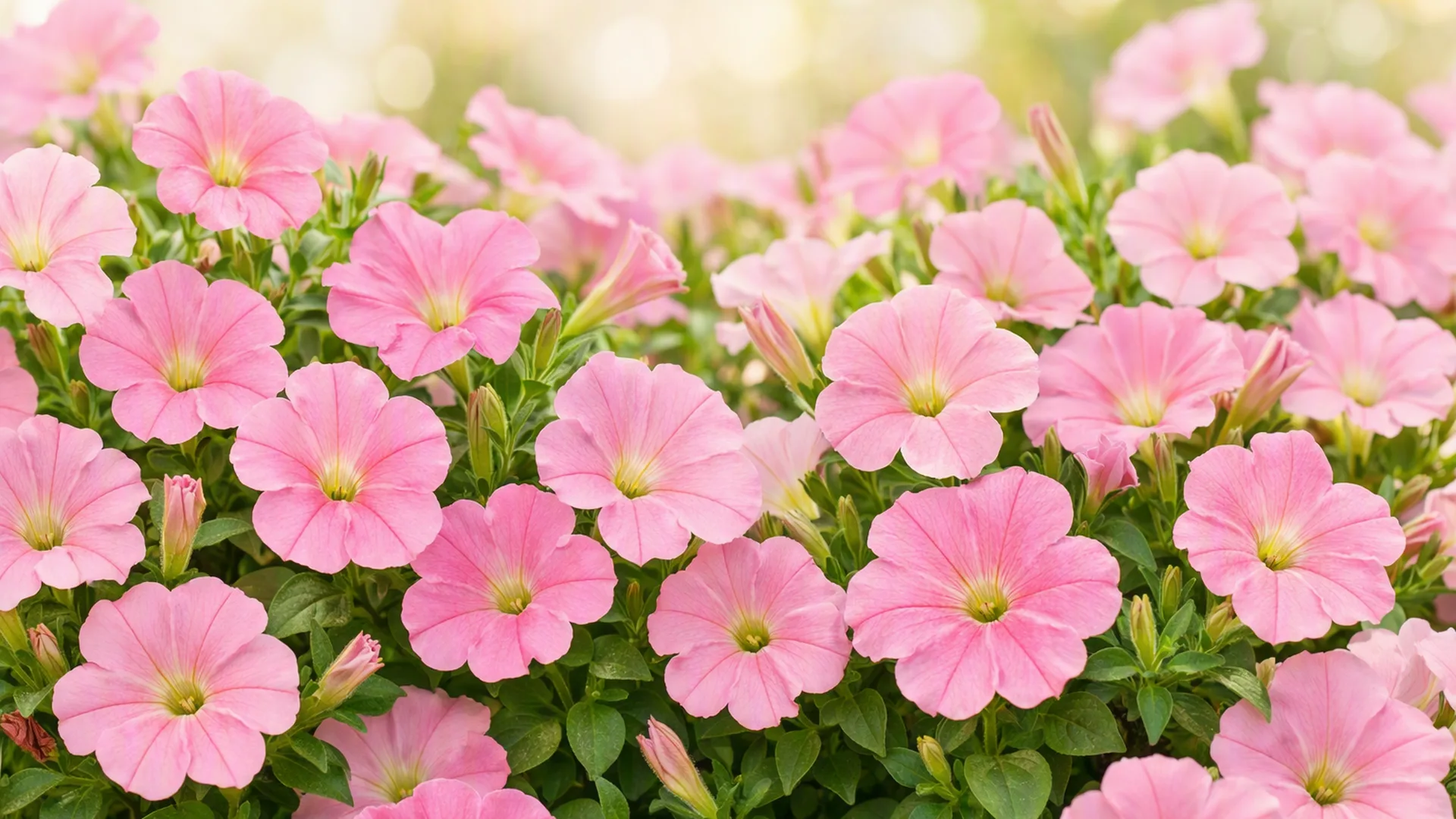
Pink sits between the white and violet ancestors of the garden petunia, so it is an easy colour to achieve in breeding. Plants come in blush, rose, salmon and hot pink, and often show darker veins or a pale throat. Like every petunia they are members of the nightshade family, which also includes tomato and potato, and the leaves and stems are covered in sticky hairs.
Do pink petunias have a meaning?
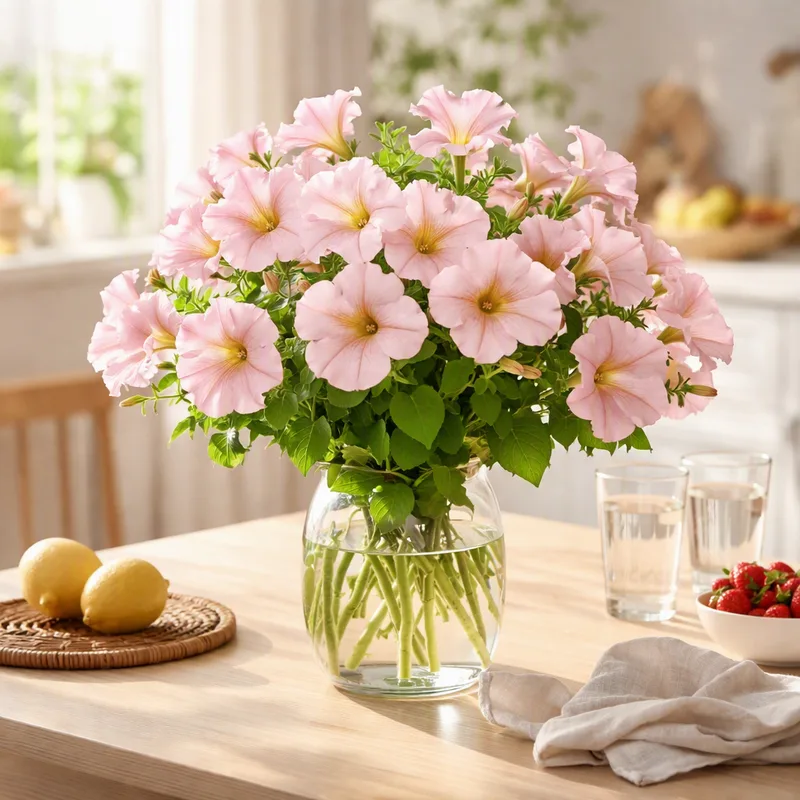
Searches for the meaning of pink petunia lead to conflicting answers. Reliable sources do not give one, so it is safest to treat it as a friendly summer flower rather than a coded message. Pink, as a general rule, is linked with gentleness and affection, which suits a gift of a planted pot for a friend or a neighbour.
Reliable care
- Plant them in a container with drainage holes and fresh compost once the last frost has gone.
- Let the pot dry slightly between waterings; constantly wet roots invite rot in a soggy Irish June.
- Choose a position with five or more hours of sun.
- Use a liquid feed each week or fortnight through the summer.
Combining pink
Pink petunias are lovely with silver-leaved plants, deep purple fuchsia in the same display, or a blue trailing lobelia. In a basket, mix trailing and upright varieties for a fuller effect.
Towards the end of August many plants look leggy. Cut stems back by around half and feed generously, and you will usually get another flush through September. After the first hard frost, the plants are finished and can go on the compost heap.
Cat and dog check
The ASPCA does not list petunia as a danger to dogs, cats or horses.