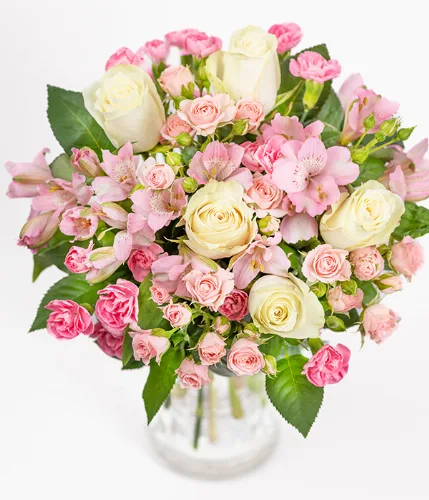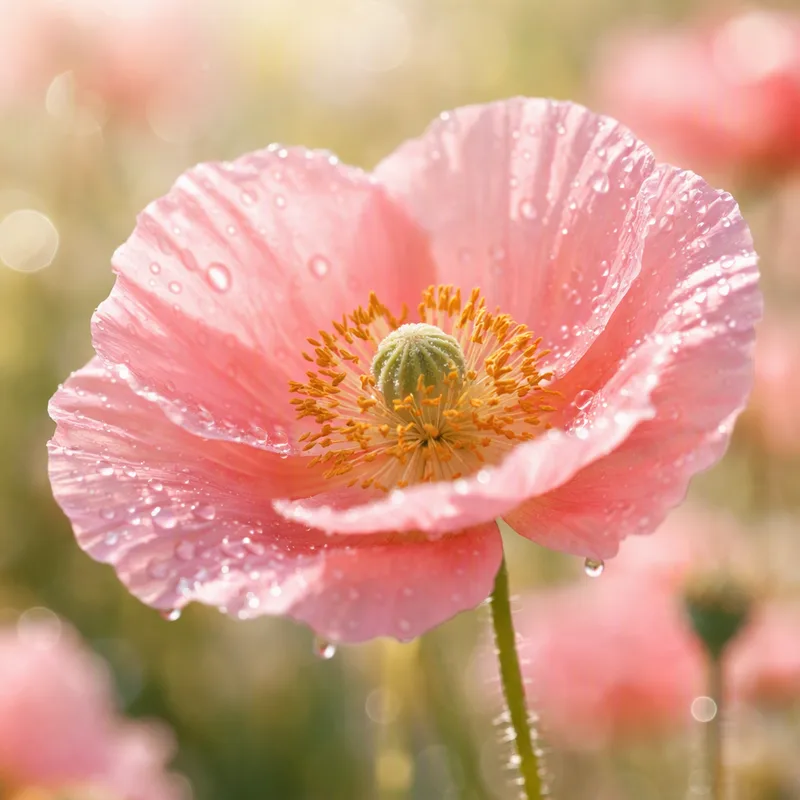
From blush to rose
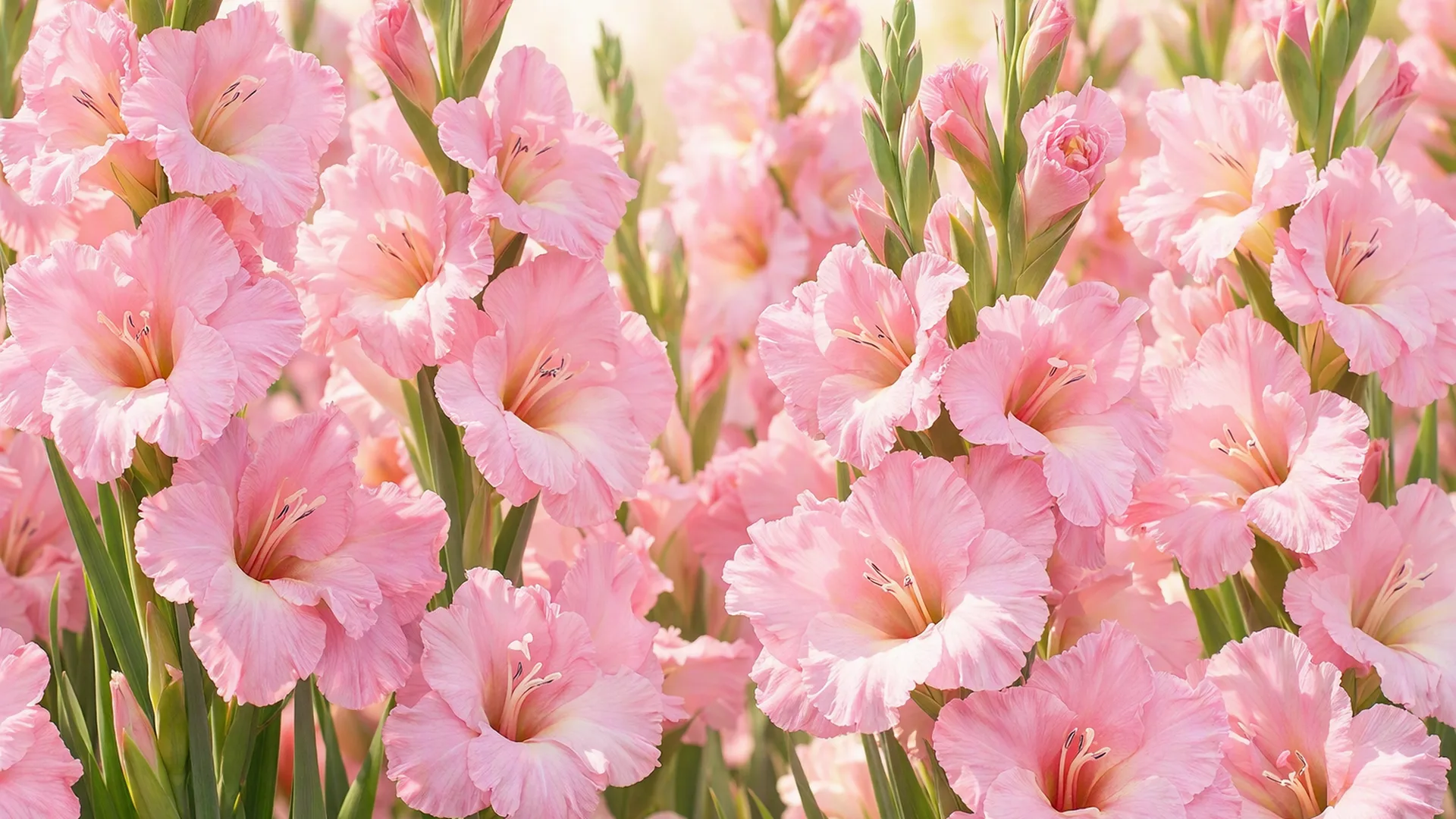
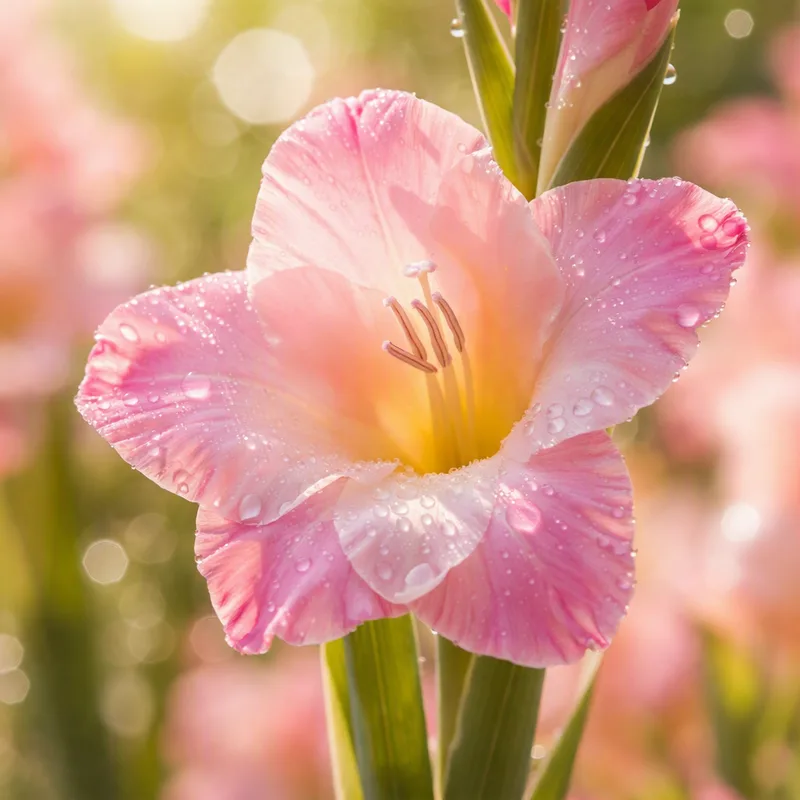
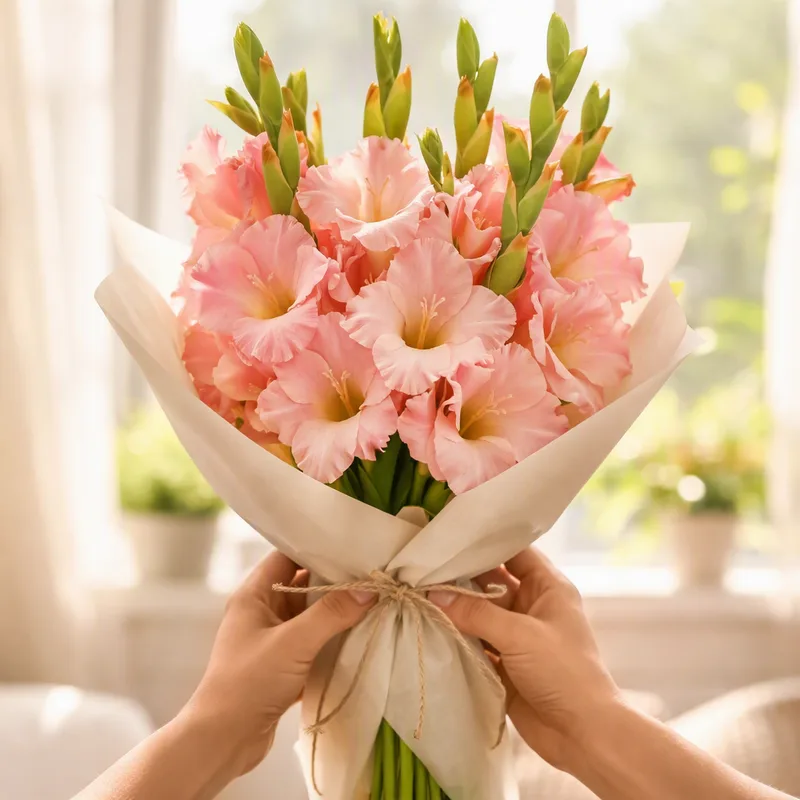
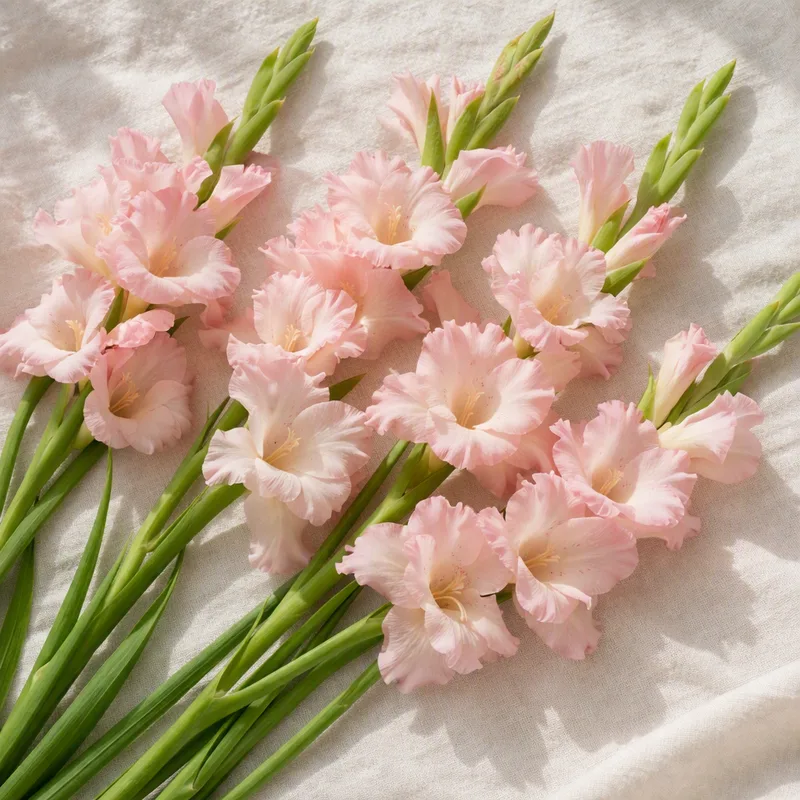
Pink is a shade that comes naturally to gladioli: wild species in southern Africa are described as ranging from pink through reddish to light purple with white markings. Cultivated hybrids stretch the range from pale shell pink to strong cerise, often with a lighter or creamy throat. This is a gentle colour for a late-summer garden, and it softens the sword-like outline of the plant.
The meaning
Searches for the meaning of pink gladiolus find a mixed answer. Because the plant is named after a sword, flower dictionaries tend to link it with strength and integrity, while pink adds a softer note of affection and admiration. The meaning is a matter of convention, so it makes a good talking point rather than a firm rule.
Planting and care
- Choose a sunny site and free-draining soil, and plant the corms 10 to 15 cm deep in spring.
- Stake tall types; strong gusts can snap a laden spike.
- Water during dry spells, but ease off once the foliage turns yellow.
- Lift and dry the corms in autumn, because large pink hybrids rarely survive wet winters unprotected.
Pairing pink
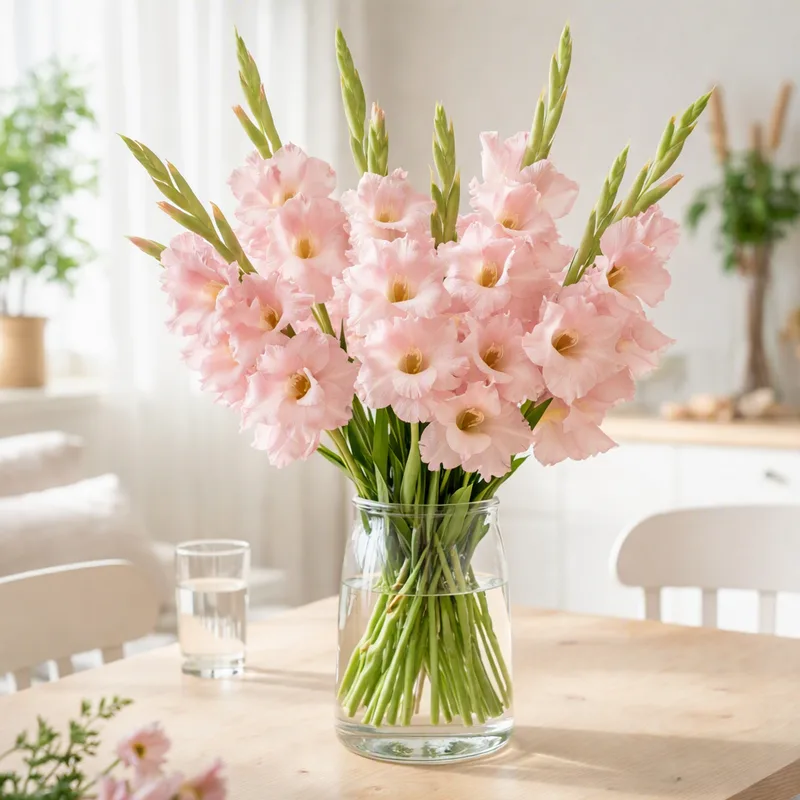
Pink gladioli suit a cottage-garden mix with dahlias, penstemons and ornamental grasses. Indoors, put the long stems at the back of a bouquet and fill the front with rounder flowers.
Pets and handling
Animals should not eat any part of the plant. The ASPCA lists gladiolus as toxic to dogs, cats and horses, with drooling, vomiting, lethargy and diarrhoea reported. Keep stored corms out of reach, and wash your hands after handling them if you have sensitive skin.