
Are there pink poppies?
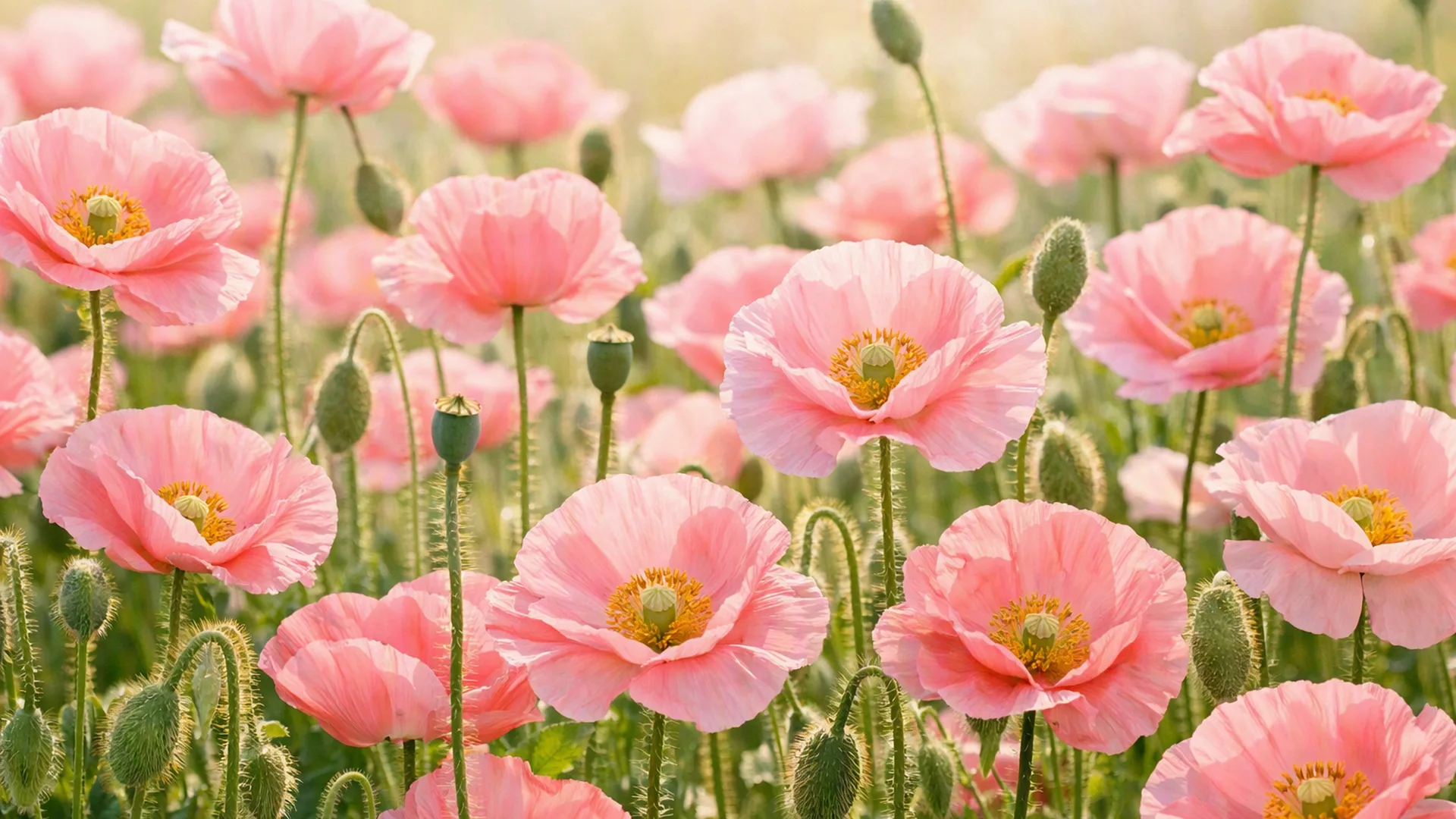
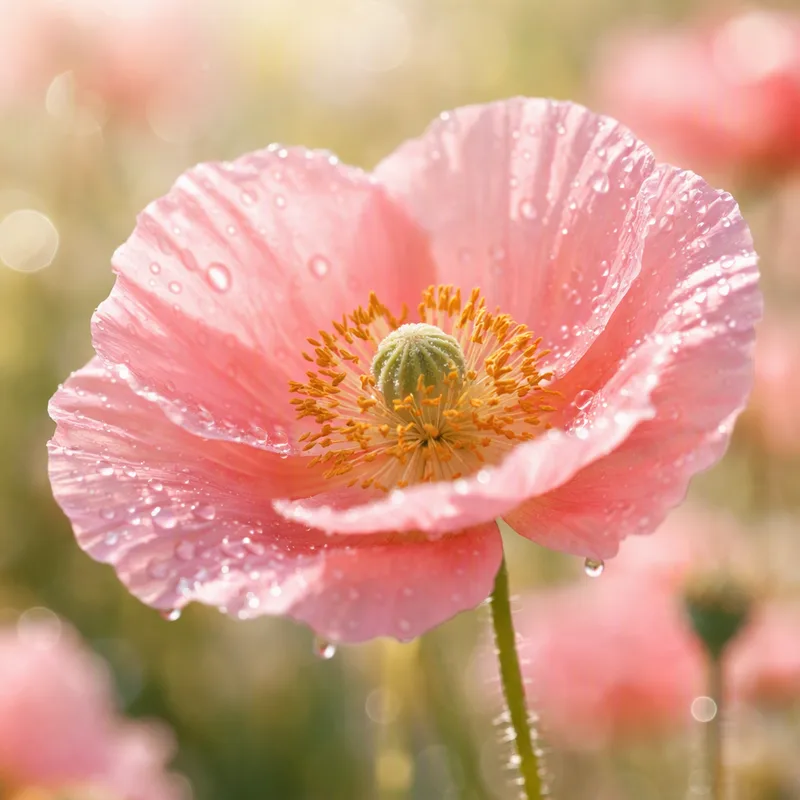
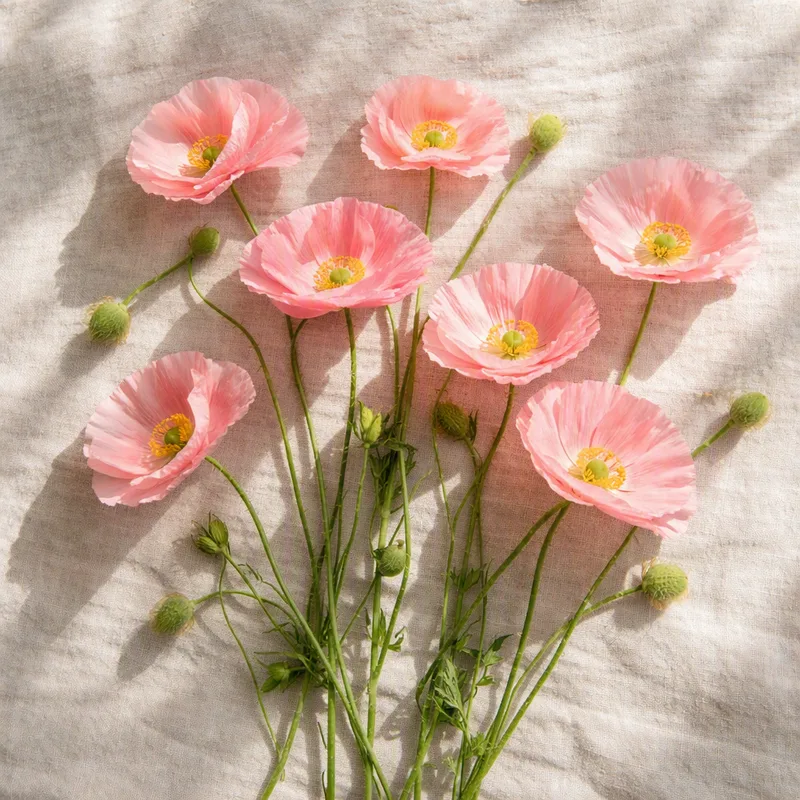
Yes. The wild corn poppy, Papaver rhoeas, is red, but breeders have produced pink, orange, yellow and white cultivars. The best known is the Shirley poppy, a strain with delicate, silky petals in blush, salmon and rose, often with a pale edge and no dark blotch at the base.
The Irish garden angle
Pink Shirley poppies suit cottage-style borders and the edges of vegetable beds, where they self-seed in gaps. Sow in spring on raked soil; flowers appear from early summer. Because the seed is tiny, mix it with dry sand to scatter evenly. A mild climate means seedlings from an autumn sowing can overwinter in a sheltered garden.
- Aim for sun and light soil.
- Thin the seedlings to a hand's width apart.
- Deadhead to prolong flowering, or leave a few heads for seed.
Meaning
Pink is not linked to remembrance. People tend to see it as a gentle, summery colour for the garden.
Combining with other plants
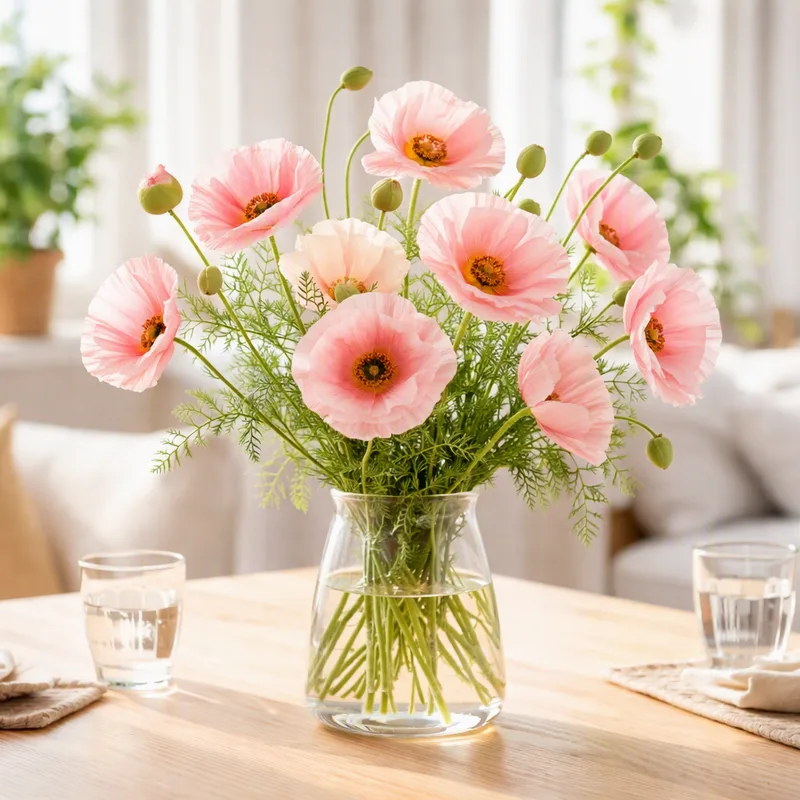
Try pink Shirley poppies with blue cornflowers, white ox-eye daisies and the feathery foliage of fennel. All of these like open, sunny ground and similar light soil, and the mix looks like a meadow even in a small plot. Because poppies flower for only a short spell, the companions keep the bed looking full once the petals have dropped.
Safety and pets
Like the red kind, pink corn poppies contain the alkaloid rhoeadine, which is a mild sedative. Keep them away from pets and children, and ring a vet or doctor if anyone eats them.