

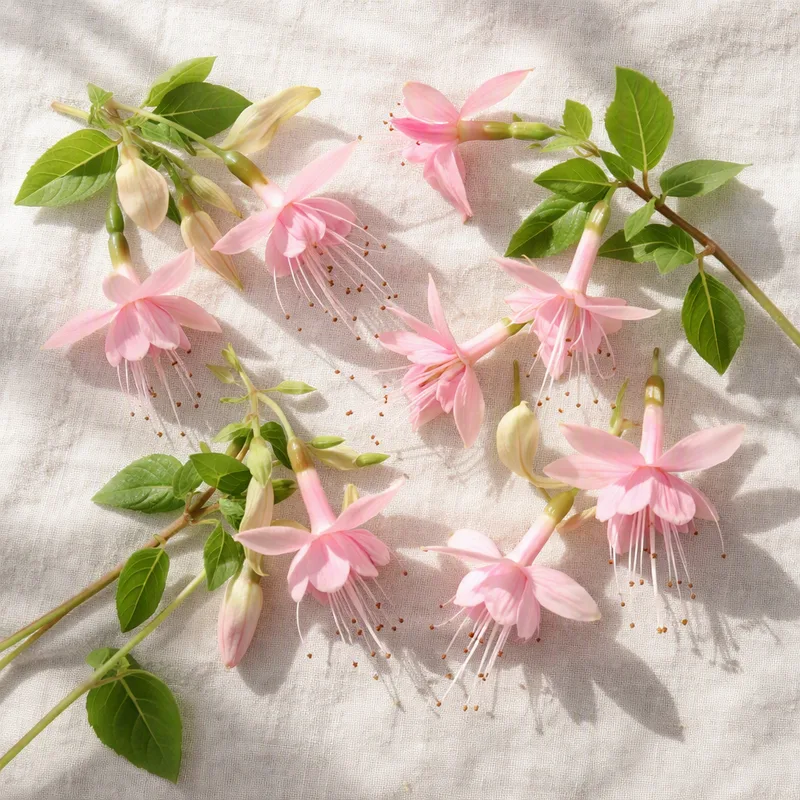
The colour behind the name
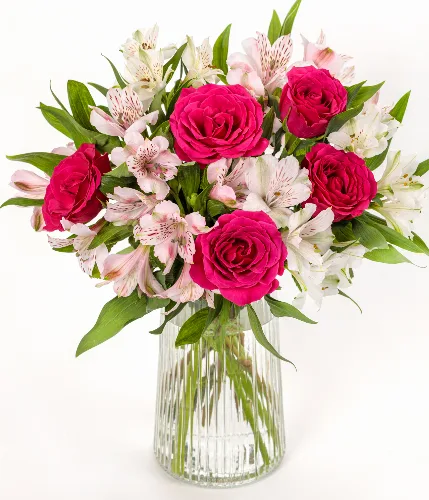
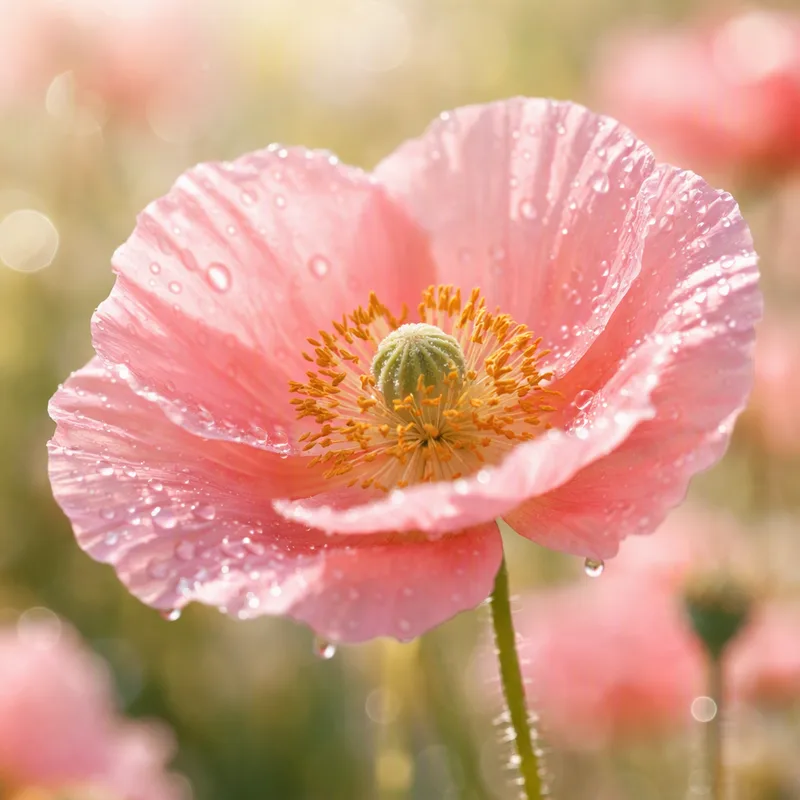
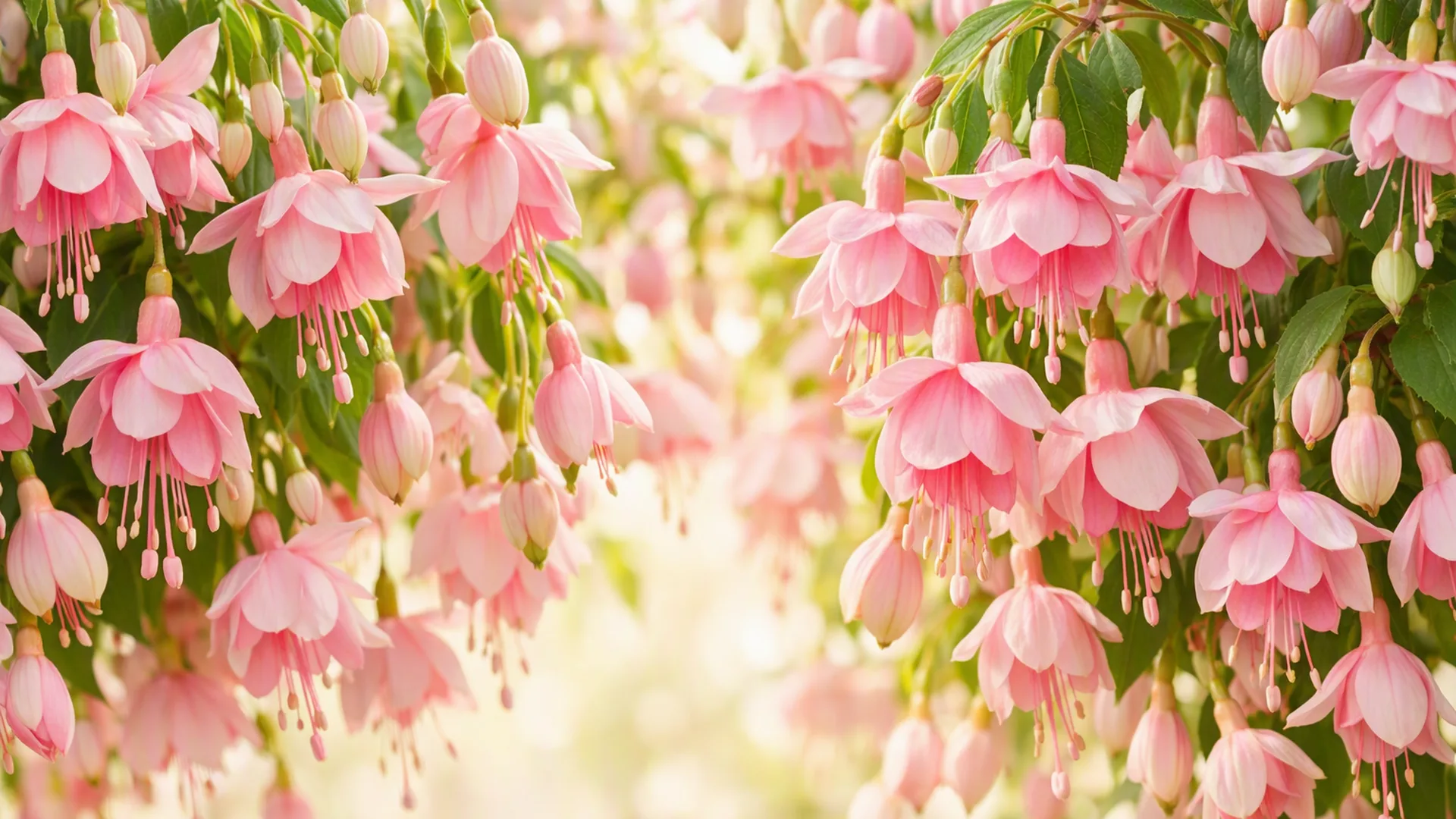
Pink is where the plant and the colour meet. When people search for "fuchsia colour" or "fuchsia pink", they mean a bright purplish pink, and that is much like the flower of many hybrids. Real fuchsia plants cover a broad palette, from white and soft pink to deep red, purple-blue and orange or salmon, but pink-and-purple combinations are the ones that give the name its punch.
A shrub, not a cut flower
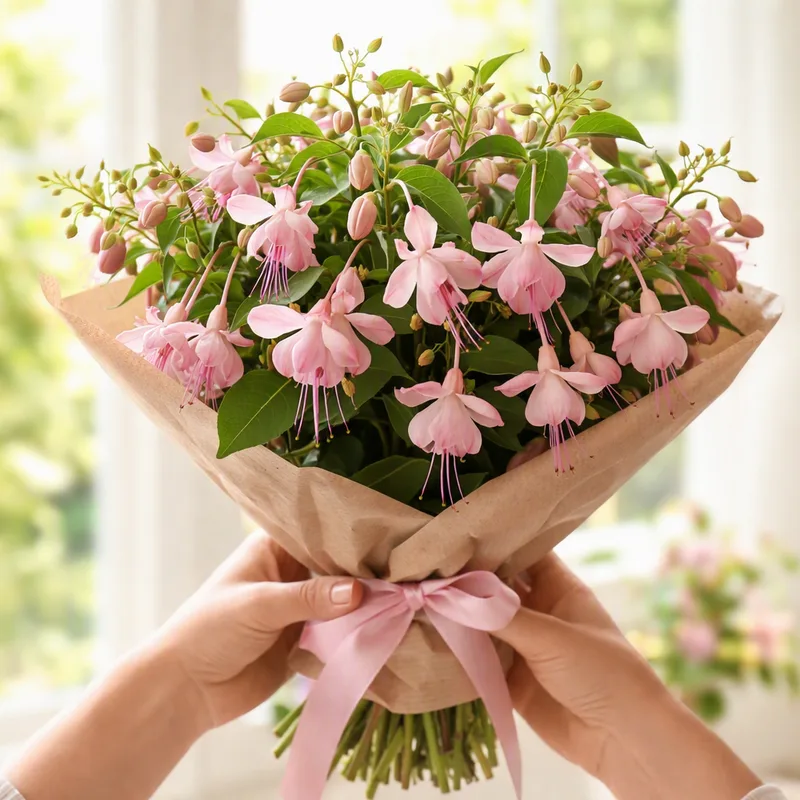
Fuchsia is bought as a potted plant, not a vase flower. Typical heights are 0.2 to 4 metres depending on the species, though baskets and bedding types sit on the small end. The blossoms have a pendulous teardrop shape with four long sepals and four shorter petals, and flowering runs from late spring through summer into early autumn.
Garden tips for Ireland
- Partial shade is best; strong midday sun scorches the petals.
- Water evenly. A summer hanging basket might need a drink every day, while a hardy shrub in the ground needs little.
- Hardy hybrids will often survive winter outside in mild coastal gardens, especially the south and west.
- In colder inland areas, plant the crown a little deeper and mulch it thickly.
Common problems
Fuchsia gall mite distorts leaves and shoots and has been recorded in the United Kingdom since 2007. Cut off and bin affected growth rather than composting it, and avoid buying plants with swollen, twisted tips.
Edible or not?
Berries follow the flowers. Some species have tasty fruit, while others are bland, so you cannot assume that all fuchsia berries are worth eating. Cat owners can take comfort from the ASPCA's non-toxic list, which includes fuchsia.