
A flower with 2,000 years of history
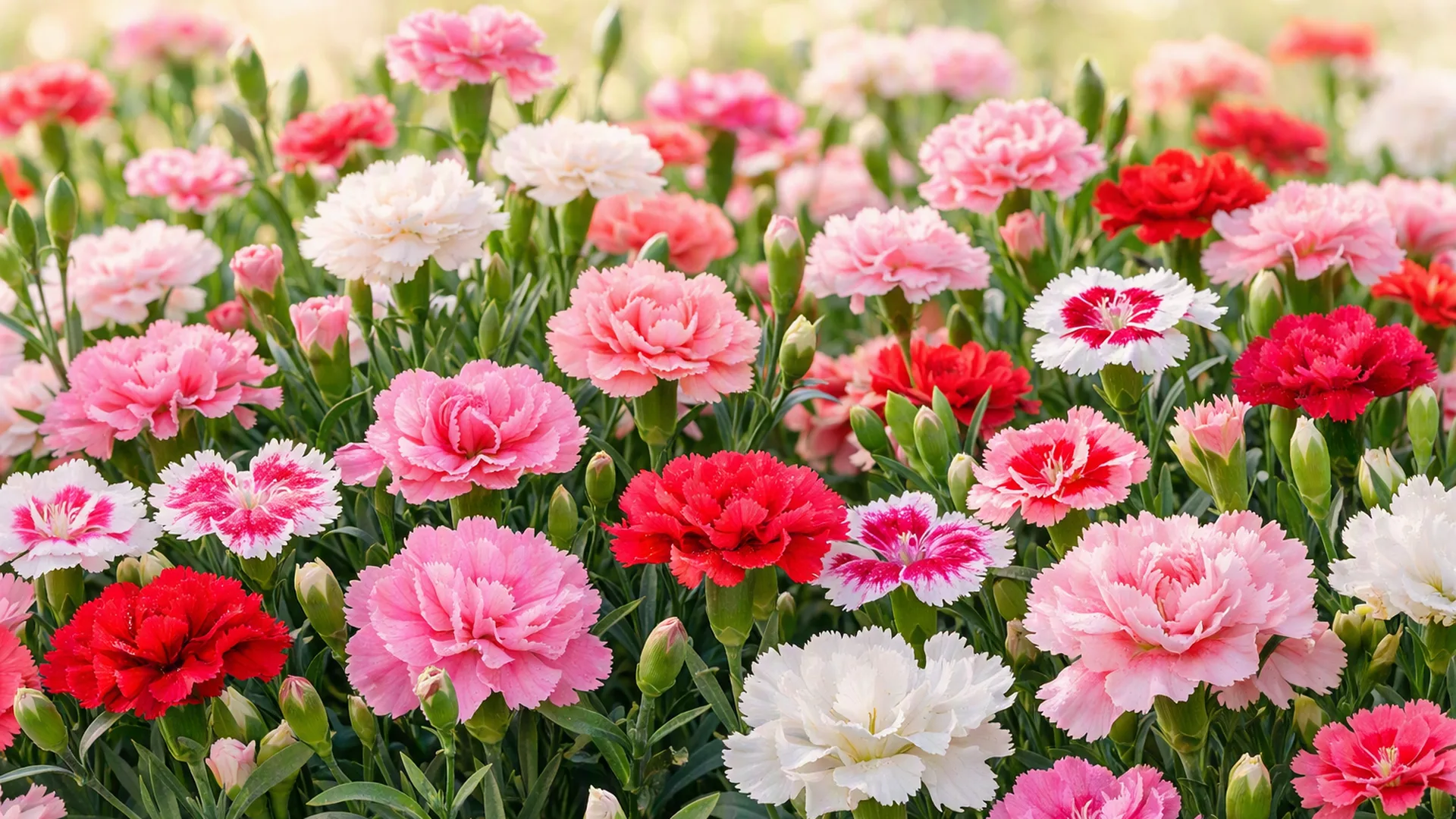
The carnation is a Mediterranean native, and gardeners have grown it for so long that its exact natural range is uncertain. Greek writers mentioned it around 2,000 years ago. The genus name Dianthus comes from the Greek for divine flower, and the common alternative name, clove pink, refers to the spicy scent that carries a hint of cinnamon and nutmeg.
Why florists keep using it
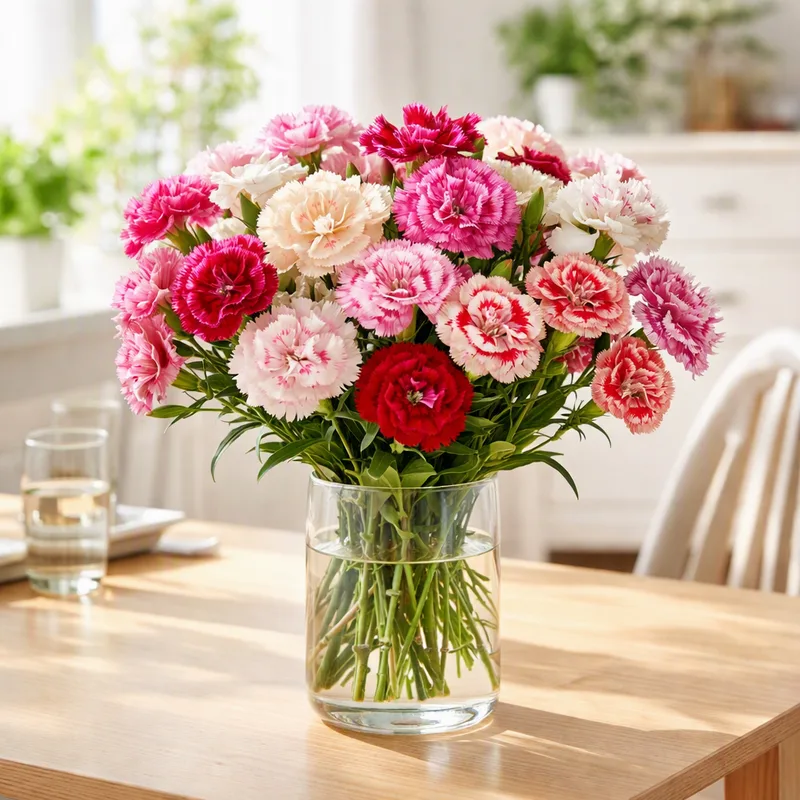
Few cut flowers match its stamina. With clean water, a fresh cut above a joint in the stem and a position away from ripening fruit (which gives off ethylene gas that ages petals early), a bunch can look fresh for about two weeks.
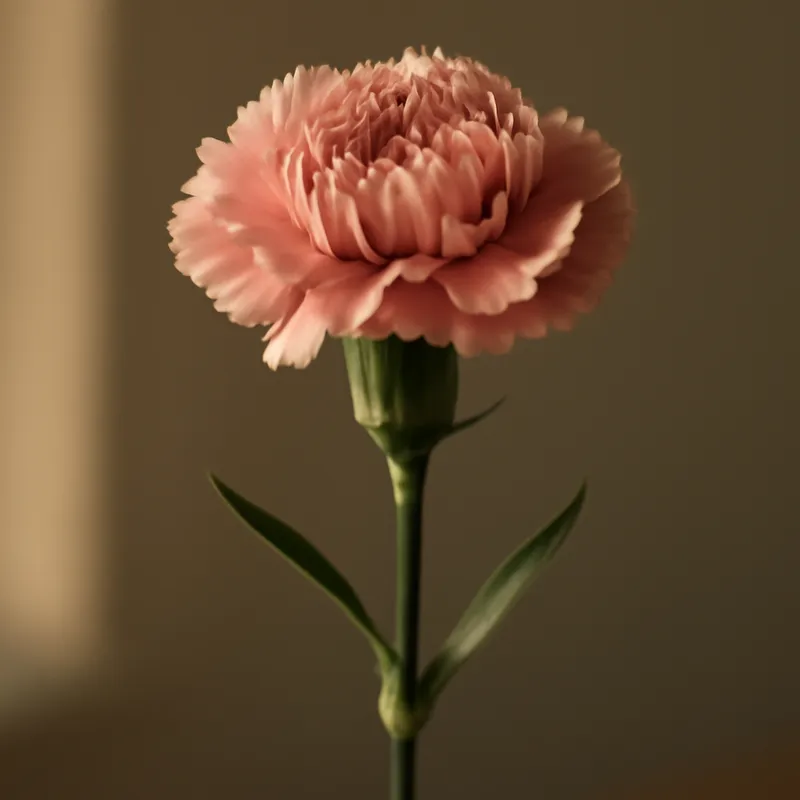
- Standard carnations carry one large flower per stem.
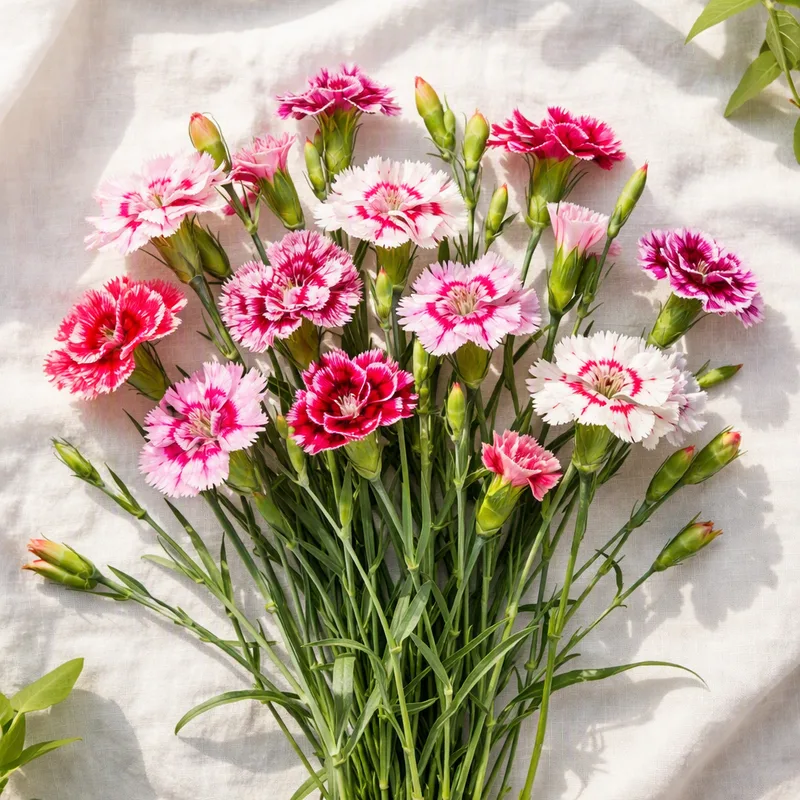
- Spray types carry several smaller buds, handy for posies and buttonholes.
- Scented garden forms are called pinks and thrive in sunny, free-draining beds.
An Irish literary footnote
Dublin-born Oscar Wilde made the dyed green carnation famous in the 1890s, and in Ireland it still crops up around St Patrick's Day. A pale carnation takes up dye through its stem very readily, which is why white ones are used.
Looking after pets
The ASPCA lists carnation as toxic to dogs, cats and horses, but the effects are mild: some stomach upset and possible skin irritation. Even so, a cat nibbling a vase of flowers is worth a call to the vet. Garden carnations like lime and sunshine, so on Ireland's acidic soils add a little garden lime or grow them in pots.