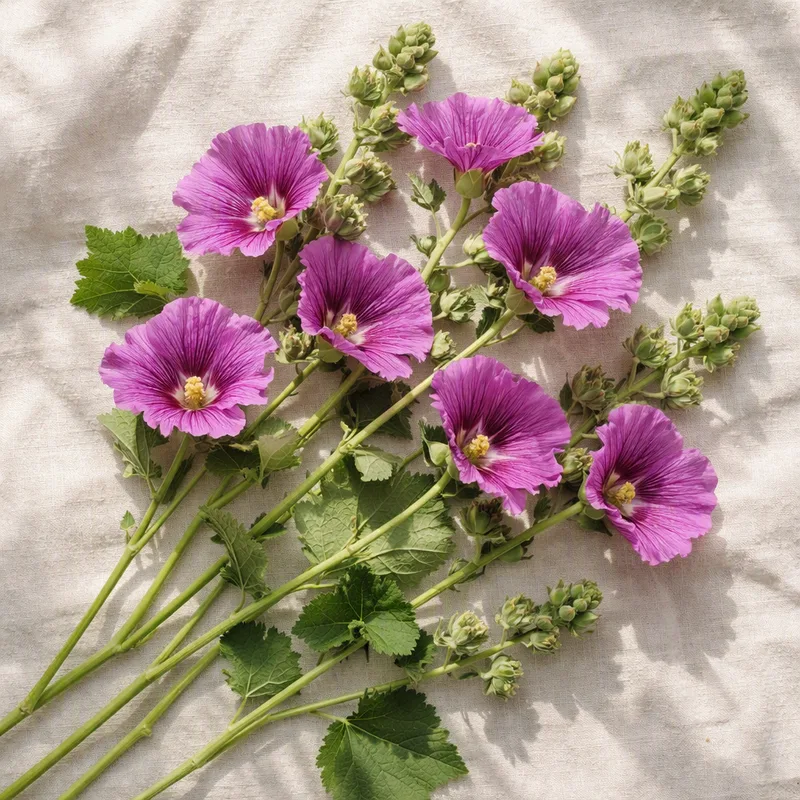
What a hollyhock really is
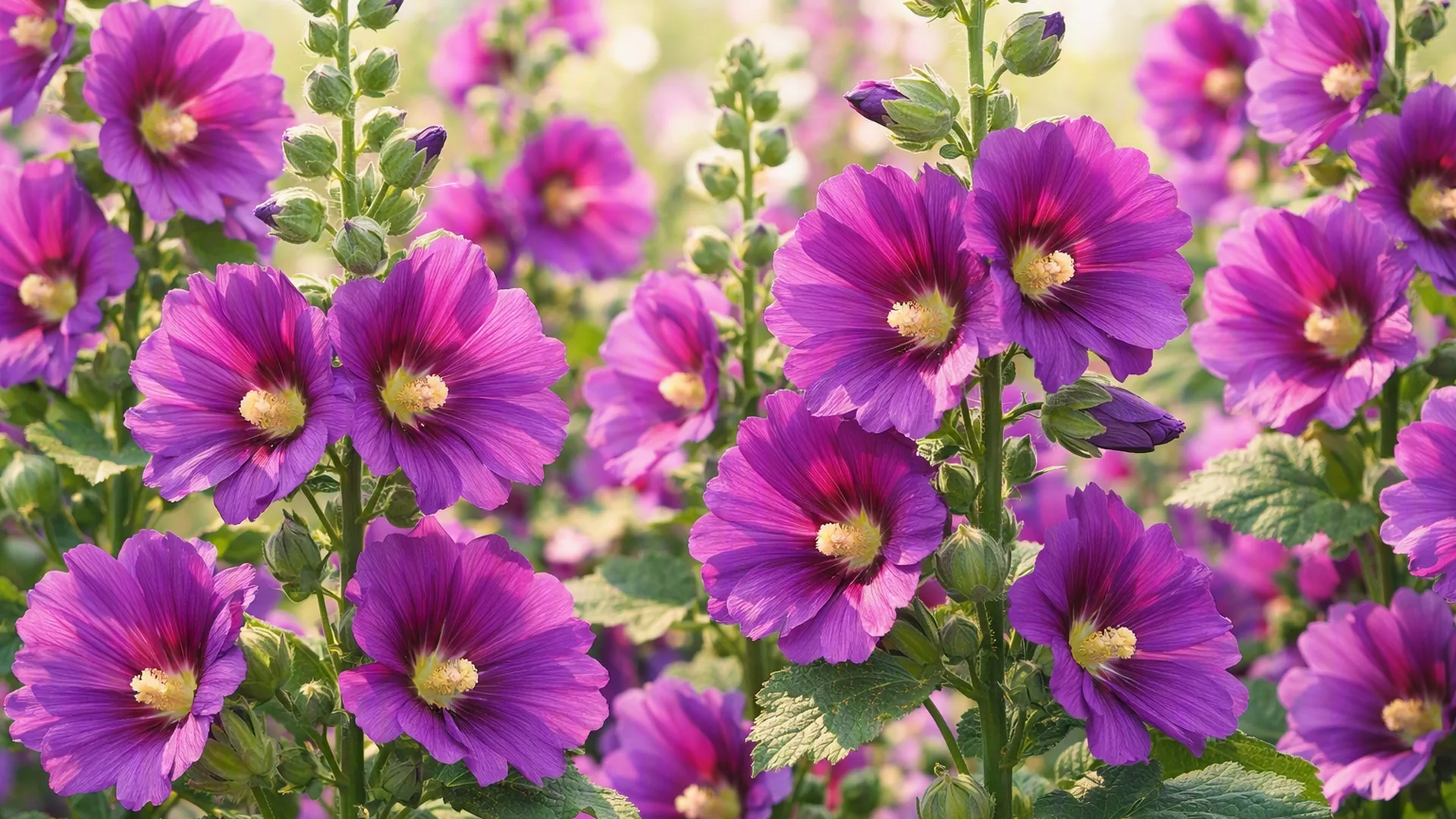
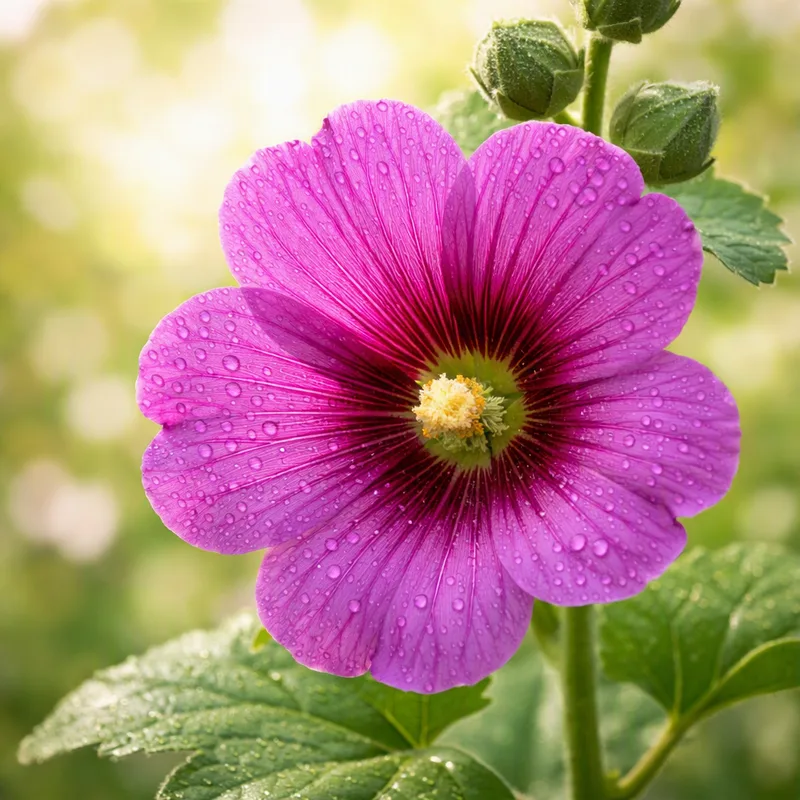
Alcea rosea belongs to the mallow family. It usually reaches 1.5 to 2.5 metres, and the flowers open from the bottom of the spike upwards between July and September. Botanically it is a biennial or short-lived perennial: the first year gives only a rosette of large, rounded leaves, and the flower spike comes in the second year. Since it seeds itself freely, a clump often appears in the same spot for years.
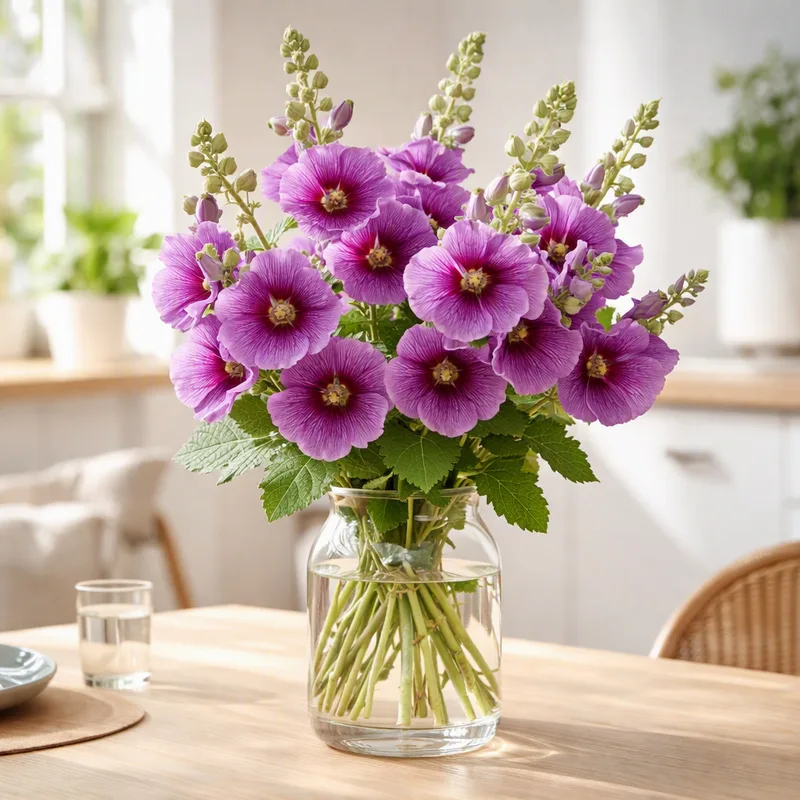
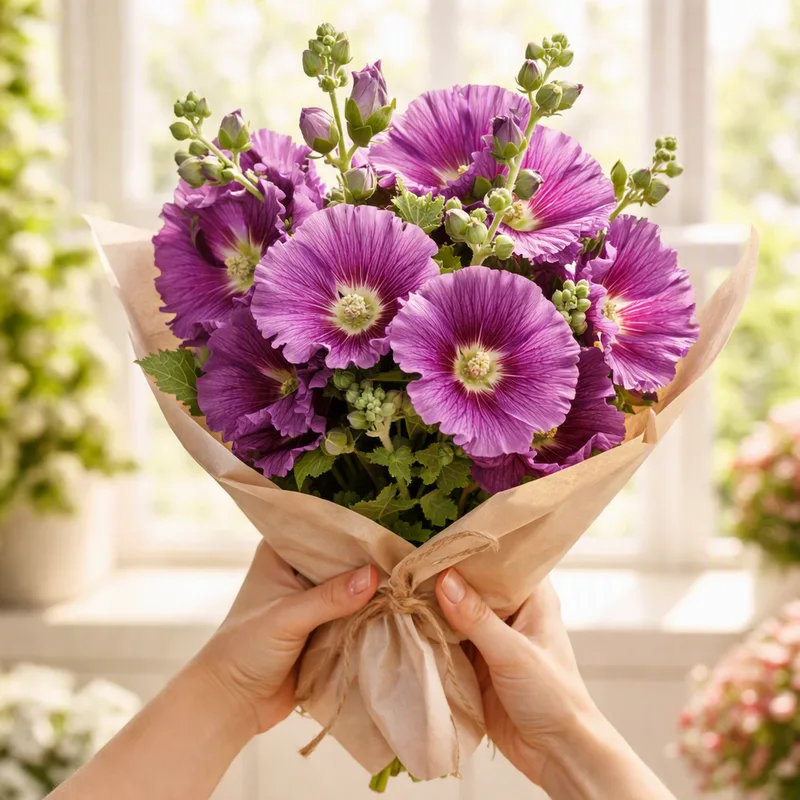
The wild form is mostly pink to purple, which is why a "classic" hollyhock in a mixed packet tends to lean towards purple and mauve. Hollyhocks have been grown as ornamentals in Europe since the Middle Ages and remain a symbol of the cottage garden. In the Victorian language of flowers they stood for ambition. They make poor cut flowers because the stem is long and the flowers open one after the other.
Growing in Ireland
- Choose full sun, a fertile, well-drained soil and a wall or fence for support.
- In the windy west and on coasts, tie every stem to a stout cane.
- Sow outdoors in May or June, or start seed indoors in spring; the RHS advises protecting young plants from slugs, which are a real worry in a damp Irish summer.
- Plants are fully hardy, so no winter protection is needed.
Rust
Hollyhock rust is the common problem. Look for orange spots on the upper leaf surface and brown pustules underneath. Remove infected leaves at once, avoid overcrowding, clear fallen leaves in autumn and replace old plants every few years with seedlings. Damp air makes the disease worse.
Pets
Hollyhock appears on the ASPCA list of plants that are non-toxic to dogs, cats and horses. The stems and leaves are bristly, so gloves are handy when tying them in.